
Often our luxuries come at someone else’s cost. I personally don’t have much of a sweet tooth, but I do enjoy dark chocolate once in a while. (Milk chocolate tends not to be vegan.) My wife had discovered Moka Origins chocolate at a local health food store and then learned that their location is in the Poconos, just outside Honesdale. We visited their facility, small but growing. We learned how they’re committed to fair trade and sustainability. And they’re gaining a reputation in a world where scale is everything and as scale increases quality declines. We all know that to be true but we still support the big guys. The visit to Moka Origins made me reflect, once again, how we prefer low quality and cheapness to something that’s really well made but costs more. It’s one of the realities of our economic system.
There is a small but thriving vinyl market for sound recordings—the quality is better, and many are willing to work with the inconvenience of turntables and discs than simply streaming whatever. I took a lesson from Moka. The cofounder told us that large companies come into places like Africa paying low prices to buy in bulk. They buy improperly fermented cacao beans in huge lots which probably includes some beans that aren’t even cacao. Mixing these large lots with enough additives, they can get away with the chocolate taste most people have grown accustomed to having. If, on the other hand, you scale down and pay attention to what you’re doing you can even tell the country of origin of chocolate by its taste. Since Moka sells only single origin chocolate, we were given samples from three different African countries and they were obviously very different, even to someone without a sweet tooth.
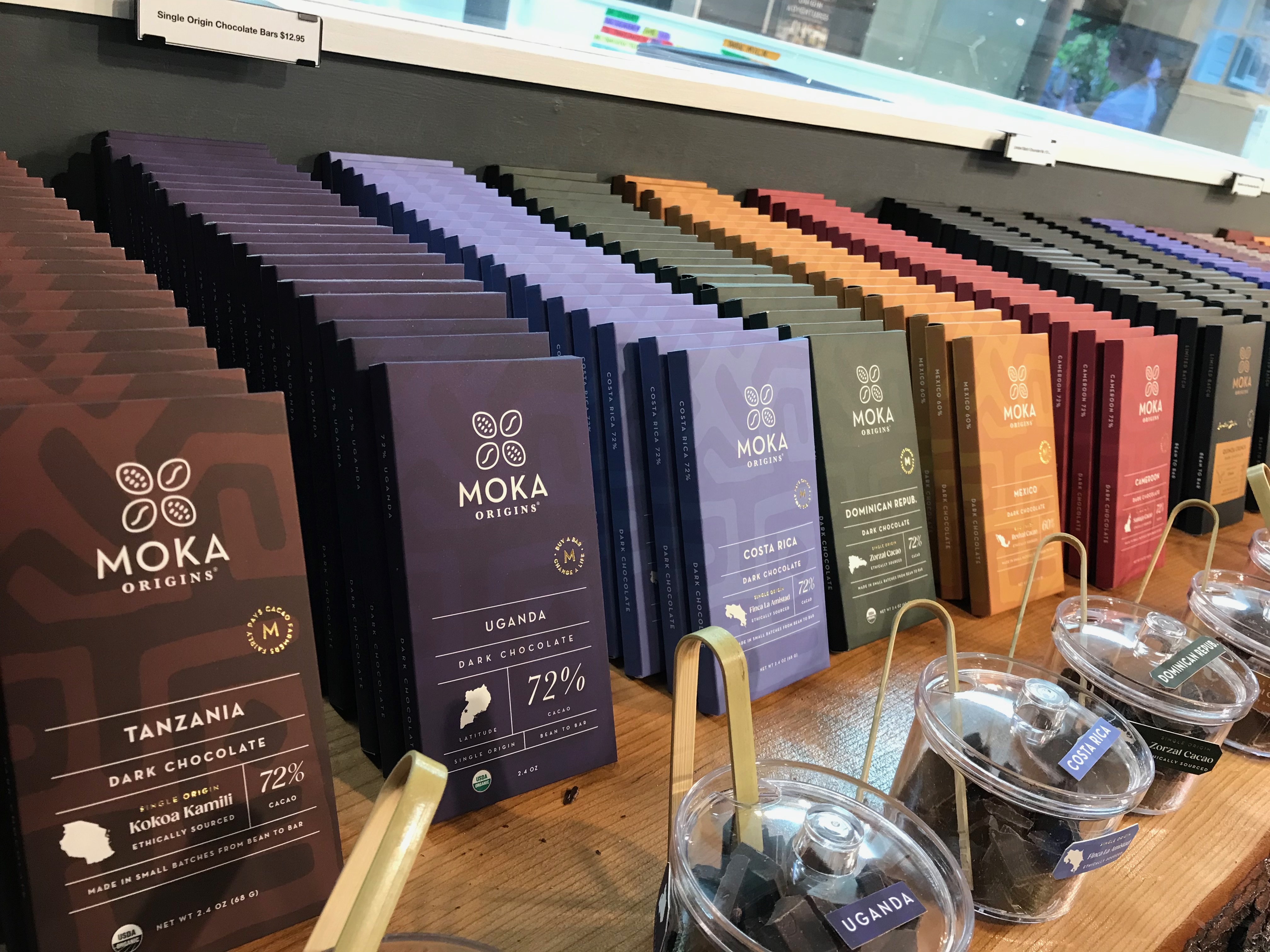
Economic scale often drives quality down. In a company where the owner comes in on a Saturday morning to personally lead a tour and where the chocolate bars they sell are literally wrapped by hand, you know you’re not in Hershey. Or at Nestlé. Or any other corporate candy giant. These companies make astronomical profits. The owners of Moka Origins spend time in Africa, developing fair trade farms to grow quality produce. I also learned that cacao pods are technically fruits. It’s a food. We tend to overlook that in our quick snack culture. This was a very educational half hour, even for someone not inclined to food tourism. So, if you happen to be in northeast Pennsylvania on a Saturday morning, stop in to try chocolate that’s really a food. Or you can order it online. Just know that you’ll pay for fair pricing for those who are doing the work to raise and process cacao beans as they should be treated. You can tell the difference fairness makes.
Oh, and I should mention they also do coffee…

 Steve A. Wiggins