For Love or Money

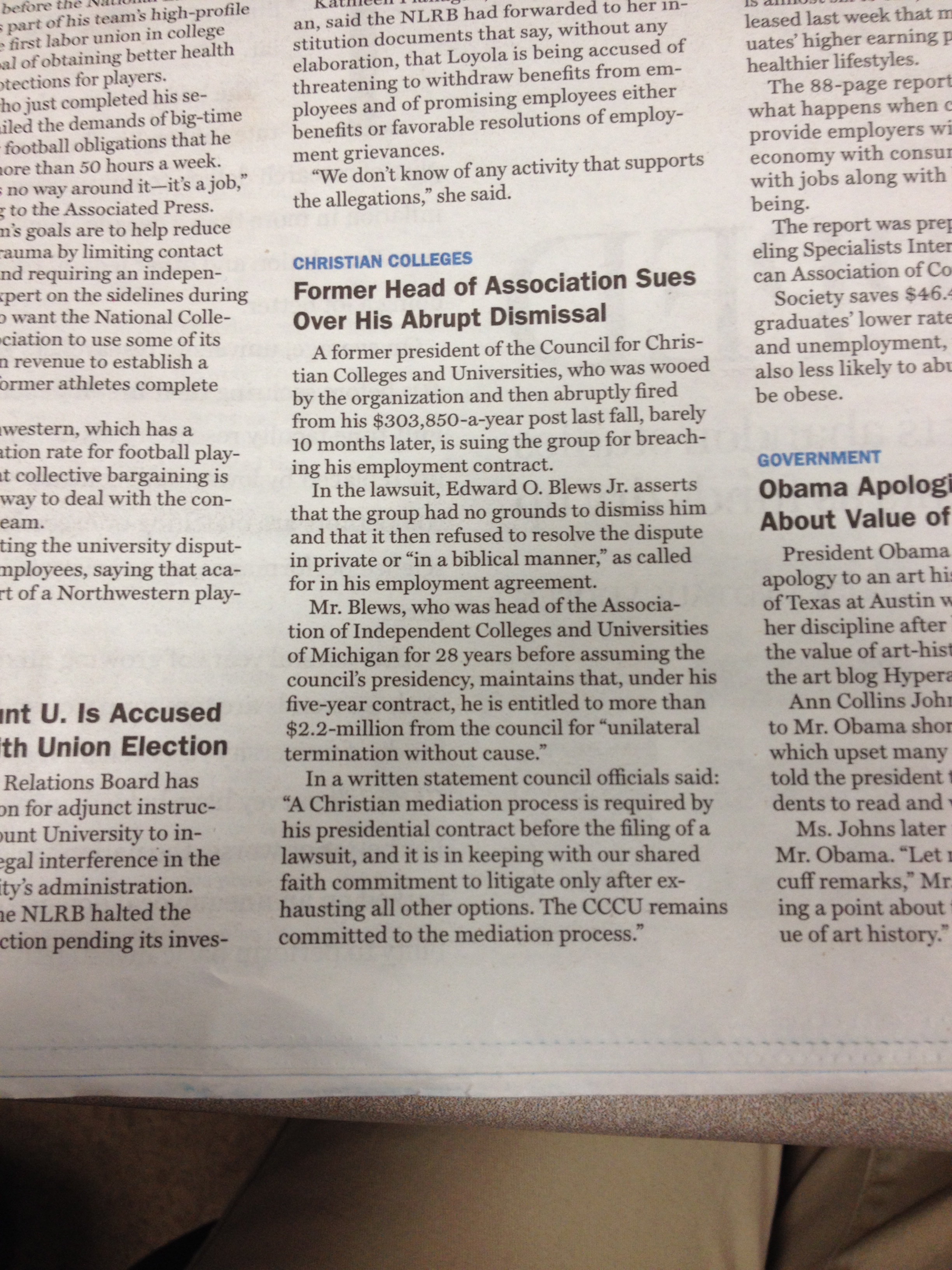
IMG_1258The Council for Christian Colleges and Universities is seeking a Christian way out of a contract. It seems, according to a recent Chronicle of Higher Education article, that Edward Blews was released from his $300,000 position “without cause” (I know how that feels—not the $300K part, but the “without cause” aspect), and he wants this resolved “in a Christian manner.” To the tune of two million dollars. That’s Christian if anything is. Christian higher education counts for a fair proportion of schools in the United States, while the CCCU, defining itself as “Christ centered” has only 120 members in North America at the moment. It was founded in 1976. Ironically, my old alma mater does not find itself on the list, although Grove City College often proclaimed itself as God’s Country Club during my years on campus. Among the services listed on the CCCU website is advocacy and public policy, that will allow them the “crucial right” to hire “only persons who profess faith in Jesus Christ.” And perhaps, who can’t afford a lawyer.

Academic freedom has been on my mind a lot lately. Conservative Christian views seldom benefit from academic inquiry. These views, most of which are decidedly modern, are passed along as a package with political riders, and strive to see themselves as counter-cultural, although, in fact, they resemble the 1950s more than the 2010s. I have no idea why Blews was let go, but I do know that “without cause” hides a multitude of sins. In my case, it was shorthand, I think, for just being too liberal. I was doing a great job, but endangering the morals of majors, I guess. Teaching critical thinking does have a price tag. I don’t see seminaries on the CCCU member’s A-list at all.

It is becoming increasingly obvious that we need to understand more about human religious motivations. Reason alone cannot satisfy brains where emotion may be just as critical to thinking as logic is. I know that when I’m depressed all thoughts seem to flee, except the most dismal of the lot. Reason can’t penetrate this fog. Yet reason itself cannot be ignored. The facts it teaches are frequently uncomfortable—to scientists as well as religionists. There’s nothing fair about it. When it comes to legal agreements, however, we are at the mercy of lawyers. Ironically, those who head Christian coalitions of various sorts feel the need for financial compensation. A little lucre to wash down the humility of dismissal. “Without cause” can be the most unkindest cut of all, eh Marcus? Even Judas got his 30 pieces of silver, but the cash never satisfies.

Mermaid Missionary

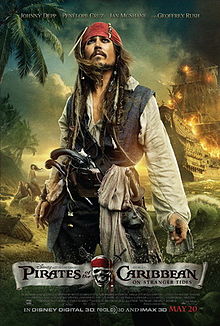
Last summer I was invited to address a church in Princeton about Christian themes in the movies. Back in my seminary days I often presented biblical material at adult forums, but my interest in religious themes in movies has grown over the years. I don’t claim to be an expert, but I have watched secular movies with an eye toward religiosity since I was in high school. The day of the presentation followed a recent viewing of Pirates of the Caribbean: On Stranger Tides. Although I’ve posted on it before, that particular movie is among the most heavily freighted with Christian themes of any I’ve seen. Now that I’ve had a chance to watch it again on the small screen without the distractions of getting home through traffic afterward, I would redouble my assertions. The very premise of the movie—the hope for eternal life—is a decidedly Christian refrain and the pirates, who wear their sins on their sleeves, are eager to attain it. The missionary, mentioned in my previous post on the film, serves as a kind of foil for that theme, insisting that all souls can be redeemed. Except, he decides, Blackbeard’s.

The reason that Blackbeard falls out of the missionary’s personal book of life is his mistreatment of a mermaid. Now the swarming, man-eating mermaids are among the most memorable images from the story. One has to be captured to unlock the magic of the Fountain of Youth, and the victim happens to be the missionary’s mermaid. In a Florence Nightingale moment, the two different species fall in love—celibate preacher and heathen, mythological creature. An odd couple indeed. Carried in a glass coffin filled with water, the mermaid also needs air to survive and the heartless pirates don’t really much care. To save the little mermaid from asphyxiation, Philip shoves his Bible into the gap he breeched between coffin and lid, saving the fishwife’s life. Talk about conversion!

When the glass coffin breaks, spilling all the water, the mermaid is reborn as a human. Echoes of Splash come to mind here, as well as Disney’s earlier effort, The Little Mermaid. The transformation in this case, seems spiritual as well as physical. Syrena, whose very name invokes the classical sirens, is the one who delivers the magical chalices (communion, anyone?) to Jack Sparrow to save the life of Angelica, or, more likely, to bring Blackbeard to an end. Our busy mermaid, now transformed again to her fishly form, saves the injured missionary by converting him to her way of life under the waves. There are shades of Lovecraft here as well as a reversal of Ariel’s fate in Little Mermaid. Although critics were harsh on this movie where a comic character now takes on a serious role, I still find it compelling. Nearly all the main characters undergo transformations as the story unfolds and whether heathenish or not, almost everyone ends up a better Christian of one sort or another.


A Tiger’s Tale

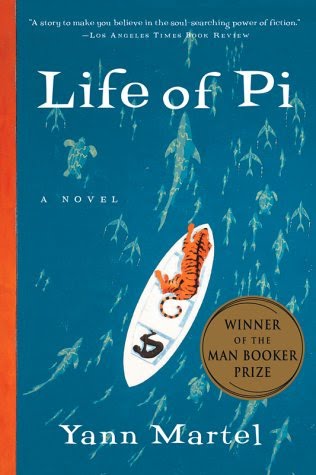
When my wife finished Yann Martel’s Life of Pi she said, “You’ve got to read this book!” Philosophical novels don’t often capture the interest of publishers or agents, but when they manage to slip through the fine-mesh mail-armor of the guild, they sometimes become best-sellers. Publishers often underestimate the intelligence and the hunger of the average reader. I was glad to have something so provocative to read on my long daily commute. Since the book was published in 2001 I won’t worry too much about spoiler alerts. It should come as no surprise that the biblical flood theme comes through a book where a zookeeper’s son is stranded on a lifeboat with various forms of wildlife. The most unexpected and endearing member of this menagerie, the tiger Richard Parker, is also the most deadly. How easy it would be to spin off in a Melvillesque direction of the beast as a representation of an uncomfortable God! Indeed, when Richard Parker scampers away when the boat runs aground, Pi laments how it was like losing God.

Setting the stage for this development is the tale of three religions. As a boy raised in India Piscine (Pi) is surrounded by traditional Hindu culture. On a family vacation he notices that atop the three hills are three houses of worship: Hindu, Christian, and Muslim. Curiosity draws the young boy in, and by the end of part one he is happily and concurrently Muslim, Hindu, and Christian, to the deep chagrin of the various religious leaders. They, coincidentally, all meet Pi with his parents one day in the park and each insists that although they encourage the boy’s continued membership in their tradition, he must drop the other two. Like any sensible person, Pi has chosen the safe road when it comes to conflicting religions: accept them all. It is only religion itself that deconstructs his triune belief system.

After his eventual rescue, Pi is questioned by insurance agents concerning the fate of the ship. They cannot believe his incredible tale, because they can only believe what they have seen for themselves. Pi asks, “What do you do when you’re in the dark?” An appropriate question for us all. This story is a parable about perceiving more than what can be seen. Tigers are hidden all around. Sometimes we call them Hobbes. Sometimes Richard Parker. They are protectors and they are dangerous. Some people call them God. In the end our protagonist is left without the divine presence that had kept him alive all the way across the Pacific Ocean. When the book is over, I think we would all admit, it is the tiger that we miss most of all.


Truth in Fiction

In my more optimistic moods, I like to think of myself as a literary sort. Not constrained by the narrow confines of academia’s hallowed — and often hollow — halls, I have spent much of my life reading literature. I can’t say what started me on this track; my parents were not readers and the small-town school I attended encouraged little beyond subscribing to MAD Magazine. When I stumbled onto the literary giants, I was hooked. There are still great writers I have yet to explore, but one that I only really discovered at the prompting of my wife is Mark Twain. I’d of course known who he was. In my youth I never read any of his books. Then on a fateful, if carefully planned out, trip to Hannibal, Missouri to dig geodes during my geologist phase, we were rained out. The geode farm was closed. Sullen beyond shattered rock-hound dreams, I was at my wit’s end (not a long trip) when my wife suggested we not waste the miles we’d traveled, since Hannibal was also the boyhood home of Mark Twain. While there we bought souvenir quality volumes of Tom Sawyer and Huckleberry Finn. Upon returning home, I read them non-stop.

While on vacation last week my wife was discussing her literary pursuits with her family and it emerged that the full, uncensored, autobiography of Mark Twain will begin its public appearance in November of this year. One of the topics to receive his attention is religion. Twain was a Christian, insofar as any Presbyterian can make that claim, but he was critical of formal religion. A quote purporting to be from his autobiography runs: “There is one notable thing about our Christianity: bad, bloody, merciless, money-grabbing, and predatory. The invention of hell measured by our Christianity of today, bad as it is, hypocritical as it is, empty and hollow as it is, neither the deity nor his son is a Christian, nor qualified for that moderately high place. Ours is a terrible religion. The fleets of the world could swim in spacious comfort in the innocent blood it has spilled.” A bit caustic, but honest. When the books come out, I’ll be able to check it for veracity.

One of the things I value most about Mark Twain was his ability to hit his readers without giving away that they’d been hit. He accomplished this through a brutal honesty, often cloaked in fiction. When I explain myth to my students I tell them that it is an attempt to clarify the truth through story. Modern people tend to be fixated on historicity and sometimes miss the importance of a story because “it never happened.” If Huckleberry Finn never navigated a raft down the Mississippi, it would not affect the truth of the story or the insight of the author. It seems to me that with a writer so honest we would do well to consider what he had to say about his own religion before unsheathing our swords and rattling our sabers.


The Passover-Easter Complex

Some years back I completed an unpublished book for young readers on the holidays. This project was undertaken because most holidays have a religious origin and because I could find no comparable source for kids to learn this information from a reliable source. Unfortunately publishers have showed little interest. Rather than waste the effort it took to write the book, I have been installing segments here, on the Full Essays page of my blog. Since it is Easter for many Christians today, I have added the next installment: the Passover-Easter Complex. It begins like this:

No doubt the most complicated set of holidays are those that surround the changing of the seasons – the solstices and equinoxes. Among even those holidays, the Passover (Jewish) and Easter (Christian) complexes are especially complex. Like most major holidays these celebrations have very interesting roots. Problem is, it is hard to know where to begin! We’ve already started with Mardi Gras, but that is kind of a festival on its own. To really get started, we have to turn back to the calendar (again?).

Easter, like Passover, is a “moveable feast.” That doesn’t mean playing musical chairs while you eat! It means that the dates change depending on the moon, so to figure out the date you have to (you guessed it) look at the sky. (Actually, these days you can look on the web or in many books used by churches to figure it out. But work with me here, let’s pretend it is, gasp, before these things were invented!) Two days of the year have an equal amount of day and night all around the world, when the earth stands up straight on its axis. Marking the beginning of spring and fall they are called the vernal and autumnal equinoxes. (“Equinox” means “equal-night,” “vernal” means “green” or spring, and “autumnal,” duh, “in autumn.”) Back when people had no TV, this was a big thing! Not only was it cool to have equal day and night, in the spring it meant days were finally getting longer and warmer. For ancient people it meant that light was winning the struggle with darkness.

Read more…