Alas, 2012

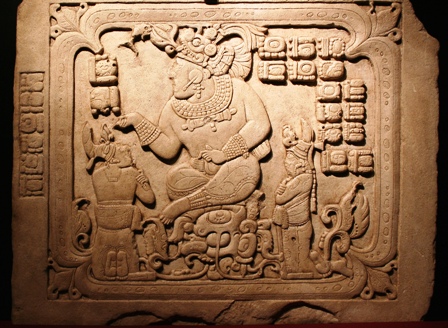
Having just survived a year with two purported Christian apocalypses, we now enter 2012 with its more potent Mayan apocalypse. The mysterious Mayan people, we are led to believe, could not foresee a world beyond 2012, and many otherwise rational people are seriously nervous about it. Whether it is the unread pages of the Bible or some stone inscription in a language most people have no hope of verifying, we venerate ancient wisdom. Especially when that wisdom indicates the dissolution of the entire world. I would suggest that the reason we do this has to do with the society the Bible built.

All the available evidence suggests that many early Christianities existed. Even the early disciples couldn’t always agree among themselves. Serious research over the past several years has indicated that what won out as “orthodox” Christianity was but one stream of the many faiths inspired by Jesus’ life and teaching. Gnosticism, surviving only in very small pockets today, was equally deserving of the title “Christian” and perhaps even outnumbered the “orthodox” variety early on. Other sects and splinter groups counted themselves among the followers of Jesus only to be labeled “heretics” by more dominant groups. Eventually one branch received government sanction and became the official copyright holder of the title “Christianity.” Amid all this confusion brewed a concern of correct teaching. The main reason was that many early Christianities believed the end of the world was imminent.

Gathering the writings to prove their point (more or less) into the Bible, this “orthodox” variety continued to grow and splinter. By the end of the First World War, technology had revealed just how much damage people could do to one another. “The war to end all wars” proved to be anything but, launching the world into a sequel within less than two decades. These wars were apocalypses in the own right for millions of people. Armchair theologians yearned for that old time religion and since saints and apostles were all long gone, the Bible was the only thing tangible left. Throughout the twentieth century the Bible grew in grace and stature until it became a god itself. Because of the veneration of this now ancient document, other ancient texts became sacred by association. Enter and exit the Mayans. These people would have been forcibly converted to Christianity, had they hung about. Because their writings are old, however, they are treated like Scripture. Therefore we tremble.
You don't have to read it to believe it!

We have lost our fluency with ancient rhetoric. Our finesse with self-destruction has underscored the point. 2012 will not see the end of the world unless it is caused by our own death-wish that has grown from the Mayan earth heavily fertilized by misinterpreted writings of early Christianities.

Gnot What It Seems

Mythology has a funny way of dying. It just keeps resurrecting itself. It is the eternal return. One of the shocking truths about religions is that their cohesiveness is exaggerated for effect. The usual desired effect is power or influence over others, as in most human enterprises. Nowhere is this clearer than at the birth of religions. Since each human brain processes information in a unique way, the two people in a room with the religious founder will hear his/her teachings in their own way and neither will be identical with each other or the founder. This phenomenon has been long recognized by religionists. It is customary to speak of “Christianities” or “Judaisms” rather than suggest a fictional singularity.

Manuscript finds and serious study of early Christian texts make a strong case for two major brands of Christianity as early as the first century of the common era: “Orthodox” and “Gnostic.” The former likely arose in opposition to the latter. Gnosticism congealed out of a heady brew of Zoroastrian dualism, Judeo-Christian nascent apocalypticism, and good old “Canaanite” mythology. The teachings of Jesus could readily fit into a worldview that rejected materialism for a pure spiritual plane untainted by physical limitations and pollution. It is only a small step from here to the belief that the physical world is an illusion. Problem is, that would mean the physical resurrection was apparent only, and what does that mean for all future prospects of bliss? Better to bring down the hammer of Orthodoxy than to live with doubt.

Yet Gnosticism lives on. One of the few direct lines of descent can be found among the Mandaeans, an endangered monotheistic sect that has maintained a Gnostic dualism for centuries. Indeed, they trace their origins all the way to Adam. Gnosticism, whether recognized or not, has left its influence on concepts from The Matrix to Philip K. Dick’s novels to Rich Terrile’s theories of God. Certainly there is a draw to believing this world is an illusion and that reality lies elsewhere. Maybe in that real world there is no need for religion since everyone already knows the truth.

sursum codex


Saint John, Elton, That Is

“I think Jesus was a compassionate, super-intelligent gay man who understood human problems. On the cross, he forgave the people who crucified him. Jesus wanted us to be loving and forgiving. I don’t know what makes people so cruel. Try being a gay woman in the Middle East — you’re as good as dead.” According to Parade.com, this was Elton John’s take on Christianity. I find the comments endearing in a naïve sort of way. They further demonstrate how people construct their gods in their own images. Compassionate? No question. Super-intelligent? Well, maybe. He certainly was creative, witty, and above average in intellectual celerity. Gay? Not likely. Not for doctrinal reasons, but simply for cultural ones. “Gay” as a lifestyle simply did not exist in the first century. The Bible maintains a steely silence on any aspect of Jesus’ sexual life, so we can never know. Perhaps it’s a case of “don’t ask, don’t tell”? Understood human problems? Bingo! Yahtzee! That is, I believe, what Jesus was all about. In my humble opinion, Elton hit that one dead on.

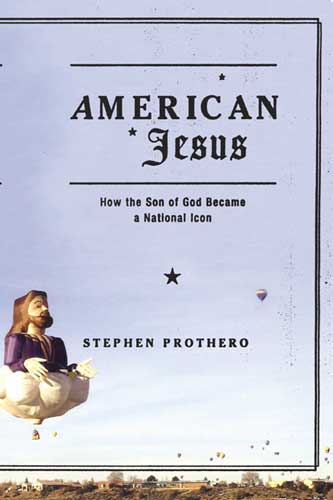
The crafting of Jesus into our own form is a major aspect of Stephen Prothero’s American Jesus. A fascinating romp through a bizarre collection of made-over Jesuses, Prothero’s book should be required reading for anyone interested in civil religion or Thucydides. Even a religion prof from my alma mater, however, didn’t fully convince me that anybody really understands who Jesus was. Such is the way with all truly great individuals.

Unlike some commentators who are clearly upset by Elton John’s summation of Christianity’s founder, I am a bit more circumspect about it. No one has cornered the market on Jesus. As hard as various Christianities have tried, Jesus still emerges in divergent forms to diverse individuals and populations. From Superstar to “super-intelligent gay man,” there is no doubt that Jesus left an eternal imprint on the human population of this planet and that those who believe in him will always portray him in their own image.