Politicking

It was weird seeing my face on a 27 x 40 poster.  When I went to give my campaign speech I was wearing dress clothes that I’d bought at Goodwill.  My “campaign manager” said I did a great job, being witty and somehow confident.  I didn’t win.  Still, my stint in politics was not yet over.  The next year one of the presidential candidates asked me to be his campaign manager.  I took on the job with gusto, and, claiming no credit, I would note that he won.  So where was all of this politicking going on?  At the United Methodist Church Conference Youth Council.  I ran for council secretary one year, and lost.  I kept the poster with my face on it for a few years but the ink faded and the paper was cheap, and besides, I’ve never considered myself much to look at.

Thinking about the resources allocations (I didn’t pay for the poster—couldn’t have if I’d wanted to), I have to wonder about the priorities of the church.  Of course, it was only much later, after I’d gained significant seminary experience myself, that I realized just how political a job “ministry” is.  Yes, I had students while I taught in seminary, already strategizing on how to become bishop.  It was a political game.  Such games are no fun without power.  And money is power.  So maybe the Western Pennsylvania Conference was funding some learning experiences on the impressionable minds of the young.  It just took me a few extra years to catch on.  (Some things never change.)

I dislike politics.  Even now I wouldn’t feel compelled to do anything beyond voting my conscience were it not the clear and obvious danger that we’re in, courtesy of what used to be a conservative political party.  Any party that can’t keep a demagogue from receiving its nomination has embraced fascism and that’s a perilous road to travel as Germany and Italy discovered about a century ago.  My dislike of ecclesiastical politics certainly played a large role in my decision not to pursue ordination.  I’ve been a church insider, and what happens at board meetings?  Politics.  The person in the pew often doesn’t realize just how political religion is.  I learned Robert’s Rules of Order from church meetings.  My nomination to elected office in the organization led nowhere.  I was left wondering if there’s anywhere left that politics don’t apply.  The print on the poster faded.  The very last time I unrolled it, it was completely blank.


Wachet auf

I have a proposition.  Some folks in town have a big “Anti-Woke” (aka, “asleep”) flag on their house, along with various Trump paraphernalia.  Since the Republican Party has largely become reactionary and would, admittedly, still prefer to be asleep, perhaps Democrats should adopt Buddha as a symbol.  I know this would be dangerous in a nation that prides itself as being the city set on a hill, but “buddha” means “awoken one.”  I’m not a Buddhist but I have no problem with it.  The Eightfold Path makes a lot of sense to me.  In any case, a good symbol is something to be cherished.  I think of Gordon Deitrich having a Qur’an in his house, even as a gay man, in V for Vendetta.  Symbols are important.  The anti-woke seem to have forgotten Matthew 24.42 “Watch therefore: for ye know not what hour your Lord doth come.”  The Bible generally advocates wakefulness.

Photo by Mattia Faloretti on Unsplash

Trump-branded Christianity is a strange beast.  Certainly the use of a Buddha symbol would become a cudgel.  Ironically so, for a faith that promotes nonviolence.  The “foreignness” or “not-Christianness” outweighs the positive outlook it entails.  Any religion that advocates violence should reassess its principles.  Buddhism isn’t perfect—no religion is.  The basic ideas of right view, right intention, right speech, right action, right livelihood, right effort, right mindfulness, and right concentration work well enough with Christianity, as Thomas Merton discovered.  For some, however, the Asian outlook (overlooking that Christianity began in Asia) is a deal-breaker.  Strange for a global religion.  Not so unusual for those who prefer to be asleep because Fox News sings them a lullaby.

One of the most stirring Christian hymns is “Wachet auf, ruft uns die Stimme,” based on a Bach cantata.  Perhaps better known as “Sleepers Awake,” the words take their origin from Matthew 25, the parable of the ten virgins.  If I recall correctly, the virgins ready to be woke are those who fare better in this tale.  They’re less concerned with condemning other religions and more interested in being able to wake and trim their lamps swiftly when the time comes.  As I told a friend the other day, I’m an unrepentant idealist.  I do believe that we have it within ourselves to treat all people as having inherent worth and dignity.  The real draw to having Buddha is a symbol would be the introspection.  Instead of telling other people how to live, the principles are applied at home.  Of course, a person has to want to wake up for any of this to work.


Just Ask

I see a lot of headlines, and not a few books, that puzzle over something that there’s an easy way to resolve: why do evangelicals (I’m thinking here of the sort that back Trump despite his pretty obvious criminal, predatory nature) think the way they do.  The solution is to ask evangelicals who’ve come to see things a bit differently.  I’m not the only one, I can assure you.  Many professors of religion (particularly biblical studies) and not a few ministers came from that background.  If they were true believers then, they can still remember it now.  At least I do.  I was recently reading a report in which the authors expressed surprise that evangelicals tend to see racism as a problem of individual sin rather than any systemic predisposition society imposes.  To someone who grew up that way, this is perfectly obvious.

I’m not suggesting this viewpoint is right.  What I am suggesting is that there are resources available to help understand this worldview.  To do so, it must not be approached judgmentally.  (I sometimes poke a little fun at it, but I figure my couple of decades being shaped by it entitle me to a little amusement.)  I don’t condemn evangelicals for believing as they do—that’s up to them—I do wish they’d think through a few things a bit more thoroughly (such as backing Trump).  I understand why they do it, and I take their concerns seriously.  I know that many others who study religion, or write articles about it, simply don’t understand in any kind of depth the concerns evangelicals have.  It’s only when their belief system impinges on politics that anybody seems to pay attention.

Maybe this is a principle we should apply to people in general.  Pay attention to them.  Listen to them.  Care for them.  Relentless competition wears down the soul and makes us less humane.  Religions, for all their faults, generally started out as means for human beings to get along—the earliest days we simply don’t know, but there is a wisdom in this.  In any case, if we really want to know there are people to ask.  Who’ve been there.  Whose very profession is being shoved out of higher education because it doesn’t turn a profit.  Learning used to be for the sake of increasing knowledge and since that’s no longer the case we see guesswork where before it would’ve been possible to “ask an expert.”  I often wonder about this, but as a former member of a guild that’s going extinct, I simply can’t be sure.


Monopoly by Statute

The Bible is an odd book.  It is foundational for the modern world, no matter how much we might want to deny it.  Even so it’s a strange book.  The King James Version (KJV) of the Bible is a masterpiece of English literature.  There’s not one King James Version, however, as several variants exist.  Nevertheless, the KJV remains quite popular among some religious groups and it is still studied in English Departments as part of our cultural heritage.  It is also in the public domain, which means anyone can print and sell it.  Unless, of course, you wish to do so in the United Kingdom.  Here’s where the story gets interesting.

Because of England’s troubled religious history—remember the whole Catholic v. Protestant monarch thing?—the printing of religious books became a contentious issue shortly after the adoption of the printing press.  In 1577 a monopoly on Bible printing went to one man, Christopher Barker, the Royal Printer.  Ostensively to control the version of the Bible approved for use in the Church (of England), this royal privilege became law.  In perpetuity.  Now rights, as commodities, can be bought and sold.  And this happened from time to time.  Cambridge University, however, had been granted a royal charter earlier—also perpetual—to print “all manor of” books.  Since this arguably included the Bible (a lucrative business) it wasn’t prevented from printing them as well.  Oxford University was granted a similar charter some years later and so the two ancient universities and the Royal Printer were the only ones allowed to print the Bible for sale in the United Kingdom (except Scotland, but that’s a story for a different time).

Image credit: Daniel Nikolaus Chodowiecki, public domain via Wikimedia Commons

This privilege, which still exists on the books, did not apply to later versions of the Bible.  The KJV became wildly popular and really wasn’t challenged much for over two centuries.  By the nineteenth century British lawmakers, presumably, had better things to do than argue about who could print the Bible.  Meanwhile other translations divided and conquered the profits coming in from the sale of what had been, in essence “the” English Bible.  As late as 1990 the Royal Printer status landed with Cambridge University, so the sale of rights continues.  A similar story accompanied the Book of Common Prayer, which has always been in the public domain but can only be printed in the UK by the two major university presses.  The story of the Bible is a fascinating one, and since it has shaped western civilization, it seems appropriate to give it the last word: “where your treasure is, there will your heart be also.”


Squeaky Clean?

A New York Times story, apart from the expected misunderstanding of actual Evangelicals, made me sad.  The article points out that, especially since 2016, “Evangelicals” have taken to soft-core porn, cussing, drinking, and premarital sex.  In other words, Trump has given them license to behave like secular folks while still claiming the name “Evangelical.”  Why should this make me sad?  I lament the loss of place for those who grew up, like me, striving for clean living.  It’s an image—a mirage—rather than a reality, of course.  But still, if conviction holds, you can get pretty close to the ideal.  That vision of life has been occluded by a guy who runs for President because he cares only for himself.  Jesus, on the other hand, was all about caring for others.  Going as far as, if the Gospels are to be believed, sacrificing his own life.

Like fiscal conservatives, such legitimate Evangelicals now have no public voice.  One of only two political parties has become identified with an individual rather than ideals—what used to be called a platform.  I have Republican friends.  I grew up identifying as a Republican.  I also grew up as an Evangelical.  I studiously avoided things like bad language, sex, tobacco, and alcohol.  Even at Evangelical Grove City College I was a bit of an outlier for how seriously I took all these things.  Of course, studying history can be dangerous, particularly for ideologues.  Still, “clean living” had its own virtues.  Those who continue to try to live that way are swimming into a rip tide, it seems.  For some Trump seems like the Second Coming, sans the white horse.  And this, above all, is sad.

There are those who claim, often loudly, that religion is bad.  I agree that when a religion tries to force others to obey its standards it can quickly become evil.  Still, the baby should be left behind when the bathwater’s discarded.  Religion has led to much good in the world.  Hospitals, charities, and yes, “clean living.”  These things, along with retirement homes and affordable apartments for low-earners in their autumn years, are necessary to pick up the slack that the government leaves.  It is cause for sadness that the clean living camp has succumbed to Trump-style hypocrisy.  Heck, religion gave us the word “hypocrisy.”  The standards of classical Evangelicalism are often impossibly high.  If we look at current Evangelical leaders we find many, many skeletons in a house with many closets.  And a wagging finger warning the young, “Do as I say, not as I do.”


As We Know It

The end of the world, as we know it, is really more recent than we think.  Yes, Christians of a certain stripe have been looking for the second coming since the first leaving, but that detailed map of how we’re living in the end times, courtesy Hal Lindsey, is a new thing.  Here are the fast facts.

First and second centuries, Common Era: early Christians tended to think Jesus would “be right back.”  When that didn’t happen they began to look in the Bible for reasons why and started to develop theologies to cover the bases.

Late Antiquity to the Middle Ages: settled in for the long haul, theologians developed eschatology.  Although that sounds like a disease, it’s actually a system for thinking about how the end of the world will come down.  There were conflicting theories.  The two main flavors were premillennialism and amillennialism.

Early Modernism: Protestants came along and searched the Bible for minute clues to make into a system.  In response, postmillennialism became a thing.  Now there were three options.  Various phases were discussed: tribulation, resurrection of the dead, and the already-met millennium.

1820s: William Miller, a Baptist minister, began number-crunching and figured the end of the world would take place by 1843.  His followers, “the Millerites,” continued on after what was called “the Great Disappointment.” 

1830s: John Nelson Darby, a Plymouth Brethren leader, came up with Dispensationalism, a scheme that divides history into eras, or “dispensations.”  He thought we were living near the end of that scheme about 200 years ago.  The idea of “the rapture” was added to the other phases.

1917: Cyrus I. Scofield, published the Scofield Reference Bible.  A man with little formal education (and a “colorful” background), he applied Darby’s dispensations in his Bible, giving the United States a road map to the end times.

1970: Hal Lindsey, a seminary educated evangelical, published The Late, Great Planet Earth.  It became the best selling book (classified as nonfiction) for the entire decade.  New ideas, such as “the Rapture” and “the Antichrist” began to be read back into the Bible.  The book was made into a movie.

1976: David Seltzer, a Jewish screenwriter, penned The Omen.  The movie made use of Lindsey’s adaptation of Scofield’s adaptation of Darby’s ideas.  The wider public, seeing it on the big screen, believed it was about to happen.

2000: the world still didn’t end, either with a second coming or Y2K, as many predicted.  Round numbers will do that to people.  It didn’t stop predictions of the end of the world.

2012: the Mayan calendar gave out.  A movie was made.  People believed. Apocalypse averted.

2024: you fill in the blanks.

Image credit: Albrecht Dürer

Gather Round

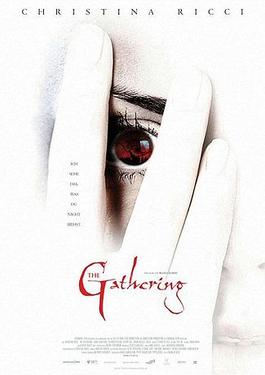
The church has been keeping secrets.  That’s the basic premise behind a fair raft of horror films.  Apart from giving those of us watching religion and horror quite a bit to talk about, it reinforces just how close the two are.  The Gathering is a film I missed when it came out, but one which has an interesting, if unlikely premise.  At times it reminded me of The Reaping, and at other times, the prequels to The Exorcist.  Cassie is a young American woman who loses her memory after being hit by a car near Glastonbury, England.  At about this time a deliberately buried church is being explored by an art history professor.  He asserts that it is the church Joseph of Arimathea built and represents, in its altarpiece, the earliest rendition of the crucifixion.  The clergy seem quite disturbed by this.

Meanwhile, Cassie recovers and is taken on as an au pair for the art historian and his wife (the one who hit her with the car).  The people of Ashby Wake stare at Cassie, as if they know her.  She has premonitions of several local people dying violent deaths.  The clergy learn that the altarpiece depicts those who came to watch Jesus’ crucifixion, not out of love or devotion, but simply for spectacle.  Since then they’ve been cursed and show up to watch various historic tragedies.  The clergy want the church, the earliest representation of the spectators, reburied.  The people of Ashby Wake include those of “the gathering,” indicating tragedy is about to unfold in that small town.  There is a twist ending I won’t reveal, but this is one of those horror films that rely on religion to make them work. 

Critics tend to dislike the film while viewers are divided on the question.  I actually enjoyed it, personally.  The concept of the watchers committed to bloodlust seemed different, particularly when put in the context of nascent Christianity.  It doesn’t handle religion as well as some horror does, but it’s a serious effort.  Why Joseph of Arimathea would want to have portrayed gawkers rather than those loyal to Jesus is one of the bigger questions left unanswered.  After the ending some of the unusual scenes earlier on make more sense.  But still no reason is given why an early church would have portrayed those not to be emulated.  As a horror film with no jump startles, but a slowly building dread, it fits the bill for some of us.  The “church keeping secrets” theme is one that should be explored further.


Hellish Fears

Aporripsophobia, the fear of rejection, and the fear of punishment (mastigophobia, or as I prefer, “spankophobia”) are closely related.  They define me.  Much of this comes from the fear of Hell, which I internalized early in life, along with the Calvinistic theology that backed it.  Some have thought that I’m “thin skinned” or afraid of criticism.  That’s not quite it.  I’m afraid of what criticism implies—I did something wrong and therefore may be punished for it.  What brings this on, all of a sudden?  Well, as I was getting ready to jog the other day a police car stopped in front of our house on a routine traffic violation.  My immediate thought was that I had done something wrong.  They were here for me, not the guy whose car they were attending.  Then this brought back that time in Boston.

I moved to Boston on my own, with all I had in a VW Beetle (old style).   I know now that the headache I had after that long drive was a migraine.  (I’ve had maybe a half-dozen in my lifetime, and they’re unmistakable.)  I parked the car, stumbled into my new apartment and went to bed.  The next morning I had a ticket for parking with the left tires to the curb (against the law in Boston).  I didn’t know it was illegal.  Even with a migraine I would’ve not parked that way had I known.  The receptionist at the police station actually said to me “Ignorance of the law is no excuse.”  That terrified me.  I thought it was only something Gilligan said.  If you don’t know all the laws how can you possibly avoid punishment?  And isn’t punishment rejection?

Some think I always have to be right.  They may not know the underlying cause—being wrong is to be subject to punishment.  And punishment leads to Hell.  When I was in Kindergarten the first time, I was held back partially because I was four but partially because I colored the triangle in the left corner purple instead of yellow, opposite to the verbal instructions.  It was because I don’t know my right from my left—I still don’t.  To me that first ever school correction was seared forever into my gray matter.  I’d done something wrong.  I was held back in school.  More likely than not, I was going to Hell.  I’ve known people to suggest, as does Richard Dawkins, that raising a child in a religion is child abuse.  I understand parents’ motivation, however.  You don’t want your child to go to Hell.  If they end up living in it all their lives I guess it’s a small price to pay.

Photo by Vadim Bogulov on Unsplash

Bigger Picture

One of the quirks of my thought process is that I tend to look for the bigger picture.  I’ve always done this and I suspect it drives some people batty when they ask me a question and I begin to answer from what seems to be a tangent.  (I also think this is why I performed well in the classroom.)  So, when I saw the article by Eric Holloway on Mind Matters, titled “Why Is Theology the Most Important Empirical Science,” I had to take a look.  Mostly a series of bullet-points that point out some of the religiously-motivated ideas that led to scientific discoveries, the article is useful.  My penchant for the big picture goes a bit broader, however.  The entire worldview in which the scientific process was born, and thus its underlying presuppositions, are religious.  Science and religion are the dogs and cats of the thought world but I’ve seen dogs and cats live happily together.

Science has always been with us.  Early peoples weren’t benighted troglodytes.  They observed, hypothesized, drew conclusions.  Science as we understand it, however, began in the Middle Ages in Europe, drawing on observations from earlier thought in the Arab world.  The context in that Arab world was solidly Muslim.  The Middle Ages in Europe were solidly Christian.  None of this discounts the contributions of Jews to the whole, it’s merely an observation regarding the larger cultural outlook.  Many of the principles of science even today (for example, that people are categorically different from other animals) are based on those religious worldviews.  We seldom go back to question whether we might’ve gotten something fundamentally wrong.  Meanwhile, the dogs began to chase the cats.

College as a religion major involved a lot of discussions about basic presuppositions.  Then questioning them.  Not much of this went on in the classroom (Grove City was, and is, a conservative Christian school).  The wonderful thing about higher education is the bringing together of people with different outlooks.  It was those after-hours conversations that helped form my questing nature.  I’d already started asking bigger questions when I was a child, annoying my parents and, I suspect, sometimes vexing clergy.  A single human mind is too limited to grasp it all, but it seems to me to deny religion a place at the table is to leave out massive amounts of human experience.  Of course, economics, the dismal science, seems well on the way to eliminating the study of religion in higher education.  And we will have lost, if this happens, a large piece of the bigger picture.

Photo credit: NASA

A Different Legion

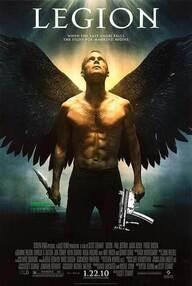
Religion and horror can play well together.  They can also be unevenly matched.  Although Legion has been on my list since shortly after it came out, my impression after having watched it is that the angels are strangely corporeal.  Their fights are physical with very little supernatural involved.  I suppose that’s why it’s generally classified as “action,” but the premise is one that suggests a bit more supernatural would’ve been welcome.  The writing suffers from any number of ailments, and the ending leaves you wondering just how good God is supposed to be in this telling.  I suppose a plot synopsis might help.

A pregnant waitress in a remote diner is nearly at term.  The Archangel Michael has come to earth in Los Angeles (get it?) and has armed himself to protect this unborn baby.  He comes to the diner where the owner and his son, his cook, and four customers are holed up against what they think is a demon attack.  Michael eventually reveals that the arriving hordes are not demons, but humans possessed by angels.  God has decided to wipe out the human race again, this time with angelic mercenaries.  If the waitress’s baby survives, however, the world will be saved.  So there’s lots of shooting, and although a white guy dies first, the only two Black characters are the next victims, of course.  To kill angels, it turns out, you have to shoot them.  Who knew?  In the end, which pits Gabriel against Michael, it’s revealed that God was testing the loyalty of his angels by giving them this task.  Mindless obedience, God thinks, is wrong.  If people have to be killed to prove it, so be it.

The theme of the messianic baby stays intact but goes nowhere.  At the end it’s unclear if the angel attacks are still going on, but the waitress and her boyfriend, along with the baby, drive around heavily armed, ready to fight.  Did the angels get the message that they are being tested by God or are they, like many Republicans, simply following the “leader”?  Seeing the title and knowing nothing of the story, I had assumed this was a movie about demons.  The “Legion,” of course, is angelic but there’s not a lot transcendent about them.  Even the use of wings (which are bulletproof), makes this feel like Dogma without the humor.  I knew religion would be involved in this horror, but I didn’t know how poorly it was played out.  Still, it would fit into Holy Sequel, if it ever happens.


Upon Further Occlusion

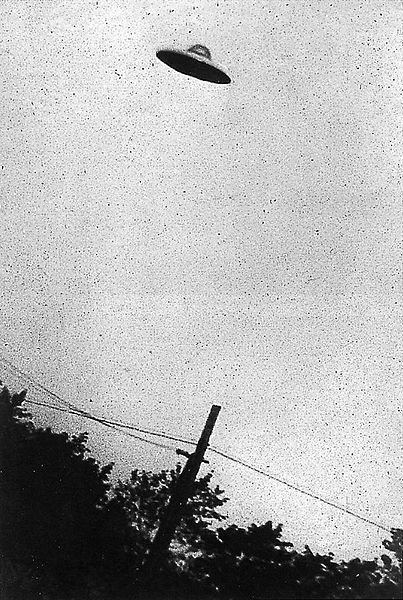
Admittedly the source is GBN, but the headline is irresistible: “Nasa ‘quietly funding’ theological conferences amid ‘demonic’ UFO fears.”  Essentially an interview with Nick Pope (no relation to “the Pope”), the story posits that NASA has been spending on theology because of fears that UFOs might be demons.  Nick Pope is a recognized ufologist, but the story doesn’t state where he acquired the information on NASA’s spending habits.  Pope did work for Britain’s Ministry of Defence, and has had a long-standing interest in UFOs.  And some US congressional members have stated that they believe said UFOs are demons.  I’d still like to see some documentation, however, before accepting that NASA’s paying for conferences in a discipline that’s on decline in academia.  Seems a little difficult to believe.

It also seems like this would be a more exciting theological conference than the one I attend.  Perhaps even stranger than UFOs is the use of the word “theology.”  In British English the word tends to mean what “religious studies” means in these (still) United States.  American English understands theology to be a distinct part of religious studies—the discipline that is occupied with philosophical questions within a specific tradition.  The one probably most familiar is Christianity, where historical theology and systematic theology are often on seminary curricula.  I’ve noticed more and more Jewish and Islamic theology cropping up in recent years.  I always take pains to say I’m not a theologian (in the American sense).  Maybe it would just be easier to consider UFOs.

Image credit: George Stock, public domain via Wikimedia Commons

There’s no doubt that theology gave us demons.  One of the points I was trying to make in Nightmares with the Bible is that that’s not entirely true.  Demons came first, and theology later.  People have, historically, always believed there were other entities that behaved with intelligence.  Generally they were more powerful than mere humans.  It was really only around the time that Christianity began that such entities were coded as purely evil.  Those who posit that UFOs are demons really aren’t up on their theology, which makes me wonder what kinds of conferences NASA is spending its money on.  If it is.  This seems plausible because the government often spends on things that are unexpected.  I personally would like to see a bit more of it funneled towards education, but I’m just one voter.  In any case, if there are such conferences, and if they’re British style theology, please put me on the mailing list.


Sinful Thoughts

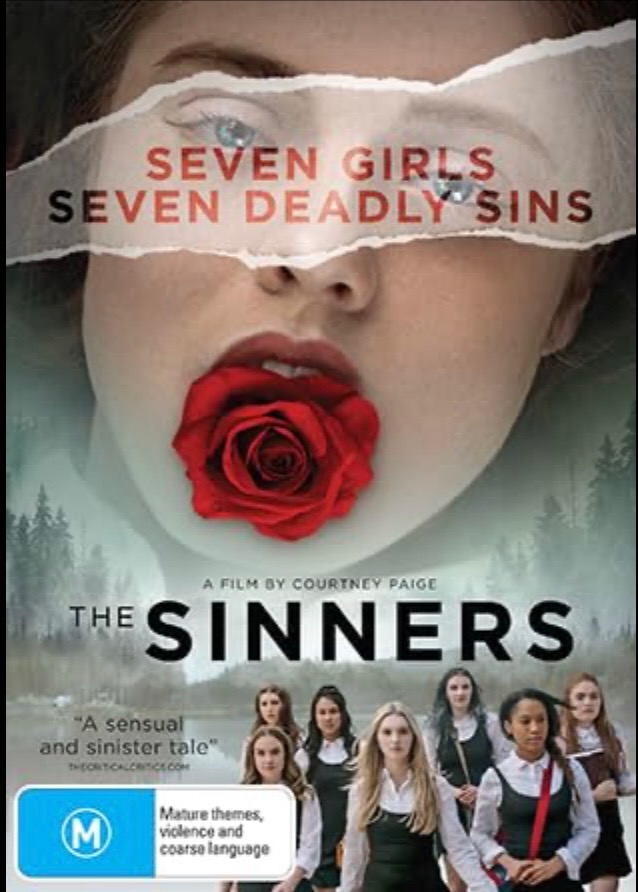
The driving force behind Holy Horror is the fact that the Bible appears in lots of horror movies.  More than might be expected.  Although I’ve moved on to other projects, I still keep an eye out.  There may not be time or opportunity in my life to write a sequel, but you can’t unnotice the Bible in The Sinners.  The title drew me in, as did its free status on Amazon Prime.  It’s a Bible-based flick, for sure, but even the basic description gets religion wrong.  I generally like movies by female directors, and this one was a project of Courtney Paige whose name, for some reason, sounds strangely familiar.  In any case, one of the biggest blunders movies like this make is that the religion doesn’t hang together.  Of course, it doesn’t say what variety of Christianity it is, but it’s of the literalist stripe.

Seven alpha females at a Christian school in a Christian community form a clique in which they’re each characterized by one of the seven deadly sins.  They’re lead by the pastor’s daughter, of course.  One of the girls keeps a journal in which she confides that she confessed their activities to the pastor.  The betrayed girls decide to scare the offender but she escapes when they’re intimidating her.  She’s found dead but then the other sinners start being murdered.  The police aren’t really effective and the girls try to figure out who’s behind this.  I won’t say who but I will say that it doesn’t really make much sense.  Scenes jump around and characters appear with little or no introduction—it’s disorienting.  But that religion…

I know enough PKs (preacher’s kids) to know they often aren’t as innocent as dad thinks (and it’s generally dad).  I also know that forced conformity of religion builds resentment and resistance.  But there’s something wrong here.  The pastor drinks wine.  Even the truly religious girls drop f-bombs.  One even attends a Satanist meeting with no explanation.  The pastor’s wife is having an affair.  The school librarian has sex with her husband at the school between classes.  They can all quote scripture, and often do.  What religion is this?  I couldn’t really engage with the movie because there were too many distracting religious gaffs.  Hey, I don’t mind when movies show the problems with religions—they’re fair game for commentary, after all.  But if you’re going to do it, try to understand the mindset of the religion you’re criticizing.  There’s a lot to think about in this movie, and it really isn’t that bad.  But for those who know religion there’ll be some question of which it is that’s under fire.  If I ever get back to Holy Horror I’ll say more.


Modern Gnostics

It’s not exactly a standard church.  At least I don’t think it is, but I’m just learning.  (That’s my life’s motto—I’m just learning.)  A convoluted path brought me to the Gnostic Catholic Union’s website.  I’m quite curious about this group.  I’m kind of busy, however, and I’ll hope to come back to it later.  You see, Gnosticism and Catholicism don’t sit easily together in my mind.  There’s a standard myth, accepted by many, that Christianity grew in linear fashion from Jesus through today’s weaponized Evangelical.  Or today’s Roman Catholic.  Or today’s—you fill in the blank—denomination.  Those of us who study the history or religions know the story is much more complicated than that.  It’s more like cladistics than theology.

It wasn’t so simple as a baby born in a manger.  Christianities were a variety of thought pools (not quite think tanks) in the first century.  There was a mix of Jewish ideas and messianic fervor.  One of those pools developed into a type of Christianity known as Gnosticism.  Gnosticism also had branches but one of the main ideas was that only initiates know a hidden knowledge necessary to make it work.  We still see this at play in both religious and secular organizations.  You need to know the secret handshake to be on the winning team.  Meanwhile different Christianities grew different ideas.  We rather simplistically think that Constantine unified them at the Council of Nicaea but you can bet that the guys leaving the council room did so with different ideas on the way home.

Roman Catholicism today is a very diverse religion.  You see, religious identity is something you tend to be born into.  Many people never question it because they’ve got other things to do with their lives.  Still, if you look you can see just how different “Catholics” can be.  It’s perhaps ironic because “catholic” means “universal.”  What’s really universal, however, is that people think differently about religion.  It’s the human condition.  There’s no reason a person can’t be both Gnostic and Catholic, just like there’s no reason you can’t be, say, a Unitarian-Universalist and a Hindu.  Religion is perhaps the most misunderstood of human enterprises.  Since most of us are too busy with other things we hire experts to tell us what to believe.  When enough of these experts are close enough in thought a denomination is born.  And it has many, many siblings.  I ran across the Gnostic Catholic Union quite by accident, but even those of us who are religionists by profession have limited time for everything.  I’m just learning.


Calculating Christians

I know some calculating Christians.  I use “Christian” as religion scholars do—it is the way people identify themselves, not necessarily what they are.  For example, I grew up learning that Christianity was God’s excuse for throwing a bunch of unknowing people into Hell.  Laughter all around!  Then I did something radical.  I started reading the Bible.  Spoiler alert: as you start to get near the end, you learn that Jesus and his early followers (except maybe Paul) promoted the idea that God is love and the only correct response to that is to love other people.  Of course, a religious founder, deity or not, can’t control what his/her followers will do.  Christianity quickly became judgmental.  “I’m going to Heaven and you’re not!”  Laughter all around!  In my life I’ve been the recipient of calculating Christians more than once.

Calculating Christians are those who, like ein U-boat Kapitän, try to figure out the best way to do the most damage to those they don’t like.  They will destroy your career—torpedoes away!—and then get on their knees to thank their vengeful god for sinking a satanic vessel.  And all the lives of Christians onboard are counted as collateral damage.  God’s good at sorting things out.  Laughter all around!  I’ve also known “Christians” who will target a family member when he’s down, and stressed out to the max, only to tell him he’s going to Hell and they’re just fine with it.  Laughter all around!  They do this without ever asking about the two seriously ill people in a family of three, or how you’re doing with that therapy you’ve had to start.  Jesus would do no less than kick a confessing sinner when he’s down.

There’s a reason Christianity is developing a bad name.  With the first compassionate Pope in centuries we find doctrinaire Catholics condemning his compassion.  Among the Fundamentalist camp we find those who would gladly die for the most hate-filled politician ever elected on these shores.  Calculating the end of the world is, after all, a tiring activity.  No matter that you’re wrong (you never consider the possibility and you never, ever try to weigh the facts), you calculate how to blow it up for everybody.  Laughter all around!  The only thing that keeps me sane, I believe, is knowing that many actual Christians out there know that such actions are taking God’s name in vain.  And that, they know, is against the commandments so prominently placed on courthouse lawns.

Pietro Perugino, The Crucifixion with the Virgin, Saint John, Saint Jerome, and Saint Mary Magdalene [middle panel], public domain, via Wikimedia Commons

Rocks and Philosophs

Porphyry is, apart from being a cool word, a kind of purplish stone that was prized for statue-making in antiquity.  It is also the name a Syrian philosopher gave himself in the third century of the Common Era.  Now, if you read widely about antiquity, as some of us have done, you’ll encounter the name Porphyry from time to time, but those of us who focused on older materials don’t pay him much mind.  I was reading about Porphyry recently, however, and did a little poking around to discover that he’d written a book called, in translation, Against the Christians.  Some historians speculate that Porphyry may have once been a Christian himself, but whether or not that’s true, he developed an antipathy to the sect.  I was curious about what his beef may have been only to discover that this book is lost.

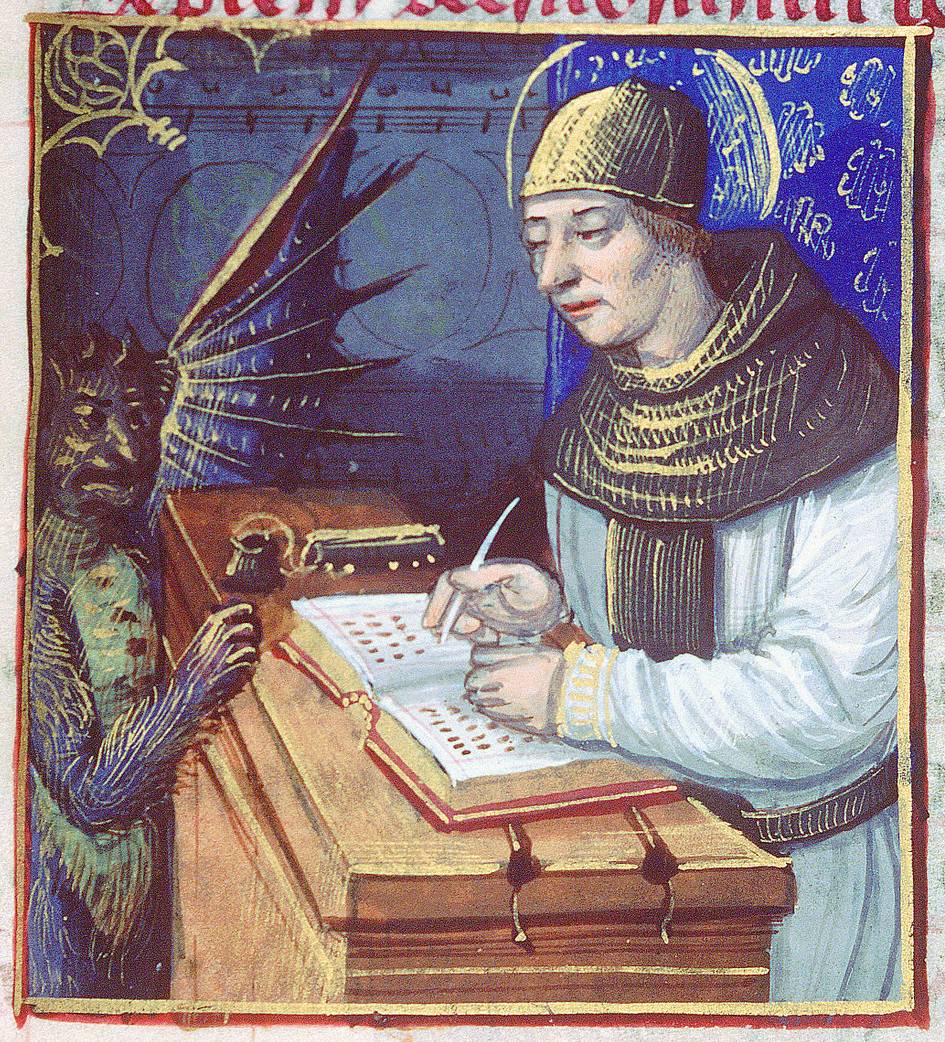
Now lost works in antiquity are the rule rather than the exception.  Literacy may not have been widespread, but those who could write did write, and often prolifically.  Human history was very well documented.  But tonnes of it went missing.  Wars have been part of that history and wars are notorious for destroying written records.  Also, much writing was on perishable materials that, well, perished.  That wasn’t the case with Against the Christians, however.  Porphyry’s work was purposefully destroyed.  By this point Christianity had taken over the Roman Empire.  Rather than accepting the challenge of a philosopher, officials censored and destroyed his work.  Ironically, all that survives are quotes from books of theologians who were trying to refute him.

This made me reflect on the book bans that are currently all the rage among some “Christian” politicians.  Such rearguard actions belie the confidence that imperial religions showcase.  A religion that’s afraid others might see the holes raises many questions, does it not?  It seems to come down to the idea that nothing has changed in two millennia, even though Jesus didn’t have a cellphone—not even one of those old flip-open kind—and much of what we know of nature was still many centuries in the future.  The fact is that we only try to silence those who disagree when we fear them.  Book bans pretend that they can hold the hands of the clock still and that all will remain as it was decades ago.  Learning, however, is a genie let out of the bottle.  Back in Porphyry’s day powerful bishops and emperors ordered his book banned and destroyed.  And we are all the poorer for it.