Halloween in December

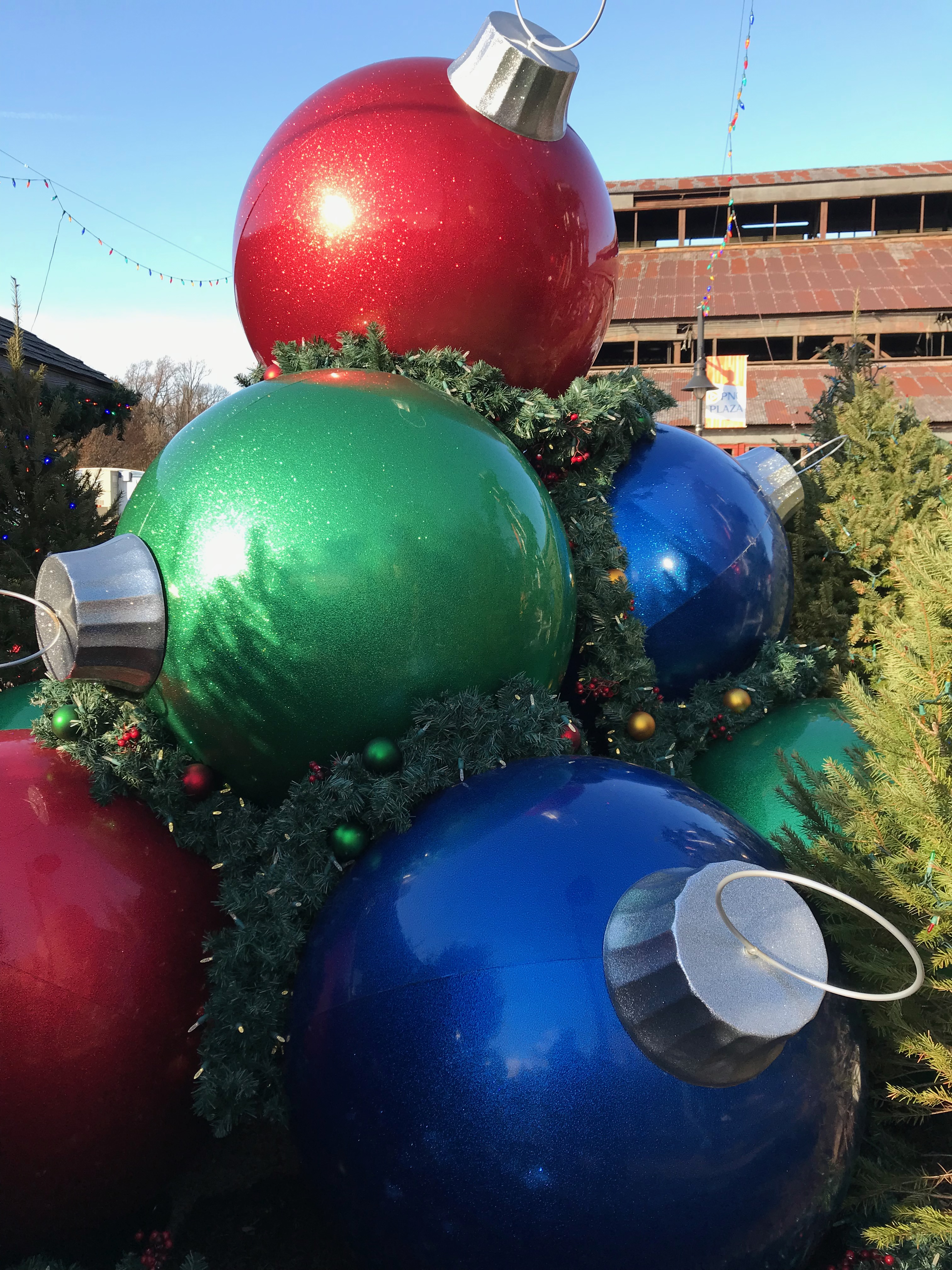
The wind was frigid.  We were still in the cold snap that layered the northeast in its gelid blanket for the first part of December.  We had advance tickets for Christkindlmarkt, a Bethlehem tradition.  As we wandered through the tents I was thinking of one of the few Facebook groups I follow, Halloween Madness.  Most of the posts are repurposed from the internet but the last few weeks, since Thanksgiving, the offerings have been blending Halloween and Christmas.  Most people don’t stop to think how closely related the two holidays are.  (I devote a chapter to Halloween in Sleepy Hollow as American Myth, where I explore this connection in a preliminary way.)  But in this bleak December—we’ve seldom seen the sun for more than a couple hours at a time since the aforementioned Thanksgiving—my thoughts emigrated towards horror.

For those of you who’ve never been to Christkindlmarkt, it’s a germanic themed market consisting of four (or more) large tents, full of vendors.  Many of them are Christmas themed, but not all.  Those that are Christmas themed tend toward the Currier and Ives version of the holiday, but some consider the more ghostly side of the season.  Although I didn’t see any booths explicitly devoted to horror themes or monsters, a few of them had a bit of this aesthetic to them.  I’m no fan of capitalism, but I have to wonder if this isn’t a missed opportunity.  I think there’d be some fans.  I do enjoy Christmas for its symbolism and optimism and coziness.  I really do.  But when I have a few free moments in the holiday season I sneak in reading a scary book or watching a horror movie.  There is a connection, but you have to study the holidays to see it.

I fear that this year I was trying pretty hard to preserve any bodily warmth between the tents and didn’t really have much time to think about it until the next day.  I’m always mindful that Edgar Allan Poe’s “The Raven” is set in December.  And that both Charles Dickens and M. R. James associated Christmas time with ghosts.  I suspect most people, however, prefer the cheerful, happy side of the holidays.  I don’t blame them.  Life can indeed be harsh, as harsh as this windchill, for much of the rest of the time.  There are some of us, however, who do find a little lift by peering into the darker corners, even at this festive time of year.  And with natural light in such short supply, there are a lot of shadows about this chilly December.


Shipping Tracking

It’s an anxious season. What with porch pirates being a thing and the holiday season near, I think it’s about time to rate shipping trackers.  Please, I am not rating the actual delivery persons—theirs is a difficult job, I know.  On the receiving end, there’s always an anxiety that an item left on the porch will be raptured before discovered by the person who ordered it, so I try to arrange my schedule to be home on delivery day, during delivery hours.  The post office (USPS) has always been a little suspect.  I’ve had “item delivered” messages from them only to find it wasn’t even out for delivery that day.  And don’t get me started about two local distribution centers that appear to have no idea what state they’re in, let alone what other towns might be nearby.  USPS isn’t near the top of my list.  With apologies for the spoiler, Amazon understand logistics.  I know many people who don’t like Amazon for various reasons, but say what you will, they generally know where your package is, in my experience.

There is a service on the bottom of the list, regarding trackers, but before I get there I need to say that these are shipping companies we’re discussing.  Their raison d’être is to move items from one place to another.  I also realize that the older companies that ship had to integrate computer tracking into already existing structures.  USPS was around centuries ago, and it’s understandable that integrating tech into the rather straightforward process of getting an item from A to B is a challenge.  I’ve worked for companies that have tried to integrate tech into pre-existing structures, and it’s always messy.  Still, it would seem that if your business is delivery and everything from GPS systems and advanced software make that more efficient, why wouldn’t you integrate it?

Which brings me to the bottom of my personal list.  I’m sorry UPS (not USPS), it’s you.  The tracking info is often virtually junk.  The number of times I’ve seen a package to be delivered that day only to have some half-hearted excuse, such as “Delayed” pop up on the timeline, with no explanation, followed a day or more later with a vague “we’ll get it to you when we can” message, hardly inspires confidence.  All the more’s the pity since UPS was the “United Parcel Service,” with the goal of being a package delivery service industry.  And it was founded more than a century ago.  You’d think that they might be able to scrape together a few dollars to hire some kind of systems architect to figure out where the software’s falling down on the job.  Of course, I should be charitable with the spirit of the season. It’s just that I’m anxious.  There are porch pirates in the neighborhood.


Eve of Winter

“You must live like a monk!”  These were the words of one of my bosses.  I really couldn’t deny it.  I try to lead a quiet life of reading and writing and I do try to avoid extravagances.  My contemplative life suits me.  Every now and again, however, busy stretches come and distort my perspective.  Thinking back over this autumn on the eve of December, that season has been one of those times.  So much so that I haven’t been able to watch much horror, which is one of my usual seasonal avocations.  I suppose it started when a scammer emptied out our bank account in early September.  That entire month is a blur of fear, depression, and anxiety.  Those emotions have settled down, but the trauma and financial loss have remained.  

Toward the end of the month, my daughter moved.  Thankfully not too far away, but parents often feel the need to help when their only child is not yet well established in a new area.  October grew so busy that we had no time to decorate for Halloween.  We did manage to carve some pumpkins, but the weekends—the only time anything for real life actually gets done—were all eaten up and I entered November with that crowded head space that accompanies a monk lost in the secular world.  Looking back, I finished fewer books than usual and I’ve already mentioned about the movies.  This year I was pretty sure I’d be attending the American Academy of Religion and Society of Biblical Literature annual meeting in November.  I had missed the past two years, not really mourning the loss, but preparing for the trip occupied part of October.  Halloween came and went, taking the first weekend of November with it.

In November we had guests come and the second weekend disappeared.  The next weekend I had to get into high gear for my trip to Boston.  That was when I had the flu shot that wiped out a weekend.  I awoke groggily on Monday realizing that Friday I’d be on Amtrak’s Northeast Regional.  I’d never been to Metropark before and the conference itself ate up the fourth weekend in November.  After that, we turned around and spent Thanksgiving with some longtime friends in New Jersey.  Then we learned a Pennsylvania friend had spent the holiday alone and decided to make a celebration for them yesterday.  So here I find myself on the eve of winter with a fall that somehow disappeared.  Busy spells can be refreshing, even for the monkish.  But tomorrow is back to work as usual as December sets in.


Hoping for 2025

Those who predict, as pollsters repeatedly remind us, can’t really prognosticate.  In ancient times some prophets were thought to be given (usually conditional) views of the future directly from God, but even these weren’t fail-proof.  Nobody knows what 2025 holds for us.  I love holidays, but New Year’s Day is one of the more chancy ones.  I don’t stay up until midnight because if I do I don’t sleep that night (I tend to awake just a couple hours after midnight most days), and I don’t make resolutions since I try to correct errors in my life as soon as I find them.  Maybe New Year’s could stand a makeover.  Something beyond staying up late and drinking.  In my experience, the next year comes anyway.  And it should be an opportunity for hope.

Interestingly, although attempts have been made to Christianize the day, it tends to remain secular.  The current date was established in the west because of the rebranding of solstice celebrations to the birth of Jesus, but the religious elements never really stuck to New Year’s Day.  It marks a clean slate for taxes and other financial resets.  Importantly, it’s a day off work.  Maybe we should rebrand it.  Honestly, I don’t have any suggestions myself—this sounds like a job for a committee.  Who wouldn’t want to be on a holiday committee?  And holidays do evolve over time.  When it was Columbus Day many employers didn’t make it a paid holiday.  Rebranded as Indigenous Peoples Day, some progressive companies did.  See what I mean?  Holidays are what we make them.

The more I think about this, the more I wonder if we shouldn’t reinstate the twelve days of Christmas.  Epiphany (aka Insurrection Day) comes on January 6, and, pre-Adam Smith the twelve days lasted until then.  New Year’s could be one among siblings.  I’m sure that if we tried hard enough we could come up with some branding for each day.  The Brits already have Boxing Day on the 26th.  The Scots make the 31st Hogmanay.  Our task, should we choose to accept it, would be to fill in the 27th through the 30th and January second through the fifth.  If we divide that up and send it to committee I’m sure we could come up with something.  It seems we already have the ten lords a-leaping lined up.  Said lords prefer having two more work days this week, I know.  Perhaps New Year’s, or even the Christmas season, could stand a bit of workshopping so we can really catch up with our sleep.  Here’s hoping, for 2025.

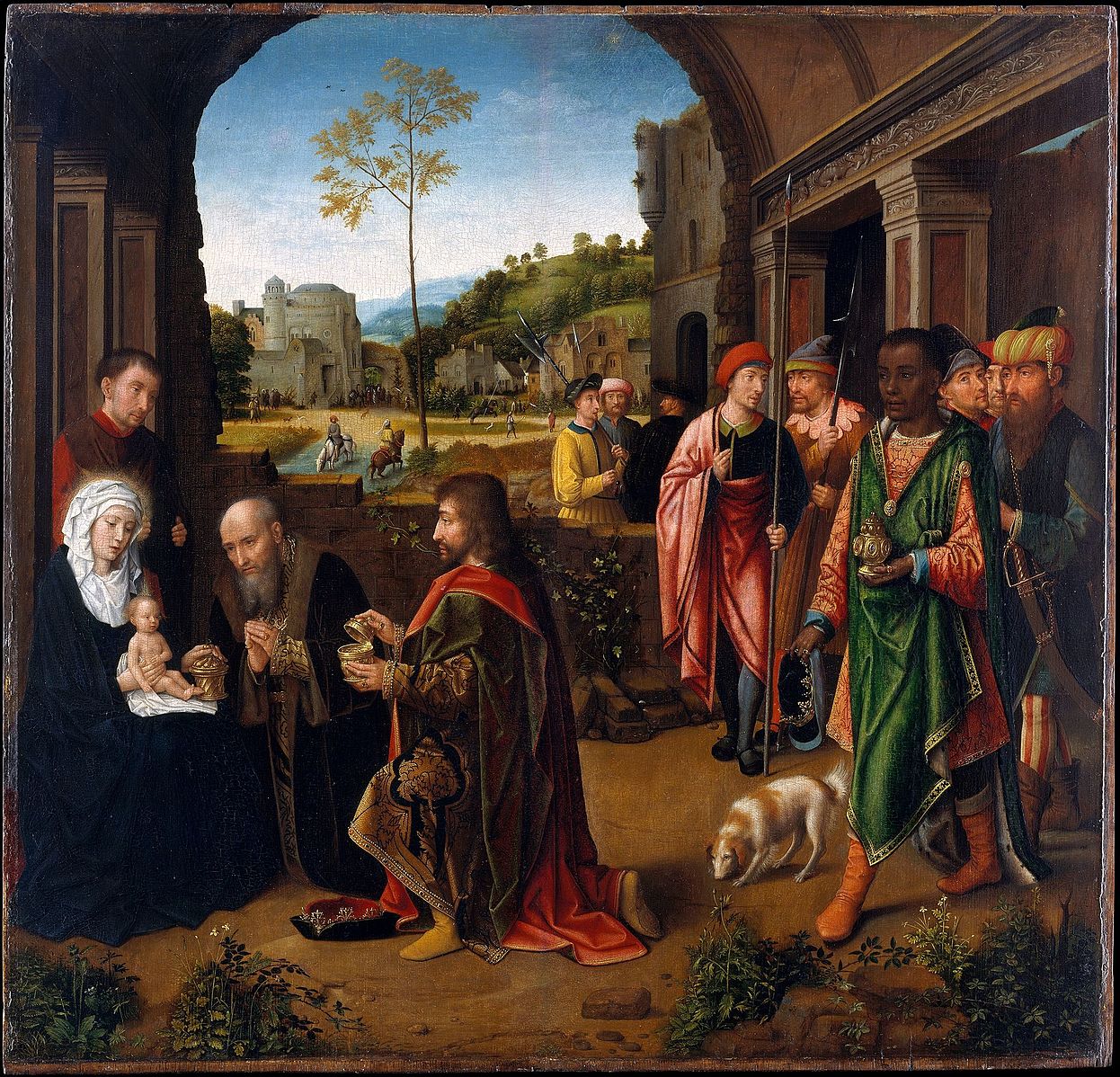
Let’s give them time to arrive! Image credit: The Adoration of the Magi – painting by Gerard David, Creative Commons CC0 1.0 Universal Public Domain Dedication by the Metropolitan Museum of Art

A Christmas Parable

And it came to pass in those days, that there went out a decree from Donald Trump that all the world should be taxed.  2 (And this taxing was first made when American troops were pulled from Syria.)  3 And all were to be taxed, every one to help build a wall.

4 And Joseph had just bought a house in Nazareth, but had to go into the IRS office, unto the city of record, which is called Bethlehem; (because he was of the county of Northhampton:)  5 To be taxed with Mary his espoused wife, being great with child but no insurance.  6 And so it was, that, while they were there, the days were accomplished that she should be delivered at St. Luke’s. 7 And she brought forth her firstborn son, and wrapped him in swaddling clothes, and laid him under a bridge; because there was no housing for them in Bethlehem.

8 And there were in the same country soldiers abiding in their bases, keeping watch over their radar by night.  9 And, lo, drones appeared before them, and the glory of aliens shone round about them: and they were sore afraid.  10 And the ETI said unto them, Fear not: for, behold, I bring you good tidings of great joy, which shall be to all people.  11 For unto you is born this day in the city of Bethlehem a Democrat, which is the Prince of Peace.  12 And this shall be a sign unto you; Ye shall find the babe wrapped in swaddling clothes, lying under a bridge in Bethlehem. 13 And suddenly there was with the UFO a multitude of the heavenly host praising democracy, and saying,  14 Glory to the American ideal in the highest, and on earth peace, good will toward women and men.

15 And it came to pass, as the drones were gone away from them into heaven, the soldiers said one to another, Let us now go even unto Bethlehem, and see this thing which is come to pass, which the ETI hath made known unto us.  16 And they came with haste, and found Mary, and Joseph, and the babe lying under a bridge.  17 And when they had seen it, they made known abroad the saying which was told them concerning this child.  18 And all they that heard it wondered at those things which were told them by the soldiers.  19 But Mary kept all these things, and pondered them in her heart.

20 And the soldiers returned, glorifying and praising democracy for all the things that they had heard and seen, as it was told unto them.

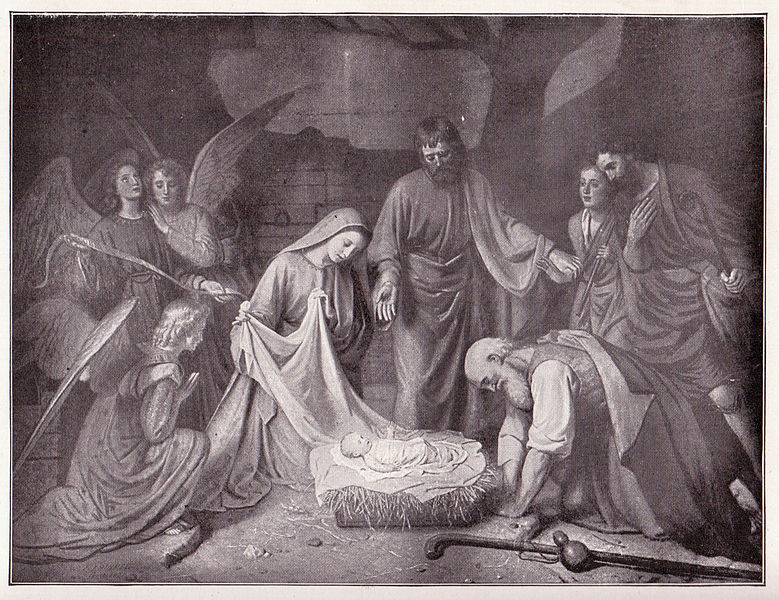
Image credit: The Harmsworth Monthly Pictorial Magazine, Volume 1 1898-9; public domain via Wikimedia Commons

Eves and Holidays

If you stop in to this blog for reading about horror movies, don’t worry, there’ll be plenty of that to come.  One thing everyone who knows me knows is that I believe in holidays.  Capitalism has been killing us for centuries, but since I began having to do a 9-2-5 job, I feel the grim reaper’s approach more steadily.  Day after day after day being eaten up by work and leaving so little time to be who I really am.  I invest a lot in holidays because they break, if only temporarily, capitalism’s death-grip around our throats.  And today is Christmas Eve.  Not technically a holiday, I’ve worked for employers who, Scrooge-like, don’t consider this a paid day off.  You want to mentally prepare for Christmas (the only paid holiday in the season), you cash in a vacation day.

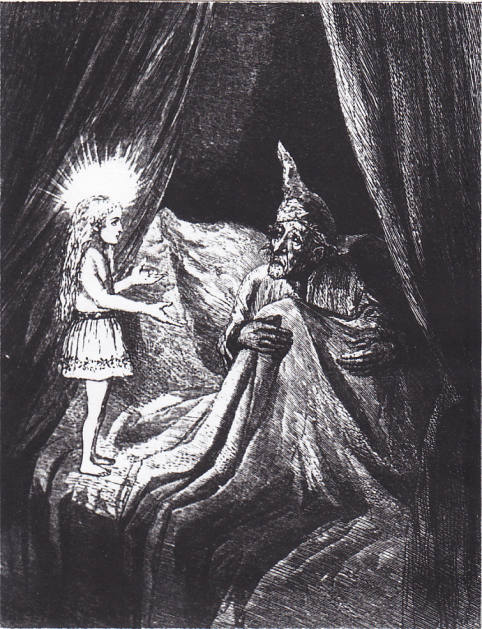
Image credit: Sol Eytinge, Jr., The Ghost of Christmas Past. Public domain via Wikimedia Commons

As influential as Charles Dickens’ A Christmas Carol is, late capitalism simply doesn’t get  the message.  Studies show, consistently, that work in this era is more efficient when workers have more time off.  Now, I’m not so naive as to realize that some professions require work on holidays.  After all, I trained for ministry for many years, and Christmas is always a work day in that profession (even if nobody comes to church).  Emergency workers of all sorts have to be at least on call for holidays.  Police can’t assume citizens will behave just because it’s a holiday.  But such professions, I profoundly hope, have other payoffs.  I entered a profession (professoring) partially because of the division of time.  (And it is one of the few things I’m very good at.)  People should have fallow periods.  Why is Christmas Eve still a work day?

Scrooge is clearly still in charge.  I, for one, will not shed a tear when capitalism dies.  I’ll predecease it, I’m pretty sure, but even so, I welcome a world where people’s needs come before the plutocrats’ profits.  A friend of mine always insists on saying that we don’t live in a democracy but a plutocracy.  Seeing the election results last month only confirms that he’s right.  As I recently wrote here on this blog, the howling is most fierce before the new dawn.  And lasting change must take place slowly.  Sudden shifts only lead to more sudden shifts.  Stable growth is slow.  I’m sure influential people don’t read this blog, the humble musings of an unfluencer, but if they do, there’s a simple plea here.  Consider the holidays.  Read Dickens, and have the courage of your convictions afterwards.  And yes, a blog post (unpaid) will appear on Christmas.


This Is Halloween

He was probably trying to impress his wife with his wit.  I was in a department store—a rarity for me.  I was wearing a mask, because, well, Covid.  As this guy, older than me, walked by he said “Halloween’s over.  Take off your mask.”  It bothers me how politicized healthcare has become, but what bothered me more was that it was only October 20.  It wouldn’t even be Halloween for another 11 days.  What had happened to make someone think Halloween was over so early?  Yes, stores had switched over to Christmas stuff by then.  In fact, I wandered into another store where Christmas carols were playing.  Capitalism seems to have wrenched the calendar out of order.  We’re tired of All Hallows Eve before it starts.  In fact, just the day before we’d gone out to a pumpkin patch to get our goods and the carved pumpkins are now showing their age.

If that little exchange in the store had been in a movie, it would’ve been a cue for me to transform into some big, scary monster.  Of course, Halloween is what it is today because of relentless marketing.  And a handful of nostalgia from people my age with fond childhood memories of the day.  For some of us, however, it is a meaningful holiday in its own right.  It makes us feel good, even after we’ve grown out of our taste for candy.  It is significant.  Christmas is a bit different, I suppose, in that there is nothing bigger following, not until next Halloween.  Besides, Christmas is supposed to go for twelve days.  The fact that Halloween is a work day makes it all the more remarkable.  We have to work all of this out while still punching the clock.

I had really hoped to be able to get to Sleepy Hollow this Halloween.  Sleepy Hollow as American Myth tries to make the case of how that story and Halloween came of age together.  It is the iconic Halloween story, what with ghosts and pumpkins and all.  And the month of October is spent with scary movies for many people.  This month I’ve posted about horror movies every other day, pretty much, trying to connect with my audience.  If that is my audience.  I tend to think of Halloween as a community.  Those of us who, for whatever reason, think of this as our favorite time of year.  A time when perhaps we don’t feel so stigmatized for liking what we do.  A time that we’re not hoping will shortly end so we can get onto the next thing.  It may have been meant as a joke, but I wasn’t laughing.  Happy Halloween!


Christmas Monsters

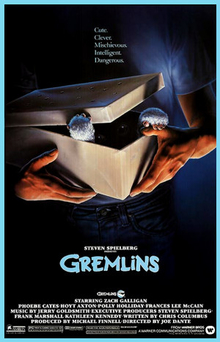
Gremlins holds up pretty well with the years.  My renewed interest was sparked by holiday horror—I had last seen the movie in a theater in 1984, when it came out.  Having grown used to CGI, I was surprised to re-learn that the gremlins were puppets but that it was so obvious was also a surprise.  Although comedy horror, or horror comedy, had been around for years at that point, as critics pointed out, the contrast here was stark.  This could be a kid’s movie (and was one of the reasons behind the shortly new PG-13 rating) but the nasty gremlins could be unexpectedly brutal.  I’d forgotten that Billy’s mother was so effective—killing a gremlin in a blender and another in a microwave.  The story has been retold and/or parodied often enough that a summary isn’t necessary, but given my recent interest in both gremlins and holiday horror, it’s worth a few moments’ reflection.

Holiday horror is more than a scary movie that happens to occur on a holiday.  In my definition, the horror has to derive from the holiday itself.  In Gremlins the gift of Gizmo is based on the fact that it’s Christmas, otherwise Rand wouldn’t have been looking for a gift for his son, starting the whole chain of events.  More than that, the reason I didn’t go back to the movie again in my college and grad school years was the story Kate tells about her father on Christmas.  Like some parents, I felt like what was a fun little story was a bit too distressing given the holiday setting.  Would the story have worked set at a different time of year—remember, it was released in summer—with the commentary that it makes about consumer culture?  No, this had to be a Christmas movie and the fear comes from that fact.

The gremlins are given minimal backstory here, although Murray Futterman tells Billy and Kate  that gremlins come from foreign merchandise and they tinker with machines.  Gremlins had been used in horror before, and given that the canon of classic movie monsters was being set from the thirties through the fifties (gremlins appeared as monsters as early as the forties) they fit right in.  They’re inspired monsters.  People naturally feel vulnerable on planes and monsters in the atmosphere can be particularly frightening.  And the fact that technology frequently malfunctions, well, wouldn’t it be nice to have a monster to blame?  Reading up on the movie made me curious to see the sequel, which, it seems wasn’t too badly received.  I’m glad to have used a small portion of the holiday season to have refreshed my memory.


Ninth Day of

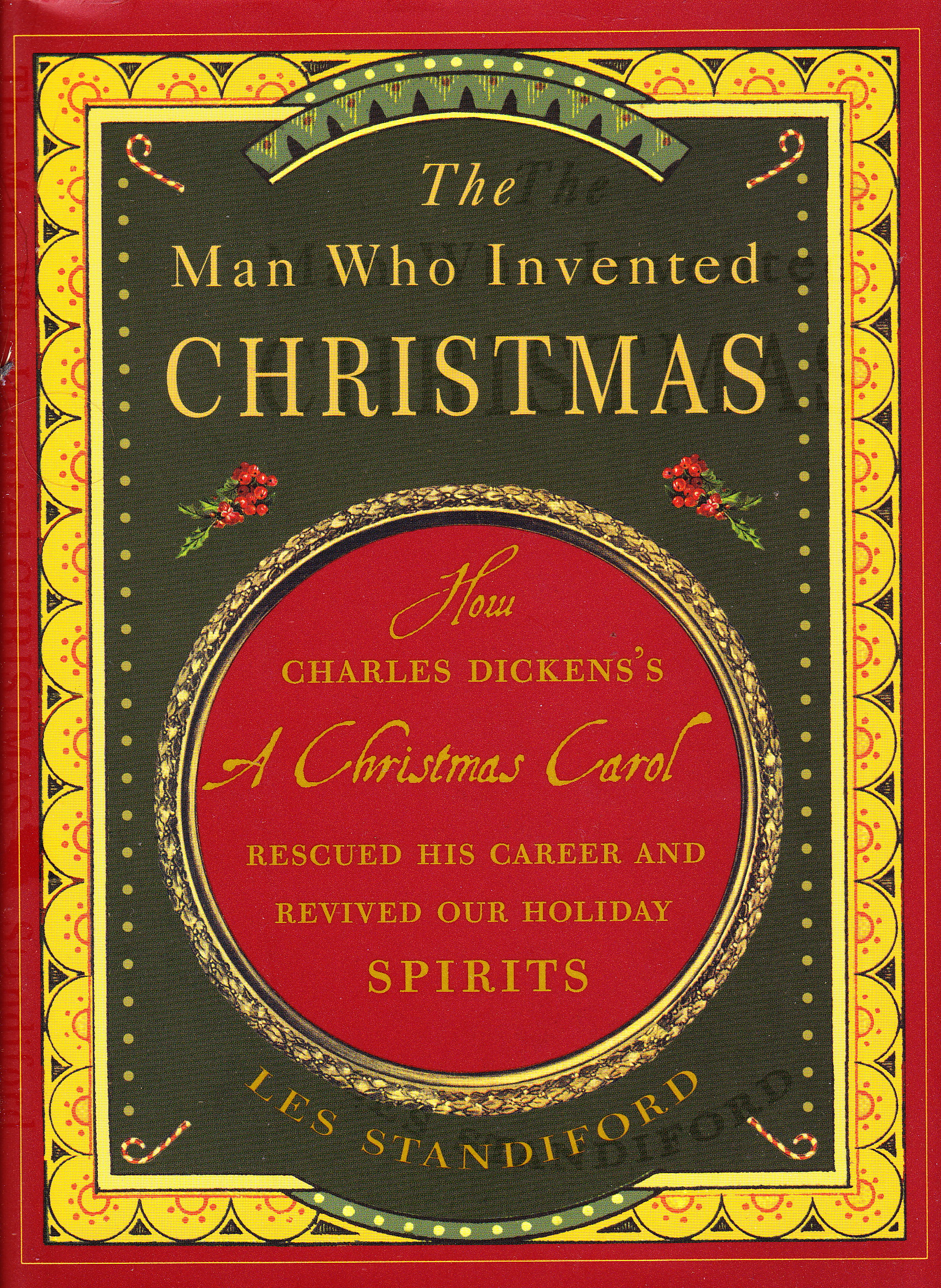
I read Les Standiford’s The Man Who Invented Christmas back in 2017 and learned a lot from it then.  Some of what I read on the bus, however, has faded a bit with time and I was curious to read it again in the light of the reading I’ve done about Washington Irving.  Irving was a bit older than Charles Dickens and had, it seems, given Dickens the idea of writing, first, a sketch book (Sketches by Boz), and second, writing about Christmas.  From what I’ve read about Irving, he had a cautious liking of Dickens but wasn’t terribly impressed.  Standiford does note that it was Irving who suggested an American tour to Dickens (it didn’t turn out well) but he (Standiford) indicates that Irving was a staunch fan of his English colleague.  Were I able to spare the time, I would follow footnotes and read letters to see if I could get to the heart of the matter.  Of course, I’ve become much more interested in the history of modern literature in recent years.

It would be difficult to overestimate the influence of Dickens in English literature.  As Standiford points out, he helped to invent novel publication as we know it.  Although he took up the gauntlet of international copyright (something Irving had earlier understood as important), he became internationally famous partially through pirated works.  We still use the phrase “What the Dickens” to express surprise. (It turns out that the expression predates Charles—now that’s influence!)  As Standiford notes, however, we’ve passed the era when a single author can have such great influence.  Dickens was a singular talent and read by vast numbers of his compatriots and also grew a respectable readership in the United States.  He also had a great deal of influence on how we celebrate Christmas.  I was this time looking for Irving lurking in the shadows.  And I found him.  Dickens was an enthusiastic fan of Irving.

Standiford brings Irving into the discussion often, but also perpetuates the association of “It was a dark and stormy night” with Edward Bulwer-Lytton (who did use it) without mentioning that the phrase originated with Washington Irving.  One gets the sense that Irving was completely eclipsed by the work of his young fan, Charles Dickens.  Standiford mentions Irving quite a lot in this little book, but it’s about Dickens and not his American colleague, of course.  And Standiford also notes that crediting Dickens with the “invention” of Christmas is overstatement.  The story is nevertheless fascinating.  To me this second reading underscored the importance of Irving for the Christmas holidays, and also how terribly difficult it is to make a living as a writer.  I’m glad I came back to it, even when life otherwise threatens to be too busy for re-readings.


Not Tomorrow

Two of the sweetest words I know are, in the context of a vacation, “not tomorrow.”  They’re especially sweet after you’ve had a couple days off and you start feeling anxious that time is running out, only to realize that although work will start again soon it’s “not tomorrow.”  You have another day when you can stay in your pajamas, read, watch movies, or, if you’re a certain personality type, write.  Or play games, put a puzzle together, visit friends.  Whatever it is you do to find meaning in life outside work.  Outside academia I’ve never worked for a company that gave more than one day itself for the Christmas holiday.  (Two, if you count New Year’s Day, but that’s technically on next year’s meager holiday tally sheet.)

Each year I cash in vacation days so that I can feel “not tomorrow” more than a day or two in a row.  One of the more depressing recollections I remember is climbing onto an empty bus well before sunrise to commute to an otherwise empty office my first December working for Routledge since I hadn’t accrued enough vacation to take the week off.  I’ve worked for two British companies and it doesn’t help knowing our colleagues in the UK automatically have that week off.  Colonials, however, have far fewer holidays, and if that means trooping to the office for form’s sake, so be it.  Very few people answer their emails between Christmas and New Year’s.  Her majesty’s realm thrived for my presence, I’m sure.

The pandemic has taught us that many, if not most, workers are self-motivated when not confined to an office.  We also know that the United States has the lowest life span among developed nations, and my guess is that one contributing factor is that we don’t have enough “not tomorrows” until it becomes literally true.  Life is a gift, and spending it doing the things we value is something we tend to deny ourselves in the hopes that someday we might retire.  Many companies have begun to cap the number of vacation days you can accrue at numbers so low that the year looks like a desert from January through late November.  It’s that stretch of “tomorrow is a work day” punctuated by weekends so vapid that they vanish by the time errands you can’t do during the week are done.  Why have we done this to ourselves?  For me personally, I only have two more regular work days off.  I’m beginning to feel anxious about it.  Then I tell myself that, for today at least, although I have to start work again soon, it’s not tomorrow.


Christmas Silence

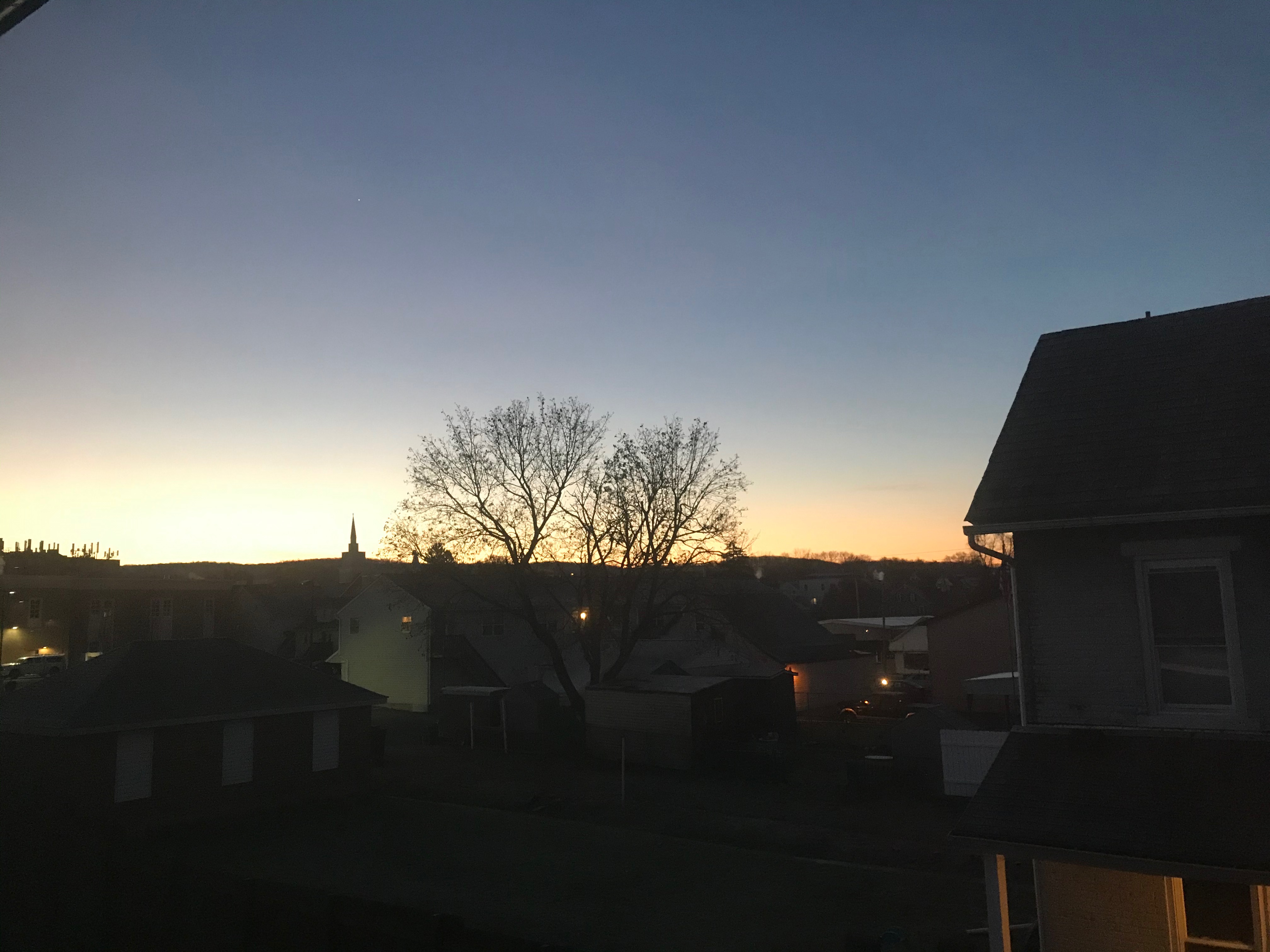
Christmas seems to have come too fast and not fast enough this year.  Like Halloween, it’s one of those long anticipation holidays.  The older I get, the more I appreciate the silence about it.  Not in a Grinch-like way, I hope.  More along the lines of “Silent Night.”  We spend so much of the year—so much of our lives—hustling about, barely having time to think.  Speaking personally, it takes about a week off work just to begin to get to that phase.  I need time to let the daily onslaught of work and capitalism and angst tune down.  There’s a quietness about Christmas that’s profound.  I suppose that’s why I like to spend it with my small family and not feeling obligated to go anywhere.  It’s like those precious moments before sunrise that I experience daily, only all day long.  That’s truly a gift.

The newspapers and internet sites have been summarizing the year for the last couple of weeks.  That always seems premature to me.  I understand why they do it, but Christmas and the days following are some of the very best of the year, and it makes sense to include those along with the stress, darkness, and ugliness that are the daily headlines.  I can’t help but think of Simon and Garfunkel’s “7 O’Clock News/Silent Night.”  Especially this year.  Christmas is for everyone, and the insistence that we make it exclusive (putting Christ back into it) makes it divisive.  Why some people have to be right all the time I don’t know.  I prefer Hamilton Wright Mabie’s take: “Blessed is the season which engages the whole world in a conspiracy of love.”  Simon and Garfunkel are both Jewish and I think they understood “Silent Night” better than many Christians did back in 1966.

I’ve been writing quite a lot about horror movies this year.  The months and days leading up to Christmas have often been difficult ones.  Such movies are therapy.  They can even fit into the beautiful silence of this day.  That’s my hope, anyway.  May this day include enough silence for you.  The rest of the year has no difficulty filling itself with trouble.  We need holidays.  Christmas has always struck me as the most peaceful of them all.  Ministers, and even those of us who never made the cut, tend to be holiday experts.  Those who don’t get caught up in the dogmatism of it all are the most blessed.  Christmas is for everyone.  And may it be peaceful this year.


Saint Nick

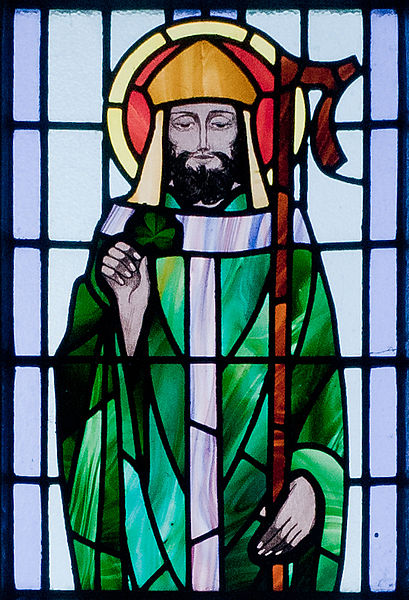
My wife and I have both noticed it.  December has been much busier than usual, and neither one of us works in retail.  We’re at the age when most people are considering retirement, but are both just settling into our careers.  But this is about December, not about us.  Today is December 6, Saint Nicholas Day to some.  What many people don’t realize is that this used to be “Christmas” for particular sets of folks.  You see, St. Nick was one of the many components of what would become Christmas.  His saint’s day was/is today and it was traditional among some early American communities to pass out gifts today because of the tradition that Nicholas was one of the more generous saints.  While at Nashotah House the rather somber Advent atmosphere was broken this day when the Dean would hand out gold coins.  Well, chocolate coins covered in golden foil, but you get the picture.

Image credit: National Library of Wales, public domain via Creative Commons CC0 1.0 Universal Public Domain Dedication

In our capitalistic zeal to get Christmas down to just one day off, if that, we’ve targeted the twenty-fifth.  Saint Nicholas was rolled into Santa Claus and we could keep on working nineteen more days.  “Santa” was known by many names—Father Christmas, Christkindl, and Kriss Kringle, among others.  They were expected at different times in December, even as the Catholic Church had decided on this month to be Jesus’ birthday, to counter Roman celebrations of Saturnalia and Kalends (both of which were more than one day, I might add).  December, in other words, should be a festive month.  Instead, it’s become a busy season for squeezing everything in before taking some time off work.  Do we ever sit back and consider how ridiculous such hectic living is?

Don’t get me wrong—I love the Christmas season.  I save up vacation days every year to give myself a mini semester break.  When I’m feeling exhausted with September’s onslaught, if I can cast my eye as far as December I can feel some relief coming.  And I’m not sure why we don’t get offered a few more days in December.  Remote workers can’t always make it to the office holiday party, so maybe December 6 might be a remote worker’s mini Christmas day off?  The weary struggle to make it to the official Christmas could use a little refreshment just about now.  I don’t recall a December ever being this busy on the work front.  For the economy’s sake, hopefully those in retail aren’t finding themselves bored.  One thing that all of us might wish for, however, is a visit from Saint Nicholas.


Evolving Holidays

Holidays evolve.  I noticed this Thanksgiving that protests against the origins of the holiday have grown.  The same is true concerning the “Christmas Wars” every single year.  Some holidays (of which we have relatively few in this country) are disappearing altogether.  What seems to have been overlooked, or forgotten here, is that holidays change over time.  Public analysts and early holiday promoters encouraged government recognition of holidays as a means of bringing the nation together.  It’s easier to do this if we recognize that holidays evolve and the general trajectory is toward becoming more and more inclusive.  There will always be those who protest the “secularization” of holidays, but they share a large part of the Venn diagram with those that believe the Bible is a science book.  Things change.  Evolution is real.

I’m not just writing this because Thanksgiving and Christmas represent holidays from my tradition.  It’s true that they represent what was the majority religion (Christianity) at the time they were established here, but I would be glad for holidays from other traditions to be added as well.  Americans need more time to rest and recharge.  Anyone who’s studied the history of Christmas, say, realizes that its origins aren’t really Christian.  It’s a combination of a Christian alternative to Saturnalia, the recognition of St. Nicholas (December 6), Germanic Yule, and the festival of Roman Calends to start the new year.  Among other things.  Early Christians didn’t celebrate Jesus’ birthday.  Nobody had any idea when it was, but a tradition grew and as it grew from diverse roots it became more and more inclusive.  Why should we protest a day when we can acknowledge its troubled past and look for ways to make it better?  Something for everyone.

Holidays bring people together.  I’ve been researching them for years and I’m amazed to see how those that survive eventually catch on and bring people together for a common purpose.  Think of Halloween.  Masking disguises who we are.  It’s a day when everyone is welcome.  There are those who protest it, of course.  But holidays need not be seen as triumphal celebrations of some past misdeed.  (Here’s a hint from history: almost no historical event is seen as positive from everyone’s point of view.)  Instead, why not embrace those few red letter days that we have and use them to seek a common purpose?  Why not encourage those in positions to make decisions to consider the good of a few more holidays?  Trouble can always be found, but holidays, if done right, may help heal.  It’s the way of evolution.


Not Quite Christmas

Holidays have always fascinated me.  Although we grew up poor, I always have cozy memories of childhood Christmases.  It was a combination of things—being out of school for a couple of weeks.  Presents.  Christmas trees.  Time outside ordinary time.  I’d read Penne L. Restad’s Christmas in America: A History years ago.  So many years, in fact, that I forgot that I wrote a blog post on it before.  That was back in 2012, in my early days of commuting to New York City, and early days of blogging.  Sometimes I have to come back to a book, however, and rereading this one reminded me of why.  There’s a lot of good stuff in here.  It mostly focuses on the nineteenth century, but it does go back before that and steps into the twentieth century (when it was written) toward the end.  I’d forgotten a lot of what I’d learned before.

This time through, having worked as an editor for a decade and a half now, I could tell that it was originally a dissertation.  It’s pretty hard to remove that completely from any book project.  Nevertheless, it’s engagingly written and full of facts.  I’d forgotten that Santa’s red clothes were not, in fact, Coca-Cola’s invention.  And that Washington Irving played quite a role in introducing Americans to the holiday.  And just how interconnected Christmas is with Thanksgiving, New Years, and yes, even Halloween.  Of course, no book can be adequately summarized in a brief blog post.  My previous one highlights some of what I found here, but this reading brought out other interesting features.  I spend quite a bit of my energy anticipating holidays.  Some years they’ve been minimized due to circumstances, but they are definitely the fixed points around which my life revolves.

One of the interesting things I noticed this time, introduced literally on the second-to-last page, was that the book mentions holiday horror.  Restad’s focus is on America so she doesn’t really delve into the British tradition of telling scary stories at Christmas.  (I do discuss this in The Wicker Man, I would note.  Although set on May Day, it was released in December, fifty years ago.)  These kinds of interconnections fascinate me.  Our culture reflects who we are and American culture includes Christmas for any who want to take part in it.  In fact, the book makes the point that becoming secular helped Christmas spread goodwill to people of all religious persuasions, or none at all.  It’s not really even a Christian invention.  It’s a blending of traditions that bring light to the darkest time of year.  And here I am like a kid, eagerly awaiting it again.


Writing 2023

I don’t put a great deal of stock in either round numbers or random passings of time, such as New Year’s Day.  Don’t get me wrong—I’m glad for the holiday—but time is like an ocean; who can say where it begins or ends?  Many people use this occasion to correct bad behaviors, but I was raised with enough of a Calvinist outlook that I tend to be self-correcting along the way.  I certainly corrected myself at several points in 2022 and still ended up spending a couple of its final days in the hospital with an ill family member.  The way I get through is by living in a world that’s largely fantasy.  I awake early (even on holidays) and spend the first few hours of the day writing and reading.  Without this I fear I might become a monster.  A self-correcting one, of course, but a monster nevertheless.

Looking ahead is too scary, so I read and watch horror instead.  If recent reading is correct, such activities are taking part in creating modern myths.  Who knows what 2023 might bring?  It’s safest to take things one day at a time.  I am hoping that my Wicker Man book will appear in this, the fiftieth anniversary of the film.  I also hope to get some more YouTube videos posted, as well as continuing this blog.  As last year unspooled I intentionally did not accept any more academic writing assignments.  The stress levels run too high for that kind of thing, and my CV’s not going to get me back into academia at any point soon.  Life’s too short, and it is better to spend it writing what I want to write.

Writing one’s future isn’t a bad idea, I suppose.  I’ve learned that plans almost never work out the way intended.  I’m not sure if that’s because growing up poor plants ideas too high to grasp in your head, or if life is inherently populated by unseen tricksters.  It’s best to try to keep them happy in any case.  And at least this year begins with a four-day work week.  We can be thankful for small mercies.  Even as it starts I’m casting my eye hypocritically toward the next Christmas break, for which I save up my scant vacation days, and which I anticipate all year long.  In the meanwhile there’s the lion’s share of 2023 to get through.  It feels daunting at this point, but with books and those I love, I hope to reach that point unscathed as I write my future.