The Four “R”s

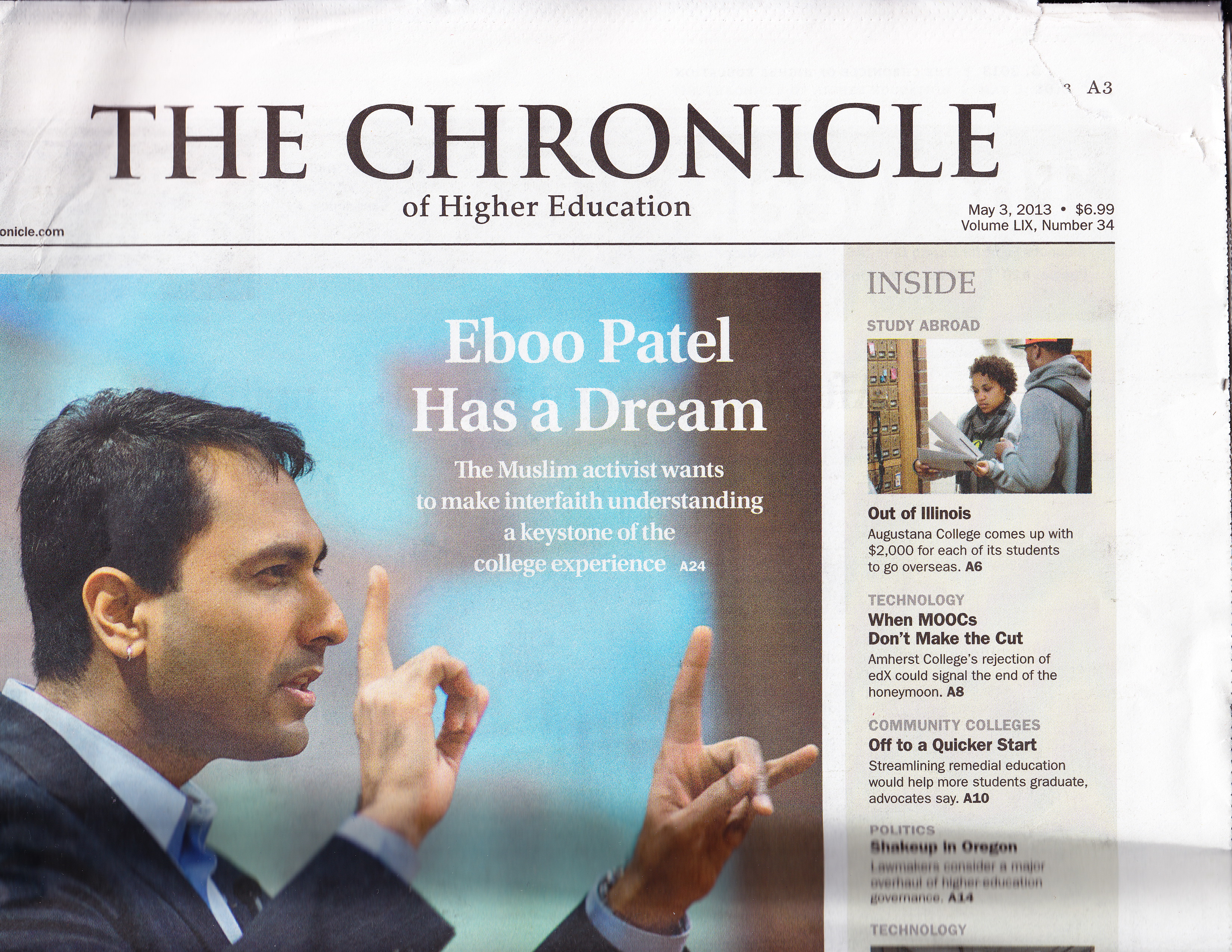
Last week the Chronicle of Higher Education feted Eboo Patel. As someone who has been on the receiving end of subtle religious violence, I appreciate what Patel is trying to do. He is a Muslim activist, the kind of which the world needs more. His last two books have been advocating for religious understanding to be considered a keystone of a college education. He’s right; religious understanding should stand right up there with the other three “r”s of education. The problem Patel faces is one I have personally faced, however; there is no money in religious studies.
Chronicle

That seems odd, even as I write it. We see lavish treasures owned by the Vatican. We see televangelists living in mansions that make Graceland seem tawdry. No huckster is more able than a skilled preacher at wheedling money out of people. Religious terrorist groups, our society conveniently ignores, are often well funded. We just don’t want to pay those professors of religion! We glory in our enlightened status and wonder why America consistently ranks among the most religious nations of the world. What department is first to receive the chop when the budget tightens? Well, it begins with an R.

What Eboo Patel is saying is what I’ve been preaching for all my adult life. We all think we know what religion is, but we actually have no idea. Universities, with rare exceptions, will do what they can to hide the study of religion like a zip on prom night. Patel is a Muslim and has good cause for wanting people to understand that his religion is not evil. He has written a couple of books advocating teaching our young about religious tolerance. It is a message America, especially, should be eager to embrace. Paradoxically, we don’t give a damn. We will cast caskets full of money into business and law departments. We will fund the research of medical and science students. Don’t ask for permission to hire a religion specialist of any description, however. Don’t you know that religion is dying out?

No doubt the electronic revolution has forever changed the way our young think about reading, writing, and yes, even arithmetic. If we had it the way our universities suggest, they would know as little as possible about the fourth, forgotten “r” that leads to much misery and meaning in our little world.

Just Books

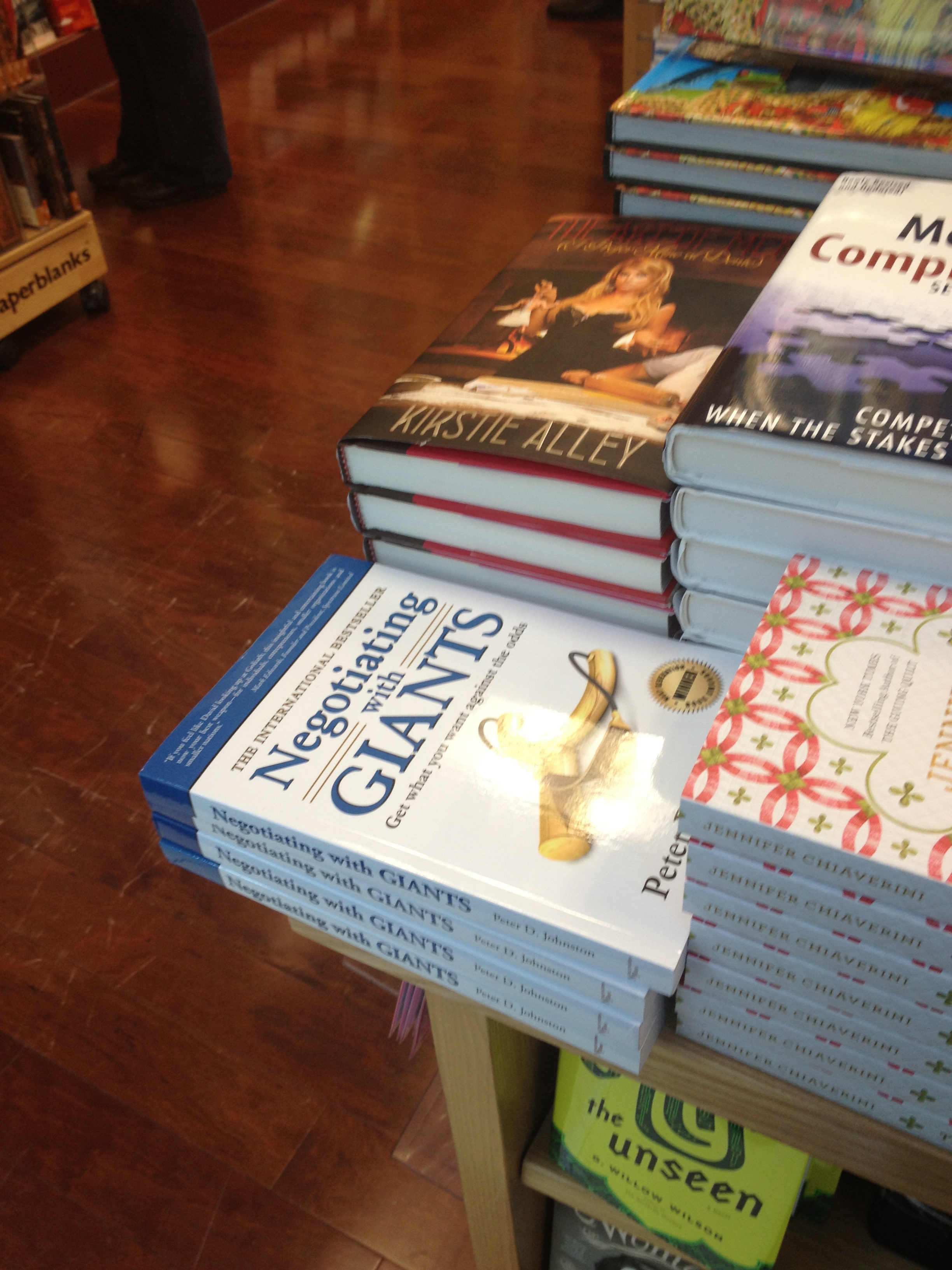
It’s very difficult to make your voice heard in this world. I’ve been talking for nearly half a century, and most of the time it’s like nobody’s listening. For those who follow the Chronicle of Higher Education, the fact that Herbert Richardson, the founder of Edwin Mellen Press, is threatening to sue some librarians for comments made on various blogs, is not really news. When the Chronicle ran a story this week on Herbert Richardson’s career, I gained a renewed appreciation for what he’s doing. I say “renewed” because I remember the days when I was very poor. My first year of teaching, with my wife in a university program and my own student loans due, I was paid a measly ten grand for a salary (this was in 1992). Despite these privations, my wife and I attended the Society of Biblical Literature annual meeting on a very tight budget. For those of you who’ve not been, SBL offers a book orgy for scholars. Publishers of all descriptions offer books at a discount, but even so, many titles are out of reach. My wife was researching Methodist hymnody for her thesis, and Edwin Mellen Press had a resource that she needed. We simply couldn’t afford it. Herbert Richardson saw our earnest discussion at his book stall, walked over, picked up the book, handed to my wife and said, “Take it.”

Although Herbert Richardson would not recognize me, he has on other occasions, shown me unsolicited kindness. Reading the Chronicle account, I learned that he is a Presbyterian minister and that he had taught at Harvard Divinity School. He is unconventional in some respects, but he also enjoys bucking the trends. Edwin Mellen Press publishes good research that mainstream publishers pass up because their eyes are always on the prize. The bottom line. I never published with Mellen, but I have had snooty presses turn down very careful scholarship of my own. My sympathies are with the underdog, and with the guy who tries to help the underdog. Academia is a cruel world. Some of us have received nothing but backhanded salutes from “established institutions” for all of our adult lives. It’s hard to feel sorry for them. What are the needs of one man in a machine so vast? Not much, apparently.

I’m not the litigious sort. Lawyers have generally caused mostly grief, in my experience. But I don’t castigate the important work Herbert Richardson is trying to do. It might be easy for those lucky enough to be welcomed by academia to forget just how lucky they are and noses are easily looked down towards those of us who never received a chance to shine. No, I wouldn’t sue those who bad-mouth me, and I’m sure there are plenty, but I think Herbert Richardson’s heart is in the right place. As a guy who would happily work for books if food, shelter, and healthcare could somehow be had, I know what it is to covet a book and not be able to afford it. I know what it is like to feel want. Herbert Richardson, based on my encounters with the man—we continue to cross paths from time to time—understands those who love books. That is a principle I can live by.

IMG_0506


They, Robots

Somehow I knew robots would continue to be part of my life. After all, they are a staple of science fiction and they are indeed also a staple of science fact. As my association with FIRST Robotics taught me, robots are everywhere. (And they can play frisbee better than I can.) So when I saw an article in the Chronicle of Higher Education entitled “Robots Aren’t the Problem: It’s Us,” I knew I was in for a scolding. It’s not so much the robots that worry me, it’s what they say about us. People thrive in environments of complexity. Even a simple robot has me standing next to a bunch of teenagers scratching my head. I don’t know what half the parts are and have no idea what the other half do. Even the components can be complex. A good case can be made that the natural world is equally, if not more, complex. I can imagine how, for instance, being confronted by a tiger in the wild would offer a bewildering variety of complex implications. And yet, robots are the world we’ve constructed for our selves.

Not every job is immediately threatened by mechanical replacement, but we know that in the industrialized world some jobs have disappeared. Our choices of how to find meaningful vocation are being conscripted by the machines we make. Like God we make them in our own image. Unlike God, we make them more powerful than ourselves. Richard Florida, in his Chronicle article, notes that some claim the robots will free us to become more human. Only if the economic barons will allow it. Even today, at the very beginnings of the robotics revolution, it is awfully hard to find a satisfying job. Even with very extensive education. I know this from experience. At the end of the day you end up working to make money for somebody else. Robots didn’t steal my vocation, business did.

Al-jazari_robots

I appreciate Florida’s point, but I wonder if we can’t point a finer point on it. All people are greedy, to a point. In most of us a human, all too human, conscience starts to bother us when we realize that we are unfairly advantaged. Some people even actually do something about it. Those who run the business, however, didn’t get to the top by obeying the dictates of conscience. The apotheosizing of money demands that humans be treated like, well, robots. We are all servants to those who aren’t shackled with quibbles and moral qualms. Robots, on one end, are reducing the number of jobs. On the other end entrepreneurs are seeking whom they may devour. The mass of humanity is caught in the middle. When it is time to beg for mercy, from what I’ve seen, the far safer bet is with the robots.


Free Think Ing

It is not exactly pride that I feel when I see my undergraduate college featured in a Chronicle article entitled “Group Aims to Help Conservative Parents Counter ‘PC Indoctrination’ at Colleges.” I almost feared to scroll down the page. Yes, good old Grove City College has to thrust its manly credentials into the face of reason once again. The problem is that what such conservative groups decry as “indoctrination” is, in reality, critical thinking. It took me a long time to learn this distinction. I grew up in a conservative family, but I didn’t choose Grove City because of its flaming commitment to sixteenth-century values. I chose Grove City because it was a selective, intellectually honest school close to home. Being a first generation college student, I had no family tradition on which to draw. Guidance counselors didn’t know what to do with a religious kid who seemed to have some smarts. Other colleges seemed so far away. I didn’t even know what I wanted to study. You see, being raised in humble circumstances you learn to react to the many unpleasantries that life throws at you and there really isn’t time to plan out a future. It never works out that way in any case. I felt driven, but I didn’t know where I was going. Some day I hope to find out.

In the meanwhile, Grove City College has grown even more reactionary than when I was there in the 1980s. The Chronicle article states that “Conservatives have long complained about a perceived liberal bias in higher education,” and that Jim Van Eerden, an “entrepreneur in residence,” (shudder!) at Grove City has started the ironically named “FreeThinkU” to counter the liberalities students receive in school. Talk about your mixed messages! I wonder if Van Eerden has ever considered that Free Thinking has a long association with the very progress he abhors. Free thinkers gave us the gifts of evolution, rational thought, and for a while anyway, free love. Free thought gave us Kate Chopin, J. D. Salinger, and Margaret Atwood. They literally gave us the moon and have landed our probes on Mars. Somewhere lost in space a metal plaque is spinning in infinity with a naked couple and directions to planet Earth. I think the mis-named FreeThinkU might be better rechristened as Don’tUThink.

Higher education has a long, long history with religious thinking. Early universities were often outgrowths of theological colleges. Over the centuries, as our thinking matured, the ways of the past were recognized for what they were—outdated, short-sighted, unchanging for the sake of being unchanging. The reality that meets our eyes through the lenses of logic sometimes claims beehive hairdos and horn-rimmed glasses and greased back business haircuts as its victims. The earth is warming up. We did share a common ancestor with the apes. Our universe is even larger than we ever thought. And yet “FreeThinkU” suggests that we need to set the clock back a little. Maybe just a couple of centuries, but enough to hold our kids in the twilight of misperception. Progress has to be more than raping the earth and getting rich. Free thinking has to be a willingness to use the minds we have. I wonder what the aliens will say when they land here, our Pioneer 10 plaque in hand. If they land in Grove City, I suspect, they might feel they were sold a false bill of goods.

From the alumni mag; think about it...

From the alumni mag; think about it…


Beg Your Martyr

Despite the extreme antipathy shown toward religion by the educational establishment, the Chronicle of Higher Education doesn’t shy away from the topic. In the March 1 edition of The Chronicle Review, a piece by Candida Moss presents one of the uncomfortable facts of religious history to the academic world. Many of us who are “specialists” have known for quite some time that the record for mass persecution among early Christians is sketchy at best. In “The Myths Behind the Age of Martyrs,” Moss reveals that historical documents don’t present the first few centuries of Christendom as quite the blood-bath that early hagiographies do. It is true that perceptions vary depending on one’s point of view. If your auntie were thrown to the lions, it might look like everyone you knew was being persecuted. If you were a Roman historian, the numbers might seem small in comparison with, say, those pesky Carthaginians, heathens the lot of them. Still, it was this persecuted self-image that left a lasting imprint on Christianity. Until Constantine, anyway. When Christianity became imperial, it didn’t hesitate to get medieval on a few posteriors.

As Moss points out, early Christians (as well as Jews and those of other bookish traditions) rewrote their stories over time. Even altering the Bible—not yet the Holy Bible—was fair game. The whole discipline of textual criticism grew up to answer the question of what the original Bible likely said. As soon as believers take their writings as factual, however, the story will change. Were early Christians persecuted? Almost certainly. By the tens of thousands that tradition asserts? Less likely. The Romans were practical. Like most domineering classes, lording it over someone isn’t nearly as satisfying when your subjects are dead. You want that superior feeling? Keep the masses in servitude. But alive. That’s not to say that it didn’t feel like everyone you knew was being murdered for trying to do the right thing.

When I was little, I was taught that it is more important to put others’ needs and wants in front of your own. It is a basic Christian teaching. Somewhat naively, I approached the academic empire with that simple basis deeply embedded in my mind. I didn’t realize just how often others would use this trait to their own advantage. Other Christians as well as the non-religious are happy to take from the willing giver. This didn’t prepare me well for life in the business world where, I am learning, the delight in taking from the giver has only grown stronger over the centuries. So I end each day spent and weary and feeling like I’ve been thrown to the lions. Not literally. Still, I believe in the plain idea that if we all treated others’ needs before our own the world would be a much better place. I’ve never outgrown my idealism. Until others join in, however, I’m sitting in the stands trying hard not to watch what the lions are doing down below.

800px-Jean-Léon_Gérôme_-_The_Christian_Martyrs'_Last_Prayer_-_Walters_37113


Bible-Landia

It takes a mighty powerful stimulus to get the media to pay attention to biblical scholars. It is no surprise, therefore, when the Society of Biblical Literature meets with the American Academy of Religion each November that, for a few days a year, Bible becomes chic. This year various newspaper articles appeared, perhaps warning Chicagoans what all these crusty professors were doing invading their fair city, but the one that caught my eye was in the Chronicle of Higher Education. The Chronicle is the purveyor of all that is high-brow and sophisticated, epithets seldom applied to the Bible. The story in November 19’s edition made this clear by throwing in a little scandal—some Bible scholars believe the Bible to be “morally bankrupt.” Now there’s a twist. Nor is it really that hard to understand. Anyone who’s read the Bible seriously will have to admit to having squirmed a time or two at the moral implications. Dashing babies heads against the rocks will be one of those places.

IMG_0513

In a society accustomed to seeing in black and white, morally at least, it is difficult to get the religiously convicted to admit that the Bible is a pastiche. Some parts are morally sublime (yes, even in the Hebrew Bible where “love your neighbor as yourself” originates) while others are ethically execrable (can I get an amen from the babies?). It is always interesting to see friends quoted in the media. I taught Hebrew Bible for 18 years without anyone really being that interested (including most students). I guess maybe I wasn’t radical enough. To me the Bible has to be viewed in balance, the moment one falls on their knees before it the corruption has begun. Interestingly, the article focuses on the New Testament side of the equation. That’s where the sexier conflicts wallow.

People arguing about the Bible. Is there anything more representative of American culture? It happens every four years, at least. Ironically the Bible quite often stresses the unity of those who believe. With thousands of denominations mutually excommunicating each other, one has to wonder if the Bible is living up to its full potential. Not that anyone will notice. Amid all the well-heeled, tenured professors, satisfied with their lot in life mill the hundreds who’ve spent thousands earning their advanced degrees. They are the lost generation—those for whom there are no, never were any, jobs. They are every bit as capable, and in many instances even more capable, than their tenured compatriots. The level of concern, at least at a visible level: nil. That, more than anything, indicates to me the true morals of studying the Bible.


Mrs. Jesus

First we learned that Yahweh was married. Then we hear, “like father, like son.” A Galilean tempest in a Wonderland teapot. A papyrus fragment from centuries after the fact implies Jesus might have been married and the media smells blood. The scholars who translated the materials tried very hard to demonstrate that their efforts indicated nothing about the historical Jesus, but that doesn’t sell newspapers, magazines, and website hits. Jesus being married does. Spying an article about this in the Chronicle of Higher Education recently, I pondered why this might be. Why the great fuss over Jesus’ potential marriage? This is not an easy fabric to unweave. Americans have been routinely taught to idealize Jesus in order to underscore his divinity. A man without warts, no faults, perfect hygiene, completely symmetrical. His unwed nature is silent testimony to male superiority—when God chose to incarnate, he picked a masculine template. And for a man to need anything is a sign of weakness. If some Coptic Gnostic suggests that maybe Jesus had a weakness after all, well, that’s scandal enough to sell a million copies right there.

Theologians are quick to say that God is really beyond gender, but we sexual beings are so, well, focused on our biological packaging that we just can’t conceive a deity any other way. American culture thrives on the concept of a personal relationship with God. It is difficult to have a relationship without assessing the sexual roles. More than reproduction, our sexuality defines how we interact with others. By recasting Jesus as a married man, the whole dynamic is thrown off. Girls who are taught to uphold the virginal Jesus as an ideal man would now have to create room for the other woman. Boys would no longer have to consider the monastery. Overestimating the impact of marrying off Jesus in this country might well prove impossible.

The Chronicle takes a bemused look at the issue, as befits a disaffected, intellectual publication. For most Americans the relationship can never be so diffident. Scholars may find it funny, but we are vastly outnumbered. Like a divine paternity test, ink analysis of the papyrus fragment is out at the lab. If it’s just another forgery, life goes on much as before. The fact is, as has been stressed all along, all that can be potentially proven is that some people in the fourth century thought Jesus had a main squeeze. People have wondered that for centuries, with or without a papyrus to spark discussion. We are sexual beings, and like Xenophanes’s horses, our gods must look like us or become like the shadow over Innsmouth.

“And I think the couch should go over there!”


Battle Bots

Our local high school robotics meetings start up again this week. Actually, they’ve been going on all summer since robots do not require the rest and mental downtime that we mere creatures of flesh do. Glancing through the headlines of the Chronicle of Higher Education I saw a leading article on a topic I’ve been reading about: the military use of robots. On a college campus visit last semester I came across a robotics display and, since I’ve picked up some of the lingo, I engaged an engineering student sitting nearby. He told me that most of the funding for robotics at the collegiate level (there, anyway) came from the Department of Defense. Earlier this year I had read Wired for War, a book as stunning as it is frightening. In fact, P. W. Singer is cited in the article. What makes this interesting, however, was the role of Ronald Arkin, a Georgia Tech professor of robotics and ethics. Dr. Arkin believes robots to be morally superior to humans at making battlefield decisions. He’s not alone in that assessment.

The more I pondered this the more troubled I became. Morality is not a scientific purview. Ethics that have been quantified always fail to satisfy because life is just a little too messy for that. Who is more morally culpable: the policeman who shot a thief dead when the man was only stealing bread because his family was starving? Hands down the most challenging undergraduate class I took was bio-medical ethics. It was thornier than falling into a greenhouse full of roses. Sick minds and reality cooperated to draw scenario after scenario of morally ambiguous situations. I left class with two more things than I’d taken in: a headache and a conviction that there are no easy answers. Having a robot vacuum your floor or assemble your car is one thing, having one decide who to kill is entirely another.

The article cites the rules of war. The main rule seems to be that no matter what, some people will always kill others. We try to sanitize it by making the inevitable death-dealing follow ethical conventions. While religion often takes a bad rap these days, one of the things that it is capable of doing pretty well is providing an ethical foundation. People may not always live up to the standards, but religions only in very rare situations give people an excuse to hurt others. Nearly all religions discourage it. The rules of a science-based morality would likely fall along a logical algorithm. Unfortunately, there’s more gray than black or white in this equation. Algorithms, in my experience, are not so forgiving. So as I get ready for my first robotics meeting of the year I need to remind myself that the robots are capable of great good as well as great evil. Like with humans, it all depends on who does the programming.


Queens and Playmates

Once upon a time, theology was queen. I’m no theologian, but then, I didn’t make up the phrase. A recent article in the Chronicle of Higher Education discusses how some scientists say there is no longer a need for philosophy. In passing the piece mentions that theology had, long ago, been considered the queen of the sciences. According to medieval thinkers, philosophy was her handmaid. Antiquated archaisms apart, I sometimes think back on this whole venture of education. Few today acknowledge, and most probably don’t know, that education began as a religious exercise. Writing, and reading, were overseen by the gods. Even in the modern world the earliest universities were founded to teach theology and law. Many of the ivy league schools, including Harvard, Yale, and Princeton, began as training grounds for the clergy. How quickly our forebears are forgotten.

It’s not that I think religion deserves a privileged place in the academy, but I do believe it deserves a place. Science has a long track record of spectacular successes. Not only that, but the advances in science often capture the imagination—and here we are back in the realm of the humanities, that place where feeling and possibility are unlimited. Many of those of us in religious studies—apart from creationists and their kin—gladly award science its deserved paean to successfully unpacking the intricacies of the material universe(s). As the Chronicle article demonstrates, some on the science side of the circle want to claim all the marbles and go home. Some of us want to keep the game going well after dark.

Maybe that’s a very wide metaphorical shift—from queen to playmate—it may be presumptuous. After all, what has religion, or philosophy for that matter, got to claim? What shiny Nobel Prizes to display gracefully, or great advances of which to boast? The benefits religion can claim are somewhat less tangible, but important nevertheless. While some people declare that meaning is a chimera, deep down, as a species, we know that it is important. Even more than that, the fact that you’re reading this right now owes its ultimate origin to religious thinking. Writing was the brainchild of the gods, an activity we learned in imitation of the divine. I will always find science fascinating, but I will always do so with a book held in my hands. “Now, here, you see, it takes all the running you can do, to keep in the same place,” in the words of another famous queen.


Coexistence

Sometimes I think I’m a punching bag. Not uncommon among scholars of religion, I suppose. I have read my fair share of overt attacks on religion: Hitchens, Dawkins, and even Jillette, and sometimes limp out of the ring wondering why I even bother. Still, science doesn’t completely explain the universe I inhabit either. Thus is was with some glimmer of hope that I read a story in Monday’s Chronicle of Higher Education entitled “Does Religion Really Poison Everything?” There can be no doubt that religious behavior has a track record of some execrable atrocities—some very bad behavior has been engendered by fervent religious belief. At the same time, those who despise religion have a hard time explaining it. As the Chronicle piece points out, religion is likely an evolved trait. There is some survival value in it, otherwise it would, by natural selection, disappear. Religion is seldom a rational enterprise. That doesn’t mean that it can’t be rationally studied, but rather that religion is primarily experienced as an emotional phenomenon. We find ourselves motivated by feelings, although reason will often drive us to do things we don’t feel like (like going to work). And emotion is necessary to be truly human.

It is often difficult to respond to those who castigate religion as an evil or poison, not for lack of reason, but because of feelings. Having spent most of my life with religion, it is not surprising that attacks on it often leave me feeling ashamed. But ah, that is an emotional response! It seems rational on the surface, but really, shame and embarrassment are typical emotional responses. This is the realm of religion. Reason may indeed indicate with great accuracy the way the universe works—of this I have no doubts. At the same time, I’m not sure the entire universe is something that humans can adequately comprehend. I have a hard time remembering what’s on a short shopping list if I accidentally leave it at home. Our brains aren’t equipped to the task of comprehending universes. Feel overwhelmed when facing a physics test? That overwhelmed feeling is an emotional response. With considerable cheek, might I suggest it might even be a little bit religious?

The Chronicle is a high-profile source for academic rectitude. I am pleased to see Tom Bartlett pointing out that the line-drawing in the sand between religious Fundamentalists and pro-science New Atheists will not solve anything. Religion is often guilty as charged. It is not, however, pure evil. There is enough evidence out there to suggest that religion is a tremendous coping mechanism for billions of people. And coping is not a bad thing, all things considered. Wisdom that is often attributed to the Greeks suggests that “all things in moderation”—the golden mean as it’s known—is the way to human happiness and success. The idea is older than the Greeks, and indeed, can even be found in the Bible for those who are willing to look. One need not be religious to see that, like most human inventions, religion has both good and evil uses. Evolution gave us religion, and it gave us science. It also gave us brains divided down the middle and strong reasoning that must dance with creative emotion in a tango that frequently makes abrupt shifts of direction. Our job, as humans, is to learn the steps to the dance.

Different, but equal.


Thinking Zombies

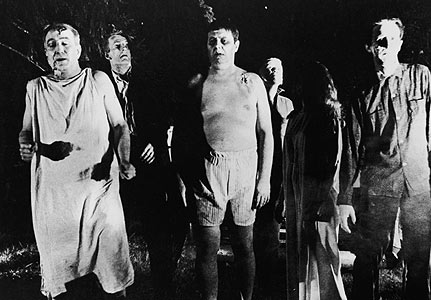
Religion seldom makes as big an impression as when it concerns itself with the undead. Popular culture has gone after zombies to such a degree that they have engaged academic discourse well beyond the field of African-Caribbean religions. In fact, religious specialists tend to shy away from the topic in a kind of first-date embarrassment. Perhaps it’s because zombies in popular culture are so much cooler than their Vodou forebears. Within the past several months, however, zombies have shown up in Time, on the Center for Disease Control website, and now in the Chronicle of Higher Education. An article this week explores the academic implications of a paper by neuroscientists Bradley Voytek and Timothy Verstynen on the zombie brain. The two took on the project as a lark at the behest of the Zombie Research Society. Science fiction writer and head of ZRS, Matt Mogk gave an interesting take on zombies. He’s quoted in the Chronicle as saying, “Zombies are rooted in science, not superstition and myth.”

At the risk of sounding extremely uncool (one that I take rather frequently, I fear), I would point out that exactly the opposite is the case. Zombies are rooted in superstition and myth, i.e., religion. The entire idea that a person can be made to rise from the dead—originally to be made a slave—comes from that heady blend of Christianity and African religion that developed as part of slave culture. Slavers were notorious in not wanting slaves to accept Christianity because that might make slaves think that they were equal with their owners. By suppressing Christianity among slaves, the African religions in which many were raised came to blend with the Christianity that they’d garnered. One of the bi-products was the zombie. The zombie partakes of the Christian concept of resurrection, but in a twisted way. Once the new vision of the zombie presented by George Romero took off, yes, they did move into the realm of science fiction, often the forerunner of science.

A very serious issue underlies the zombie myth—the very religious concern about death. While not all religions comfort with an afterlife, they all in some way deal with ultimate issues. The end of life is about as ultimate, from our limited experience, as they come. Science loudly and repeatedly insists that death is the final frontier. We don’t cross back this way again, according to the available evidence. Scientists do not study ghosts or souls, and are very cagey about near-death experiences. The zombie, who is now threatening the careers of young scientists, is a most religious monster. Everything about the zombie points to its origin as a religious trope. Voytek and Verstynen wanted to interest people in science by taking a comic look at zombie brains. The problem is that zombie brains are brains on religion, not science.


Buying the Truth

Every now and again the Chronicle of Higher Education dips its trowel into the biblical archaeology debate. Those of us who’ve made extensive arguments based on ancient texts and artifacts know the territory a little too well. Archaeology, which largely grew out of biblical scholars attempting to “prove the Bible,” eventually started on its own track of scientific respectability with the predictable result of distancing itself from the Bible occurred. So far, so good. Then biblical criticism took a turn towards post-modern sensibilities. The truth cannot be known, and therefore the safest approach is to stop seeking any truth at all. Archaeologists in the know joined this venture (biblical scholars and archaeologists often cross borders in this exotic land), and began to deny historical Israel, as well as the rightly dismissed historical Abraham and Moses. Once you’ve walked a few leagues down that path, however, it is difficult to turn back. This is, of course, an over-simplified account of a complex dynamic, but the issues raised, as seen in the Chronicle, are real. Our perspective flavors our interpretation. If you don’t believe in a historical Israel you’ll never find one, no matter how hard you look. (A similar dynamic is at work in studies of religions and “paranormal” phenomena.) The word “evidence” is finessed as readily as fine hair treatments and the kinds of evidence that convince vary depending on the scholar. It is safest to admit we don’t know, sometimes.

The more troubling aspect, as far as I’m concerned, comes when the Chronicle introduces the concept of corporate sponsorship to archaeological digs. As an erstwhile volunteer on a dig (somewhere back in the Iron Age, it feels like now), I know that archaeology is frightfully expensive. There’s nothing like being on a dig to witness firsthand the amount of labor that goes into removing all that dirt–carefully! Carefully! Universities can’t afford it (stadiums don’t come cheap, you know!), so many digs rely on corporate donors–often television and film companies. And if you’re paying for footage, you want something to bring in watchers. An unnamed archaeologist quipped honestly in the Chronicle, “I don’t agree with everything they say in the films, but they pay me an awful lot more than I could ever earn from writing or teaching.” There it is, staring us straight in the face. The truth goes to the highest bidder.

That may sound benign enough, but in Israel especially, archaeology has high political stakes. You see, politicians are easily swayed by the “we were here first” argument. To get an idea of its specious nature, just ask a Native American! Proving the veracity of a David or Solomon no longer just gets God off the hook, it also builds the basis for claims against people who’ve been here an incredibly long time. The sad reality is that in archaeology, as in higher education, money speaks with an inordinately loud voice. As an agreed means of exchange, money is certainly important, but is it “true”? For those who’ve stopped short of the post-modern abandonment of that great philosophical ideal of Truth, we should be wary of allowing lucre to decide the issue. Those with money already help to decide what courses will be taught and what tels will be excavated. We run a real risk when we let those same people decide what will be considered the truth. In a society enamored of media and its ease of use, the truth is sometimes what comes across the television. There is another way, but it involves heavy digging and lots of reading. Maybe next time—but for now just pass the remote.


Enoch’s Dilemma

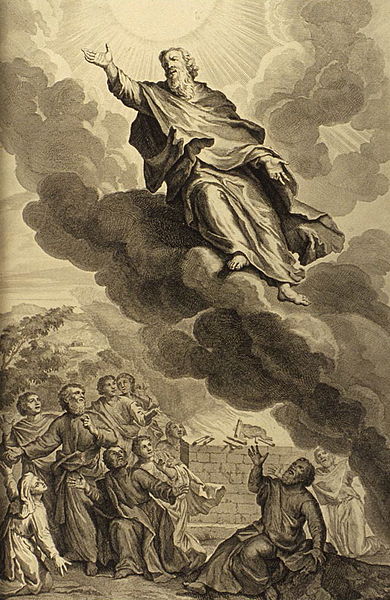
“And all the days of Enoch were three hundred sixty and five years: And Enoch walked with God: and he was not; for God took him.” These two verses from Genesis 5 convey just about all we know of Enoch. That, and he was the father of the oldest man ever, Methuselah. With this intriguing introduction, however, the religious mind insists on a backstory. Over the centuries of antiquity, books grew about this mysterious character as he became the prototype of the person who never died. The Bible doesn’t state that Enoch didn’t die. Nor does it state that he did. Plenty of wiggle room for the mythic imagination. In what appears to be an unrelated story, the Chronicle of Higher Education this past week reported on technology that builds on the strange but natural idea of phantom limbs.

When a person loses a limb, sometimes they report still feeling it. Their brains grew in a body that possessed the limb, and once it is gone the brain still has memory of it. The term used for this is a phantom limb. Knowing that mind does control matter to some extent, robotics experts have figured out ways to wire a robotic limb to the brain of a paralyzed person that responds to brain signals sent to the phantom limb. As much like science fiction as it sounds, this is already happening. The robotic limb responds just like a biological limb. This technology is just developing, of course, and is very expensive. It also implies that cyborgs, once the fodder of futuristic fiction, are becoming reality. Some theorists, such as Raymond Kurzweil, suggest that the brain itself can be converted to electronic signal and transferred into mechanical storage. Once that is achieved, we will have Enoch without any God to take him.

The world that we’ve been engineering bears a strange resemblance to the world of the Bible. For the people of ancient Israel death was the final word, and with rare exception (the only unquestioned case of the undying man was Elijah) people simply accepted the inevitable with no concept of an afterlife. Contact with the Zoroastrians convinced some Jews of the possibility of life beyond death and the quest for immortality was on. It has been a desideratum of human aspirations ever since. We invented machines to help us do what nature has not equipped us to attain. Finer and finer lines have been drawn between the biological and the mechanical. While it make look like immortality to some, to others it seems that we have been kidnapped—taken, if you will—by technology. What really happened to Enoch? The Bible doesn’t say, but it seems that we are getting very close to finding out on our own.


Whose Call?

I think about religion quite a bit. Well, it’s actually a big part of my job. I also spend quite a bit of time sorting out where religion is represented in the spectrum of human learning, specifically in higher education. One can’t help but notice a profound disconnect between reasoned thought on religion and the often brainless way that it is played out in public forums. Often this ineptitude comes through the mental fumbling of politicians, but just as often the culprits are well-heeled preachers who learned their trade at the hand of like-minded individuals who castigate the usual methods of examining evidence. Even as recently as this week I saw disparaging remarks made in a Chronicle of Higher Education article about seminary education—something I understand a little too well. For all their faults, most seminaries try to teach students to interpret their faith intelligently.

Perhaps it is too fine a line to be etched in the sand, but the study of religion and the promotion of religion are entirely different entities. Our society desperately needs more of the former. I quite often lament the short-sighted lack of education about religion in higher education. Given the frequently destructive nature of religious teaching, it would behoove us to understand it a bit better. In my research on the state of education about religion in the United States, it has become clear that many—perhaps most—high-powered institutions of higher education do not offer the opportunity to study religion. Many secular schools, seeming to fear religious cooties, simply avoid the subject like Yersinia pestis. There is nothing particularly alarming about that. Until one starts to count the number of accredited institutions that teach indoctrination as education.

A simple survey of institutions of higher education in the United States will reveal hundreds of doctrinally based colleges that generally teach uncritical attitudes towards religion. Students graduate from such schools with bona fide parchments that claim them to be proficient in the subject. Meanwhile, at the local state university, no one can study religion because it is considered a subject unworthy of academic research. Maybe it’s just me, but I have trouble reconciling this lack of interest with what I see in a society where Tea Parties are steeping and sabers are rattling in the name of religion. Same sex unions are being shouted down. Women are paid lower wages for the same work as men. The ground is being fracked beneath our feet. The impetus for these destructive behaviors takes is fueled by religion, and they only scratch the surface. I would humbly suggest that if we want to see the state of the union clearly it is best done with eyes open rather than hiding behind an amendment and pretending religion is not there.


Come Sail Away

A profound sadness accompanied my reading of Academically Adrift: Limited Learning on College Campuses, by Richard Arum and Josipa Roksa. I mentioned this study when it was highlighted in the Chronicle of Higher Education a couple months back, and have just finished reading it. My sadness stems from having been told from my earliest years that I was a natural teacher, but having fallen victim to statistics. Higher education, Arum and Roksa assert, no longer considers undergraduate education to be its highest priority. This is statistically borne out. Often it is because colleges and universities no longer have the will or incentive to retain committed educators. Concerned parents sometimes ask me what’s wrong with the system. Truth is, I worked hard on my teaching only to be forced out—I simply don’t know. A large part of it, I believe, is that in the 1970’s the US government instituted changes in higher education policy to advantage freer market forces (i.e., capitalism). Our educational institutions have been on the decline ever since.

Not being a sociologist, I can’t assess all the data presented in Academically Adrift, but the portrait painted is a disheartening one. Middle class and working class people pay enormous amounts to send their kids to college. The majority of students do not learn much in the way of critical thinking when they are there. It became clear, however, that one thing higher education does not erase is class distinctions. The findings seem to indicate that, if anything, college deepens the rift. Those colonists who long ago fled the tyranny of the crown replicated their own version of a caste system in their new nation. I have not been the only one to notice that those of us who grew up in very humble circumstances just don’t stand a chance of earning credibility in academia’s elitist eyes. Our only hope is education—precisely what many college students are not getting for their parents’ money.

My critique of higher education is accompanied by just a small morsel of hope. I cherish every school I’ve had the privilege to teach in, save one. In each classroom I found some students who were eager to learn, some of whom would become friends. Education is pointless if it doesn’t make life better for people. We could be starving dogs growling for the same bone (just like capitalists) living in a junk yard or a desert. Education alone holds the promise of lifting us out from our bestial predilections. With its Midas touch, however, the free market has transformed higher education into a money-making venture eviscerated of its very soul. Unless our society can learn once again to support education for its own sake—the sake of improving our lives instead of improving the bottom line for the top one percent—we will find ourselves back in our caves scratching the fleas from our unwashed bodies. Of course, at least the one-percenters will have plenty of cronies standing in line to scratch their noble backs even then.