Clearly Religion

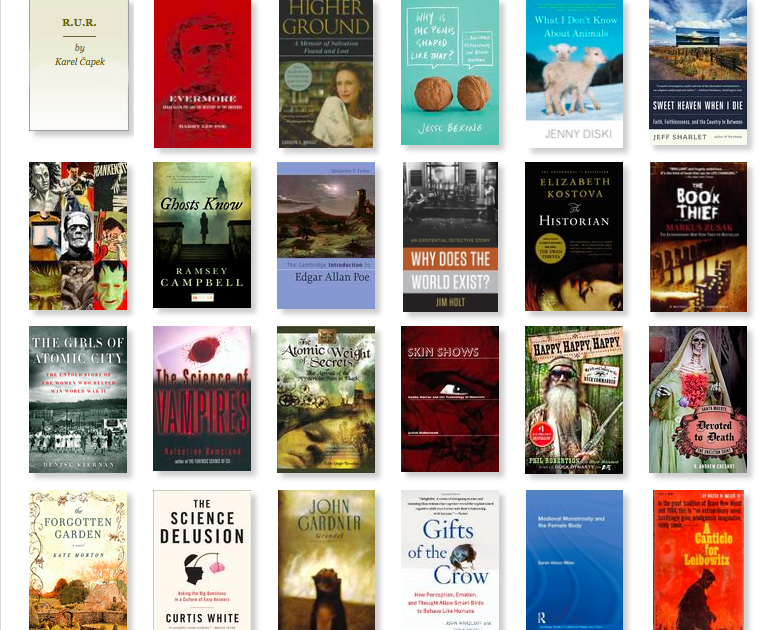
GoingClear“There is no point in questioning Scientology’s standing as a religion; in the United States, the only opinion that really counts is that of the IRS;” so Lawrence Wright partially concludes Going Clear: Scientology, Hollywood, and the Prison of Belief. This is an important book, and one which once again demonstrates how seriously religions should be taken. New religious movements offer a ringside seat to how orthodoxies are born. Facts may be distorted or covered up, but there is information to be had on L. Ron Hubbard, Joseph Smith, and Mary Baker Eddy. We can learn from the way their ideas may move from fiction to fact, and how intelligent people still feeling spiritual yearning can turn to a religion invented recently as well as those invented millennia ago. As Wright points out, all religions make improbable claims. Fact-checking, however, is much more difficult for periods long gone that left only meager records. The distance in time may lend ancient assertions the benefit of the doubt, but the real decision-maker is money.

Given universities’ interests in lucre, one might logically conclude that religions would be of great interest. It is telling that, especially in the case of Scientology, that the factor most important to the status of the church is its money. Religions may claim tax-exempt status, setting them apart from purely commercial enterprises. This gives religions an advantage when they are careful with their finances, and the whole question of whether a religion is a religion is not left to scholars but to the lawyers of the Internal Revenue Service. The truth of religion lies in its bank-books, not its holy books. No doubt in the case of Scientology this is because of the high-profile court cases in which the status of the religion was challenged by government agencies. Nevertheless, when it comes to the laying down of the law, only money really matters in defining a religion.

As Wright discusses, one of the problems we face is that religion is poorly defined. Nobody can really assert much beyond that religions involve belief of some kind. Beliefs, in this case, about L. Ron Hubbard and his ideas. Although facts about his life are disputed, there can be no doubt that Hubbard was an intriguing man. He was a prolific writer with great imagination, and he clearly had keen insight into psychology. A religion used to be measured by the good it produced. Now it is measured by the dollars. As Going Clear illustrates, trying to construct an unbiased account of Scientology is a fraught enterprise. Like many modern religions, Scientology is very secretive. Even the early Christians knew that if everybody could join, then the club loses its appeal. Apart from belief, religions also must have outsiders and well as insiders. In a world measured by consumerism, wealth is the surest sign of blessing. No one should be at all surprised, therefore, that it takes the IRS to decide that which used to be taken by faith alone.
2013 in Books

Screen Shot 2014-01-05 at 6.03.10 AM

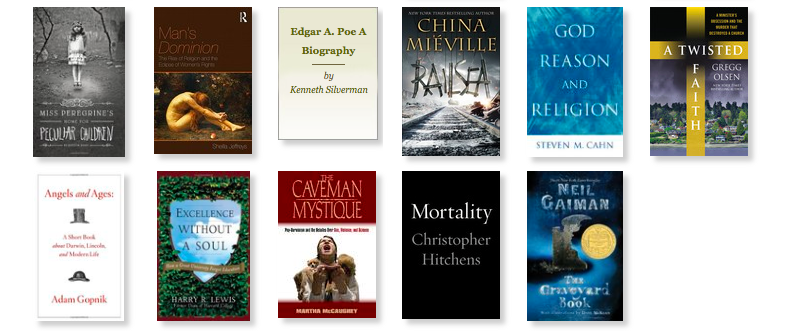
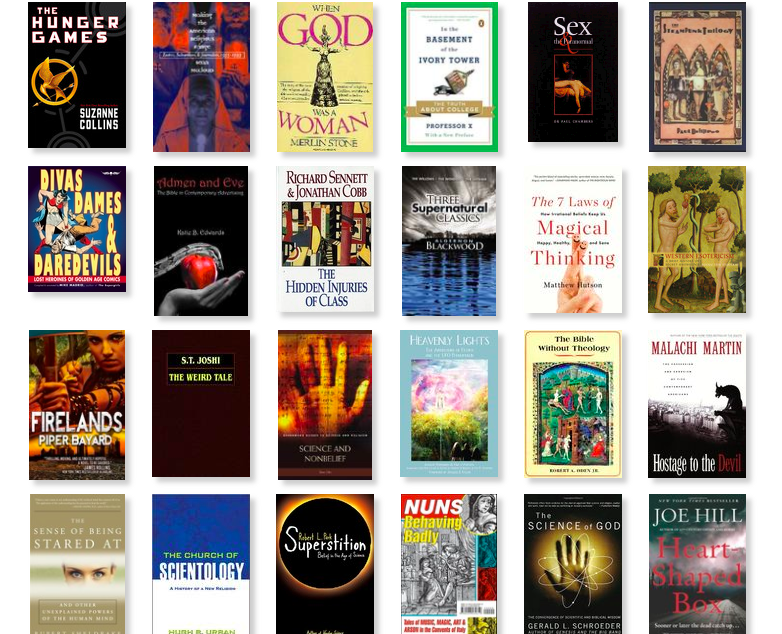
According to goodreads.com, I read 83 books in 2013. The beginning of a new year seems a good time to assess what is memorable among the reading material of the previous twelve months. I am an eclectic reader: this informed my research when I was teaching in higher education—nobody can know everything, and it doesn’t hurt to keep an eye on what fellow researchers in “unrelated” areas are doing. I always throw in a healthy dose of novels as well. Among the novels, some of the most profound were those written for younger readers (each of the books discussed here, by the way, can be found discussed in more detail by selecting the category “books” at the right on this blog). Neil Gaiman’s The Graveyard Book, Ransom Rigg’s Miss Peregrine’s Home for Peculiar Children, Suzanne Collins’ The Hunger Games, and Markus Zusak’s The Book Thief all stand out as particularly profound. They are all, as young adult books tend to be, stories about coming to terms with the adult world. The theme of death weighs heavily in all of them. In none do the children take refuge in religion.

Screen Shot 2014-01-05 at 6.02.33 AM

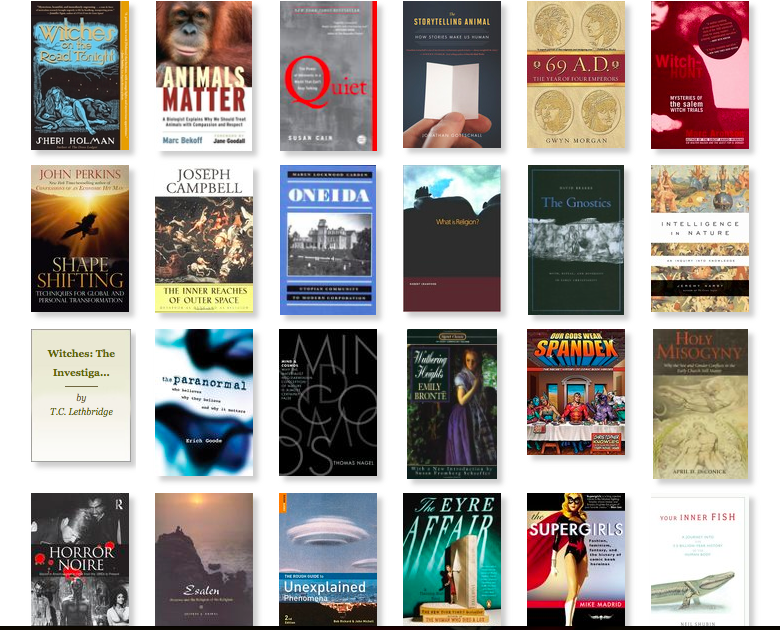
Among the non-fiction offerings, revisiting my most memorable also reveals trends, I think, in how religion might be usefully applied to an increasingly secular culture. It is no easy task to choose favorites, but I see that I read three books about comic books: Mike Madrid’s The Supergirls and Divas, Dames, and Daredevils, and Christopher Knowles’ Our Gods Wear Spandex. The work of Jeffrey Kripal started me on the quest of taking superheroes seriously as sublimated religious figures. Clearly that is the case, as has become increasingly apparent in top-grossing movies. Another set of books (Thomas Nagel’s Mind and Cosmos, John Angell and Tony Marzluff’s Gifts of the Crow, and Curtis White’s The Science Delusion) highlighted some of the deeply rooted flaws of a materialist reading of the world, whether they intended to or not. Robin Coleman’s Horror Noire, and Susan Hitchcock’s Frankenstein indicated that monsters are among the most eloquent of social critics, even when they have little to say. I would recommend any of these books without hesitation.

Screen Shot 2014-01-05 at 6.02.02 AM

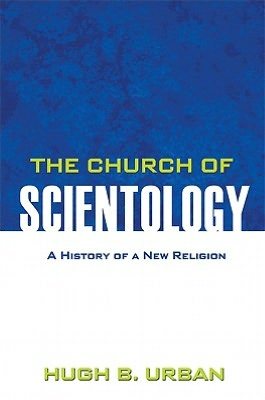
Some of my reading was on specific religious traditions. Maren Cardin’s Oneida, Hugh Urban’s The Church of Scientology, Sean McCloud’s Making the American Religious Fringe, and Andrew Chestnut’s Devoted to Death each showcased either a single or several traditions that have emerged in the last century or two that have had a striking impact on America’s religious morphology. Katie Edward’s Admen and Eve is a great example of how businesses have figured out that a religiously hungry society will buy, if marketing pays attention to religion. Among the most powerful books I read were Susan Cain’s Quiet and Jonathan Gottschall’s The Storytelling Animal. Being human is, after all, the most religious of experiences. Starting with fiction, I’ll end with fiction. The novels for adults I remember most vividly are those with strong female protagonists: Sheri Holman’s Witches on the Road Tonight, Piper Bayard’s Firelands, and Elizabeth Kostova’s The Historian.

Screen Shot 2014-01-05 at 6.01.24 AM

This blog offers me a chance to give brief sketches of books that have much more to say than a few words might summarize. The fact that religious ideas and themes might be found in such a range of books underlines once again that we live in a religious milieu, whether we want to admit it or not. Read on!


Mr. Hubbard’s Legacy

churchofscientology As a child just discovering the joys of reading in the early 1970s, I found science fiction captivating. We were poor, and our town had no library, so I’d buy my books on Saturday trips to Goodwill. In other words, you take what you can get. I recall buying a book by a guy named L. Ron Hubbard. I don’t remember the title or the story, but I recall my surprise when, as a religion major some years later, I learned that this same sci-fi author had started a new religion. Scientology was not something you’d likely encounter in a poverty-stricken, sub-Appalachian town in rural Pennsylvania, and with no Internet it wasn’t so easy to learn about such things even if you had. We did have TV, though, and we watched Welcome Back Kotter (Risky Business was a little too risky). When I discovered that John Travolta (“Vinnie” as we thought of him) was a Scientologist, I was curious. But only to a degree. When I first taught World Religions and spent a few years researching the Scopes Trial for a book I never had the chance to write, I became very interested in American religions. They don’t come much more American than Scientology (and Latter-Day Saints).

As soon as Hugh B. Urban’s book The Church of Scientology: A History of a New Religion appeared, it immediately went onto my reading list. Like most interested laity, I’d found it difficult to trust much of what I’d read on the Church of Scientology from media sources. Now I had a reliable guide! Even better, Urban frames his study around a question that pervades this blog: who gets to decide what is a religion? As Urban deftly points out, it is odd that government agencies are often those tasked with a job more fitting for those of us who’ve studied religion with the rigor that a physicist devotes to quarks and neutrinos. Some of us have parsed religious texts to bare bones and then dug up the skeletons beneath and examined their ossified remains as well. The world doesn’t take religion studies too seriously, however.

Urban’s book, well written and solidly researched, maintains that rarest of academic feats: objectivity. When approaching a religion, particularly a controversial one, emotions are easily engaged and objectivity is challenged. While confessing that he isn’t a Scientologist, Urban lets the historical facts speak for themselves. He doesn’t try to belittle those he studies, but he doesn’t coddle either. Reading his fascinating account, many questions are raised about the rights of religions and the role that secrecy plays. And we know that Urban is only skating across the surface of a deep and mysterious pond here. Sitting in my room with a yellowed, used copy of some L. Ron Hubbard pulp fiction story in my hands, I would’ve never guessed, as a child, what I was really holding.