Sacred Sites

The sacred is hard to define.  Calling it “holy”is only to pass the buck, and I can’t get beyond the feeling that we need something more up-to-date than Rudolf Otto.  Something that takes into account what the religious world looks like in the next century.  No matter which direction we turn we run into undefinable words—numinous, heightened, transcendent.  Wonderful words that fail to capture the essence of the experience.  This has been on my mind because I’ve been thinking about sacred spaces.  No matter how secular we may be, we all know such places exist.  They may be places significant to large numbers of people, or to a set of one.  Perhaps there are many kinds of sacred spaces and many ways that they may be made so.

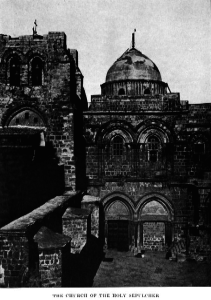
The place where a significant event in life took place, for good, is recorded in that way our brains have of switching into slow-motion, high-attention mode.  Were we not so secular we might say something spiritual was going on.  Pilgrimage sites worldwide are often associated with what’s interpreted as a religious event.  Those of us who weren’t there at the time feel compelled to visit.  To breathe the air of that place.  To linger in wonder.  Is there something still there?  I tried desperately to feel this when I visited the Church of the Holy Sepulcher in Jerusalem.  It was difficult with so very many other people there.  I went alone and I was thinking maybe something might happen.  Like what happened to me at the Church of All Nations next to Gethsemane.

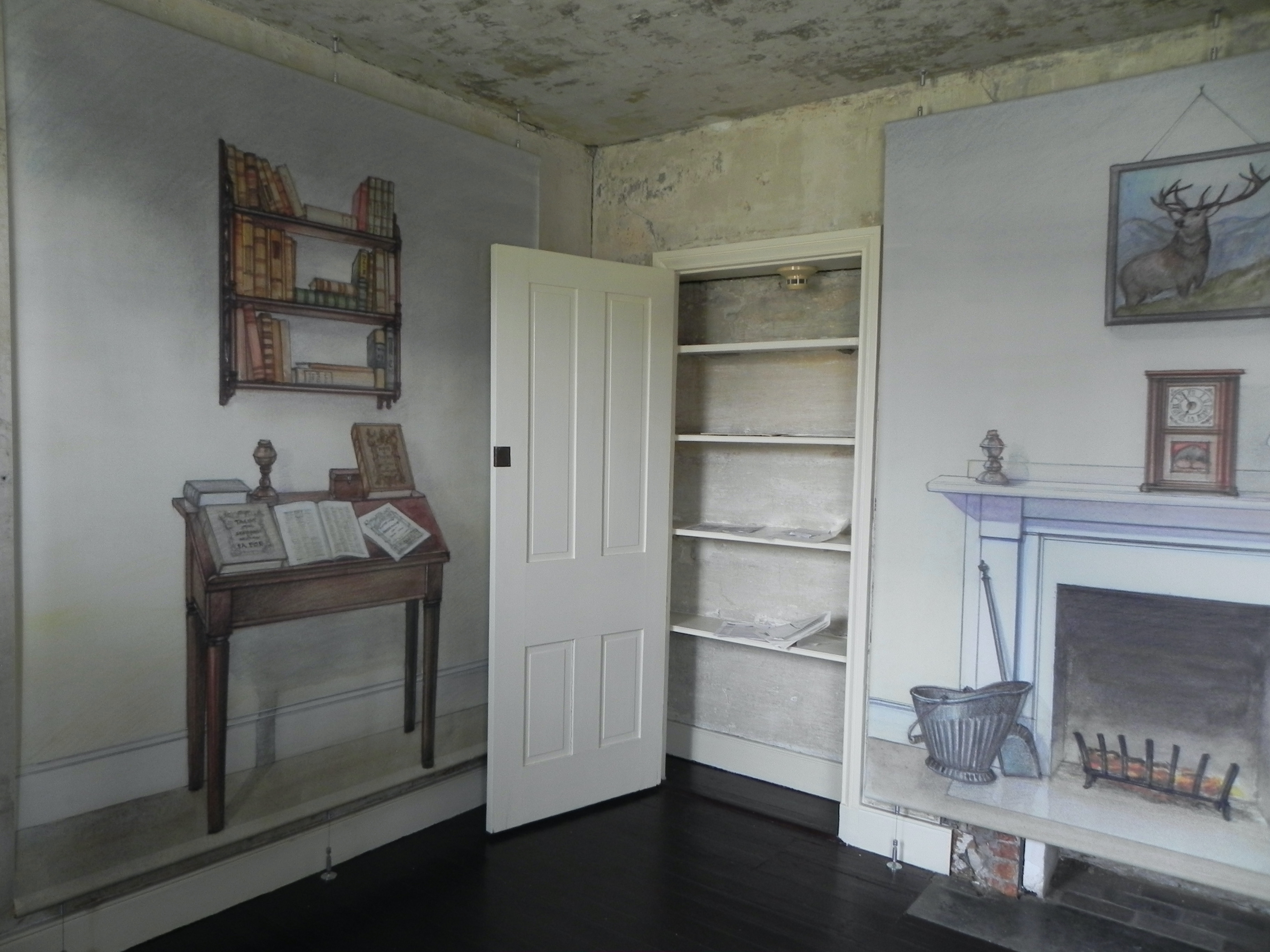
As I was pondering this, many such sites came to mind.  The birthplaces or living spaces of great writers have always drawn me into such a reverie.  Standing in Poe’s house in Philadelphia, knowing that one of the world’s iconic writers saw these same walls, walked these same floors, but for him it was likely ordinary.  For the rest of us it’s something more.  Yet I’m no closer to defining it.  Thinkers like Otto had professions that included unstructured thinking time.  Many of us don’t have that luxury.  We feel the urge but the clock for our 925 keeps inexorably ticking, like the beating of the heart beneath the floorboards that make a place sacred.  Many of these places are far too personal to write about in a public place.  They await someone with the time and inclination to think on these things to give us to words to define them.
Before and After

Fresh from seminary with a head full of historical-critical theory competing against my immortal soul, I was lost in the Church of the Holy Sepulcher. I’d learned enough in class and in my own reading to know that the association of Jesus’ burial here only dates back to the fourth century. And also that the identification was made by a politician—Helena was the mother of Constantine—and not a archaeologist, or even a theologian (God help us!). The location was, in other words, hearsay. Three hundred years is a long time to keep track of where something happened. I sit on a bus trundling through Weehawken every day and ponder that we don’t really know where Alexander Hamilton was shot. Such are the ravages of time. I was young and, presciently didn’t know if I’d ever return to Israel, so I wanted to make sure at the time. It was holy confusion. Finally an elderly Coptic monk beaconed me into his edicule to touch the stone. He gave me a cheap rosary and asked for a donation.

churchoftheholysepulcher1885

The scene returned to me when a friend sent me a story about the “discovery” of the actual chamber behind the build-up. The report by Fiona MacDonald in Science Alert briefly tells the background to the location and describes the hurried excavation. Still, we have no idea if, as Indiana Jones might say, “They’re digging in the wrong place.” Tradition has nevertheless hallowed the spot. For seventeen-hundred years some people have suggested this is where it all happened, and where many of the liturgical churches agree. Some Protestant groups, attuned to the Bible a bit more than tradition, have suggested The Garden Tomb is the correct location. The years ago when an academic future seemed in store, I stopped by there too, just in case. There were no crowds.

An enormous amount of effort was poured into building and maintaining the Church of the Holy Sepulcher. Crowded with tourists and various orders of clergy, I wondered how anyone might find such an experience spiritual. Territories are marked out between the various denominations seeking legitimacy in stone. Who wouldn’t want to own the spot where it actually happened? Wouldn’t that be the ultimate truth claim? So more money is being spent. More digging is taking place. Science, some believe, might come to the rescue of religion. From my experience, brief though it was, trying to make sense of the Holy Sepulcher, I have my doubts. But what do I know? I’m not even sure if Copts use rosaries.


The Tower

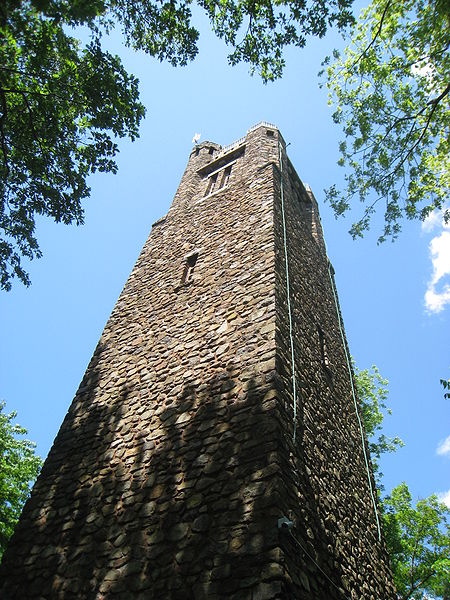
Photo credit: Daderot, Wikimedia Commons

Photo credit: Daderot, Wikimedia Commons

I’ve never been to Bowman’s Hill Tower. In truth, I’m not even sure what its significance might be. Beyond giving a spectacular view of the Delaware River valley, it is my understanding that it is a memorial built to George Washington and his many activities in this region. It’s not even that old. I have come, however, because of a memory not my own. Many decades ago, my mother visited the tower with her parents. She has pictures but couldn’t remember the name of the tower, or even where it was. As fate and happenstance have it, I live a mere hour away and I’ve undertaken this journey to a tower I’ve never seen to bring a sacred sense of place back to life for someone else. Too bad the park is closed today. It is a sunny Saturday in July, and it seems that everyone is outside. We drove across that impossibly narrow, rickety bridge between New Jersey and Pennsylvania at Washington’s Crossing (so named on both sides in both states) to find our way to this quiet park to find a lost past. “Closed” the sign laconically says.

The urge to travel, speaking strictly for me, is the pursuit of sacred space. Over Independence Day weekend we traveled to Boston not only to see fireworks, but to revisit a site of some personal significance. In my three years in that city life took me places I never imagined I might have gone. The memories, mine this time, although hazy, still permeate the air. Boston is a sacred city. Since childhood I have had dreams of Maine. From Boston I pushed further north to the rocky coasts and gray oceans of the stormy north Atlantic. Although neither God nor angel appeared, I knew that I had once again discovered the sacredness of space. Every time I leave, I count the days until I might return.

Many locations are sacred to a person. Some of mine are in the west, and some in the east. And when I’m there I require some time alone, for the sacredness of space is a deeply personal matter. When, many years ago, I was jostled into the Church of the Holy Sepulcher amid ecclesiastical robes too numerous to identify, I knew this was a holy spot for many. The very dust of Jerusalem seems sacred with age. But what had happened to me here? Beyond the endless readings and rereadings of the biblical tales, Jerusalem was someone else’s sacred location. Aside from the dark crusaders’ crypts, there was no place to be alone. I’ve never been to Bowman’s Hill Tower. Despite driving to Pennsylvania for that sole purpose, it is a place I have yet to see. And when I finally do climb that tower, it should, I hope become clear to me whether anything of the numinous remains in this dusty corner of somebody else’s memory. Sacred space is like that, and it keeps some of us forever on the move.