That Time Again

Where’d it go?  I could swear I left an hour sitting right here on the table, and now it’s gone.  That’s the feeling of waking up the day of Daylight Saving Time.  Sure, it’ll stay light later now, but the mornings, when hope is most necessary, are once again dark.  It’s funny how we play with time.  I’ve known many people who love the end of Daylight Saving Time because of the illusion that they’ve gained another hour of sleep.  In fact, it’s just a deferred payment.  The great time-keeper in the sky won’t be cheated.  So—pardon my yawn—we’re adjusting again.  One of the great mysteries of this is that keeping Daylight Saving Time permanent has strong bi-partisan support in the US government.  It never becomes law, however, because riders are constantly attached to it, making one side or the other back out.  And so we all spend a couple weeks trying to get our circadian rhythms to adjust.  Again.

I’ve often wondered about the timing for this change.  Why Sunday morning?  In this nation that likes to pretend to be Christian, it’s a regular joke that folks in pre-pandemic times would miss church, having forgot to set their clocks ahead.  One incredibly busy Sunday in Edinburgh, my wife and I had missed church altogether.  I’m thinking it must’ve been in the final throes of getting my dissertation finished.  When supper-time rolled around we found we were out of some ingredients and we went to the local grocery to find, of all things, it was closed early.  It was only then that we had to stop and laugh at ourselves.  We’d just spent an entire day out of joint with time and didn’t even know it.  In pre-internet days it was possible for that to happen.
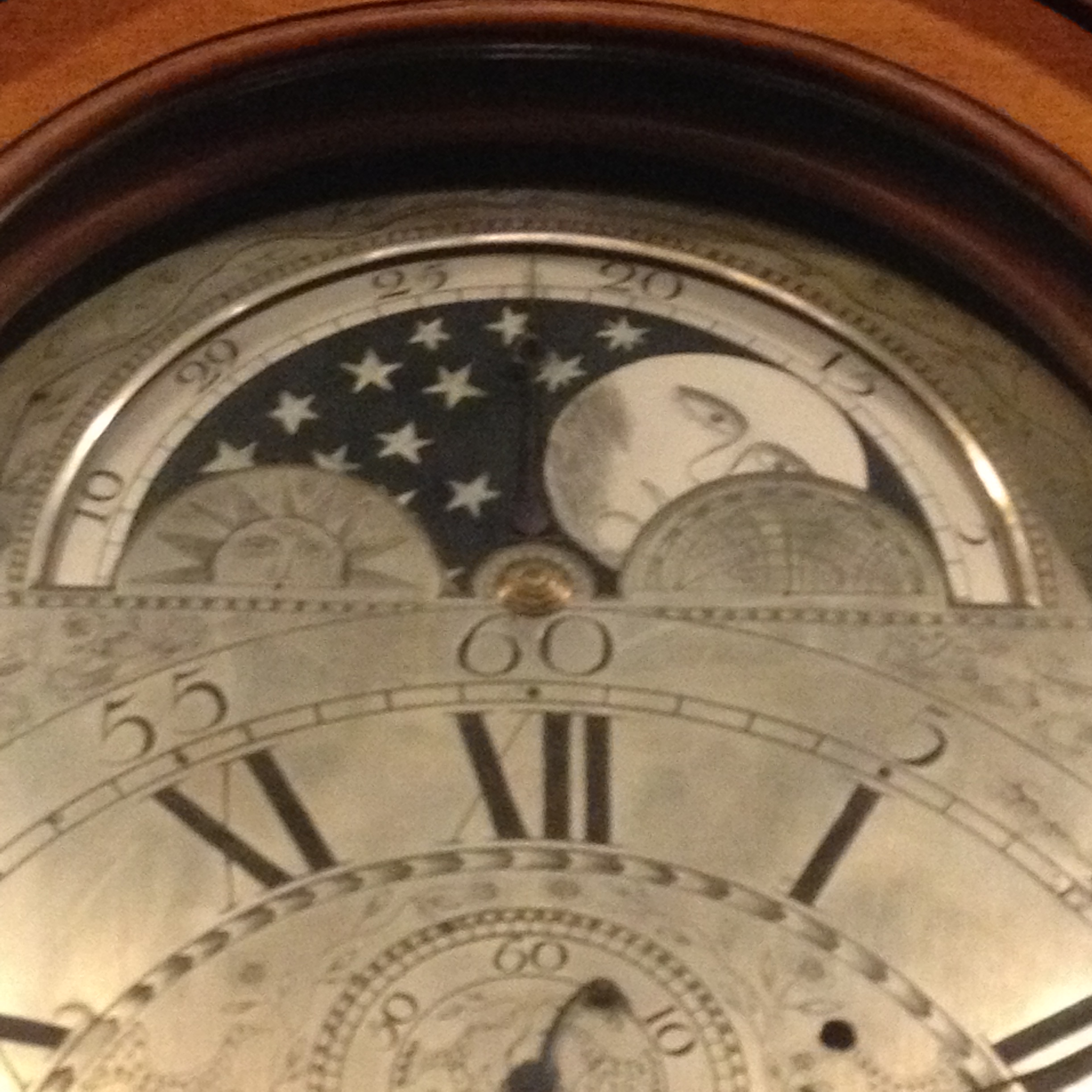
Most of our clocks now set themselves automatically.  I still wear an old-fashioned analogue watch.  I need to set it manually, which keeps me on my toes when Daylight Saving Time approaches.  O yes, and the clocks in the cars are off—they’re not wired in that way, being older models.  And the one on the microwave.  I can always use my phone for the accurately predetermined time on which we all agree to operate.  Even if the morning skies, which were starting to be light at six now stay dark until seven.  In another month we’ll catch up again.  And Daylight Saving Time, instead of being a strange intrusion, like most unwanted guests, will begin to feel like normal.

Retrograde Motion

How wondrous it feels, after a winter of dark skies, to see dawn beginning to break even before I crawl onto the bus in the morning. Almost pagan in my desire for the longer days, I anticipate this every year after standing in the dark since October. Then everything changes. Darkness falls again. I’m inexplicably weary, despite the sleep of a weekend. It’s Daylight Saving Time. Every year I wonder at this inane wartime madness that we keep going, despite its lack of applicability in an electronic age. Employers, I should think, with an eye toward efficiency, would lead the charge to end changing clocks twice a year to yawning employees and the inevitable depression of taking a step back into darkness. It will be another month before the sun again appears at my bus stop. Meanwhile, it will be light when I’m getting ready for bed in the evening. Perhaps I’m the only one who thinks about this. Religion, however, has always held time sacred.

IMG_2439

Quite apart from “sacred time”—holidays and festivals—religions have always been about the appropriate use of time. Counterintuitively, they suggest the rushing about we do to make money, to ensure our material well-being, might be misplaced. There might be a better use of the allotment that we’re given on this earth. Time to ponder. Call it prayer or meditation, studies show that it is good for us to spare some of our time for quiet reflection. Every second counts. And time sets the very patterns of our lives. Bodies know when to awake and when to eat. Until we go and shift the entire calendar on them.

Daylight Saving Time was a wartime measure to ensure the most efficient production of arms. Now, in days with lights blazing constantly, telecommuting, and farming being done largely by automation, we still religiously keep to this barbaric ritual. Eyes heavy with sleep, I stand in the utter darkness again, wondering when I might see some glimmer of light. It will only come when I’m ensconced in my windowless cubicle. It is so dispiriting. I, for one, would gladly forfeit a mere extra hour’s sleep in the autumn, just to keep progress going in the spring. Instead, I follow the crowd as we waste an hour that becomes five, six, ten, or twenty as we try to readjust our bodies to rising an hour earlier. For those of us up before four a.m., it is a sacrifice indeed. All I really crave is to allow the light continue to grow.