Tattered Dreams

If I sometimes wax rhapsodic about Bruce Springsteen, it is partially because the world is sorely in need of believable prophets. I’m not the only one to notice this phenomenon. Writers on American culture and religion frequently cite Bruce, and his message has been called everything from a prayer to a gospel. The fact is he, like the best of prophets, is one of us. To those of us who grew up in working class families, Bruce seems like the torchbearer who encourages us to keep going. We may end up still in the darkness, but we’ll be a little closer to the light. Sunday’s paper has a review of Bruce’s latest concert tour kickoff, and there is some sadness there at those who’ve been lost. Although I haven’t yet had time to listen to Wrecking Ball, I did read the tribute to Clarence Clemons in the liner notes. It reads like a secular liturgy.
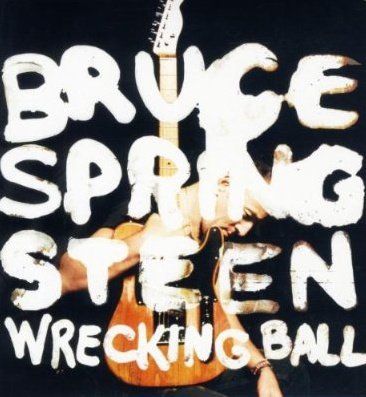
The word “liturgy” means “the work of the people,” or some such concept. And that is what Springsteen has always projected, the honor, the angst of the working class. There is trouble in paradise, from Cadillac Ranch down Thunder Road to My Hometown. Through it all, despair is always tinged with hope in, for lack of a better word, resurrection. In times when many artists focus on the escape, Bruce reminds us that hardship is real. Escape may be a possibility but even Born to Run still ends in New Jersey. Unlike many, the Boss is not willing to give up on this humble state. Perhaps the most diverse mix of people in the country, New Jersey is the American dream, scars and all.

Although his music has brought him fame and wealth, Bruce has not forgotten whence he came. Social inequality has been highlighted throughout his oeuvre, from the late 70’s on, and guess what? We’re still there. Like children of alcoholic parents we’ve grown used to promises being made that will never be kept. After reading what contenders for the presidency are saying, I cower, shivering with fear. I’ve never been one to believe a good beating is the way to solve anything. How is it possible that we’ve come so far only to have left so many behind? The American dream is indeed tattered, a mirage thrown to those slowly dying of thirst. If we’re going to make it through difficult times, we’re going to have to do it together. I guess that’s why I keep coming back to Bruce. In a world where lies are the coin of the realm, the words of true value can still be found, even in New Jersey.


The Big Man

“When the change was made uptown/And the Big Man joined the band…”

Clarence Clemons (from WikiCommons)

Among the earliest markers of religion in human culture is the advent of music. While still disputed, bone “flutes” from about 40,000 years ago seem to indicate that early humans knew the value of music. Driving around now that the weather has warmed up, it is clear that people still find music so important that they like to share it from their open car windows at a volume I find uncomfortable even across the street. Like religion, music is an intensely personal aspect of life. Although I mention bands I like occasionally in this public forum, I never parse my music tastes too much because they are a little too revealing. With Clarence Clemons’ death yesterday, however, it is appropriate to pause and give my respects.

Those who know me sometimes wonder at the fascination I have with Bruce Springsteen; I am not an idol-worshipper and not all of Springsteen’s work appeals to me equally, but he represents an appreciation of the ordinary person. What first drew me to his music was the fact that he understood blue-collar mentality and angst generated by an unfair society. In an interview on his Born to Run special edition, Springsteen notes the seminal change that Clarence Clemons made in the E-Street Band, as reflected in the opening quote from “Tenth Avenue Freeze-Out” above. The playing of Clemons’ saxophone was so distinctive that even my very untrained ear could often pick it out on other artists’ albums even before reading the credits.

The E Street Band, of course, changed over time and lost a first-generation member with Danny Federici’s death three years ago. Although Bruce Springsteen is alive and well, and still active in causes to help those who are victims of an uncaring system, the E Street Band will never be the same without Clarence Clemons. The old camp song says that music never dies, and that is a hope we can hold out for the impact of remarkable performers as well. When I walk into a classroom with kids who have no idea who the Beatles were and who’ve never heard of Alice Cooper, Deep Purple, or Pink Floyd, I feel my age. But it is okay as long as I can still listen to the music once I get home (I never play the stereo while driving—I prefer to concentrate on the music a little too much). It is like a religious experience. I am sure the cosmos is a more harmonious place for having hosted Clarence Clemons, even if just for a little while.