
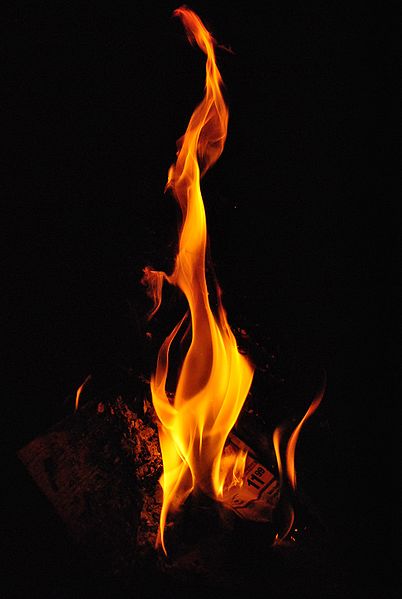
“It was like Armageddon,” a woman in Colorado Springs told a reporter, according to CNN, after seeing the wildfires raging down the mountains onto the city. The article opens with a reference to Godzilla. The story is a wrenching reminder of how helpless humans are in the face of disaster. When facing danger far bigger than ourselves, language of God is never far behind. The things we control—the future we engineer—is bright in prospect. We’ve impacted our own chances for the better in a steady surge since the Middle Ages. Of course, there have been notable blips along the way where we’ve fallen victim to our own paranoias, but generally, things are better. Controlling fire was among the first of human innovations that eventually led to civilization. Humans took a natural force and put it to work for us. It is easy to forget that fire serves no master. Until nature reminds us.
Earth, wind, fire, and water. The ancient Greek philosophers had narrowed the basic environment down to four features. Each of them holds profound dangers for a small species like our own. No wonder the ancients ascribed each of these elements a guardian deity or two. On driving trips to the west, I have gone past fires whose intense heat could be felt hundreds of yards away in the air-conditioned comfort of our car. Still, I shuddered. In this day of advanced transportation, most people can drive themselves away from the danger of wildfires. The problem is that material goods take up space, and in a world that values material goods above all things, well, you still can’t take it with you. My heart goes out to those who tell their stories of impossible decisions of what to take. What in our lives can’t be replaced? What do we truly value?
Funny thing is, we’ve known since I was in high school at least, that our own actions were changing the climate. The wildfires may not be directly related—I don’t know—but I do know that we’ve been in deep denial. We’ve been caught in a sin so black that the only way out is to lie until we’re even deeper in it. We’ve been destroying our own environment for money. Money with which to buy material possessions. Earthquake, hurricane, wildfire, and flood. None of the four elements are safe. We can put our material goods in a secure house in a mountain stronghold and still lose everything. It is the fate of a culture that puts too much faith in material goods. Colorado is beautiful and peaceful, much of the time. But nature respects no human. Yet we put our faith in material things. Maybe she was right after all, it is like Armageddon.
Friend and foe.
 Steve A. Wiggins