Not Frightening

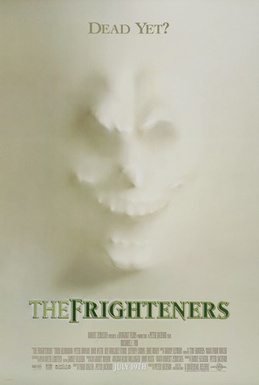
Years ago a friend, which I define as someone who wishes me no specific bodily harm, suggested I watch The Frighteners.  It finally came to a free streaming service (with commercials), so I gave it a go.  I really enjoyed parts of it, but on the whole, there was too much going on to make it an effective film.  It’s a horror comedy, and once films like that stretch beyond 90 minutes they tend to need a lot of magic juice to keep the engine running.  So, here’s the basic idea: Frank can see ghosts.  With the help of a couple of ghosts he makes a living driving spirits from peoples homes, after setting them up.  Unfortunately there’s a serial killer ghost actually killing people.  Since Frank tends to be the last one the victims see, there is some suspicion that he’s involved in their deaths.  

A young widow, Lucy, is a doctor and is trying to help a woman (Patricia) who seems to be abused by her mother.  It turns out that Patricia is associated with a serial killer from many years ago, and it’s unclear whether or not she’s innocent.  Meanwhile, a neurotic FBI agent comes to town and decides Frank is guilty and tries to kill him without due process.  Meanwhile, more and more people are dying.  It’s probably a spoiler to say that the serial killing ghost is the same as the serial killer that Patricia was in love with and she’s still helping him to get to a record number of deaths.  Frank ends up dying twice but is brought back to life at the end, after Patricia and the serial killer are taken to Hell.

The movie is stylish and a bit of fun, but if you’re watching it on a streaming service with commercials it ends up being over two hours long.  Some parts are funny, but not hilarious.  Some parts are spooky, but not really scary.  The plot is complex and takes its time unfolding.  The serial killers attempting to break a record is disturbing and not exactly in good taste.  The acting is good but the viewer’s left feeling a bit confused as to what the message is and how they ought to feel.  It’s the kind of movie that I might find myself in the mood to watch again, someways down the road, but in the short term, I’m glad to have seen it once.  I’m not sure my friend and I share taste when it comes to movies, but at least he’s not wishing me any harm.


Addams Family Research

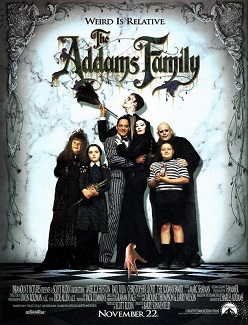
After having binged on Wednesday earlier this year, and wanting something lighter to watch, we finally saw The Addams Family.  Neither my wife nor I watched the television series too much when we were kids, but it’s probably no surprise that I watched it more.  As with Wednesday, if you didn’t see the television show, or read Charles Addams’ cartoons, you can still enjoy the movie.  After all, some of the salient aspects of the eponymous family are never explained.  Why are they so wealthy?  Things like that.  Although the movie, which is family friendly, can’t be called horror, it is a dark humor piece that scratches a certain itch.  For several years I’ve been pondering how horror has become such an amorphous genre that it really tells us little about a movie.  Taken literally, this one would be horror.

Not having grown up as a particular fan, I never really attempted to research the Addams family, but the basic idea was that they were people who lived as they liked, not caring what others thought of them.  They remain happy and cheerful in their macabre tastes.  The humor in such a situation is obvious.  The ultimate non-conformists, they are wealthy enough not to have to worry about fitting in.  Also, they tend to have some supernatural abilities.  Watching the show growing up, the character that never seemed to fit  the macabre image was Pugsley.  Often a partner in crime for Wednesday, his “monstrous” nature seldom seemed obvious to me.  Maybe it was his outfit.  In any case, not fitting in is what the show is all about.  Not fitting in and not worrying about it.

The plot of the movie is surely well known by now.  Gomez’s brother Fester is missing and a criminally minded Abigail Craven sends her lookalike son Gordon to take Fester’s place to get access to their riches.  The humor, apart from the madcap plot, often comes from subverted expectations.  A character points out a gloomy, macabre, or scary situation followed by a comment of how much they enjoy it.  As I’ve noted, taken literally such things define horror.  Horror and comedy can work well together.  In fact, I’ve reviewed many horror comedies on this blog.  I would have never thought to have watched this movie, however, without the prompting of Tim Burton’s Wednesday.  She’s an underplayed character in the series since the focus tended to be on the bizarre adults, as far as I can recall.  As Christina Ricci’s second feature film, her Wednesday laid the groundwork for the Burton series.  Maybe it’s time to do a little more research into family history.


Light Shadows

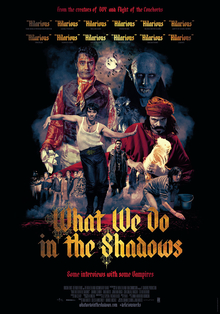
I often do things backwards.  It’s not really intentional.  You see, I’m busy with my day job and something most people may not realize is that researching and writing are also a full-time job.  Only they don’t pay well, unless you’re a professor.  In any case, I find out about things in odd ways.  A friend got me watching What We Do in the Shadows, the current FX television show.  I then realized it was based on a movie so I decided I should see that before going any further.  The movie is funny, but the television show develops some of the same bits so really, it is best to see the movie first.  It turns out that while I’ve been busy working, and writing books on other types of horror movies, this franchise has been developing.  So what’s it about?  Vampires unliving together.

One of the contradictions about vampires, as the undead, is that they live by certain rules that make them distinct.  Going back to Bram Stoker’s Dracula, they don’t always live alone.  In fact, three female vampires live in Castle Dracula (although the Count moves to England without them).  What We Do in the Shadows is based on the premise of vampire roommates in contemporary housing.  How would they get along as roommates?  Many of us have experienced roommates and we know the kinds of conflicts that normally arise.  Would the undead have some other complications?  In case you haven’t gathered so already, this is comedy.  There are a few vampire chase scenes and a hilarious interaction with werewolves, all filmed as a mockumentary.  It’s pretty funny stuff.

There’s nothing too serious here, but there is bloodshed, of course.  And the developing of different characters for the undead and putting them together in one house does lead to all kinds of situations, some of them adult.  The television show is binge-worthy, if you’ve got the time and if you like vampires.  If you want to start from the beginning, the movie sets the premise well.  Vampires are so well established culturally that there’s plenty of room to fly.  Comedy horror has really come into its own.  Vampires have been culturally ascendant for quite some time now.  They are yet another thing I was fascinated by as a child that later became cool.  I wrote one of my senior term papers on vampires in high school, before college convinced me such things were puerile.  Now I’m finding that the culture has gone after them.  As I say, sometimes I do things backwards, even on a large scale.  


Betelgeuse

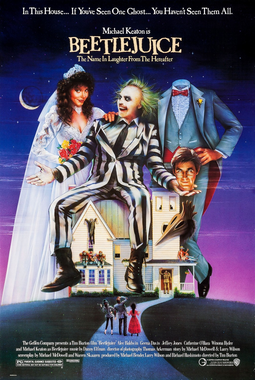
So let me see… from 1988 to 1992, what was happening?  Hmm.  I was getting married after moving halfway across the country in a rented car, moving to Edinburgh with no money, and working on a doctorate.  I guess I was pretty busy.  I missed Beetlejuice in 1988 and confused it in my head with Death Becomes Her (1992), which I may or may not have seen.  Some time ago I felt that I really should watch the former, not because of the sequel.  I may have seen bits of it over the years, but I wasn’t impressed with what I remembered.  Maybe part of the draw—the movie did quite well when released—is how different it was then from many things that came after.  Now that I’ve finally watched it, I can see it has some charms but I felt rather like the critics who noted the Betelgeuse subplot seems dissociated from the rest of the movie.

Michael Keaton as Beetlejuice is fun to watch, no doubt.  He doesn’t have much screen time, though.  His backstory, which seems important to explaining why he is how he is, feels shortchanged.  It also doesn’t really explain why the other characters dislike him so much.  When he’s released to save the Maitlands, he does, yet all they want to do is banish him.  I know better than to look for a coherent set of character motivations in such a movie, but for all the fronting of Beetlejuice, the story is really the Maitlands coming to grips with being dead and having other people move into their house.  The Others, while straightforward horror, handles this dynamic a bit better.  Of course, Beetlejuice is a Tim Burton movie, and that comes with a certain inherent quirkiness.

I had a mixed reaction, it’s fair to say.  Part of the problem may be that I’ve seen some of Burton’s better work, which came after Beetlejuice, before seeing the movie.  And other movies have done quite well in the weird category (Parasite, Everything Everywhere All at Once, Poor Things), making Beetlejuice feel its age.  Or maybe it’s all the build-up to Betelgeuse and then giving him so little time for his antics.  Perhaps it was the title of the film, or its confusion in my brain with another dark fantasy comedy, but it just didn’t press all my buttons.  Seeing it in the context of its Zeitgeist may have helped, but I was rather busy then and that part hasn’t really changed since.


Another Frankenstein

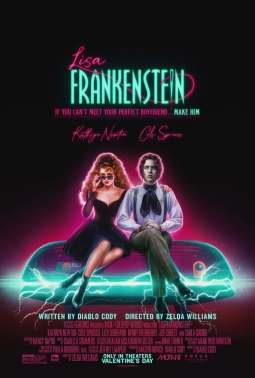
It’s a persistent bias.  Hollywood and the general public (at least critics) still downgrade the work of female directors.  I watched Lisa Frankenstein and loved it.  It’s a movie that was recommended both by a friend and the New York Times.  Okay, so it’s a comedy horror, but it’s well done and again, told from a female point of view.  It reminded me quite a lot of Edward Scissorhands and a bit of Frankenweenie.  But let’s step back a second.  Lisa is a high school senior whose mother was murdered by a maniac with an axe.  She lives with her father, step mother, and step sister in a new town and she’s got Goth sensibilities.  She hangs out in the overgrown cemetery, particularly at the grave of a Frankenstein.  A lightning strike brings the Victorian-era corpse back to life and since Lisa had said she wanted to be with him, he comes to her.

Missing some body parts, including his tongue, he begs Lisa for help restoring them.  This they do through murders (at first, accidental) so fresh parts can be sewn on.  After each addition an electric shock revitalizes the organ and makes the creature more human.  Of course, Lisa goes through the usual high school difficulties and her relationship with her bubbly, cheerleader step-sister keeps her going.  Especially since the step-mother is wicked.  With plenty of nods to classic horror, and an innovative story arc, I found it quite enjoyable.  It isn’t a perfect movie, but it is a very good one.  It shares a writer with Jennifer’s Body, which I discussed not long ago.  The movies have a bit in common, but are distinctly different while dealing with issues of girls becoming women.

I have a soft spot for gothic tales, as regular readers know.  Lisa Frankenstein manages to be gothic while also being funny.  Like Stranger Things, it revels in the culture of the 1980s and the sound track is quite good.  Written and directed by women, it falls into that category of movies that should’ve received more advertising.  I wouldn’t have known about it had not a friend recommended it.  While comedy horrors may be an acquired taste (I still prefer straight-up gothic tales), they often work well.  Another tie-in is clearly Corpse Bride.  There’s a healthy dose of Tim Burton aesthetic here.  Mixed with that pathos we all remember as high school.  The period when our chrysalis begins to crack painfully and we start to take our first steps as adults.  No matter what the cultural bias says, women’s experiences are just as valid as men’s.  And Lisa Frankenstein understands that.


Whence Evil?

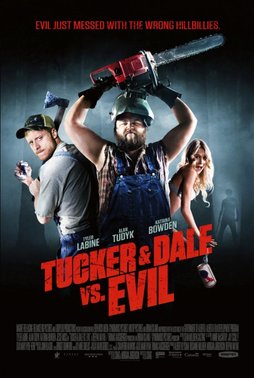
I’m at a stage where horror-comedy, or comedy-horror is becoming appealing.  This sub-genre is really perfect for those horror fans who like to laugh and still get something of substance.  Tucker and Dale Vs. Evil is a great example of the dangers of stereotyping.  Like Scream, it is very aware of horror tropes, but it makes fun of them in creative ways.  At points it’s laugh-out-loud funny, but it is pretty gory.  It begins with the usual folk gothic scenario of a group of college kids going camping deep in rustic country.  At the last gas station, they encounter Tucker and Dale, whom we’ve been primed to think of as potentially murderous hicks.  In reality, they’re a couple of hapless but nice guys on their way to fix up a cabin they bought as a vacation house.

The college kids end up camping nearby and interpret everything Tucker and Dale do through the lens of assuming hillbillies are inbred evildoers.  It’s kind of a reverse Deliverance.  So it sets up a love story between one of the coeds, Alison, and Dale, who rescues her from drowning.  Meanwhile Alison’s friends assume Tucker and Dale have kidnapped Alison and plan to attack to set her free.  Of course, mayhem ensues.  Dale, who is big and shy, and who suffers from an inferiority complex, keeps on making missteps in trying to convince the other kids that his intensions are good.  That’s the most brilliant part of the movie—it cautions against reading people in the light of our biases.  Often when I find myself in areas where we see lots of Trump signs, the locals, in non-political contexts, are very nice.  I feel sad that one man has decided hatred is the only way to power.  Making people distrust and hate each other so that he can win.

People, overall, are pretty descent.  There are some bad ones out there, for sure, but the number of times I’ve encountered helpful strangers—in both rural and urban settings—reinforces my underlying belief that if we don’t try to set people against one another their natural goodness will come through.  It’s hard to do when all the campaigning, and even the rhetoric from 2016 to 2020 was of distrust of others and personal superiority.  The real hero of Tucker and Dale Vs. Evil is Dale, the one with an inferiority complex.  Those who humbly assume that others are better than they are seldom try to hurt other people.  And yet, those who don’t know “salt of the earth” types, who may live in less-than-ideal circumstances, frequently approach them with fear.  It’s a horror-comedy in the making.


Terrible Comedy

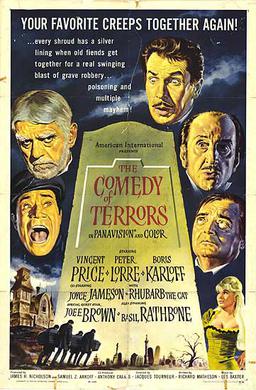
Frankly, I expected better.  The Comedy of Terrors seemed to have a lot going for it.  With my current interests in American International (AIP), Vincent Price, Jacques Tourneur, and Richard Matheson, watching it for free was a no brainer.  And I mean, no brainer.  Maybe it lacked the Roger Corman touch.  The premise is cute enough, bring together horror icons and have them take the mickey out of Shakespeare’s Comedy of Errors.  Peter Lorre and Boris Karloff join Price and Matheson scripts generally don’t disappoint.  Tourneur had a string of great horror movies behind him.  But the magic just isn’t there.  Comedy horror, or horror comedy, is difficult to pull off well.  Particularly if it’s deliberate.  What Young Frankenstein got right just went wrong in Comedy.

All of this makes me more conscious of just how impressive a great movie is.  With so many moving parts, films leave plenty of gaps where things can go awry.  The vast majority of movies perish with little notice, of course.  Success—earning more than it cost you (still waiting for that with my writing)—comes to some, and that’s what has me vexed here.  Tourneur was a talented director.  The actors all had proven themselves repeatedly.  Matheson brought life to so many horror and sci-fi movies and television shows.  Even AIP had a number of hits after starting out as notorious for their low-budget approach.  The jokes in Comedy aren’t funny and the horror’s not scary.  Some have opined that the sarcasm is spot-on, but it didn’t seem so to me.  There’s even some disagreement as to whether the film earned its budget back or not.

Horror movies come in all stripes.  And spots.  Even solids.  Comedy horror isn’t my favorite, but some of the gems of the genre (Rocky Horror Picture Show, Gremlins, Shaun of the Dead, Ghostbusters) show that the combination can work but ought to serve as cautionary tales.  (Both Ghostbusters 2 and Gremlins 2 failed to capture the magic of their forebears.)  If everything falls together just fine, step back and bask in wonder.  Trying too hard (of which I’ve been accused) sometimes doesn’t work while you’re attempting to be funny.  It’s pretty clear that Nicholson and Arkoff thought bringing all of this talent together was a recipe for success.  Of course, there are plenty of moving parts and a director, or even a producer, is entitled to a blunder or two.  I like a good laugh as much as the next guy, and after seeing this flick I could use one.


Small Things Grow

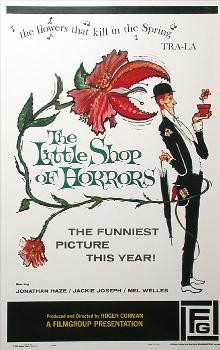
I’ve always been fascinated with origins.  I guess I’m a kid who never grew up.  Now that I’ve turned my attention to movies, I sometimes wonder about the origin of the story.  For example, The Little Shop of Horrors.  I first saw the musical movie version of 1986.  It was cute, and employed horror themes like the Rocky Horror Picture Show from the previous decade.  Then, when Roger Corman died, I read that he’d filmed the story back in 1960.  Curiosity compelled me to watch the original.  Like its remakes, it’s comedy horror, or horror comedy.  But beyond that it’s a literal farce.  Roger Corman was a showman, and that means he tried different things to entertain.  One of them was Little Shop.  The idea of the plot you probably know, but I couldn’t remember the ending as I sat down to view it.  After all, it’s not meant to be taken seriously.

I have to say that the music makes it better in the remake.  The endless malapropisms and burlesque humor are funny, but really in the original they are presented as low comedy.  The Jewish humor was early on I feared might be anti-semitic, although not intended that way.  I empathize with Corman.  It took him nine months to find a company to release the film.  Ironically, it attained cult status after being double-billed as the B movie with Black Sunday, which was a quite serious attempt at horror.  Camp has a way of living on in cult status.  Of course, the early bit part for Jack Nicholson didn’t hurt.  It isn’t bad for a bad movie.

The idea of people-eating plants is a reasonable approach for a horror story.  (I’ve used it myself.)  Plants move very slowly, however, which is one reason that the idea’s hard to accept.  Even The Land Unknown had used the idea three years earlier.  But the seed was planted.  The idea of the film lead to an Off-Broadway show, which led to the more famous movie.  Then it reopened off-Broadway and a reboot was planned (but currently seems to be on ice).  Not bad for a movie based on a desire to reuse a set that was scheduled to be torn down, and then shot in two days.  Classic Corman.  The result was a bad film that is still fun to watch all these years later.  I did miss the musical numbers, however.  When you plant seeds, you never know what might grow.


Why Weenie?

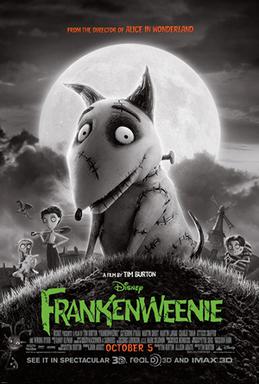
Often I ponder how incredibly influential Frankenstein has been.  Even those who don’t care for horror instantly recognize the creature and what he represents.  (At least partially.)  Tim Burton thought of tying Mary Shelley’s story to a pet dog in Frankenweenie.  This was a black-and-white, live-action short released in 1984.  It wasn’t aired much before being locked in Disney’s famous vault.  It wasn’t really what Disney was known for.  Ironically, then, in 2012 Disney released a feature-length version, also black-and-white.  This one was stop-motion animation, however, inspired by Burton’s Corpse Bride characters, at least to a point.  At its core the story of a bereft boy bringing his dog back to life, the original showed the mayhem introduced by crossing the border between life and death.  Not too different from what Shelley was intimating some century-and-a-half before.

The remake, or reboot, was feature length and had to develop the plot a bit.  Along the way there are numerous nods to other horror films.  Critics have noted that horror is an amazingly self-referential genre.  Comedy horror delights in parody.  So, as a Vincent Price-like science teacher inspires Victor with the concept of reanimation via electricity, the boy decides to resurrect his pet.  Other school children find out about the undead Sparky and decide to make their science fair projects reanimated pets.  Or sea monkeys, in a clever take-off on Gremlins.  Naturally, the other pets lack Sparky’s good will, not raised out of love, but out of a desire to win a competition.  One student’s resurrected turtle becomes a Godzilla-like kaiju, allowing for winks at Jurassic Park.  The cat-bat reminded me, anyway, of Gremlins 2.

Ultimately, the story comes to the same resolution as the original short.  Of course, this isn’t scary horror.  Comedy horror is an odd genre.  It permits darker-themed elements to play against fun and fantasy.  Frankenweenie isn’t really laugh-out-loud material, and if you’ve seen the previous version the story arc is already known.  Still, it’s an effective movie.  Although it made millions at the box office, it wasn’t as many millions as Disney has come to expect.  But it is quintessential Burton.  It also has a moral attached—that even scientists need to pay attention to love and the motivation for learning.  The parents at the PTA meeting are scandalized by what science does, in a bit of real-life parody as well.  So Frankenweenie came across as pretty good to me.  I like monster movies.  It did lack, however, the emotional impact of the original.  Of course, the tale of a boy and his dog is its own kind of archetype, I suppose.


They Come in Batches

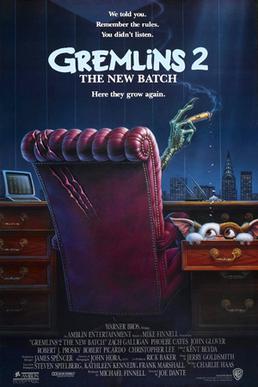
There’s horror and there’s comedy horror.  And then there’s just plain silly.  Gremlins 2: The New Batch falls into that last category but with the strange factor that it’s silly without being funny.  There are a few smirk moments, and sometimes the self-parody approaches clever, nevertheless it’s bad.  It’s a big budget bad movie.  The idea that the gremlins try to take over New York City is funny, at first, but other than Phoebe Cates and Christopher Lee, they don’t seem to know this is a satire of Gremlins.  I guess not knowing about the plot—I tend not to read reviews about movies before I see them—I was expecting something more like the first one, which I thought was pretty good.  The only reason I knew the movie existed at all was that the Blu-Ray version of Gremlins comes with The New Batch.  The late eighties and early nineties I was spending holed up in Edinburgh working on a Ph.D.  We didn’t have much money and didn’t see many movies.  We had no television (there is, or was, a television tax in the UK), so I never heard of the sequel.  

I presume we all know the three rules of mogwai, and needless to say, they immediately get broken.  The eponymous new batch takes over the Manhattan tower of Daniel Clamp.  His high-tech building needs no gremlins because the technology already doesn’t work well.  The high rise houses, among other things, a genetics lab where Christopher Lee camps it up, but which means the gremlins have access to formulas that allow them to grow wings, tolerate sunlight, and become spiders.  Sound silly?  You betcha.  One of the gremlins is even able to talk.  I watched with increasing stupefaction. 

Bad movies and cult followings are the peanut butter and jelly of cinematography.  Some bad movies never attain cultdom, but I can see why this one has.  The big budget ensured glitz and special effects.  Even the self-awareness to have Hulk Hogan being able to control the gremlins in the theater with a threat almost gives the movie an art film feel.  The horror, mostly based on the fact that there are monsters, is tightly constrained.  Although I felt increasingly like I was wasting my time as the movie went on, upon reflection I can see why some people have glommed onto it.  It may just have edged over into the so bad it’s good category.  I’ll need to think about it.  And avoid eating after midnight.


Christmas Monsters

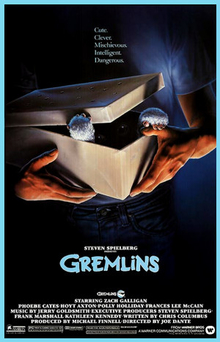
Gremlins holds up pretty well with the years.  My renewed interest was sparked by holiday horror—I had last seen the movie in a theater in 1984, when it came out.  Having grown used to CGI, I was surprised to re-learn that the gremlins were puppets but that it was so obvious was also a surprise.  Although comedy horror, or horror comedy, had been around for years at that point, as critics pointed out, the contrast here was stark.  This could be a kid’s movie (and was one of the reasons behind the shortly new PG-13 rating) but the nasty gremlins could be unexpectedly brutal.  I’d forgotten that Billy’s mother was so effective—killing a gremlin in a blender and another in a microwave.  The story has been retold and/or parodied often enough that a summary isn’t necessary, but given my recent interest in both gremlins and holiday horror, it’s worth a few moments’ reflection.

Holiday horror is more than a scary movie that happens to occur on a holiday.  In my definition, the horror has to derive from the holiday itself.  In Gremlins the gift of Gizmo is based on the fact that it’s Christmas, otherwise Rand wouldn’t have been looking for a gift for his son, starting the whole chain of events.  More than that, the reason I didn’t go back to the movie again in my college and grad school years was the story Kate tells about her father on Christmas.  Like some parents, I felt like what was a fun little story was a bit too distressing given the holiday setting.  Would the story have worked set at a different time of year—remember, it was released in summer—with the commentary that it makes about consumer culture?  No, this had to be a Christmas movie and the fear comes from that fact.

The gremlins are given minimal backstory here, although Murray Futterman tells Billy and Kate  that gremlins come from foreign merchandise and they tinker with machines.  Gremlins had been used in horror before, and given that the canon of classic movie monsters was being set from the thirties through the fifties (gremlins appeared as monsters as early as the forties) they fit right in.  They’re inspired monsters.  People naturally feel vulnerable on planes and monsters in the atmosphere can be particularly frightening.  And the fact that technology frequently malfunctions, well, wouldn’t it be nice to have a monster to blame?  Reading up on the movie made me curious to see the sequel, which, it seems wasn’t too badly received.  I’m glad to have used a small portion of the holiday season to have refreshed my memory.


Funny Scares

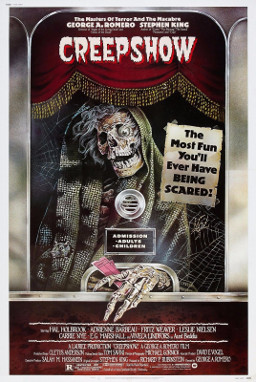
Camp has its own aesthetic.  I’m not talking about the kind with tents and sleeping bags, but that has its own aesthetic too.  No, I mean campiness in pop culture.  Creepshow, which was released in 1982, has maintained its value as camp and you pretty much still have to pay to see it (at least it’s free not on any streaming services I use).  For an episodic film it’s not bad, and since it’s comedy horror it won’t keep anyone up at night.  And of course both Stephen King (who wrote the script) and his son Joe (future horror writer as well), appear in the movie.  The elder King in a charmingly overacted segment based on one of his short stories clearly influenced by H. P. Lovecraft.  Put this all together with direction by George Romero and a cast including Leslie Nielsen and you’re in for a fun afternoon or evening.  (Or morning.  I won’t judge.)

It’s definitely a period piece.  The attitudes are those of the late seventies and early eighties.  That fact underscores, for me, how media affects everything.  Cultural outlooks change periodically and the more we know about what other people think, the more quickly they change.  Of course, since this is camp you can’t take it seriously.  And yet you somehow do.  The first vignette is, appropriately, holiday horror.  It has to do with Father’s Day which is, I suspect, a holiday to which most men acquiesce rather than anticipate.  This story is about a dad who takes it too seriously and a daughter who takes it too far.  Until…

The plots of all the stories are comic booky, and they contain many of King’s early themes.  “Something to Tide You over” is probably the most disturbing of the tales, at least by implication.  It reflects some of King’s fears as presented in some of his short stories but the method of execution is particularly distressing.  The comic book ending, however, shows it’s all for fun.  The prologue/epilogue reflects, I expect, the experience of many of us growing up.  I remember having comic books to which my mother objected because they were “too scary” for young boys (in our context).  I even recall her trying, and perhaps succeeding, to take them away and put them in the trash.  This is a situation as old as media for children.  The brothers Grimm knew just as well as King does that kids like scary stories.  Some grow out of that.  And others of us find a couple hours to watch Creepshow as an adult.  At least those of us who enjoy camp.