Something I Said?

I’m very aware of my own insignificance.  I know that I’ll die and be forgotten, just like everybody else.  Even if I manage to survive by some “Kilroy was here” action, the sun will eventually red giant all of this out of existence.  Still, sometimes I wonder if it’s something I said.  You see, I really didn’t know where to start when I published Holy Horror.  I was an editor myself and thought maybe the secret handshake would earn some kind of attention, but no.  And when I wrote both Nightmares with the Bible and The Wicker Man, both were with established series.  And in latter cases, the editor I was working with (long-term employees, both) left.  Left before the book was published and I was left wondering.  Was it something I said?
Not to brag or anything, but I’ve got about the lowest self-image a person can have.  When life beats you up repeatedly, starting at a young age, you quickly learn your place.  But still, all this leaving.  I’m a member of a faith community (if you want to know which one you’ll need to get to know me personally).  This particular tradition requires a meeting with the minister before joining—something that makes good sense.  The first church where we tried this, the minister was in the process of leaving and couldn’t schedule us in.  Then we moved and in our new area, the minister left about a month after we started attending, before we could meet.  Was it something I said?

I ask this question half in jest.  Still, having a father leave when you’re only two or three, you start to question just about everything.  I’m sure retirements, new opportunities, or just fedupness with the job (which I certainly understand) caused these changes.  But then I was ousted from three jobs in fairly quick succession.  During my interview at Rutgers University the chair of the religion department said “You must feel like you have a target painted on you.”  Leaving is a natural part of life, I know.  As an editor I know that leaving such a post is somewhat unusual because where do you go from here?  Ministers, well, they’re leading the charge during the great resignation.  Maybe they’ll become editors?  As for the rest of us, we’ll just continue to spin dizzily on this globe until old Sol stretches his arms and lets out a big, red yawn.  I won’t be here by then, but wherever I am at that point, I’ll be wondering if it was something I said.
Book Birthing

Books, like humans and other animals, undergo a process of conception, development, and birth.  It may seem, when holding a book in hand, that it is the singular work of one person, but in fact most books are a community effort.  I’ve read many books where the author was a specialist in one area and decided to write a book in a different field.  This used to be more acceptable, as various polymaths showed that specialization wasn’t the only way to understand the bigger picture.  Such efforts these days, however, take some convincing of skeptical editors.  And with good reason.  Factual books, especially, are subject to close scrutiny.  Does the author indeed know what s/he is talking about?  Is s/he qualified to write this book?

Recently I was reading such a book.  It was published by a university press, and the author was a specialist in one field, but writing in an unrelated one.  In my mind (so fictionally) I went through how this may have developed.  A writer goes to an editor and says “I have an idea for a book.”  From my own experience as an editor, this second party then asks her or himself a few questions.  Is this topic a viable book?  If so, who will buy it?  Is this author the right person to write it?  (It is possible that a person has an idea for a book better written by someone else.)  Depending on the author’s stature, the editor may cave and say, “Okay, but you need to let me help you.”  Editors (present company excepted) are some of the smartest people I’ve met.  They may not be specialists like professors, but they know an awful lot.  Many authors constantly question their editorial decisions nevertheless.

No matter how rational an author is, emotion plays into the process of writing.  I frequently tell my authors “the book has to be what you want it to be.”  Still, that may mean it should be published by someone else.  An author who publishes books s/he doesn’t like is not a happy person.  For nonfiction books other readers, such as peer reviewers and colleagues, also shape the final tome.  Seldom does the book in your hands represent something straight from the mind of the writer.  There are places for such things, of course, this blog being one of them.  (And there are many more.)  What makes the book authoritative, however, is that it has been fact-checked by many readers other than the author before it ever goes to press.  Gestation is important.  No book can be fully formed without it.


Publisher’s Breakfast

I recently had the opportunity to discuss publishing to a room full of academics. (Ooo, I can feel the envy rising already!) Although I discuss books quite frequently on this blog, I generally don’t discuss publishing much. One of the reasons is that publishing isn’t easy to tie into religion sometimes. Another—and this may be the bigger factor—is that publishing is work. This blog, which is technically a form of publishing, is more for letting my mind wander outside the paddock after being penned in at work for too much of my adult life. Still, I’m glad to give publishing advice for those who want it.

The focus of these talks (of which I’ve given precisely two) is how to get published. My main approach to this question is to point out that higher education and publishing are diverging rapidly. The reasons for this are complex, but simply put, publishers need to make money. Having been on the receiving end of tuition statements for a good deal of my life, I have no doubt that institutions make ready money. They may have trouble meeting the costs of all those administrators for whom they keep creating positions, like any good business, so each semester the bill creeps up a bit until suddenly you realize your bank account’s empty and you’d better get to commissioning some more academic books. After all, this is all about money, is it not?

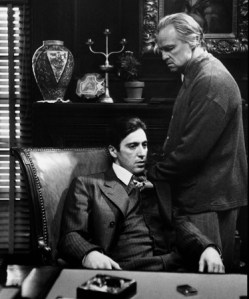
Like many in higher education, I courted academia as a hopeless romantic. I believed that love of subject and ardent devotion with ample proofs of said love would woo the academy into a permanent relationship. I’ve always been an idealist. Now I’m on the side of the desk where colleagues approach me to ask favors. It’s kind of like The Godfather, really. Only those who kiss Don Corleone’s ring tend to do so knowing that favors require some kind of reciprocity. The academy may not welcome you but would you mind helping us out now that you’re in a position to do so? No fear of horse heads here. Perhaps by now you understand why I don’t write much about publishing on this humble little blog. The focus of The Godfather, after all, is really young Michael Corleone and his devolution from an upstanding citizen (shall we say “academic”?) to a mafia crime boss. I’ll leave the other side of the equation blank. Trade secrets, after all, are worth money.