System Reboot

I think Steve Bannon has already taken over my computer. How else can I explain everything stopping in the middle of a word, fingers flying, building up to some rhetorical flourish and suddenly the screen goes blank. Windows that I’d forgotten I had open reappear only to shut down. A brief message appears telling me that an “update” is being installed. I don’t mind do I? After all, it’s the middle of the night. Who’s watching in the middle of the night? We all know who the real president is, but why he’s interested in my muddled musings is anybody’s guess.

You see, I live a regimented life. You have to when your bus arrives before 6 a.m. I crawl reluctantly from my bed at 3:30 for one purpose only—to write. The commute and work take about 14 hours of the 24 I’m allotted every day, and I’m told that 8 of the remaining should be for sleeping. That doesn’t leave much time. So I skimp on the dozing part and get up to scribble my thoughts when, traditionally, demons are a-prowl. I need my computer to be with me on this. Kind of difficult to post on a blog without it. Not that I enjoy my early morning violence to the soft fabric of dreamland. My fellow early morning commuters know what I mean. Every day there’s a car just pulling up to some bus stop as the driver’s put on his blinkers, indicating he’s pulling out. I know some folks roll out of the bed, into the shower, and onto the bus. Some continue their sleep on the bus. I can’t blame them. I’m Manichaean about my day. It’s either asleep or awake. I don’t nap, so I need to write when I’m most awake. Just after 3:30 a.m.

How do I know it’s Steve Bannon? It’s only a guess really. I’ve heard that Mark Zuckerberg and Bill Gates keep a piece of opaque tape over the camera of their laptops. Why anybody’d want to see a confused, morning-headed, middle-aged guy with his mouth hanging open, wondering what’s just happened to the blog post he was writing is beyond me. But then I’m no expert in national security. In this year of 1984 we’re all threats to the powers that be, I guess. Thing is, I can’t remember what I wanted to say once the laptop restarts half an hour later. And that’s probably the point.

Image credit: Nirwrath, Wikimedia Commons

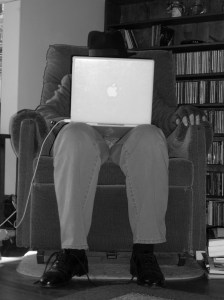
Image credit: Nirwrath, Wikimedia Commons

Samaritans, Good and Otherwise

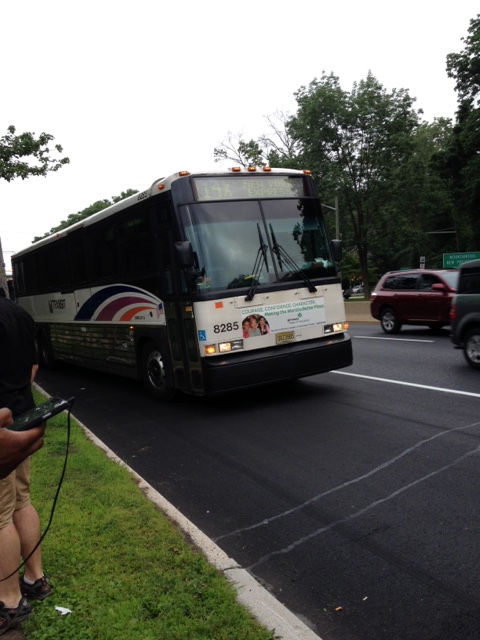
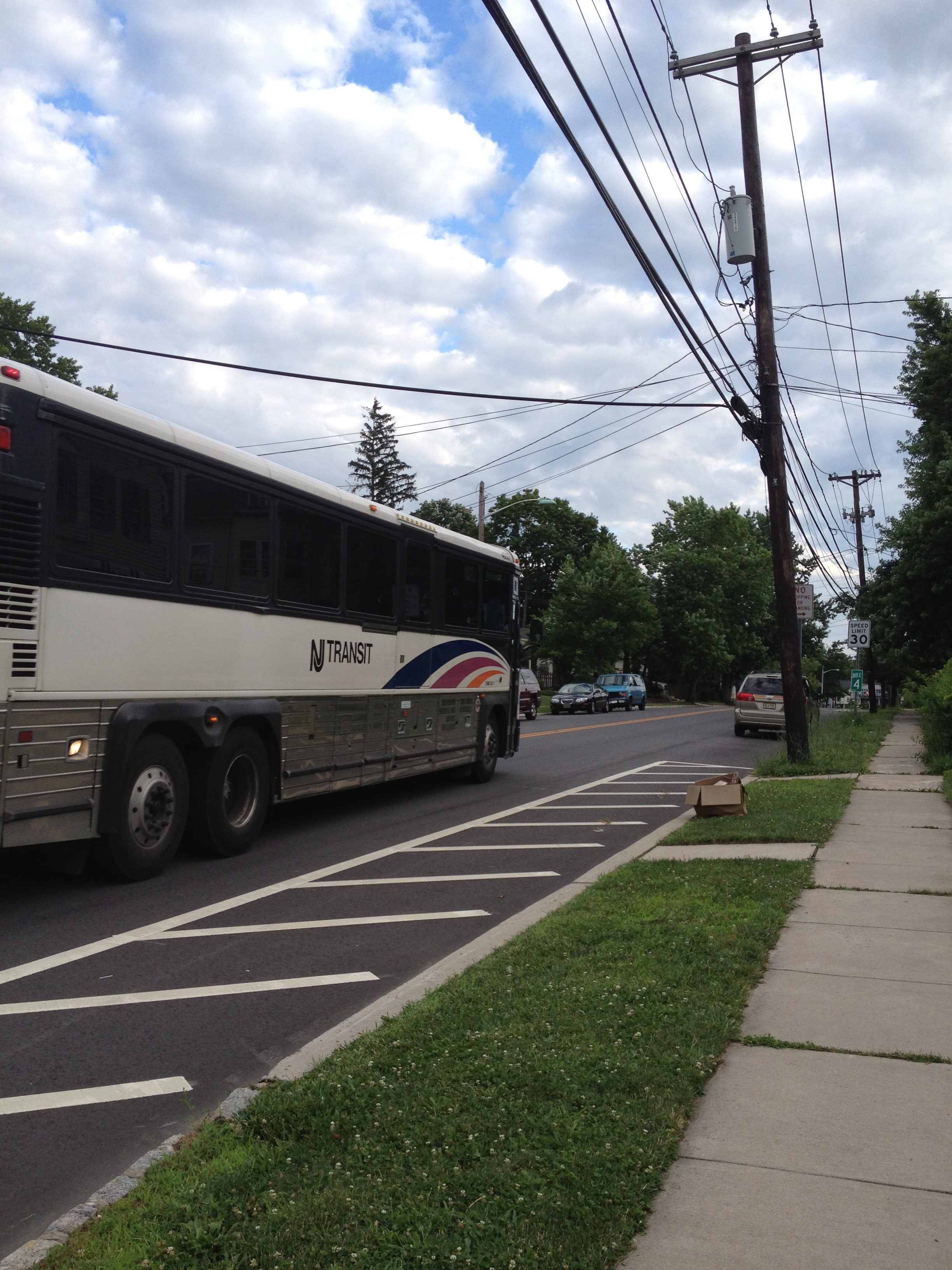
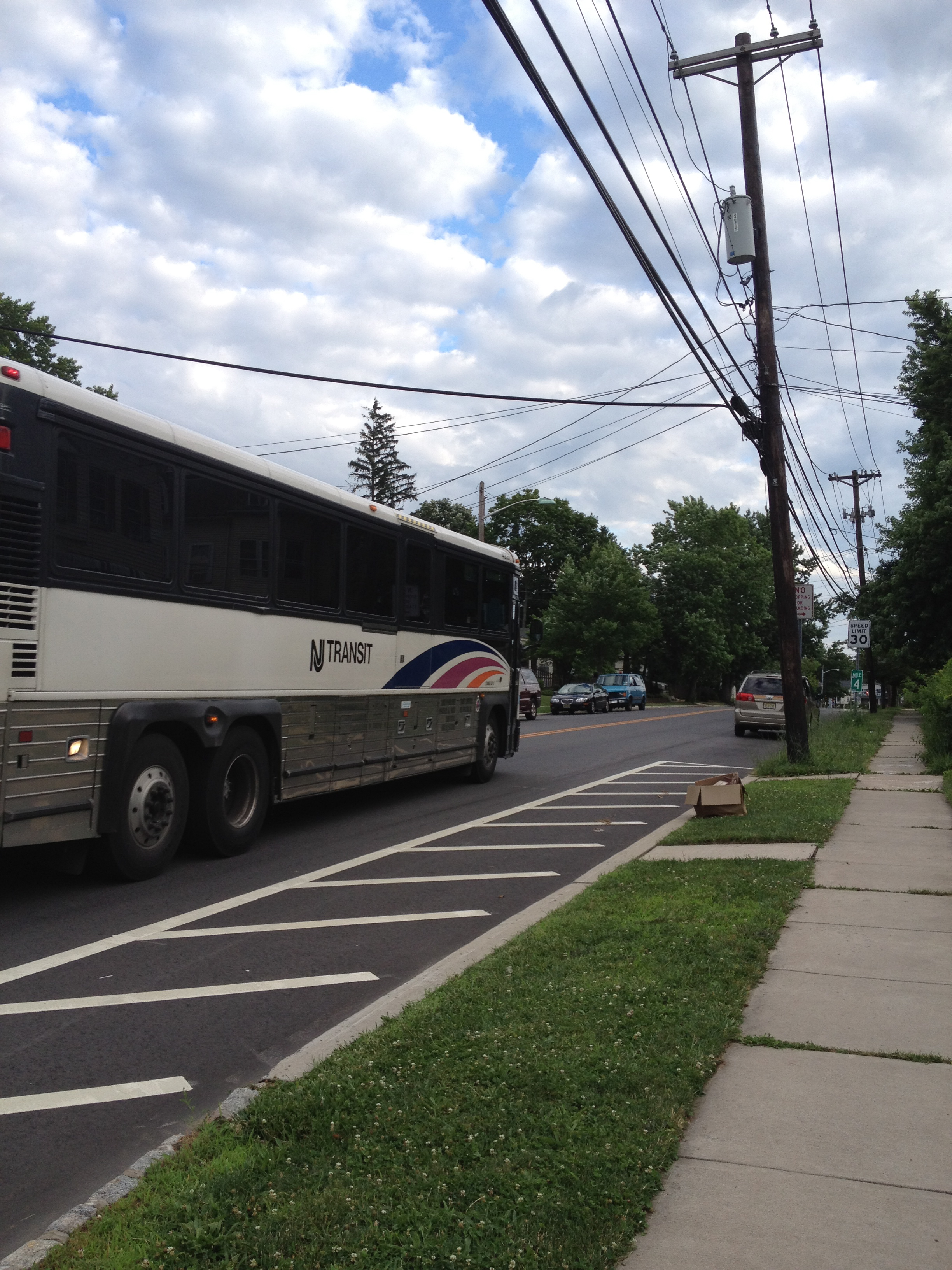
It’s the coldest day of the winter so far. I’m noticing this because I’m standing on the shoulder of the New Jersey Turnpike counting the NJ Transit buses that are flying by at highway speed. It’s been a morning of irony so far, which explains why I’m standing out here instead of sitting inside the broken down, but still warm bus right next to me. I felt the cold while waiting at quarter to six for my bus to show up. Thankfully on time. It’s very empty this morning; I’m maybe the fourth passenger. Somewhere along Route 22, miles later, the bus gives a distress cry. Ironically, the engine is hot. The temperature outside is in the single digits. Also ironically, the radio on our bus isn’t working, so the driver has to call dispatch on his smart phone. Meanwhile, the engine cools down enough for him to try it again. We’re fine until we pass exit 15 on the Turnpike.

While I try to think of others before myself, I sit near the front of the bus—the first or second row. That way when it’s time to get off I don’t have to wait for dozens of people to wake up, stretch, and slowly shamble into the aisle. (If you think that’s an exaggeration, you don’t commute by NJ Transit.) “The first shall be last,” the Good Book says, and I believe it. I lost count of how many of the company’s buses have zoomed past, but when one finally stops, I’m person number 8 off the bus. The Good Samaritan driver stops me outside his bus. “Sorry, no more seats. No more standing room.” No room in the inn. My driver urges the long line behind me to get back on the bus, where it’s warm, to wait. I was first, now I’m last. That’s why I’m standing out here in the cold. As I approach the bus I see all the first several rows are filled by those first back on the disabled bus. They will be the first to be offered a ride by the next driver along this road to Jericho.

winter

The guy behind me, now in front of me, comes to the same conclusion and waits outside too. At least we both have beards. I’m thinking of Jesus’ words about the end of the world. “Pray it won’t come in winter.” Out here, all prayers are frozen. At least thirty NJ Transit buses buzz by creating their own wind chill before another stops. I want to be first because I paid more for my ticket than those who sat further back on my bus. In fact, I could rent a small apartment in many places in the country for what I pay a year for a bus pass. I wonder if that’s what it means that the first shall be last. Or maybe my brain’s just frozen, since it’s the coldest day of the winter so far.


Lap of Luxury

How terribly rude. I was right in the middle of a sentence when my word processor shut down. Then my computer. A system update. It’s 4:00 a.m., the time I usually upload my blog post. You have to understand that I get up at 3:30 so that I have time to write. My laptop assumes nobody is working “in the middle of the night.” I would’ve thought my fingers on its keys would’ve given it a clue. Now it tells me I’ll have access, new upgraded system installed, in 25 minutes. Doesn’t my laptop have all my personal details when it comes to shopping? You’d think it would know all my personal habits by now. I mean, this is the way I do it every day. Right now my concerns are secondary. This system update can’t wait. I wasn’t even given a choice. Power nap for Apple.

What disturbs me most is that my computer reads every word I type, yet it still thinks I’m just like everybody else. Who’s awake and writing at 4:00 a.m.? And I thought we had a rapport, my laptop and me. I was the Skipper to his Little Buddy. The Agent 86 to her 99. The Will Robinson to its Robot. I guess I had it backwards all the time. The brain on my lap doesn’t agree with the brain in my head. If I can’t get my writing done now, it won’t get done at all because at ten minutes to six I’ve got to be on that bus. New Jersey Transit doesn’t offer working overhead lights much of the time, let alone wifi. It’s now or never. My coffee’s already gone and the next thing on my daily agenda is the shower. I always come up with ideas in the shower—I need my Little Buddy waiting for me when I rush out to write them down.

newchair

Who’s sitting on whose lap? How could I have gotten something so very basic so terribly wrong? In ancient times the one sitting was superior to the one standing. When the computer’s sitting on the one sitting we know who’s really in charge. Let the one with eyes to read understand. I’m a busy man, but my Little Buddy—my Skipper—is busier. When’s the last time I read a paper map? Opened a phone book? Wrote an actual letter? I can hear those bus wheels rumbling. Excuse me, but my master is calling.


Bad Theology

train_wreck_at_montparnasse_1895

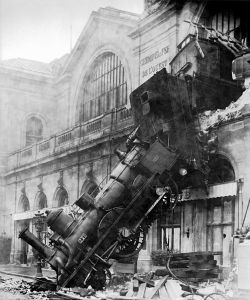
Perhaps the most overused simile for a real mess is that it’s “like a train wreck.” No doubt this is because train wrecks are messy, and deadly. Few things speak to human vulnerability more than airborne hunks of heavy metal flying in indeterminate directions. Trains don’t stop fast. If they do people get hurt. No, I wasn’t on the train that crashed into the Hoboken station yesterday during the morning commute. I’m just one of many thousands of people who make their way into the city every day, but I go by bus, which is more affordable. Still, there’s something in every commuter that mourns a tragedy like this. We’re not in competition for getting into New York. It’s only after we’re off our conveyances that we compete. The stories after the crash, however, emphasized something I’ve always known—people are basically good.

A strain of Christian theology makes the extremely dubious claim that people are “totally depraved.” Assaulted again and again with this misanthropic theology in college, I was bound to fight back. Some guys with minimal psychological training decided, in the early modern period, that God had created the vast majority of people for Hell. Because we share the primates’ evolved taste for fruit, we participated in “original sin.” It wasn’t exactly sex (since God had declared that good) but it was a consequence of it. We were born fallen and had to be redeemed. These theologians declared, however, that very few ever would be. Most of us were Hell-fodder and deserved to be since we’re so naturally evil. A few centuries earlier Jesus had said you’d know the righteous by their fruits. There’s no getting away from the fruit.

Life in the big city is impersonal. Commuters share their conveyances each day with many strangers. After the wreck, however, as my wife pointed out, those in the cars far enough back that the injuries weren’t grievous first turned to everyone else and asked if they were all right. If they need help. If they could walk. Strangers helping one another. Good Samaritans. It doesn’t sound like total depravity to me.

Our economic system thrives on hyped-up competition. When we’re taken out of that context and placed into a human one, we cooperate. We want to help one another. Perhaps it’s not the people who are totally depraved, but the system they’re forced into. No, I wasn’t on that train. My bus had pulled into New York an hour and a half earlier. But even from a distance I could see what I’ve known all along. People are basically good.


Read Long and Prosper

“Live long and prosper,” Mr. Spock was (or will be, depending) known for saying. Many of us know the regimen for healthy living: don’t overindulge on the food and drink. Get some exercise. Try to eat the right foods. Sleep once in a while. When we go to the doctor’s office, it’s generally a physical cause that we want explained or treated. It seems, however, we might have been overlooking a way to live longer. Reading. An article from last month’s Tech Times explains that book reading—sorry folks, reading this doesn’t count—correlates to longer life, according to a Yale study. The article by Alyssa Navarro explains that concentrated reading for three-and-a-half-hours a week can be connected to living longer. Those of us who read may not have that fringe benefit in mind, but it does stand to reason.

img_2947

Since people love correlates that sound alike, the way that we describe aspects of our lives is often quantity verses quality. In terms of quantity, consciousness seems to drive us to claim as much life as possible. It’s hard to let go. Connoisseurs, however, often prefer quality to quantity. While there may well be other options than these two q’s, it seems to me that those of us who read tend to do it for the quality issue. Quantity may be a fringe benefit. My job requires a long commute most days, and I bury myself in books. If I pick one that really captures my interest, I’m amazed at how quickly even an intractable commute can go. On those days I work at home, I have to admit, I miss the reading time. I try to read with the same level of concentration when I power the laptop down, but there is something about being in a situation where you’re forced to read that somehow enhances the level of concentration. It’s training, I suppose. We often think that once we’ve figured out how to read then it’s just a matter of doing it. To really get into a book, however, requires effort.

If I’m at home and I sit down for a marathon reading session, I inevitably get sleepy. Since I awake quite early this isn’t something I think I need to see my doctor about. Of course I get sleepy on the bus, but I’ve seen how ridiculous most people look when they sleep in public, and I don’t want to be one of those. If the book I have is a good fit, I barely notice how tired I am, surrounded by my aluminum walls and the wheels that go round and round. Maybe that’s because my mind is elsewhere. I don’t commute for my health. On the days when I don’t take the bus I try to get out and jog. My healthcare regimen, I think, could use a little more book reading. At least that’s as good an excuse as I can come up with for what many people, ironically, consider a kind of illness. May we “bookworms” read long and prosper.


Hi Ho, Hi Ho

I’ve been writing about reading. No surprises there, I suppose. My wife recently introduced me to BookRiot, and I wish I had more time to spend there. A recent post by Aisling Twomey describes how reading on her Tube commute helps keep her sane. Here is a good case of convergent evolution—I came to the same conclusion after about a week of what turns out to be about three hours a day commuting to New York City. We didn’t move to my current location to work in Manhattan. My job was in nearby Piscataway. It was only when a headhunter found me a job at Routledge that I began the daily trip. The problem is I get terribly car sick. To this day I can’t read in a car. Some days I can’t read on the bus either. Gradually, however, I trained myself to do it, and the results have been worth it. Ms. Twomey has read over fifty books this year on her London commute. I suspect my commute is a bit longer since I’ve read a few more than that. Still, we tilt against the same windmill, so we need to appreciate the dedication it takes.

I was talking to someone the other day who was complaining about cell phones. She said, “I used to read a lot. I worked in a book store. It was great.” Her cell, she said, gave her a stiff neck from constantly looking down. And a sore thumb from swiping and texting. And yet, she lamented, she just couldn’t stop. Books may well be a vice. I’m as bad as any addict. I have no idea how many books I’ve read in my life: the number is in the thousands rather than the hundreds, I know. And even the books I regret, I don’t really regret. Reading is a coping mechanism.

img_0670

One of the things that the traditional ancient religions all have in common is books. Not all of them treat sacred texts the same way, but they all have some form of sacred writing. There was an implicit sense, I believe, from the first stylus on clay, that something truly special was going on here. Holy, even. Writing is one of the great joys of life. Reading is another. Both are sacred professions. In a way it seems a shame to have to be forced into a commute in order to find time to read books. Still, the constant flow of new material has a life-saving quality to it. I can’t imagine spending fifteen concentrated hours a week texting. I don’t know that many people to text. The ones I do know I know through their books. And they’re very good company on a long ride.


Philosophies of Reading

I like my Starter. For those of you unaccustomed to New Jersey Transit buses and their ways, a Starter is a person who makes sure the buses scheduled to arrive at her or his gate do so on time. It’s not a job for the faint-hearted. If a bus is late, or AWOL, the Starter takes the heat from angry would-be passengers. Since they’re present “on the ground,” angry people lash out with their frustration. My regular Starter recognizes me. I’m usually early in my line, so I appear about the same place most days. My routine is, well, routine. I get to the Port Authority Bus Terminal, pull out my book, and read. Starters can’t really get involved in anything like a book because their job requires constant interruptions. Even when no buses are coming in because of an accident in the Lincoln Tunnel, they still have to answer questions and hold up the occasional crucifix. My Starter came to me the other day, as I was reading, and asked me what I thought of an incident four days earlier. To put this in context, the incident happened on Friday. I was there for it, in my usual spot, and this was Tuesday. Clearly it still bothered the Starter that someone had come out and yelled at him for not getting us a bus on time.

I sympathized. Starters can’t materialize objects. If they could, they wouldn’t be Starters. Yet, I realized as I turned back to my book, that I had lost some reading time. I don’t mind helping out my Starter, but it occurred to me that there are a couple of different philosophies behind reading while waiting for, and on, the bus. Many people, I suspect, read to pass the time. I don’t know what they’re reading, since much of it is on a flat device, but knowing that research reading is nearly impossible on the bus, I suspect they are just reading to make the weary time go quicker. Others, I know, read for content. For me, reading is very seldom passing time. I read because reading is what I want to do.

Commuting behavior isn’t conducive to my life choices. No longer do people sit quietly on the bus, respecting that inherent violence of awaking before 4 a.m. to try to get to the city before traffic inevitably makes you late. Devices make their unmuted bodily noises and glare in your face. The guy next to you pulls out his wide-screen laptop, while tapping away on his phone. Or pulls our her iPad to watch a movie with fast-paced images splashing in your face. The book is demanding company. Your time, your attention, your concentration are required to get the most out of it. I don’t mind supporting my Starter. I feel for the ennui of my fellow commuters. I also crave time alone with my books.

IMG_0899


Camera Obscura

There’s a certain etiquette to being on the bus. There has to be, when you pack fifty strangers together for an hour and shake gently. The seats on New Jersey Transit are somewhat intimate and it’s rare to make it through the journey without somehow touching the person next to you—elbows, knees, hips, or general body mass—worlds collide. I’ve mentioned before that not many people read old-fashioned books on the bus, but one of those unspoken rules of etiquette is that you don’t look at a stranger’s book. I’ve benefitted from that any number of times myself. People think odd things about you when you’re reading a book about religion in a public space. Not odd enough thoughts to earn you a seat alone, but still.

I was reading a book about an ancient Near Eastern religion the other day. For me it’s an occupational hazard. Those of us who have studied this stuff for a living keep on cranking out the books and somebody has to read them. Amid all the blue light from all the devices I often feel like I should be in a museum myself. It was with great surprise then, that my eye wandered onto the book next to me that day. I really couldn’t help it, you see. The woman who sat next to me and was using her cell phone to shed light on her book (the overhead lights don’t always work). She went to make a phone call but forgot to turn off the light so that it hit me right in the eye. Realizing her faux pas, she quickly turned it off, but my attention had been caught. In the book in front of her was a picture of the Narmer Palette. Narmer was the king who united ancient Egypt, according to the lore, and this stone ornament was the commemoration of his achievement. Anyone who’s studied ancient Near Eastern history would instantly recognize it. What were the chances? Two people sitting on a bus, reading actual books, both about the ancient Near East?

800px-Narmer_Palette

Bus etiquette, as I understand it, doesn’t allow me to ask a stranger, “What’re you reading?” It’s kind of a personal question, really. I’ve been doing this commute for going on five years now. The number of books next to me has been negligible. But one related to the very topic I was reading about? Was this one of those “if you see something, say something” things? Instead I practiced custody of the eyes and went back to my own book. Then the other unthinkable: she talked to me. “Do you know where,” she began—“ancient Egypt!” I thought. But then she asked where a certain restaurant was. I apologized. I never pay attention to the businesses along the highway. I’ve always got a book to read. I thought about asking her about the book. She had, after all, breeched the dam of silence. Instead I turned back to my own book and didn’t notice when the bus reached a restaurant whose name I didn’t even know. That’s what etiquette demands.


The Boy on the Bus

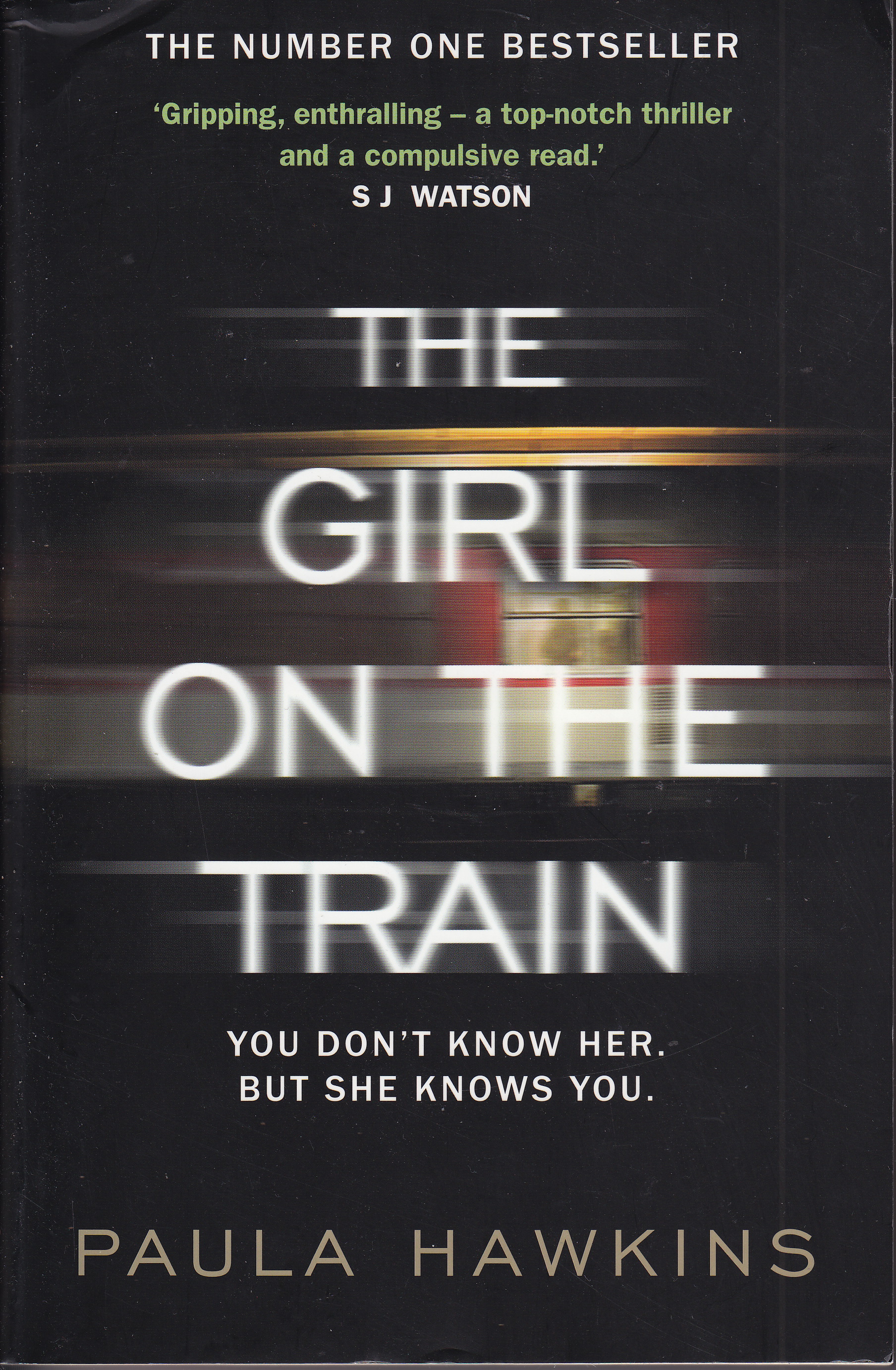
GirlOnTrainCommuting by bus isn’t the most efficient way to do research. While mostly I read non-fiction related to my research interests, monographs are difficult because of the concentration required and the constant interruptions of the road. Journal articles are, still, jealously protected by university libraries so that you can’t access them without an account. So once in a great while I read a novel on the bus to forget it all. I’d heard people talking—literally—about Paula Hawkins’ The Girl on the Train. It is a story about a commuter, and my wife was kind enough to give me a copy for my birthday, so I recently climbed on board to read it. The problem with reading fiction on the commute is that it is difficult to clear your head to negotiate the streets of the city when you’re done. You’re in an imaginary world for a while after you put the book in your bag. The nice thing is you can’t wait to get back on the bus to read some more. It makes commuting bearable. Almost pleasant. Especially when the protagonist’s commute is worse than yours.

I won’t throw any spoilers into this post, but I think it’s fair to say that the story involves trying to find a murderer. It is also a story about adultery. In fact, without adultery there would be no story. I seldom turn to novelists for a course in morality, but The Girl on the Train does have an underlying message that rings true: honesty is crucial for a civil society. The small cast of characters in Hawkins’ book have difficulty being honest with others and with themselves. This makes for a gripping ride, of course, but I couldn’t help thinking throughout that if people were honest the situation would never have occurred. Of course, then there would be no story. And I would’ve had to read something else on my commute.

My reading over the past few years has intimated that something about civilization has put a tremendous strain on people. Whether it is the constant pressure to increase productivity while time off is being stolen by ease of access (cell phones work in the middle of the woods. You can get your email while on a plane), we are never really offline. Our relationships, once the defining factor of who we are, have now become diversions from the time off work. Morality has reverted to what you can get away with. I can recommend The Girl on the Train for those struggling with a long commute. Once in a while I’d look up, surprised to find how fast the trip had gone. It might also give the reader pause to consider the larger implications. Honesty is an undersold virtue. Without it, this civilization we’ve built, and continue to build, cannot long last.


Law of Rule

Anyone who believes in the rule of law has never been on a broken down NYC commuter bus. There’s a rare kind of tension among the early morning commuter crowd. To put this in context I should say that I awake at 4 a.m. to catch the first us through town, five days a week. I’m usually somewhere between four and six on the passenger count, but if lots of people need to be in New York before sun-up, I may be as far down as 10. I select my seat with care. I tend to sit two seats behind the driver. I prefer the right-hand side of the bus, but there’s a regular who sits there and, I’m given to understand, she’s been doing this for over a decade. So I sit left. It’s never a good portent when I end up having to go four or more rows back. You see, the buses usually unload in a fairly orderly way, the front rows get out first, and each row takes its turn. Since too early is never early enough to be at work, I sit near the front because in the back you can lose precious minutes waiting for those who are sleeping to rouse themselves enough to find their feet and stumble off. If it sounds like I’m overthinking this, it’s because I’ve been awake since before four and how you start your day sets the tone. Where’d I put my coffee? Arriving at the office frantic and sweating isn’t the best way to impress anyone.

There’s a kind of comfort at being at the end of the line of service. Of course, the commute home means you’re on the bus longer than people who can afford to live closer to the City. First on, last off. Although I easily fall prey to motion sickness, I have taught myself to read on the bus. An hour in and two hours out are goodly amounts of time to really get into a book. I hate to waste time.

IMG_2304

You can smell a bus breaking down. I always hope the driver doesn’t catch a whiff, because s/he’ll call the control center and lawyers will dictate that the bus be stopped. By definition, you’ll be late to work that day. So when I smelled something burning, I hoped I was the only one. Luck has never been my strong suit. The driver pulled over and announced, in a soft voice, that we’d have to wait for the next bus. That means I could’ve slept in for ten more minutes.

The next bus is an “express”—that is local compared to my bus. The driver said, “Just stay in your seats, and I’ll call you.” Of course, people started to get off to form a line, despite the captain’s words. In a universal display of self-importance, those who just got on immediately hurry to get off first. They’ll be first in line to get seats on the next bus. Those who obey the driver are penalized. When it became clear that I could hear crickets chirping on the bus, I decided to put away my book and join the line. After quite a wait, the local came. That would get us to the City in time for work tomorrow. Several minutes later the express came. Those at the back of the line behind me hurried over. By the time I’d gotten there, still trying to honor the most ancient of queuing honor codes—the line—all the seats were taken. Those in the front of the line, now the back, headed over to take first place again, since they had expected the rescue bus to pull in front of our smoking wreck instead of behind, where it did. They weren’t shy about elbowing their unrighteous way to the front when the next bus came. I’d been on the abandoned bus since before 6 a.m. I made the third bus. The guy in my row on the adopted bus tried hard not to make room for a new passenger next to him. I was headed to New York where, I know, all the rules are off.


Bus Fare

The two things most likely to kill you on the streets of Midtown Manhattan are taxi cabs and city buses. Crossing the Fifth Avenue can be a dangerous game of chicken, even if the light’s in your favor. Over the past few weeks I’ve been noticing a lot of religious-themed advertising on the buses of this secular haven. A while back it was Killing Jesus—I suspect this must’ve been around Easter time. The movie based on the bestseller appeared with images of the savior tattooed over aluminum and glass. This week I noticed buses advertising A.D. “The Bible continues,” they claim. Don’t take that as career advice, however. With these thoughts in my head, it seems quite a coincidence that my wife would forward me a Huffington Post story entitled, “Anti-Muslim ‘Killing Jews Is Worship’ Ads Set To Go Up On NYC Buses, Subways.” New York City is a Judeo-Christian sort of town, I guess.

Of course, the text is deeper than that. I’d never heard of the American Freedom Defense Initiative (AFDI) before. According to Huff, it’s classified as a hate group directed at Muslims, and, in an ironic twist, designated public forums are not permitted to block adds. I’m just a layman, but I hope an educated one. Still, when I see public space as a battlefield for religious triumphalism, I wonder why the paid add space (what is the side of a bus, if not wasted advertising space?) is not restricted by any rules. I do not condone any kind of hate crime, and that should, I believe, include copy that intends to replicate hate. If human history has taught us nothing else, we’d be fools not to see that hate begets hate, and never love. The way out of a hateful situation is never to instill further hatred.

I spend a good deal of every week inside a bus. Sometimes as I try to read by the light of day, which has finally reappeared during my commute, the illumination is blocked by advertisements plastered over the windows of my expensive, public chariot. I sometimes peer out through the dots, unable to read what I’m advertising, and wonder what those on the other side see. Who am I shilling for? Perhaps this is a question the AFDI should put to itself—what if they were the ones on this bus. How will the person on the street look at them? With overflowing love or with reciprocal hate? The bus I ride is not really a choice I make. I like to think, however, that the destination for which we all hope would be for a more loving world.

You ad here

You ad here


Harpy New Year

A grueling early morning commute is seldom enhanced by complaining. I suspect most of us would rather not be here, crowded next to strangers on a barely adequate bus, going to jobs we may or may not find fulfilling. We put up with it, I think, because the ways of making a living have been effaced for those of the late boomer generation, but we’re a practical lot. Besides, it is a new year—why not start things off optimistically? Hanging around the Port Authority Bus Terminal as much as I do, you hear things. Our regular dispatcher and some drivers can be heard, sotto voce, saying that nobody wants to take my regular route. It’s a long route in heavy traffic, and I have the greatest respect and sympathy for the drivers. These are women and men with more fortitude than Job. Most of the time. I wonder why no one cares for an express run with so few stops?

The first day back after the holidays, however, the first commute of the new year: One of the regulars missed the bus and had to drive to a stop further along the route and berated the driver for being early. Given that some of us had been standing in the cold and were thankful for relief a few minutes ahead of schedule, and also for the opportunity to get to work a little early, the complaint seemed self-serving. Besides, this customer has made us all late for work before by complaining until a driver, like an exasperated parent, pulls the bus over. And once she starts complaining, she can’t stop. When a second customer joined in, I thought to myself, “Happy New Year.” Things were starting out well.

Yesterday, for the second morning commute of the year, our usual complainer noticed an unclaimed bag at the beginning of the route and, seeing something, said something. The driver radioed it in. Halfway to the city, she pulled the bus over, announcing she’d been instructed to wait for someone to come get the bag. We didn’t know, until he arrived, that he was from the bomb squad. Still, this didn’t stop the complaining sisters from starting on the driver again. When the bomb squad arrived, they looked on with interest as someone’s gym bag was opened with nothing more threatening than smelly socks inside. Then they started griping again. At that point I realized that New Year is indeed a religious holiday. Each new day is an unopened present. And some people will complain, even when left with an unexpected gift.

IMG_0542


Premature Transportation

Few experiences encapsulate one’s lack of control like commuting by bus.  As my first year of a daily commute to Manhattan draws to a close, I have experienced many mornings of standing in cold or hot air while a bus leisurely makes its way toward my appointed stop twenty, thirty minutes late.  The commuter can’t head back home for a moment’s warmth/coolness, because the bus could come at any time.  The sense of utter helplessness as you know that you’ll be late for work, and that you got up at 3:30 a.m. for this, settles like an iron blanket over what might have begun as an optimistic day.  Then there are those who sit beside you, totally beyond your control.  I’m a small guy and I sit scrunched next to the window to get as much light for my reading as I can.  Very large people find the extra space next to me attractive, although sometimes they insist I squish even more against the window so they might fit.  Overall, however, the exchange of comfort for reading time makes the arrangement palatable.  It’s the loss of time that bothers me.
 
Without traffic, my bus can be at the Port Authority Bus Terminal in an hour. To manage this feat, it has to reach my stop before 6 a.m.  On rare occasions it comes perhaps five minutes early.  When you take a bus, subject to the vagaries of traffic, the only wise course of action is plan on being a few minutes early.  Drivers who watch the clock are dangerous.  So it always annoys me when passengers down the line complain if a bus is one minute early.  On those exceptional mornings I hear strident voices raised, “you’re two minutes early—I had to run!” or “I was sitting in my car; you came too early!”  The driver is scolded and the next day we’re all half an hour late for work.  It is the problem of premature transportation.  Time, to the best of our knowledge, is something you never get back.  I would rather be early rather than late.
 
I first conceived of wasted time as a religious problem when I was in seminary. There was always so much to do, and relinquishing time to pointless activities such as standing in line, or waiting for the subway, grew acute.  Now that I’m an adult anxious about holding down a job that requires a lengthy commute, the issue has arisen again. Clearly part of the difficulty lies in that time is frequently taken from us.  The nine-to-five feels like shackles to a former academic.  I had classes anywhere from 8 a.m. to 10:30 p.m. without considering the drain on my time.  It was largely, I believe, because pointless waiting was not very often involved. Time, like any limited resource, must be parceled out wisely. Time to bring my morning meditation to an end and get ready for the bus. And if it’s early I will consider it as a divine gift.


Feeding the Multitudes (on a Budget)

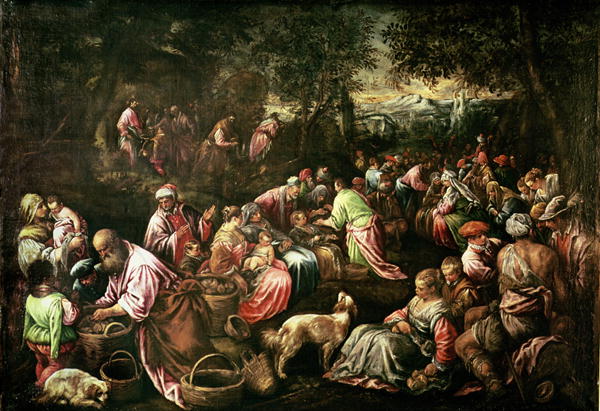
Commuting to New York City by bus can be an epiphany. When an hour-and-a-half scheduled ride stretches into two-and-a-half (I spent three-quarters as much time commuting as I did actually at work yesterday) you have plenty of time to look at the scenery. In New Jersey this translates into several towns and cities of differing socio-economic viability. The bus is a great leveler of people: corporate, business types sitting next to those who can’t afford a car or bicycle. As we trundled through Plainfield yesterday I spied a restaurant called Two Fishes & Five Loaves taglined Soul Food for all occasions. The name, of course, is borrowed from the story of the miraculous multiplication of food from the Gospels. This story fits particularly well in this setting.

According to the Gospel writers—this is the only miracle to appear in all four of the Gospels—a crowd following Jesus in a lonely place grew hungry. Instead of sending the crowds away, Jesus took the five loaves of bread and two fish they had with them and fed the crowd of 5,000 with that little morsel. When I was a student it was customary to interpret this story as one of a human-dimension miracle. The crowd, seeing Jesus sharing the food he had, each offered to share with their neighbors. Once the idea caught on, those without food had enough and those who’d brought extra had the right amount. They even had leftovers. This naturalized version of the story illustrates the message of Jesus quite nicely, although those who prefer supernatural intervention naturally reject it.

Plainfield is a town with stunning wealth and abject poverty. This situation is not unique to this location; indeed, it is a hallmark of capitalism. Those who have do not willingly give it up for the sake of those less fortunate. The free market is not really free. Today most readers like to see the story of the feeding of the five thousand as divine intervention. That matches our bail out mentality. When our circumstances make us too selfish, God comes to the rescue with conjured seafood and crumpets—or Tea Partiers—and the rest of us look on hungrily. By the end of the day, enduring that long bus ride home, I too was hoping for a miracle. Instead, as we crawled by Two Fishes & Five Loaves, loaded with people of every status, I was living in a Gospel story.