Dream Time

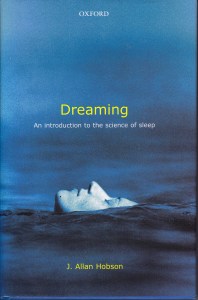
DreamingLike most people, I seldom remember my dreams. When I do, or when only the powerful feeling remains, I know that they are very emotional events. Something is always going on, and my attention is riveted. I recently read J. Allan Hobson’s Dreaming: An Introduction to the Science of Sleep. It must be intimidating, I have to note right away, for a neuroscientist to write a book. Our understanding is changing so rapidly that even academic treatments become a kind of ephemera. Published over a decade ago, it shows its age. Even I’m aware that changes in brain science have occurred and perceptions have changed somewhat since then. What struck me most, however, is Hobson’s absolute confidence that mind is a function of the brain, and that dreams are merely the madness we experience when we sleep. The madness I don’t mind so much. The materialism, however, I think is largely wrong.

Consciousness remains a great unknown. There is disagreement around whether it is emergent—coming from the brain, or receptive—perceived by the brain. Or perhaps something completely different. One of the greatest human foibles is to claim that we understand anything completely. I’ve always been amazed—knowing that the world involves much more than just sight, sound, scent, taste, and touch—that some scientists are so quick to write off complex experience as “merely” activity in the brain. Some animals, for example, seem to perceive magnetic fields. Others use navigation devices we simply don’t comprehend. They may experience senses we don’t even have. And yet, we happily claim that we’ve gotten this one nailed down. Dreams are only activities in the brain when we sleep.

Only? How can any dreamer say that this is only chemical reaction in our heads? The experience of dreaming is, implicitly, so much more than just random thoughts. Hobson does a good job describing how dreams are a form of madness, a psychosis when the reasoning part of our brains are inhibited. Fair enough, but who can experience madness and think it completely material? Our minds are more complex, it seems to me, than we give them credit for being. Hobson begins the book by noting that dreams used to be within the purview of religion. Since has now claimed them. We have an entire universe in our skulls, and yet we insist that although we don’t understand it, we can be certain that it is nothing but material. My dreams continue to suggest a different reality.


Thinking about Thought

The history of thought can be compared to a slow-moving pendulum. At other times it can be more like a ping-pong game. Acceptability for ideas can take time, but sometimes the perceptions change rapidly. Having been raised in a small town in a Fundamentalist setting, it is difficult to assess where exactly the “status quo” was when I was growing up, but by the time I had reached college it was pretty clear that the challenge science posed to my particular brand of religion was pretty firmly entrenched. Materialism—in the philosophical sense—had obviously gained several champions. B. F. Skinner and his followers applied this template to human beings, and it became fairly common to hear that we were basically automatons. (Ironically, double predestination in the Calvinism I was learning about taught pretty much the same thing.) Today there are even more vocal heralds proclaiming that all that is, is material. If it can’t be measured empirically, it can’t exist. The pendulum, or ping-pong ball, has come to one side of the table, or arc, awaiting rebuttal.

An article in Scientific American from two years ago (my personal pendulum sometimes moves slowly as well) asks the question “Is Consciousness Universal?” The article by Christof Koch describes panpsychism, the theory that anything beyond a certain level of organization is conscious. Koch begins by discussing dogs. Those of us who’ve spent time with dogs know that they are clearly conscious, although a materialist would say they are just as much dumb matter as we are. But panpsychism goes beyond dogs and horses and other “higher” mammals. Anyone who has taken the time to study any animal in depth, particularly those that are obviously mobile and can seek what they wish to find, knows that animals have will, and intension. The loss of meaning only comes with materialism.

Integrated information is the term Koch uses to describe the baseline of consciousness. Of course, this would need to account for more than the merely biological. Computers may be sufficiently complex, but the information they “possess” is not integrated, thus keeping them from being truly conscious. I’m not enough of a scientist to understand all the technicalities, but I do know that something as simple as common sense suggests that consciousness is part of all animals’ experience of life. As some scientists have long realized, feeling, or emotion, is integral to the thought process. Only when we realize that we share this world with a great variety of conscious creatures will we begin to make any progress toward understanding the difference between mind and mindfulness.

DSCN5295


Monk over Matter

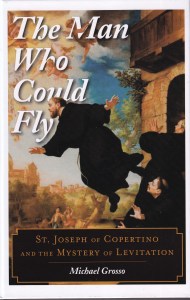
ManWhoCouldFlyPeople can think with their emotions. At a young age we begin formal schooling to teach us the rational ways that we must develop to live in society. Emotions are trained, tamed, and sometimes repressed as we are taught that “higher brain” functions are what make us distinctly human. Even in our supremely rational world, however, we can’t figure out consciousness. It remains elusive, provocatively bordering on the supernatural, and the experience of being human gives the lie to consciousness being emergent from a physical brain. These are the kinds of issues that underlie the strange case of Joseph of Copertino. The subject of Michael Grosso’s recent book, The Man Who Could Fly: St. Joseph of Copertino and the Mystery of Levitation, Joseph may well be off the radar of most people. In fact, in the seventeenth century church in Italy, his presence was downplayed and hushed, almost as an embarrassment to Roman Catholicism of the day. Why? Joseph was known to levitate. In fact, his levitations were often in public and were witnessed by individuals whose credibility was not in doubt. With the Reformation going on, however, the last thing the church needed was a miracle.

The standard historical line of dealing with Joseph is to laugh and wave our hands in the directions of those credulous early moderns. They thought they saw him levitate, but it was all imagination. Even if we have to invoke mass hallucination. People just can’t levitate. Grosso’s book, however, takes a different approach to Joseph. Looking at first-hand accounts, carefully considering the political situation of seventeenth-century Italy, and being open to parapsychology, this book presents a very different portrait of the flying saint. There was nothing to be gained by hiding such a prodigy unless, as Grosso argues, there was actually something to the story. It may come down to a basic misunderstanding of consciousness, his book suggests.

No doubt The Man Who Could Fly will be simply dismissed by many. Those who dare to read it, however, will find a cogently argued, rational exploration of a man who was lifted by spiritual ecstasies in a way we have yet to understand. Grosso demonstrates that, depending on perspective, such events do not violate laws of physics so much as demonstrate that we have much yet to learn about them. Categorizing events as supernatural puts up an artificial barrier to exploring scientifically events that have evidence in the form of multiple witnesses. Obviously we can’t go back to the 1600’s and visit Joseph in some obscure convent where he’d been shuffled by church authorities to keep him out of the public eye. Even if we could there would be no way to prove his extraordinary gifts. When it comes to the life of emotion, the only way to accept the impossible is with belief. And at times belief may be the most rational response at hand.


Yes, Virginia, There Are Ghosts

Universities find themselves in a strange position vis-à-vis the supernatural. I suspect that many institutions of higher education are slightly embarrassed at the fact that universities began primarily as training grounds for clergy. We’ve moved away from all that superstition and now believe that only science leads to knowledge. That’s why I find the University of Virginia’s magazine article on ghosts so refreshing. We all know better than to expect a straight answer from academics faced with the awkward question of belief, but the campus magazine invited six department representatives to a discourse on ghosts. The article, which can be accessed online, asked Art History, Anthropology, Religious Studies, Literature, Neurology, and Archaeology faculty about ghosts. At least they were willing to talk about the subject.

Edgar Allan Poe's room at the University of Virginia

Edgar Allan Poe’s room at the University of Virginia

Even in this world where skeptical ridicule is an accepted part of academic practice, we can’t quite let go of the idea of ghosts. They are among the most ancient of beliefs, and even despite the proliferation of apps that let you add specters for any occasion of selfie or digital shot, people still see them often enough to make academics wonder what is going on. Since science only studies that which can be measured, we suppose ghosts lie outside that realm. Those who’ve popularized “scientific” approaches to ghost hunting on television don’t bring their scientific credentials to the discussion. Anyone can be taught to use technology. (Well, not anyone—I sometimes still find my computer at complete odds with me. Technically, however, it is just an inert piece of matter.) From time to time serious scientists have turned their attention to ghosts. Results have been inconclusive.

As the leaves are beginning to fall, and the temperature follows suit, we know that many months of long nights lie ahead. Trees without leaves and air without warmth tempt our minds to believe that perhaps the microscope can’t reveal all that exists in this world. Halloween, after all, has become a major spending holiday and that assures its veracity. Driving through town, it is clear that it is quite an investment for some. Down in Charlottesville they are hunched over their desks, writing lecture notes and grading papers. As the wind blows that empty branch against your window on a overcast evening, however, it won’t matter what department you call home. There will be ghosts about tonight.


Psychobabel

Evolution, we’re told, has one goal: survival. As an unthinking process of nature, evolution “programs” us all to desire survival for ourselves and our offspring. Even attributing that purpose too it is to suggest it’s more a willful agent than a blind process. People, on the other hand, are meaning-seeking creatures and so there’s bound to be some disappointment involved. I was just discussing with a friend how it seems that people just can’t agree on evolution mostly because of the strident claims on both sides. The New Atheists make claims beyond the evidence that survival to reproduce is the “only” role of evolution and we are “just” animals with too much gray matter, and that consciousness is “merely” electro-chemical activity in our brains. Creationists, for their part, say evolution couldn’t possibly account for structures as complex as we see in nature, and therefore a deity much be involved. The rancor grows until both sides end up despising the other. People who look for the middle ground are not newsworthy and fade into the scenery. I wonder if we’re evolved to ever get along.

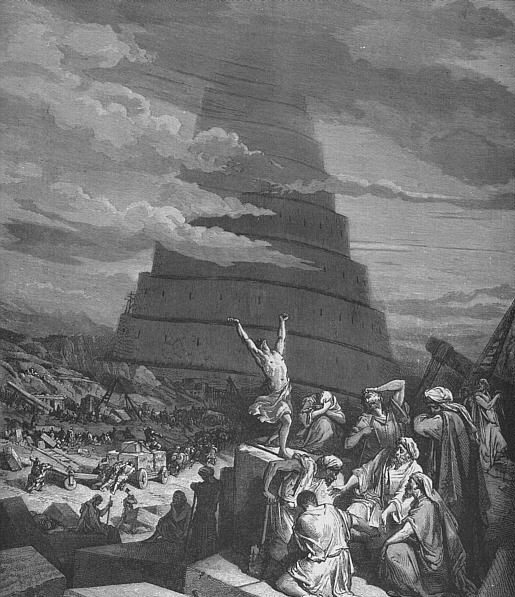
My wife mentioned that it’s like the Tower of Babel story. Here is the tale of God making humans inevitably talk past one another. We can’t understand and so we argue and criticize and insult. A more scientific explanation might be that perhaps we’ve tipped the evolutionary balance with our species-specific success. We are by tar the most numerous species of any large animal. (At least that we know of.) Having put ourselves as lords and masters of the food chain our challenges have become mental and we turn ourselves to the question of who’s right instead of simple survival. Sacred books can’t guide the discussion, but reason alone. And reason, as we all know, has its limits.

Confusion_of_Tongues

The great irony in all of this is that, if we’re evolved to seek meaning, we’re not equipped to find the truth. As neuroscientists have pointed out, the brain’s function is survival, not truth finding. Our desire to know the truth is a human avocation abstracted from consciousness. We’ve not adequately defined consciousness, but since there aren’t many large predators hunting us down anymore, that brain-power has been diverted elsewhere. Despite all this, we don’t see world peace spontaneously breaking out. Even on a smaller scale we find prejudice and hatred and insane mass production of weaponry when our only predators are ourselves. Evolution, we’re told, has only the goal of survival. Being an unthinking principle, even ascribing it this much conscious decision-making is merely a matter of convenience. Does the Tower of Babel mean we must hate those who differ from us, or does it perhaps suggest that the real goal is better understanding?


Brains and Selves

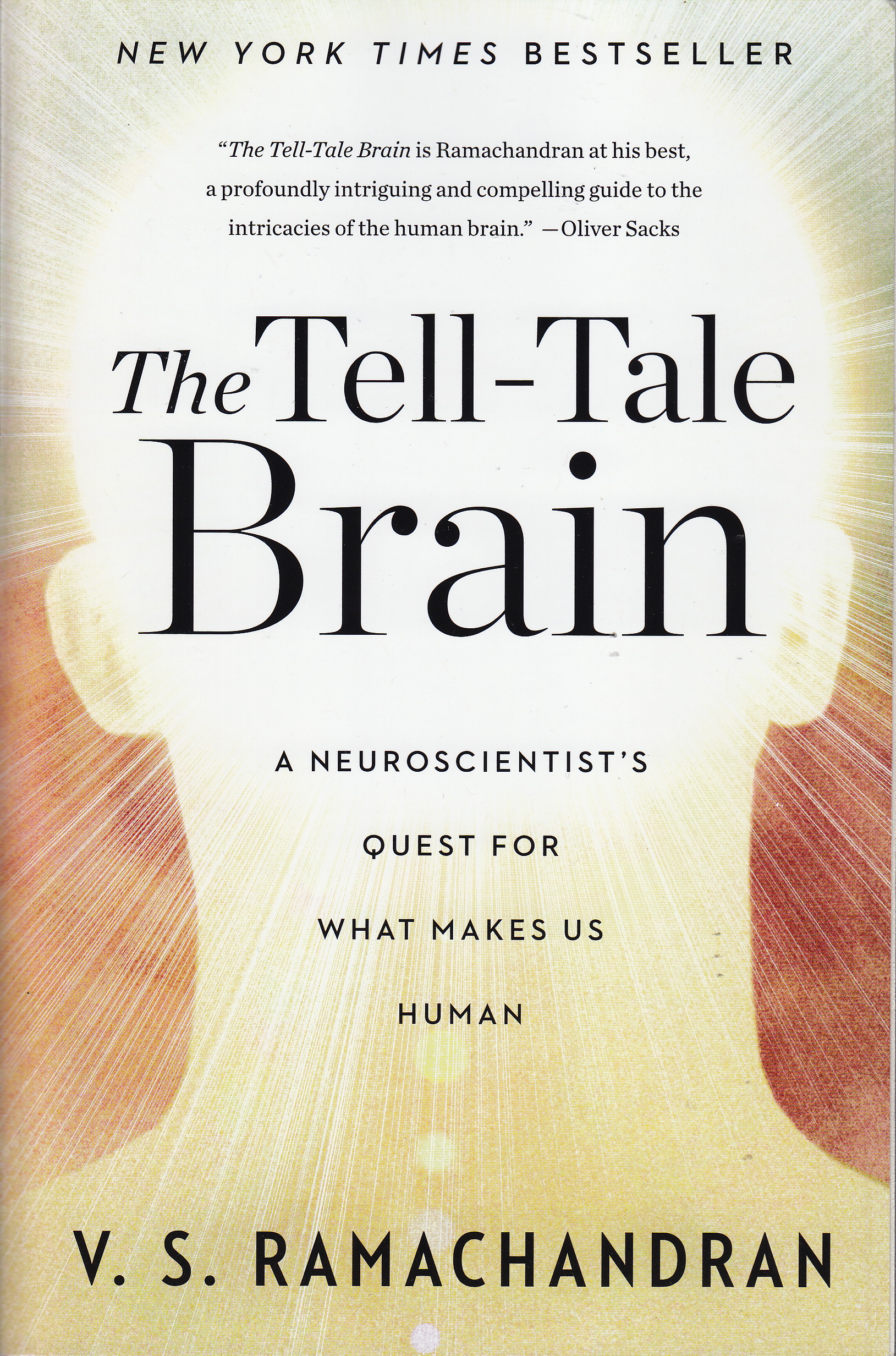
TellTaleBrainThe Tell-Tale Brain is an ambitious, yet humble attempt to find the self. V. S. Ramachandran is a neuroscientist with considerable psychology experience who is well equipped to take on, as the subtitle puts it, A Neuroscientist ‘s Quest for What Makes Us Human. The book will take you to some very strange places. And although he’s a scientist, Ramachandran keeps an admirably open mind. Right at the start he notes that he sees no reason for using “merely”s and “only”s when discussing brains and their realities. In fact, he knows that scientists aren’t qualified to answer the question of whether there is a god. Having grown up Hindu, he used to pray to many gods. A true scientist has no need to belittle beliefs. Belief, as Ramachandran demonstrates, is far more complex than most pundits would suggest. This is based on his close study of the brain and those to whom it has been less than kind.

Already in the first several pages it becomes clear that Ramachandran finds religion a useful trope. It illustrates something we all know. That doesn’t mean he (or you) has (have) to accept it, but we all recognize it. Studying how the brain works, in this book, means looking at patients with various disorders, most of which have tongue-twisting names, that are inherently fascinating. Phantom limbs, people who see the colors of numbers or feel the emotions of fabrics, or who can’t recognize their own mothers—all of these things really happen in the brains of intelligent people. For them these are reality. For Ramachandran, they can frequently be chased down to a neurological cause. And sometimes people even really think they’re God. One of the treasures of this book is to experience the non-normativity of western culture. The use of Indian art and religion as illustrations of what humans believe is refreshing.

Anyone who fears the loss of self take warning; we may not be who we think we are. Brain studies show that, in certain circumstances, brains can contain more than one self. Memories can be fabricated and the continuity that we call our life stories may well contain a healthy dose of fiction. Experiments on brains can change who we think we are. Descartes would, perhaps, go insane. Ramachandran doesn’t claim to have figured out the self, or consciousness. He may have ruled out some options, though. At the end of the book, however, he reintroduces the concept with which he started: science and religion. Quoting Darwin he shows that the main mind behind evolutionary theory refused to make an absolute declaration about the divine. Humility, it seems, may be just as effective in making converts as a Bible in hand. And to figure that out will take some brain power.


Death, Technically

Those of you who punish yourselves by reading my posts regularly may wonder at how different my last couple of posts have been. “Vacation” in and of itself is sufficient explanation for the out of the ordinary—different time zones, unreliable grammar, a certain dreaminess of topic (this is why we should all take plenty of time off work). In this case, however, there’s more to it. My wife injured herself the night before our early morning flight, and although she’s recovering well, another traveling companion is moribund. My faithful laptop that has traveled the country, indeed, crossed the ocean a hextad of times, died in its sleep on the flight over. I shut it down before climbing aboard the plane, and when I tried to boot up after that, nothing. Not friendly Apple starting tone, no wink from the camera, no sign of life from the screen.
I pulled out my phone as soon as I landed and asked Siri if there was a Genius Bar nearby. I was headed into remote parts, where shotguns are far more common than laptops. I had projects to accomplish in the rainy moments. I had a couple of readers to keep updated. Could the geniuses perform a miracle? Alas, the schedule was unforgiving. I hadn’t made an appointment and even though I’d been pouring money into Apple products while the genius before me was in still in diapers, I was up a proverbial (as well as literal) creek without an Apple. He halfheartedly gave my keyboard some kind of Vulcan finger combination pinch, but the look in his eye was definitely more Klingon.
I remember coming to this remote cabin before cell phones were invented. People were just beginning to whisper about this rumor called the Internet. People still wrote each other letters. And here I am in downtown Spokane, weeping over the dead device in my lap. It had its limits, in any case. I can’t take it into the lake with me. It needs, at its age, never to wander too far from a power outlet. And yet, it holds all my darkest secrets and most enlightened ideas. And my thumbs are too fat for typing on my phone. Looking out over the mist dancing wraith-like across the Saran-Wrap early morning surface of the lake, I see two bald eagles fly by. Surely I wouldn’t have seen them had I been behind the large screen of my departed friend. These are, after all, communications from the very edges of civilization, and technology may not, all things considered, save my soul.


Seeing I

One of my few Twitter followers (stawiggins) suggested that I watch Dr. Ken Hayworth on YouTube. Specifically, Part 3: If we can build a brain, what is the future of I?, hosted by Galactic Public Archives. It is well worth 9 minutes of your time. Trying to figure out consciousness has been a major preoccupation of mine for some years. I don’t have the tools of neuroscience, but I do have over half a century of coming to know this “I” that constantly seems to wake up in this same body and experience all its woes and occasional joys. Hayworth suggests that the self is a model projected by our brains to help us make decisions and to plan for the future. In a fascinating thought experiment, he notes that if a duplicate self were made, we (or I) should not object to being executed since there is an exact copy now. Hayworth notes, however, that any individual will object because we are “designed” to think this way about ourselves. Designed, I wonder, by whom? I suspect Hayworth means evolution designed us that way, but evolution is non-teleological, and, I suspect, not really reificatory. Evolution is merely a process.

Perhaps the horns here are only those of a semantic dilemma, but I feel not. Hayworth goes on to discuss how instinct works to continue this illusion of self. I’ve never found instinct a very believable concept. We use it when we want to deny consciousness to animals and very young children. Since they can’t have a concept of “I” they have to have “instinct” to preserve themselves. Logically, to me, this seems to be fudging. What is instinct? Is it really any different than admitting at some micro-level, animals have consciousness? To me it seems that consciousness is one of those “turtles all the way down” kinds of propositions. To be alive is to be conscious at some level. Be careful how far down you dig here.

DSCN2021

Hayworth then goes on to what sounds like an almost biblical conclusion. Ethics insists that humans are part of a whole. (A very diseased whole, as the imbalance in society forces us to conclude, but a whole nevertheless.) To kill one is to violate the consciousness of the whole. This concept seems sound, and I would suggest that it might benefit from expansion. Why stop at the human level? We are animals. Animals are conscious. Here we are back at the turtles again. Perhaps we have expended too much energy trying to parse self from soul from mind from consciousness. Perhaps we are all part of a large collective consciousness. If so, we got some very sick units near the top. Any organic being that insists only one percent needs to be kept in perpetual plutocratic indigence while billions of others wonder how long they will survive at this payscale in this economy, or, more realistically, act as slaves to that one percent, is a sick beast indeed. If consciousness is collective, we could all use a massive shrink.


Bodily Futures

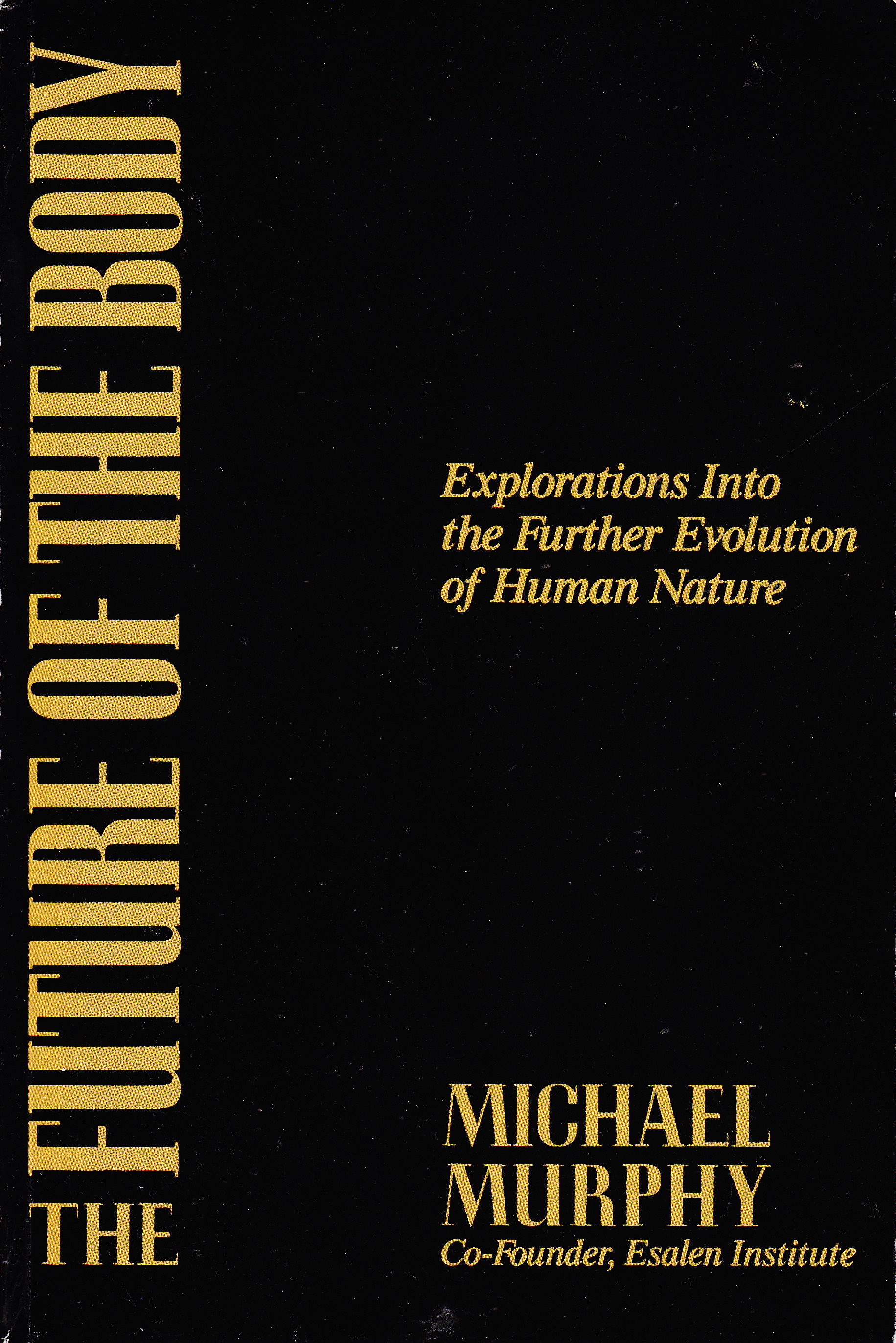
FutureOfTheBodyJust about everyone I know has their own method of curing the hiccups (or, in their more evocative spelling, hiccoughs). Most of these involve holding one’s breath or elaborate ways of drinking a glass of water. Since hiccups are involuntary spasms that can be quite annoying, they can’t be predicted or easily foreseen. Some years ago I realized that the methods I’d been using to rid myself of this unpleasantness were really just ways of getting my attention off of the hiccups—in other words, it was a matter of concentration. I started to respond by thinking the hiccups away whenever they struk me. Cut out the middleman, as it were. And it works. All of this is preamble to the remarkable material to be found in Michael Murphy’s The Future of the Body: Explorations Into the Further Evolution of Human Nature. Murphy is one of the co-founders of the Esalen Institute, about which I’ve posted before. Promoting exploration of human transformative potential, Esalen was a landmark in 1960s culture that I was a little too young to appreciate. Besides, I lived far from California and in a strictly religious mindset. Those who founded Esalen knew, however, that people are capable of more than we appear to be.

Human transformative potential involves matters with which materialistic science is often uncomfortable. Religious practices such as meditation, sports, and martial arts training, all, however, can produce results that shouldn’t be on the books. Whether it is the basketball player who can stay in the air a little too long, or a religious adept who can survive being buried alive for protracted periods of time only to be revived later, or even the remote viewer hired as a spy by the government, people are capable of more than we’re told we are. Murphy suggests that perhaps it is because we are socialized to think this way. Our young minds are open to a realm of possibilities that adult minds have been conditioned to discount. If it’s impossible, it’s impossible. Or is it?

The Future of the Body will take some readers where they do not wish to go. The fact is, however, that faith healers and stigmatics exist without fraud. Just because some frauds imitate reality, it doesn’t follow that the genuine article can’t exist. The usual reductionistic answer is that such things can’t possibly be real—let’s teach our children this fact—we are only robots made of meat. But this view still hasn’t accounted for consciousness, and consciousness is, at least for most of us, inescapably real. We know that because these bodies with whom we are associated do all kinds of things that bring it to mind. We get sick, we experience pain and emotion. We get up and go to work when we don’t feel like it. Most of the time we’re conscious of where we are, and what he have to do. Or do we? It very well may be that matters much larger than the hiccups might just be negotiable.


Grin and Bear It

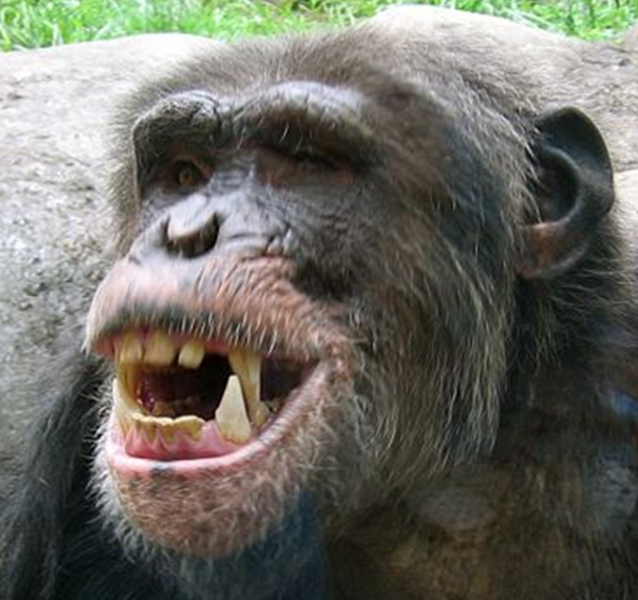
The dentist’s chair is about the last place I’d like to spend my Saturdays, but given my work schedule there are few alternatives. So there I was yesterday, yellow light glaring in my eyes, drill whirring ebulliently away, and finally gagging embarrassingly into the tiny sink at my right. Those back teeth come in handy for grinding, but they are poorly designed for brushing. I find the dentist’s office a good place for philosophical thought. In that chair where I’d rather not be, feeling sensations I’d rather not feel, I wonder in what sense my body is my own. Lately I’ve been contemplating this quite a bit. Consciousness seems attracted to a single body at a time, but the biological organism I call me doesn’t always have a say in where it is slated to go, or what it is free to do. Each job I have taken has come as an “only offer”—I’m not one of those over whom bidding wars are likely to erupt. That crown that popped off my tooth wasn’t really my doing, nor was the memorable root canal that led to it being there in the first place. Still, here I am.

Photo credit: Richard from Canton, Wikipedia Commons

Photo credit: Richard from Canton, Wikipedia Commons

Religions regularly teach that overcoming physical limitations is one of the perks of paying attention to your soul. I suspect parsing soul, consciousness, mind, and psyche is to slice this entity I call “me” a bit too thin. Whatever all or any of this is, having x-rays shot through it while the assistant hides behind the wall, it is hopefully made of sterner stuff than the teeth nature has given it. One hopes that this can’t be all to expect out of our existence. Life, if only our physical years, is too short to spend much of it in the dentist’s chair.

I’m not sure I like dentists knowing more about this body than me. Is it mine at all? I recall the exasperated call for a tongue blocker in a Wisconsin dentist office and the tooth-meister proclaimed, as if I weren’t in the room, “he has a curious tongue.” I don’t intend for my tongue to be curious, but it always seems to wonder about what finds its way into my mouth. Is it me? Is it mine? The consciousness always seems to come back to this body that does things I can’t control. These thoughts come on a sleepy Saturday morning when I should, by all rights, still be in bed. That is, if I’m indeed the one who wakes up in this body yet again today. And whichever body it may be, if it is mine, I know I brushed its teeth before going to sleep, as I have for as long as I can remember. And yet the drill whirs on.


Weather for the Birds

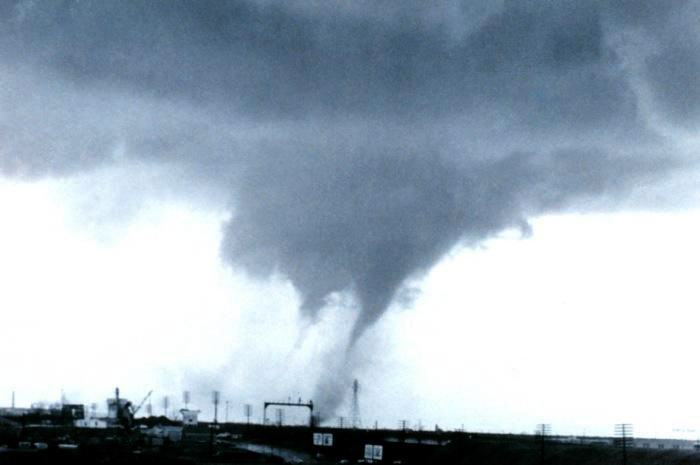
As Christmas nears so does a warm front, dashing hopes of a white Christmas in New Jersey. Well, at least there are no tornadoes coming. The weather, as my readers know, has long been perceived as a divine barometer. In a time when patience is wearing thin with religion, and weary headlines ask if it will ever finally disappear, our animal cousins seem, as usual, to pick up on clues more readily than we. An article on the BBC science page describes how a set of tagged golden-winged warblers vacated their nest a day before a tornado struck. Scientists suspect that the birds—and likely other species of birds as well—picked up the infrasound of the tornadoes that is well below human hearing range. Sensing the danger, they flew nearly a thousand miles, stopping just south of the storm’s track.

1957_Dallas_multi-vortex_1_edited

Of course, tornadoes don’t last an entire day. If the birds fled that long in advance, they couldn’t, I suspect, have heard a tornado that hadn’t formed yet. Since I’m no scientist, I’m not really qualified to offer an explanation, but I do wonder if such behavior isn’t related to consciousness. Several books that I’ve read recently have explored the concept of animal consciousness, and although we are reluctant to admit them to the realm of the self-aware, I wonder how long we can deny it. No doubt, if the birds fled (and returned after the danger had passed) there was an intentionality to their actions. Jealous of our intelligence, we must find a way to explain that animals can predict natural disasters of many kinds long before humans detect their more obvious traits. Our technology gives us seconds, or minutes, of warning. Dogs, cats, and birds know well in advance. But we are the superior beings here.

One of the problems with consciousness is that we can never get outside our own. Other people act in ways similar to us, and describe similar mental states, so we assign them the same kind of consciousness we have. Animals, not using human language, also act in similar ways to us. We call it “instinct” and continue on to the truly important stuff. I have no idea if birds can detect infrasound; I wouldn’t be at all surprised if they could. Without the ability to place it in the context of danger, however, I doubt they would take a thousand mile vacation just after their annual migration. We could learn a lot from our fellow creatures, if only we’d admit them to the conscious club and not the food club. And perhaps they might be able to explain to us why, despite all we know, religion never seems to go away.


Spirit Works

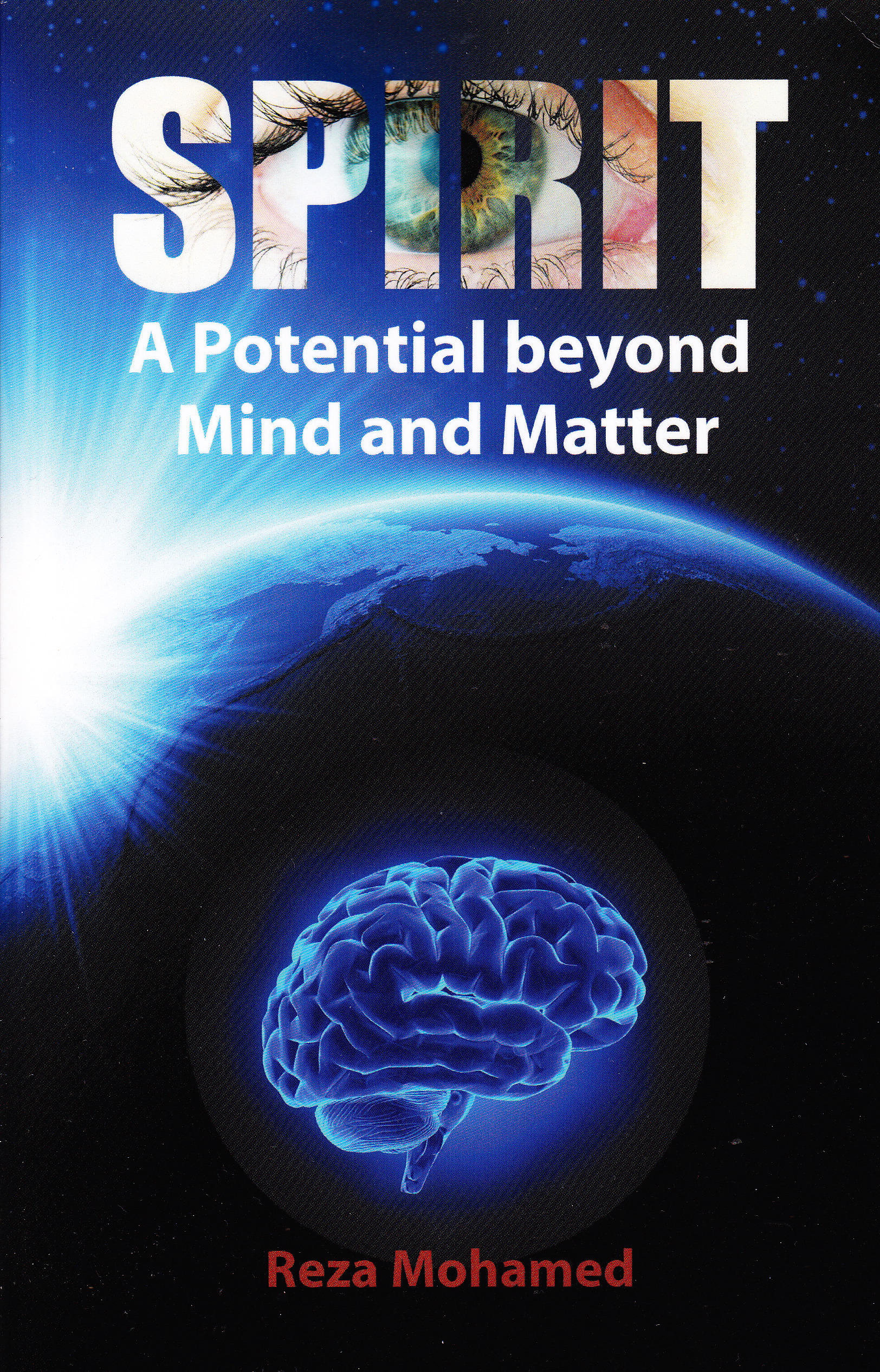
SpiritOne of the unexpected (for me) perks of the academic life was book reviews. Some journal editor would send you expensive academic books you get to keep, just for reading them and giving your opinion in writing! Most academics, truth be told—at least old school ones—would work for books. But don’t—wait. I was going to say “don’t tell the dean,” but it is clear that administration is way ahead of me on this one. In any case, I miss not having a viable academic opinion any more. Not having an institution means journals no longer care what I think about books. Also, working in publishing, there may be a conflict of interest involved. That’s why I was so happy to learn that blogging also leads to free books, on occasion. Most of them aren’t university press books, but you don’t have to be a professor to have something profound or useful to say. So it is that I came to read Spirit: A Potential beyond Mind and Matter, by Reza Mohamed.

There were several points that stopped to give me pause in this book, but about half-way through an idea caught me and has stayed with me since. It revolves around the idea of consciousness, something that Mohamed writes quite a bit about. A number of sources lately have suggested that consciousness is not unique to humans. Clearly, to my mind, animals are also conscious, and I think evidence points to consciousness, on some level, for plants as well. Perhaps even what we call inanimate, or inorganic material. Indeed, perhaps the universe itself is conscious. What occurred to me in reading Spirit, is that perhaps consciousness is the primal element. Maybe it has always existed. Could it be possible that we, like riders on a train, borrow a bit of consciousness while our bodies last, and then when we expire we simply climb off that train and consciousness continues on down the track, waiting for the next passenger?

It is nearly impossible to determine whence consciousness arises. Believing that it always existed is more plausible to me than the odd suggestion that it is just what happens when neurons get all mushy from being too close together. All creatures, as Mohamed notes, have will. Plants that follow the sun—slowly, and over years—seem to have a purpose as well. Who’s to say that it stops there? What have we lost if consciousness is endemic to the universe? Of course I don’t have any answers. Just possibilities. Ideas can spring unexpectedly from books, and as a sometime writer, I can say they even surprise an author from time to time. Then, of course, my opinion is merely that of an independent scholar. But I still find myself working for books.


Thinking about the Universe

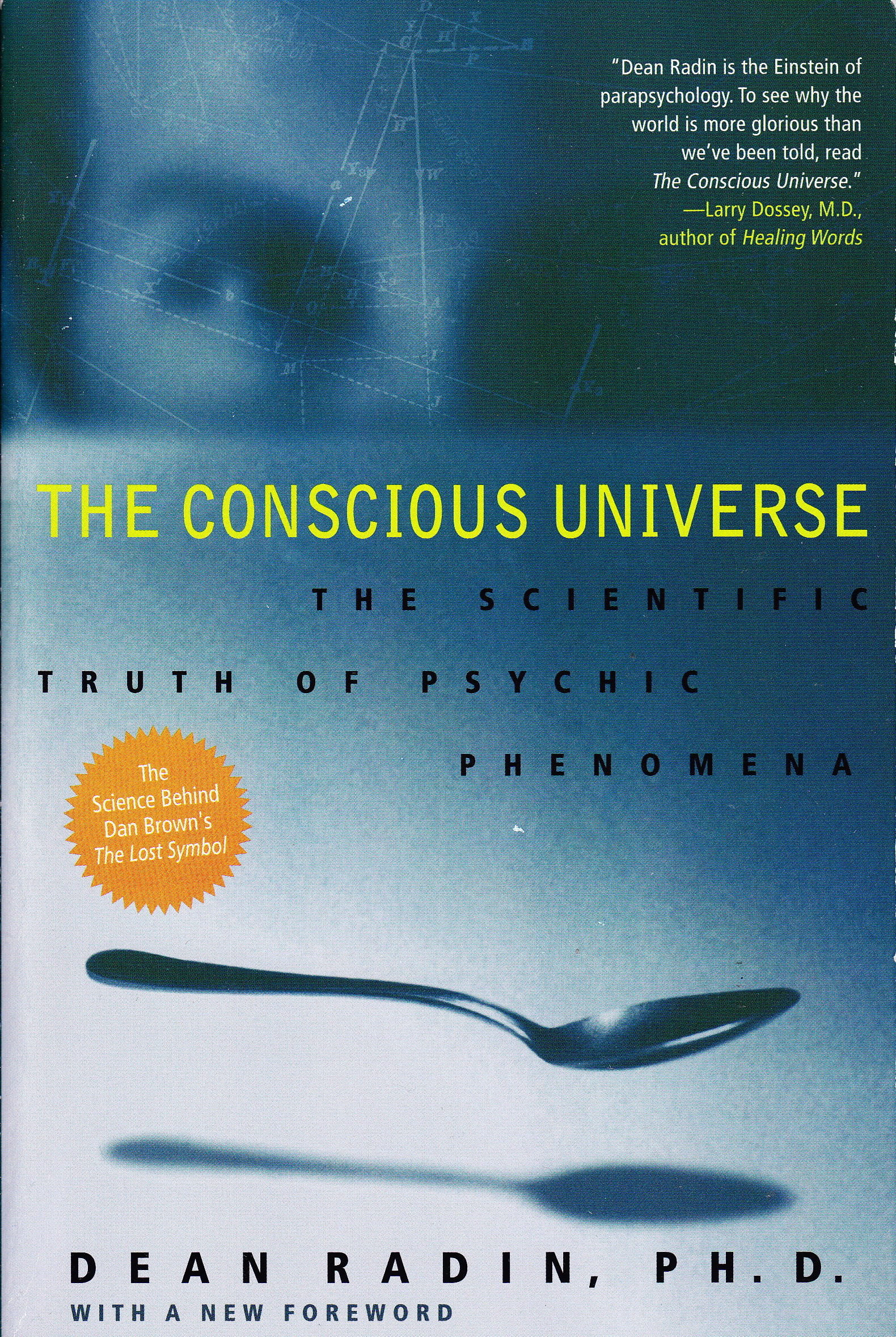
Conscious Universe Notwithstanding appearances, I have been reading. Despite the determination, disruptions to my commuting schedule always throw me off a bit. Having recently read The Holographic Universe, I decided to follow it up with The Conscious Universe. Subtitled The Scientific Truth of Psychic Phenomena, Dean Radin’s book is one of those that you don’t want other commuters examining too closely, although, however, they probably should. Radin is a fully credentialed scientist who has a rare trait: a willingness to follow where the evidence leads. Respectful of traditional scientific method and even mainstream science writing, Radin demonstrates in this book just how risky it is to go against the trends that are like deeply rutted wagon tracks over a sun-baked prairie. Science progresses by examining the evidence, but today science is, in some senses, over-reacting to the refusal of religious thought to, well, give up the spirit. Religion persists and rationalists can’t understand why. Investigating “spooky effects at a distance” is not entirely welcome in such a climate.

Radin, however, approaches psi with scientific rigor. Laboratory experiments, as he thoroughly demonstrates, have revealed with greater evidence than many readily accepted theories, that there is something behind psi. In fact, the government and private industry have invested, and continue to invest, in it. And in our more unguarded moments, most people will generally admit that sometimes coincidences are a little too odd, or that you might, from time to time, really be able to send a thought to someone else. The laboratory results, as Radin clearly shows, are simply dismissed as aberrations because they don’t fit into preconceived (frequently materialistic) worldviews. It is far easier to laugh than to sort out how all of this might actually work.

There is no triumphalism in this. It is simply the willingness to ask honest questions. Quantum mechanics, as physicists know, are not always as mechanistic as they seem. Even Einstein was willing to keep an open mind concerning the larger picture. The universe we envision today is not the same as that which Einstein knew. It isn’t easy to summarize what Radin is addressing in his book, but if I were to try I would say something like this: consciousness is essential. I know materialists dismiss essence, but I believe the evidence goes against them here. Consciousness is an integral part of the universe, and we can’t even define it yet so that all parties agree. If we don’t know what it is, how can we possibly know what it might not be able to do? Radin does what seems to be the only logical response in such a situation: he keeps an open mind.


Growing Up

WakingUpI am in two minds about Sam Harris’s Waking Up. Literally. I haven’t read Harris since The End of Faith, and I have to admit that I found Waking Up to be a very engaging book. I can’t agree with everything Harris writes—that’s an occupational hazard of acquiring advanced degrees—but to have a scientist, an atheist no less, praise spirituality felt incredibly genuine. Spiritual experiences happen. I’ve had a few doozies over the years. I’ve also read a number of scientists who tell me they’re all an illusion. Harris admits that consciousness is a mystery. His use of “mind” instead of “brain” won me over from the beginning. I discovered that the atheist can also be a seeker. Dogmatism, of whatever stripe, is the enemy.

Harris has considerable experience meditating. This is no activity for posers or wimps. It is, despite minimal physical demands, hard work. Throughout the book we get the sense that Buddhism is among the least objectionable religions, when divested of its myths. I do wonder, however, if demythologized Christianity was ever given a fair chance. From my own experience, some of the selflessness advocated by Harris can be found in taking aspects of Christianity seriously. I understand, I think, Harris’s objections to religion. It can, and does, lead to horrors both obvious and subtle. Yet, every once in a perhaps great while, it does offer redemption. Meditation, for example, has its roots in religious practice. It is this that Harris calls spirituality. And it is good.

A Guide to Spirituality without Religion is an apt subtitle for this brutally honest and open book. Harris’s knowledge as a neuroscientist endows his ideas with great authority. He opines, and he is not alone, that meditation demonstrates that “I” is only an illusion. This loss of self will haunt me for some time. For decades I is all I seem to have. Still, I am pleased to find an open-minded scientist on this same path I tread. Raised to be both spiritual and religious set the trajectory of my otherwise logic-driven life. You can’t go back and change all that, but you can grow up. To read of Harris’s spiritual experiences in the geography of great spiritual masters as well as in the laboratory instill in this reader a profound hope. Whether or not this reader is merely an illusion. There may be morning after this long night, after all.


Trans-Human

“Rapture of the Nerds,” an article in this week’s Time magazine by Jessica Roy, has me scratching my head. Or it would if I had a head. That is, if I were an uploaded consciousness in a machine. A transhuman. The idea that consciousness is transferable to hardware has been gaining momentum over the last several years during which humans have evolved into illogical machines. Roy’s article about Terasem, which is being called a new religion, explores what the leaders of the movement teach about human consciousness. You write down your thoughts in most intimate detail, download, and viola, send them out to the cosmos. Your soul has been saved. If only we knew what a soul was. Transhumanism has been promising an attenuated kind of immortality for its adherents, but as I sit down to write out my thoughts, I’m aware that there’s always a lot more going on in my brain than the simple ideas I can scrawl down before they evaporate. There’s quick wisps of thoughts about my loved ones, my schedule (what do I have to do today?), what I ate for supper last night, how I feel—all of this while I’m putatively thinking about writing a blog post. Schizophrenia of the soul?

Faith

So much of thought is having a biological body. From early days I have been aware that this body will die. I was taught that the soul would live on, but this thing I call consciousness seems pretty closely tied with this thing I call life. And once the biological input ends, that part will be over. I think. In other words, my thoughts are tied to my biological existence. How can I even begin to write a minute fraction of them down accurately? I used to toy with an idea called meta-thinking. It was something I came up with as a plot element in a science fiction story. The idea was that those who can think two thoughts at once would eventually take over from those of us with lesser mentalities. Those who have two minds in one brain are, it seems, a step closer to the divine.

I use technology on a daily basis, but I am a disingenuous advocate. Some of the most transcendent moments I’ve experienced have been outdoors with technology left behind, under a sunny sky with an ocean breeze blowing in my face and those I love walking beside me. I think I’ve already broadcast that out into the universe by simply being a part of it. I don’t need circuits and motherboards to make me more of what I am. Technology is the follower. It is consciousness that will always remain in the lead. And we still really don’t even have an idea of what consciousness actually is. It’s certainly not this computer that’s sitting on my lap. And I do have to wonder, once my consciousness becomes a robot, what it will do with this strange, primate urge I have, when I’m puzzled, to scratch my head.