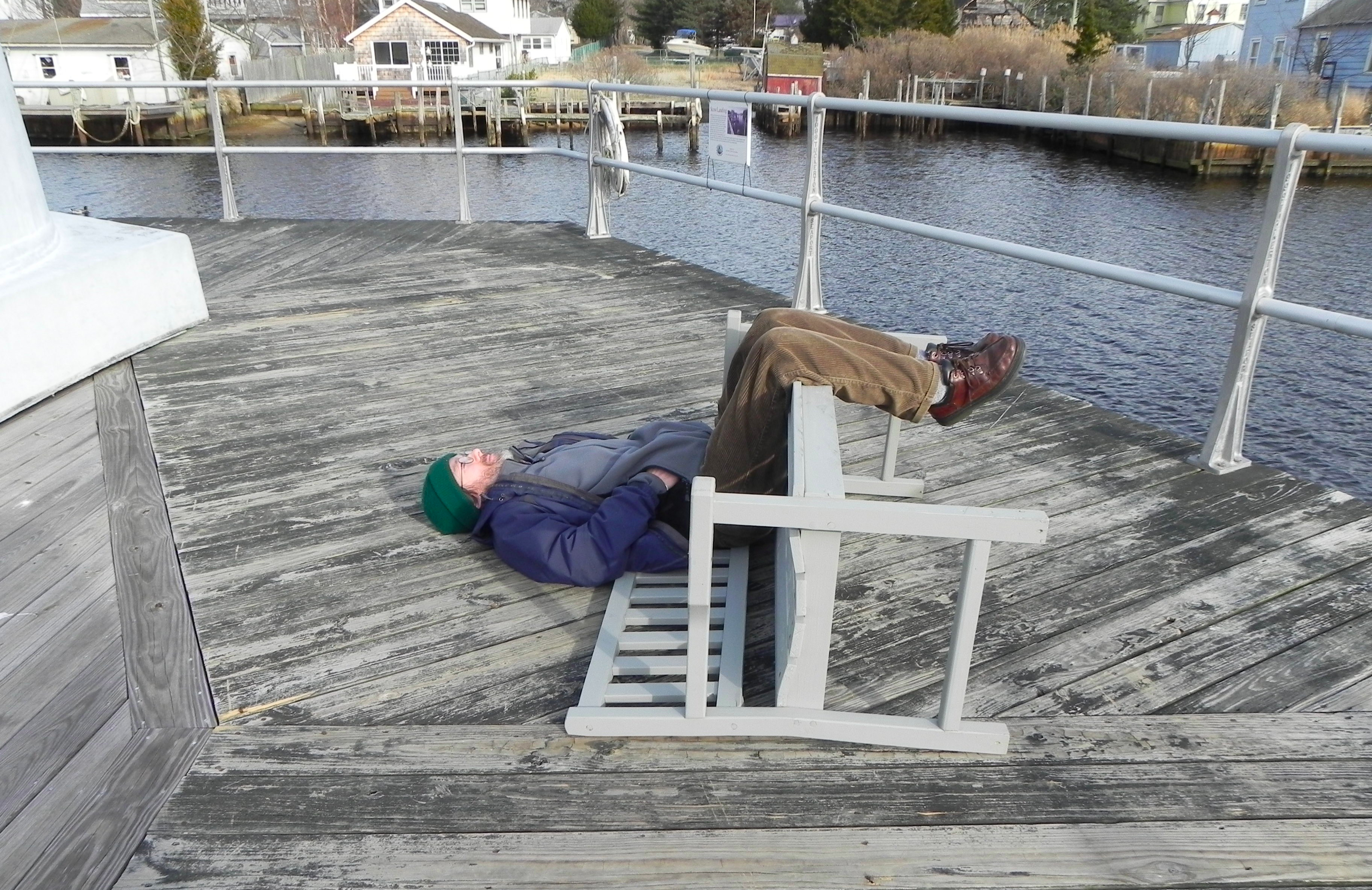
Slow and Spry

Businesses seem to want to move at light speed.  At least some do.  When I see that happening I think, “their strategy must be to make a fortune quickly so that when the unthought-through idea collapses they can move on to the next thing.  When I hear words like “agile” being tossed around I translate “reckless.”  Just over a century ago my ancestors were scraping out a living farming, and they got along okay.  Our acquisitiveness has outstripped our sense.  I read quite a bit about being satisfied with little.  Of course, I work in the “business world” where such ideas are anathema.  Even universities have decided to jump on the Titanic.  What could possibly go wrong?  My experience at Nashotah House was decidedly mixed.  One thing I always appreciated was the contemplative (i.e. slow) pace of things.  I may not be orthodox but I’m hardly reckless.

Perhaps buying the farm isn’t such a bad idea.  I’m afraid that I don’t have enough practical knowledge to raise my own food, even though I’m a vegan.  You see, for the things you can’t raise in the soil you need to sell surplus so that you can buy things.  Or rent movies.  And that takes business sense.  And businesses want to move at the speed of light.  I may be neurodiverse, but it takes me a while to process things.  I watch older movies.  I read slowly.  I think things through.  I do believe that businesses that last a long time have survived by moving a bit more slowly.  Like a tree.  By thinking things through.  The Vatican has been in business for a couple thousand years and they seem to be doing okay.  I could be Catholic were it not for doctrine.

I’m not the smartest guy around—not by a long shot—but I am a strategic thinker.  Strategic thought can be deep.  And counterintuitive.  And it doesn’t always lead to the desired results.  (I don’t even have a small college post, so that much is obvious.)  I’m content to let people pass me on the highway.  I don’t have to be first to market, as the saying goes.  I’m more in it for the long haul.  It hasn’t landed me wealth or fame, but I can spend a little time writing every day.  I get to watch movies that make me feel good.  I even get a book or two out the door.  Being agile is fine, but only, imho, if you think it through.

Time To Think

Although I’m not Roman Catholic, I often thought about joining a monastery as a teen and twenty-something.  The idea of spending all my time devoted to contemplating the ultimate reality still has a strong appeal.  I know quite a few rationalists who have no time for spirituality, but it seems to me that we all need it for facing death.  Most people, I know, avoid the topic if at all possible.  Contemplatives, on the other hand, spend quite a bit of time preparing for it.  Since it’s inevitable that makes sense.  I often wonder why people consider the most common thing in human experience with such trepidation.  If it’s a source of anxiety, shouldn’t it be confronted?  That’s not to say we need to look forward to it, but it does mean we shouldn’t run from it either.

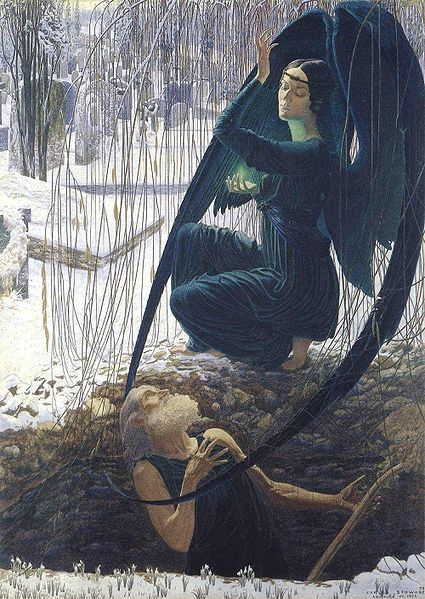
Carlos Schwabe, Death of the Undertaker; Wikimedia Commons

The combination of Christianity and rationalism, it seems to me, lead to this terror.  Christianity because it views death as an enemy, and rationalism because it has no comfort to offer.  I’ve been reading about how pre-Christian cultures thought of death.  They didn’t display the fear that Paul seems to have introduced into the equation.  Since American culture is so heavily influenced by the Bible (as was European culture before it), we have adopted the scriptural view that death is a problem.  The Hebrew Bible, in which there was no real afterlife, was less concerned with making sure you avoided Hell—they had no Hell to avoid.  The anxiety seems to have been introduced by, ironically, the concept of resurrection.

I’ve noted on pieces I’ve written for other websites that resurrection is among the favorite themes for horror films.  One of the reasons is precisely this discomfort in taking death at face value.  Our religions keep us aware of the spiritual side of our nature.  They have developed around the world in different forms and all of them address death in some way.  Most without a profound sense of anxiety.  There is some irony in cultures that adopt resurrection as a theological tenet are among those that try to avoid death most assiduously.  It plays into those cultures’ views on abortion and capital punishment.  As well as their performance of social justice.  While Paul asked death where its sting was, and seems legitimately not to have feared it, in the centuries following his position seems to have eroded.  There seems to be plenty to contemplate here, if only secular society had monasteries.


The Spiritual Life

Genuine spiritual experiences don’t sit well with a nine-to-five job.  When something truly profound happens to a person s/he requires time to think about it.  Ponder the experience.  If such a thing occurs on a Sunday (imagine that!), the next morning, still reeling, you need to go to work.  Perform duties that no longer seem significant.  And continue to do so for four more days, until the fire has gone out.  This paradox has plagued me for some time.  Perhaps it’s the fate die cast for an editor who can’t just read submissions for their financial payoff.  Who asks, “What if she’s right?”  Doesn’t that affect everything?  Especially in the case of a religion editor.

Blown away.

I first noticed this in college.  Even there the schedule was quite flexible, according to classes you had to take.  The professors were sincere in their presentation of ideas you should take seriously, but then in the work world your boss indicates that you’re not being paid to do that.  You’re being paid to produce.  Contribute to the machine.  Cogs and sprockets don’t think.  They do.  Then a significant weekend would come (or a holiday, say) where the message would really speak to me.  Change my outlook.  Until Monday morning.  The outlook would still be changed, of course, but the demands on routine would not also be changed.  It’s quite a dilemma.  As the great contemplatives throughout history have known, these ideas must be wrestled with.  Conversed with.  Tried on for size.  Walked with.  Such things can’t be done in the context of what you’re paid to do.  “Do it on your own time.”

What is your own time?  The weekend, essentially.  Work expands to fill the quiet times of weekdays.  Your time is owed to somebody who pays you less than the national average to do something any nonspiritual person could do.  Such is the danger of being open to new ways of looking at things.  Vacations need to be planned.  They are rejuvenating, but spiritual experiences can’t be planned.  They just happen.  HR has no algorithm for them.  Not exactly sick days or floating holidays.  And what if you need more than one day?  That meeting that was scheduled for Tuesday, what about that?  As if such things were really important.  Perhaps you too had the professor late for class because s/he was struggling with an idea, an experience that fit her or his specialization.  There were always office hours to recover.  That’s all fine and good, but it’s time for work.


Silent Light

One of the first things I notice during and after a snowstorm is the silence. Part of it, I suspect, is the dampening effect the blanket of snow has on ambient sounds, but another part of it is the lack of usual frenetic human activity. Here in New Jersey it often feels like being in a perpetual motion machine. People are always going some place. Movement is constant and even if I have to head to the airport at 3 a.m. there is other traffic on the road. We are all too busy. Snow has the power to make one stop and reflect.

We live on a fairly busy street since we’re just a couple blocks from the county hospital. Further along our street in the other direction are the county jail and social services offices. People are going by constantly. When yesterday’s snow began, the traffic died down. For once people seemed to take forecasters seriously—driving would be dangerous, and the snow would keep coming well into the night. By mid-afternoon we had more snow in my town that I’d ever seen at a single time during my decade in New Jersey. It was as if winter came in a single day. But it was quiet. Very occasionally a snow plow would rumble by, but most of the day our busy street was deserted. A few kids ventured out, but not many since this was a blizzard (the definition of which is that wind is strong enough to lift snow off the ground and make it airborne again). The silence was almost disorienting. It was like living at Nashotah House once again.

DSCN6193

Silence has long been understood to be a spiritual virtue. Both eastern and western religious traditions recognize the value of listening. The noise may be internal or external, but it is nearly constant. Taking time to try to shut it out, if only for a few minutes a day, can be a spiritual exercise. A snowstorm can help to quiet the constant reminders that we have to do this or that, or that we have to be here or there. During a snowstorm we only have to be where we are, and we only have to do what we’re doing. Soon enough the roads will be cleared and the traffic will begin again. Until it does, however, it is worth exploring what the silence has to offer.