Dearly Beloved

Coptic Christians have been in the news recently. In a late push to be known as the radical orthodox, it seems, the Copts have arrested the headlines. Tensions in the Middle East appear to have shifted to this ancient group and the media finds itself fascinated by them. In an unrelated development, a Coptic papyrus fragment appears to mention Jesus’ wife, according to CNN’s Belief Blog. Naturally, people are curious (read “upset”) at this revelation, although it is not history, just tradition. For decades, perhaps centuries, scholars of Christianity have noted that Jewish guys Jesus’ age would have been, by all social expectations, married. Celibacy was not really an option in the first century of the common era, and yet, no one explicitly mentions Jesus’ wife. This causes a larger crisis for divinity, because once Jesus was recognized as divine what would you do with a wife? She would complicate things (or at least theology).

The female divine is certainly as ancient as the male divine, culturally speaking, if not older. Despite cartoons of Cro-Magnon man dragging Cro-Magnon woman by the hair, all indications are that early people revered the feminine mystique as life-givers. Naturally, this equates to a kind of divinity. Only when society grew to be dominated by politics, no matter how primitive, did the male usurp the role of life-giving image-of-god-bearer. The male part in procreation was upgraded to being the creator, and the female relegated to a mere receptacle. Male gods alone could create universes, and women were downgraded to incomplete men. Still, in the myths around Israel (and perhaps within Israel as well) gods were married. The divine principle included both genders, although in an unequal distribution of power.

Fast forward twenty centuries and we have movements that encourage young women to consider Jesus as a kind of chaste lover. That’s a little hard to do if he was married—issues of adultery, at least in fantasy land, cause a real complication. The fact of history is that we possess very little of Jesus’ biography. Depending on how we parcel out the Gospels, we know only about one year’s worth (or three very scant years) of his life. Many personal details are left out. The Bible is clear that he had brothers and sisters, and even some of their names are preserved. We know his parents and find out that he was a cousin of John the Baptist. The relationships likely continued from there into other connections, but they weren’t central to the story the Gospel-writers wanted to tell. Adding women always complicates a male religion. Only non-gendered religions can be truly universal.

So this newly translated Coptic fragment comes from centuries later when it would seem natural that any Jewish man of the time would have been married. What was his wife’s name? Here’s the beauty of the revelation: for that, we can still offer the consolation, “fill in the blank.”
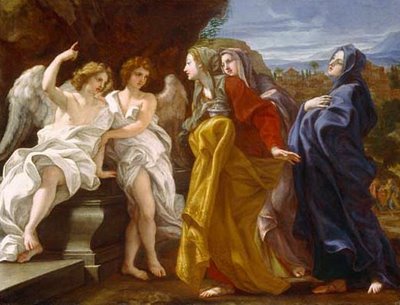
Rounding up the usual suspects?


My Myth is Bigger

“Do some people still worship those gods?” That is the question my daughter asked on the way home from seeing Thor yesterday. I had to staunch my immediate “no,” and qualify it. Revival movements exist for most ancient religions, although it is difficult to gauge how serious they are. Then I open this morning’s paper and see that conservative Muslims have been attacking Copts (by definition conservative) in Egypt again. Religion foments hatred more effectively than just about any other aspect of culture because it concerns belief. Beliefs must be held with conviction, we are constantly reminded, and conviction means convincing others that you are correct. This is the devolution from mythology to religion.

Mythology is a meaning-seeking system of stories that are true but not factual. The modern religious (and scientific) mind has difficulty accepting something that is true and false at the same time. No one requires convincing that life harbors plenty of difficulties. Even in this softer, technologically sophisticated environment we’ve created for ourselves, disappointments and difficulties abound. Religions often promise paradises that they just can’t deliver, and so true believers often grow frustrated. The myths, however, remind us that struggle is part of existence even for gods. For every Thor there is a Loki. The simplistic nicety of one God padding a harsh world with a comfortable lining simply does not match reality. Mythology has an answer for that, an answer which is more honest than many “sophisticated” religions.

In ancient times it really did not matter what you believed. Gods don’t really care what you think of them as long as you provide what they require. Offer your sacrifices, do your duty, and get on with life. Religion today is a matter of correct mental assent. If in my head I agree that this particular deity is the only one, and I love that deity, all will be well. Funny thing is, even monotheistic religions can’t figure out that if there’s only one God than everybody is worshiping it (him, according to many) already. Better to kill off those who don’t agree, just to make sure. All gods, after all, demand sacrifice.

Even scientists honor the gods: the Thor Delta


The Selfish Meme

Although we may know deep down that one day is pretty much the same as another, people have always held profound reverence for the new year. Symbolic rather than empirical, hopes resonate around the concept that a good start presages better things ahead. That’s why tragedy early in the year sometimes possesses such solemnity; we had hoped that things might begin anew. The headlines today announce that a church bombing in Alexandria, Egypt, started a new year of violence in the southwest corner of the cradle of civilization. Muslim extremists are suspected as there has been some tension between the Coptic Christians of the city and their Islamic compatriots. Although details are not clear, one matter remains in focus: the violence is based on religion.

One of the more savage legacies of monotheism is the absolute truth claims that follow in its train. If truth be truth, there be only one. So the meme goes. Multiple mutually exclusive truths cannot coexist in a religious universe. Scientists might well claim that in this non-empirical universe, no testing may reveal the actual answer. Belief takes over where knowledge fails. And belief in a religion, like it or not, follows the dictates of survival of the fittest. Memes, like genes, can be quite selfish. If one is to stake eternal, unchanging consequences on a religion, the proposition is all-or-nothing. Even purgatory is not forever. The coin falls one way or the other. Religions fight for the memes of truth, and those with the highest survival rate win.

Lighthouse of Alexandria before the bushel

Alexandria has suffered its share of violence in the past. Its famed library, the center of learning in the ancient world, traditionally underwent four destructions, the final two religiously motivated. The books surviving antiquity fell under the Christian ban of paganism in 391. Arabic sources note the destruction of the institution after the Islamic conquest in 642. The end result is the same – the irreparable loss of centuries of knowledge. The lighthouse of Alexandria, one of the seven wonders of the ancient world, might well stand as a symbol for the influence of rationality. Tradition states the light could be seen 29 miles away, but earthquakes and the need for building material saw the extinguishing of the light so that by 1480 the darkness settled for good. A fort was built from its remains. Given a choice of light or fortification, it is clear which way the selfish meme will go.


Nag Hammadi

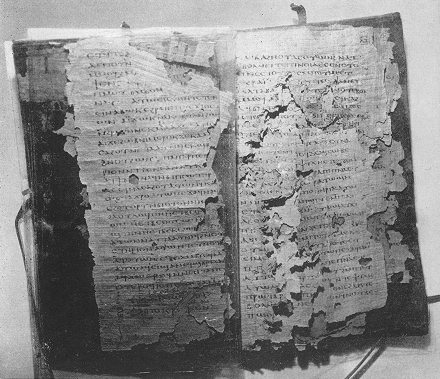
Want to create some excitement in the middle of a gaggle of scholars of ancient history? Just throw some newly discovered ancient text in their midst and sit back to watch the fun. This scenario has been (metaphorically) repeated many times in the last century and a half. New texts come to light and revolutionize what we know of ancient religions. The Nag Hammadi library represents one such flair up of excitement and intrigue. Discovered in 1945, this cache of mostly Gnostic texts has forced a new paradigm upon early Christianity. It has become clear that several flavors of early Christianity existed side-by-side until one group, claiming divine support, became the “true Christianity” (orthodox) while the others were just plain wrong. The Gnostic field of study received a shot in the arm with the publicity fair surrounding the Gospel of Judas, a Gnostic text not found at Nag Hammadi, early in the new millennium.

Good News, Gnostic Style

Discovery can be a dangerous luxury. When new evidence surfaces it can’t be ignored. When the religions of the ancient world reached their imperial stages it had already become too late to admit that mistakes may have had been made way back in ancient times. You can’t conquer a country and then just take it back. We now know that it is far more appropriate to refer to Early Christianities and Early Judaisms than to utilize their singular (if more prevalent) forms.

Nag Hammadi, a mid-size town in Egypt, has been back in the news since Coptic Christmas (just a couple of days ago) saw the death of six Copts when a Muslim extremist gunned them down on their way out of church. In turn, the Coptic community has been running riot in the town, destroying ambulances and shattering shop windows and driving Muslims off the streets. Those who hold their religions to be unchanging have the most to lose when new discoveries surface. It seems unlikely that exploration will cease; more ancient interpretations will emerge. When they do it also seems unlikely that they will find parent religions mature enough to accept their long-lost children. We could still use a little bit of secret knowledge, it seems, even today.