Covid Books

There’s a fairly new phenomenon called “Covid books.”  No, I don’t mean books about Covid-19, but books affected by the virus.  (Not infected.)  Let me explain.  Many publishers, unaware of the menace, continued scheduling books through what became the pandemic.  You see, books take a long time to put together, and, interestingly, much of the work can be done remotely.  That meant that even as we locked down, books still published.  But in 2020, few people were interested in books on other subjects.  Children’s books and others intended for young readers did really well.  Online ordering made this possible.  Fiction for adults didn’t fare too badly.  What suffered was nonfiction on topics unrelated to the pandemic.  This is so much so that publishers designate as “covid books” those that underperformed and appeared in the early twenty-twenties.

To put a more personal spin on it, I published a covid book.  Nightmares with the Bible came out late in 2020.  Granted, the topic didn’t appeal to everyone, and the price was about $100 when people were wondering if their jobs would be there after this was all over.  (Is it over yet?  I still wear a mask in crowded places.)  The reason that I consider it a covid book is that although it has received more reviews than any of my other books, it has sold the worst of them all.  Less than its dollar amount.  The publisher, which was bought by another publisher, has no inclination to do it in paperback, so it will remain an obscure curiosity.  Interestingly, I found a Pinterest page that was a listing of unusual book titles and mine was there.  But it was a Covid book.

In the wider world, even in 2025 publishers discuss Covid books.  A promising author whose book appeared in the height of the pandemic may have sold down at my levels.  What with the gutting of government programs and agencies since January, it’s difficult to tell if we’ll ever get a pronouncement that the pandemic has ended.  Where two or three are gathered, I’ll be wearing a mask.  And I’ll likely be thinking of books of that lost generation.  Information that will never be processed.  Book publishing survived, despite being a nonessential business.  People still buy and read books.  Some day some bibliophile might write a book for other readers about the year that robbed us of interesting but ultimately irrelevant books.  There’ll be too many to list, of course.  But we have been given a lesson.  Let’s hope we continue to do our homework.

Going Viral

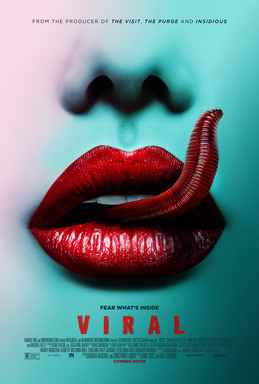
Okay, so there are some pretty big plot holes, but Viral is nevertheless an effective horror film.  The “virus” is actually a parasite spread by blood, which carriers cough in your face, if they don’t kill you first in a fit of parasite-induced rage.  The really scary thing is that this movie was produced before Covid-19 and the government response, as presented in the movie, is somewhat believable.  Nevertheless, it retains its ability to be a story about family and loyalty.  There are some missed opportunities in that regard, but overall it’s fairly well done.  It certainly keeps the tension going and I feel some spoilers coming on so I’ll warn you here.  A Blumhouse production, it seems to have had a reasonable budget.  And there’s a solid attempt to have a storyline with characters you care about.

Sisters Stacy and Emma are trying to adjust to a new school system as news reports increasingly focus on a new, and lethal, virus.  Their California community is the site of the first U.S. outbreak and the initial panic isn’t unlike what happened in 2019.  I’m a little surprised that, given that development, the movie didn’t gain more residual watching.  In any case, a quarantine and curfew are set up, but the teens of the housing development decide to have a party.  Kids will be kids, after all.  Of course, an infected guy is there and Stacy, the older sister, gets infected.  Their parents were caught outside the quarantine zone, so they have to try to survive on their own.  Emma has a new boyfriend—the guy next door—and he urges Emma to leave her sister, but she won’t.  Martial law is declared and “nests” of the infected are being bombed by the government.  Emma and boyfriend manage to survive, but the rest of the town’s a wasteland.

As I say, the implications are the really scary part.  Governments have the mandate to protect the greatest number of people—isn’t that utilitarianism, by default?—and decide to cut their losses and destroy infected communities because there’s no stopping the disease.  Even as the gaps in the story kept coming up, I was asking myself would our government do such a thing.  I could find nothing to dissuade me that it would.  Self-preservation is human nature.  As is might makes right.  Our government, for my entire life, has consisted of the wealthy and one thing we know about those with money is that they’ll do whatever they can to protect their interests.  Oh, and there are a number of effective jump startles as well. But they’re not as scary as the government.


Science of Convenience

One thing I’ve noticed about employers is that they’re all for science, except when science contradicts capitalism.  Then they become all mystical.  I had a situation illustrate this particularly well with one of my many employers.  Touting everything to be “evidence based,” they liked to refer to the science behind their reasoning.  Then a study came out demonstrating, scientifically, that more breaks actually increase efficiency in learning and working.  Suddenly silence from management. Crickets chirped.  This observation was just as “evidence based” as daily operations, but it was ignored because, well, it would be giving too much to employees.  You see, science that benefits the upper levels of management is one thing, but by the time it trickles down, well, you know.

American culture is based on the premise that you need to drive people to work as hard as possible.  Perhaps anecdotally, the Covid-19 pandemic showed that workers at home were just as, if not more, productive than they were after enduring an often horrendous commute to get to the office.  Once pandemic strictures began to lift, however, it was all “we want you back in the office.”  Bosses like to look out over seas of employees in their cubicles and feel the surge of the galley master with his whip.  You need to keep workers in line, you understand.  That’s the way capitalism works.

I often wonder where the world would be if superpowers didn’t have cultures based on greed.  One of the seven deadly sins, or capital (!) vices, the worship of personal gain stands behind capitalism as we know it.  And we’ve seen the results.  A shrinking middle class as those with all the wealth make plutocracy out of what was intended to be a democracy.  (Of course, the wealthy founders of the country probably didn’t have a real grasp of what life was like for the poor, even at the start of things.)  Capitalism is good at using aspects of all human endeavors in order to increase its reach.  Science is one such tool.  Religion is another.  Science says more time off is good, and can increase productivity in our current world.  Religion says greed is evil.  These are the parts we’d like to ignore.  Even the Harvard Business Review suggests a four-day work week is beneficial.  Business leaders are skeptical, of course.  Skepticism is one of the elements of science.  And science can be very profitable, if it favors those who hold the reins of power.

Photo by Alex Kondratiev on Unsplash

Forgetting Witch

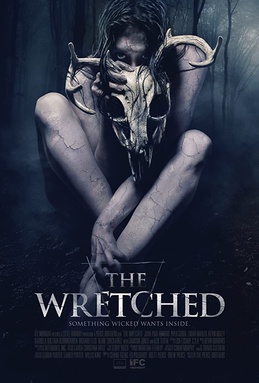
Being forgotten.  Isn’t that one of our greatest fears?  We want to be remembered, our desperate “Kilroy was here”s scribbled on the impermanent earth.  This is the fear that’s at play in The Wretched.  This fairly low budget horror film came to hold the record of being a box-office top earner for six consecutive weeks in 2020.  This was a technicality, of course.  The pandemic was in full swing and other major motion pictures were put on hold.  The Wretched played on, earning little, but more than other films.  It’s not a great movie, but it’s not a bad one either.  It all has to do with what might best be called a “witch.”  In reality, the monster is based only in part on witch traditions, but the twist is this monster makes you forget the people she takes as her victims.

The story hinging on an impending divorce and a somewhat rudderless young man being sent to live with his father in Michigan while his parents sort things out.  Ben, the young man, notices the neighbor’s young Goth wife, but something’s strange about her.  While in the woods, she and her son encountered the monster—revealed as a witch by the occult symbol carved into a tree near her den.  She steals the family baby (you’ll probably hear echoes of The Witch here, and you wouldn’t be wrong) and the family forgets there was a baby.  She then takes over the body of the mother.  Ben spies on them, Rear Window-style, when he’s not at work.  Soon the older son of the couple is missing, and the father claims they have no children.

Ben, while starting a romance with Mallory, a girl from work, pieces together what’s going on, but nobody believes him.  The problem is the missing persons are all forgotten.  To me, anyway, that was the scary part.  Ironically, while not literally so, the movie itself has been forgotten.  We all remember those days of panic in the spring of three years ago.  Long days when we didn’t leave our homes because some killer virus was rapidly spreading and the leader of the country simply didn’t care.  Those who released movies (or published books) in 2020 know that their work was quickly forgotten.  People had other things on their minds then.  I still don’t quite get why it’s called The Wretched, unless it’s perhaps those who are forgotten.  If so, the movie may become a parable of the many creative works that emerged during a time when our collective mind was clearly elsewhere.


Female Future

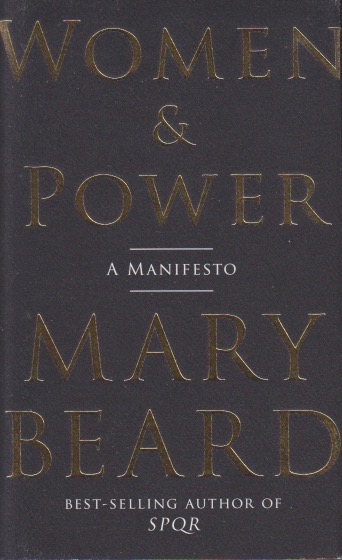
One thing we repeatedly heard during the early days of the pandemic is that people couldn’t wait for things to get back to business as usual (BAU, in corporate speak).  I told others then that we shouldn’t strive for “as usual,” but we should try for something better.  I got that same sense from Mary Beard’s Women and Power: A Manifesto.  Beard is a classicist.  She’s studied ancient Rome and earned her reputation in that area.  Women and Power is the publication of two public lectures on, broadly speaking, why women aren’t ever truly allowed to share power.  The first essay focuses on how women’s voices are routinely silenced, as they have been since classical times.  The second essay, more akin to what I was hoping about the rebuilding of society, is that we need to redefine power and how it is ascribed.

You see, as a society we have the opportunity—mandate even—to decide what’s truly important.  Electing angry old men like Trump only served to set back our progress by refusing to address the problem.  The idea, and this has been true throughout history, is that what men value is more important than what women value.  And we can’t assume all women value the same thing.  In other words, some serious thinking has to be done.  It doesn’t surprise me that some of this thinking has been undertaken by a classicist.  Those of us interested in how ideas began can have insights into why things are the way they are.  That won’t hand us the answer to the dilemma—as Beard says, hard thinking must be done—but it does show that we can begin to understand.  Beginning to understand is the first step to coming up with a solution.

Biology, and the history of biology, has something to do with the dilemma.  Childcare is a necessity and although we might be able to train brains, it does seem that women tend to have more empathy than men.  History tells us that prior to the invention of baby bottles women had to be available to unweaned children to meet their nutritional needs.  Meanwhile, men had to provide  the social structure that made the agricultural revolution possible.  As far as we can tell, hunter-gatherers (and there’s no going back to that) were more egalitarian.  Beard is right—we haven’t hit an impenetrable wall.  There are ways forward.  Equitable ways.  Different ways.  We need to stop longing for “business as usual” and imagine a better future.


Being Sapiens

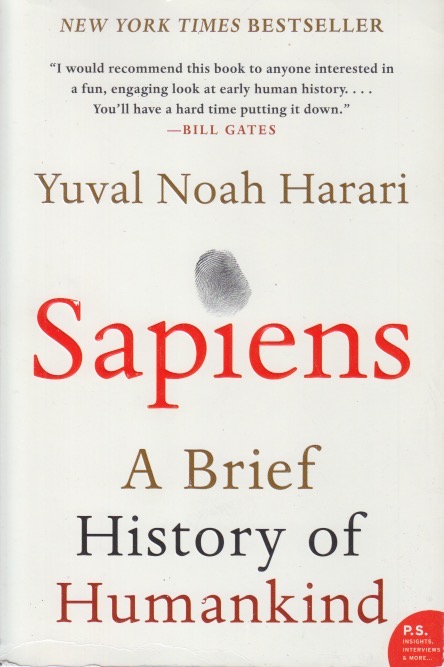
Sometimes you need some distance to appreciate an object.  A telescope may be required if it’s a distant subject, like a rare comet (if the skies aren’t perpetually cloudy).  At other times a microscope is more helpful.  Yuval Noah Harari Sapiens: A Brief History of Humankind made a pretty big splash a few years back.  Big name people, who presumably don’t have the time to get into the historical weeds—and yes, it’s quite overgrown out here—blurbed the book and it made it onto the New York Times Bestseller list.  It’s not a little book, and like most such works it’s  a synthesis that historians approach with trepidation.  Such projects occasionally make great observations, like the astronomer with her telescope.  But those who look up from their microscopes often say, “well, that’s not exactly right.”

How do you summarize 2.5 million years or so?  You have to be very selective and you have to keep backing up to pick out the things that help this story make sense to you.  Harari (my autocorrect keeps wanting to make him Harris, which sort of fits his overall thesis) divides human history into four parts, generally revolutions: the cognitive revolution, the agricultural revolution, the unification of humankind, and the scientific revolution.  Along the way he tries to pick out the major developments.  One of them, of course, is religion.  While some of the details are overstated, his big picture here is helpful to read.  Religion has helped us, but it’s also hurt us.  Perhaps the latter more than the former.  For this we need a microscope.

His part on science and the economy was both insightful and disturbing.  I don’t believe, for example, that capitalism is necessary for advancement.  We too quickly claim that socialism doesn’t work without ever really giving it a fair trial.  Instead we let wealthy industrialists come up with new ways to keep us entertained and compliant while they handle all the money—leave it to the big boys.  The future comes to resemble them.  And we’ve seen where that gets us.  Summarizing a big book like this that covers many thousands of years isn’t a straightforward or easy task, just as trying to pick out the highlights of our history can’t be.  Part of the problem is that we’re still in the middle of it.  Things may happen—the Covid-19 pandemic is a notable example—that change the course of the river.  Since this book was published before that happened, who’s to say that things might not turn out quite differently than anticipated?  This is a provocative book, but I need to get back to my microscope.


Reflections of a Hermit

Although I acknowledge that Covid has made even more a hermit of me—I won’t deny it—and I often complain when I have to travel for work, I generally end up glad that I have.  (As long as I avoid Covid.)  Being at the AAR/SBL annual meeting is like being in a living library.  You meet and talk with so many smart, smart people and their ideas and yours begin to blend in an amazing kind of way.  I suspect that it shows that my books have been written by a guy in isolation.  That is, they could be improved by other eyes on them.  That’s what peer review is about, of course, but there’s something exciting about talking to my monster friends and engaging them about their ideas.  Frequently they will ask about mine.  I’ve even had colleagues mention that they’ve read some of my work.

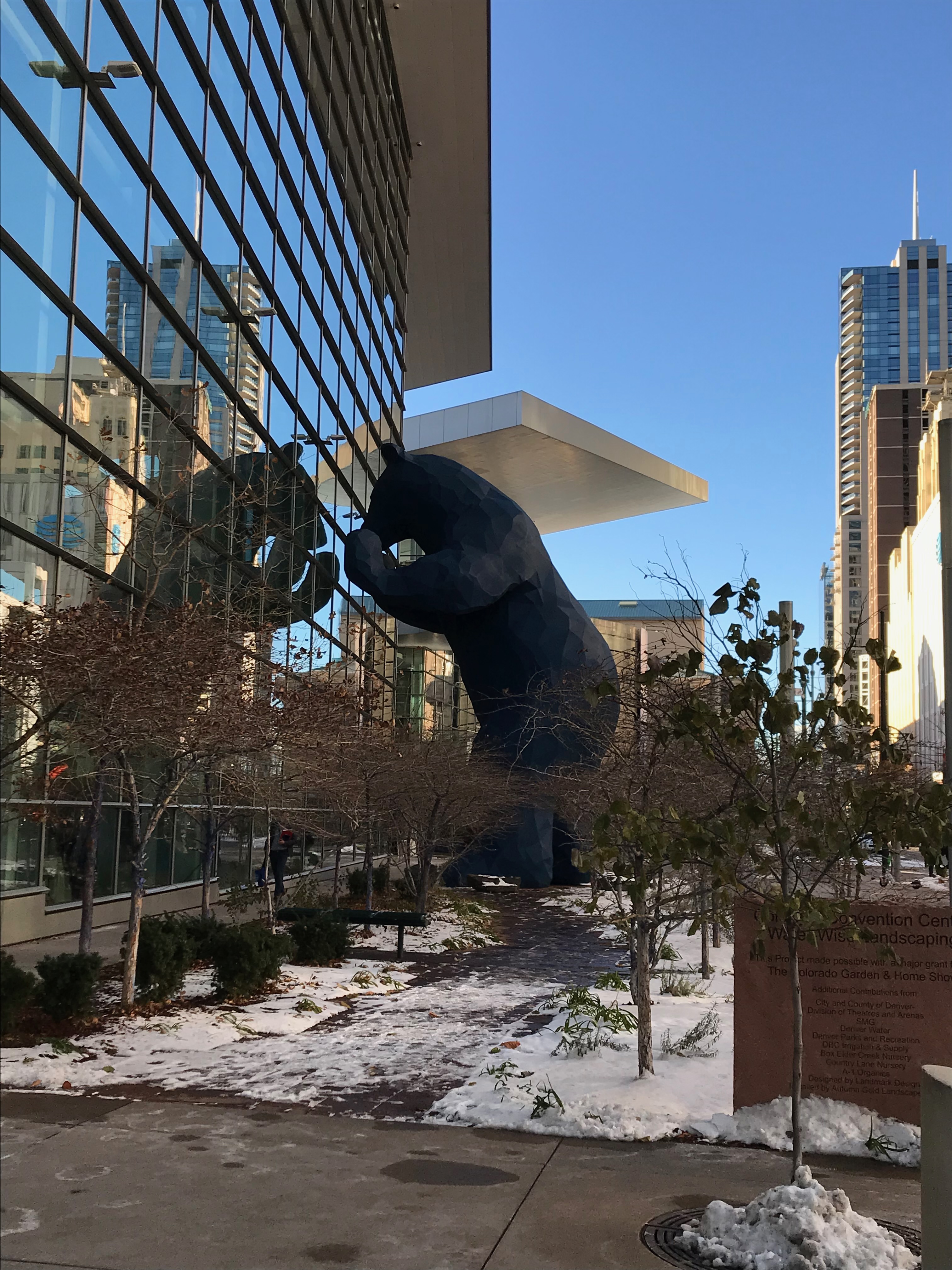
The only real problem with how this unfolds is that I have so many meetings in a day that I sometimes lose track of the many ideas that crowd into my head.  Hastily-scrawled memos in my notebook—I’m too busy paying attention—mean that only fragments remain the next morning.  Each of them a gem.  (Fitting for Denver.)  When conversation comes around to what I’ve been working on, no matter how obscure it is, my monster friends know the root story and even have ideas that help shape my work.  No one scholar can read everything, and those of us who tend towards being hermits have the limited sources of one human imagination.  When imaginations get together, however, these ideas blossom.  I learn so much from these brief days that I think I might’ve been dangerous if I’d remained in the academy.  The man with an exploding head.

I sincerely hope that I give as well as receive at these meetings.  It’s really unfortunate that we don’t support humanities scholars in this nation.  These are some of the bright stars in our national constellation, yet they struggle with underfunding, and pressures such as “metrics,” as if you can quantify the influence on young brains and the potential future of our collective imaginative life.  Although I grouse, as is perhaps to be expected of an aging hermit, I can’t help but be enriched by the fertile minds I encounter, even if behind a Covid mask.  I’m never quite sure how to thank all these idea-conjurers properly.  I wouldn’t have met most of them had my career not taken the strange turns it has.  Now I realize that even hermits may have many friends.


Horror Deprivation

Is there such a thing as horror deprivation?  Life has been so busy that I haven’t been able to carve out the time to watch any horror movies for several weeks now.  That steady diet has given me blog topics and a strange kind of personal comfort in this all-too-scary world.  More than that, it is often a coping mechanism.  I sometimes think more people might read this blog if I “rebranded” it as horror-themed, but perhaps there’s a different way to go about it.  Some writers, with enough shares and likes, have their daily observations become part of the national wisdom.  The rest of us, it seems, are simply background noise.  I’ve also been told blogs are passè and that may be the case.  I have trouble keeping up.  I don’t even have time to watch horror!

As with most things in life, I keep a list of movies I need to see.  Like claws such a list continues to grow unless it’s trimmed once in a while.  A movie is a couple-hour commitment and when even weekends are programmed to the last minute it’s difficult to squeeze them in.  I always welcome the more pleasant weather of spring, but so does the yard.  I’ve always thought, like good haunted house owners, that I would let the yard go.  Here in town there are ordinances, though.  It doesn’t look tidy—right now dandelions exceed the tolerated grass length a mere day after mowing.  Like triffids they pop up and won’t go away.  I could be in, watching a movie.  My credibility’s on the line here!

The pandemic, from which horror movies will arise, led many people to having too much time.  Netflix soared.  For whatever reason, it had the opposite effect on me—is this a special effect?—I had even less time than before.  I had to cancel my Netflix account because I had no time to use it.  Horror is a coping technique.  Real horrors spill from the headlines daily.  Sometimes the antidote is in the poison itself.  The way to be less scared is to watch more horror.  We’re still in the pandemic and Putin decides to start a war.  Republicans confess that Trump tried to take over by force and then backtrack.  Global warming continues apace.  There comes a point when the only therapy is to watch something worse unfold, as long as it’s fiction.  It’s Saturday.  It’s raining.  What can one possibly do?


Earth Haunting

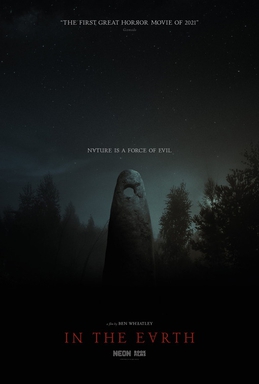
I’m still not sure what I saw.  I’m not even sure how I learned about it (it was likely either Theofantastique or Horror Homeroom), but In the Earth is a very strange film.  I can’t say it’ll be on my shelf of favorites—there’s a little too much Wolf Creek here for that—but I can say it’s something I’ll be thinking about for some time.  Body horror isn’t my favorite, but I do like to remind myself periodically of the dangers of going into the woods.  Released just last year, In the Earth is a pandemic-response film that critics say is funny (I kind of missed that aspect, I’ll admit) about a scientist and a ranger who are journeying into a particularly fecund woodland outside Bristol for research.  Martin, the lead, has an ulterior motive in that the researcher already in the woods is a former girlfriend.

Martin heads out with Alma, the ranger, and they fall into a trap set by Zach, and I suppose the humor comes in Zach’s constant observations that Martin’s wounds have gotten worse and require backwoods surgery.  The couple escape Zach (who’s clearly deranged) after he drugs them and poses them in odd clothes to propitiate the spirit of the woods.  They find their way to Olivia (the researcher/former girlfriend) and her research station only to learn Zach is her ex-husband.  And here things get weirder.  To communicate with the earth, Olivia first used an old ritual book that includes the Malleus Maleficarum and additional material.  This ancient book tells how to decipher the language of the earth through the use of light and sound with the aid of a runic standing stone that’s on no map.

Religion plays a major part in the horror here.  Olivia and Zach both want to sacrifice Martin at the runic stone.  Anyone who can watch this without seeing echoes of Abraham and Isaac probably has fewer religious nightmares than I do.  Martin, they all say, is so innocent and straightforward.  Alma keeps on trying to get Martin out of the woods but either Zach or Olivia, or the forest itself via a toxic cloud of mushroom spores, prevents them.  There are so many flashing strobes and intercut images from the spores and oddly disturbing sounds to make out what really happens at the end of the film, but one thing is clear.  Zach and Olivia have taken a religious text too literally and doing so leads them to sacrifice the innocent.  Almost biblical, no?


Sole Food

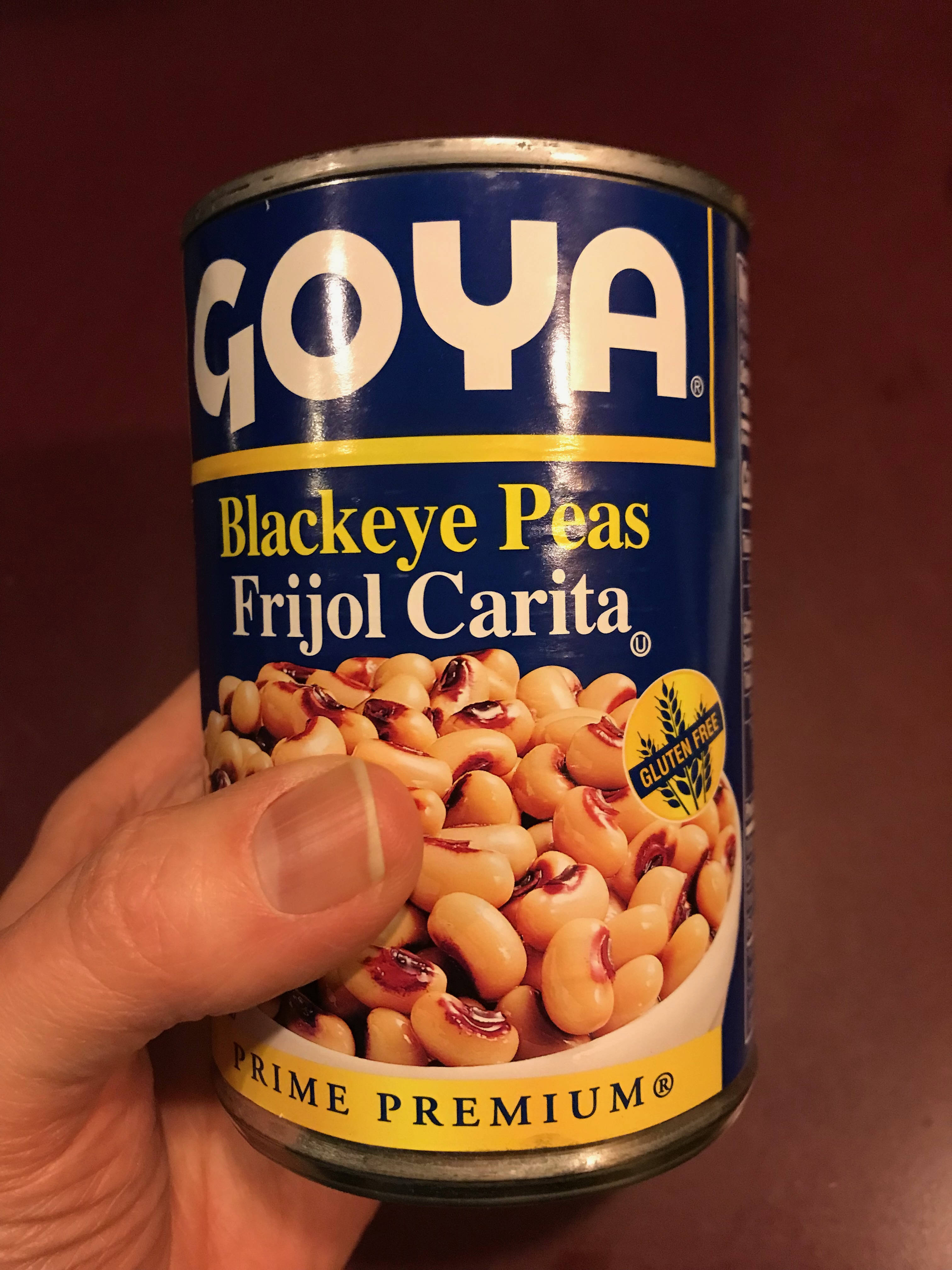
Perhaps its the pandemic.  Or at least the knock-on effect of shipping delays and supply-chain interruptions.  I can take it.  Unless, that is, it interrupts my soul food.  You see, my father was from South Carolina.  I grew up eating things like grits and black-eyed peas.  Then I probably went for a good two decades without eating either.  Like most people, however, I experience breakfast malaise.  Cold cereal every single day gets old after five-plus decades.  If we have reasonably healthy leftovers in the fridge I’ll sometimes have those.  Several years ago I started cooking breakfast for myself on weekends.  (My family wasn’t interested in my concoctions.)  When I became vegan I couldn’t keep cooking my usual weekend egg, so I turned back to soul food.

On a typical weekend I’ll have grits and black-eyed peas.  As a vegan, I really like beans.  There are so many varieties of legumes and each has its own charms.  Although we don’t eat all of them, there are over 40,000 different types of beans.  Even of those cultivated for human consumption I’m probably still pretty much a novice.  But lately our local grocery store has been having bean trouble.  Since the pandemic began we’ll occasionally go in and find the canned bean shelf bare.  Last week they had no black-eyed peas.  I fretted about it all week.  Was there a national bean shortage?  Was this the new toilet paper for a new year?  As the weekend drew near I decided I’d walk a mile on a snowy Friday to a local health food store where, I was pretty sure, there would be at least organic beans.

Dried beans are, of course, available.  I don’t trust myself to cook them properly.  It takes hours of soaking and boiling and always ends with some uncertainty.  Something about toxins and digestion just don’t mix.  Early on in the pandemic we didn’t horde, but slowly collected necessities, just in case.  Then in the summer it looked like Covid was over so we ate our supplies.  Bemused, I realized how many cans of black-eyed peas I’d storehoused.  Perhaps I had more foresight than I thought.  Supply chains are still stressed.  Backlogs take a long time to clear.  I have accepted that new appliances, cars, electronics might take quite a bit longer to get.  Specialty food items too.  I accept such things with a certain stoicism.  But my soul food, well, that’s a different matter entirely.  Don’t take my soul away!


What’s New?

Now that 2021’s behind us, what will we make of the year ahead?  New Year has generally been a time of reflection.  I don’t put a lot of stock into it because years are just random markers pointing out when we’ve been around the sun once again.  They’re good for organizing things, but does a year have any particular significance?  Many people talk as if 2020 and 2021 were cursed.  I tend to think of the Black Death and the influenza of a century ago and realize that if you’re reading this, we made it through.  Not personally perhaps, but our ancestors did.  The Covid-19 pandemic wrenched us unwillingly from our comfort zones, but isn’t that part of life?  Were things good before?  Was it kind or humane to have Trump in the White House?  Was (is) the death-grip of capitalism on the western world cause for celebration?

Yes, we had to travel less.  Our ancestors—for some of us that may be as recent as our grandparents—would likely have considered our travel excessive.  Why do we always want to be somewhere that we’re not?  What makes a home a home?  What can we do, moving forward, to make that more appealing?  The past two years have changed a number of things, some decidedly for the worse, but some for the better.  I keep reminding myself that our outlook is terribly short.  The planet has hosted life for billions of years.  Some plants live for millennia.  We see only our lifetimes and use them to decide what’s normal.  I’m never quite sure what normal is.

I do know that it’s considered a new year now, for those who celebrate the new start on January 1.  Other cultures have other dates to mark this time.  We call it 2022 based on likely incorrect information about when Jesus of Nazareth was born.  Our Muslim friends mark the years via Muhammad.  Others find yet other markers important to their cultures.  Is any of this normal?  It is normal to be so terribly polarized as a nation, with supporters of one candidate hating those who support another?  Is it normal to complain because we’re surviving through a pandemic, because our conveniences have changed?  I suppose it’s normal to want things back the way they were.  Some of us are ambivalent about this whole internet thing.  There was value in knowing how to fold a paper map.  There will, however, be value in the time allotted before us.  2022 may be just a number, but as we reflect perhaps we should think of how to improve where we find ourselves.

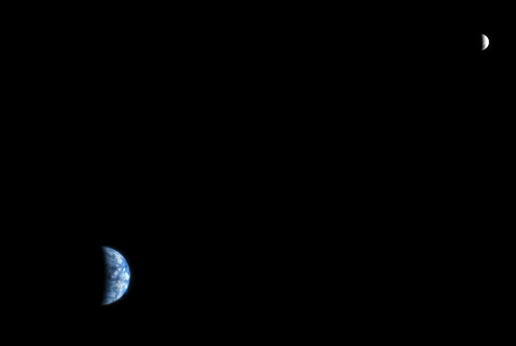
From NASA’s photo library

Masking Identity

Who am I, really?  Identity has been on my mind quite a bit during this pandemic.  With millions dying I suppose it’s important that “the officials” know who we are.  At the same time I don’t feel comfortable taking my mask off in front of strangers.  It’s kind of like a facial striptease that puts you at risk for some communicable disease.  Because I had to fly for Thanksgiving this year I got to put my Real ID to the test.  I removed my mask for the photo—at the DMV, of all places—so there was risk involved to prove that I am who I’ve always been.  When I went to get a Pennsylvania license three years ago, the system remembered me from when I got my permit and asked if I still lived in the county where that had occurred.  They seem to know a lot about me.

At the airport the TSA guy told me to take off my mask.  He had to confirm that I was the same person my Real ID stated I was.  I wish our government would tell me who I am.  And of course my passport decided to expire also during this pandemic.  I went to a local pharmacy to get my passport photo taken.  (I know you can do this at home, but you need a printer that handles photo paper.)  Then you can send the application in by mail.  How do they know it’s really me in the photo?  I had an uncanny experience many years ago when a visiting team from the Association of Theological Schools (ATS) visited Nashotah House for an accreditation visit.  One of the inspectors looked very like me.  I think we both noticed the resemblance immediately.  It was like we were twins.  Later I found his photo on the school website and asked my pre-literate daughter who it was.  She said “Daddy.”

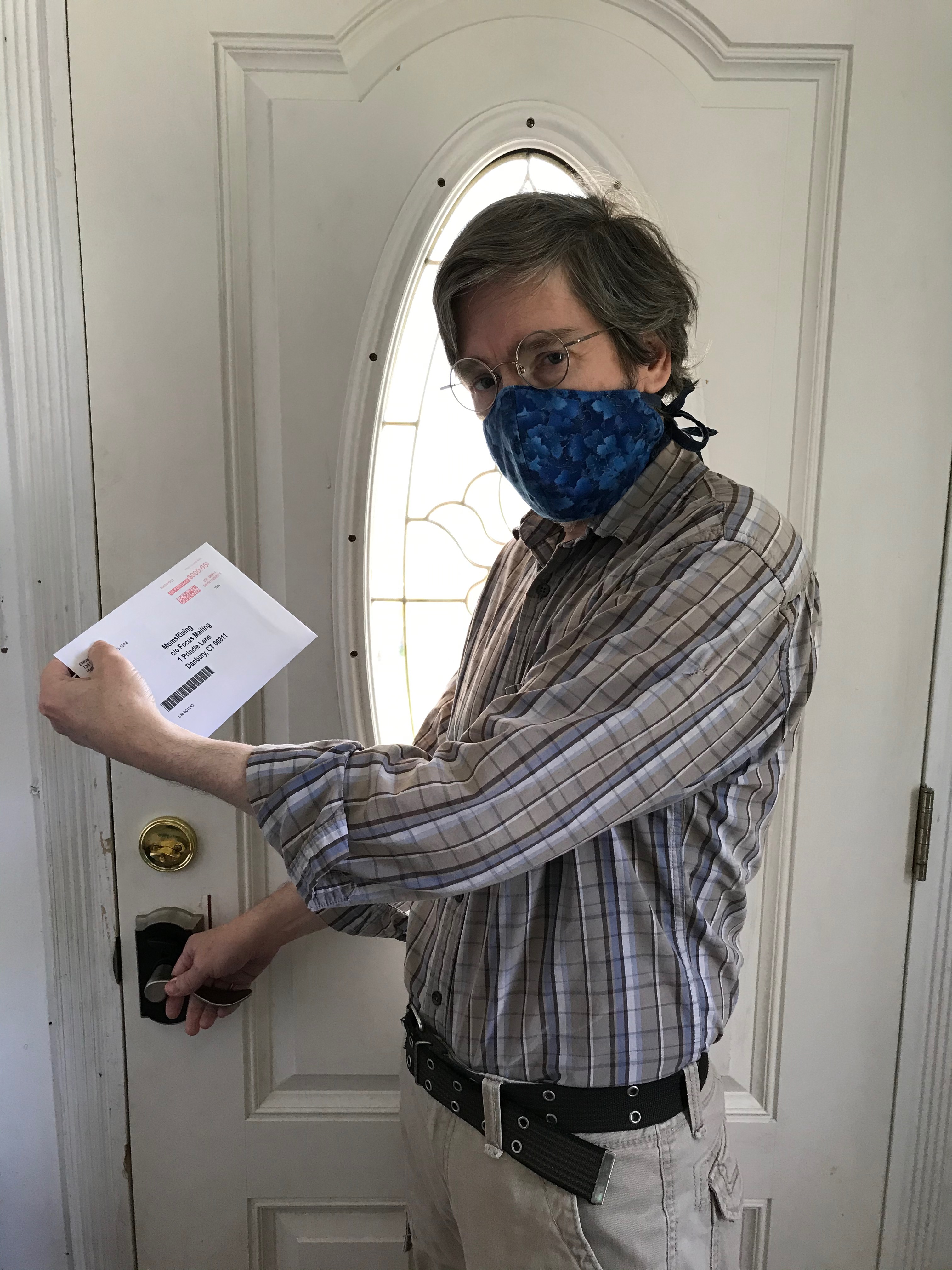
Who is that masked man?

So I’m standing here with my mask off in a store for confirmation that I am who I claim to be.  I wonder if this other guy’s photo were sent in would they know the difference?  In fact I’ve had the experience I suspect many people have had of being mistaken for someone else.  Helping a friend move to Kentucky after college, I had several people in a small town I’d never visited before identify me as Joe’s son.  I looked just like him.  Of course, that was way before the pandemic when our faces were public property.  Now I just wish I could put my mask back on so that I could feel a little less naked.


Flight Path

It’s been some time since I was on a plane.  Or in a hotel.  These things seem strange and foreign to me now.  Covid-19 is now a fixture in life and we, as humans typically do, have adjusted.  Of course I was flying for Thanksgiving on the busiest travel day of the year.  Seeing all those people standing in line at 4:30 a.m. at the airport made my lifestyle seem a little less weird.  I’m used to being up at this time.  They did have to de-ice the plane at Lehigh Valley International Airport.  I’ve never been on a plane that was taking a shower before.  I also didn’t touch anything but my book.  And it seemed that those who “don’t believe in” masking weren’t making a fuss because you can’t win an argument with the FAA. I’m thankful for that.

I’d almost forgotten how to fly.  On the first leg of the journey I was the only one whose “hand-held device” was made of paper.  Connecting out of O’Hare, however, quite a few more books made an appearance.  I sit in front of a device all day at work, so on a rare day off I don’t really want to have to stare at a screen.  Although the total air time was under four hours I brought seven books in my personal item.  I finished one of them (the longest) on the trip.  I still have plenty of choices for the flight home on the weekend.  Thanksgiving, even more than Christmas, is the time for family gatherings.  We’re all vaccinated on this side, so it feels mostly safe.

This Thanksgiving I’m thankful that no turkeys were harmed on my account.  If you knew how “thanksgiving turkeys” are raised it’d put you off your feed, as the saying goes.  I’m also thankful that travel is possible, even if with added restrictions.  Frankly, I’m glad for them.  Anti-vaxxers don’t seem to realize that it’s not just themselves they’d be protecting, but others as well.  Vaccines and masks aren’t just about selfish desires.  Last year we couldn’t even consider traveling.  Covid-19 has changed the way we do things, perhaps permanently.  We can be thankful that we learn to adjust.  I’m no fan of crowds, but there was something a bit exhilarating about being among other goal-oriented individuals all focused on being with loved ones.  It gives me renewed faith in humanity, and that is something for which to be thankful.


Story Time

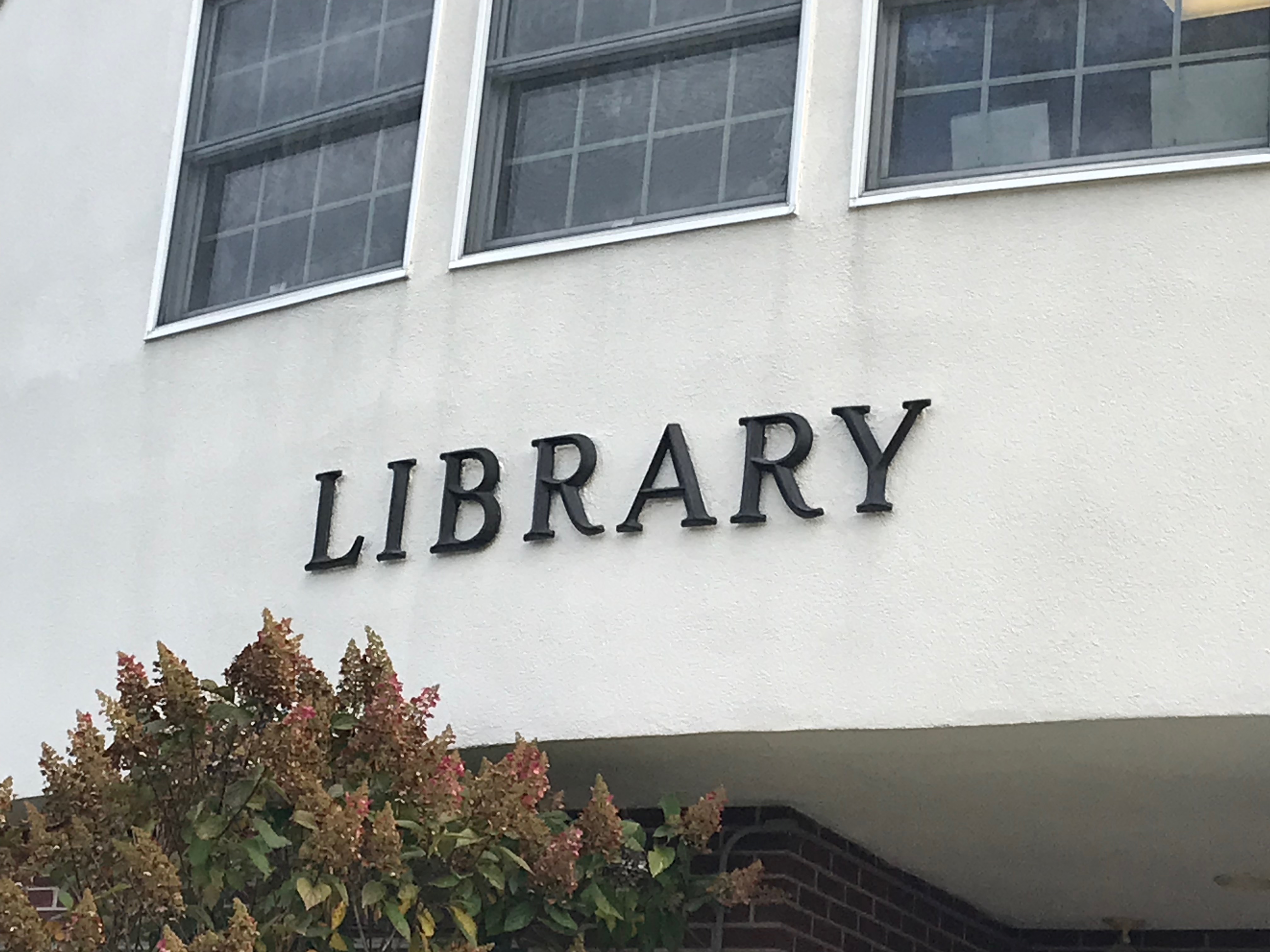
Why am I so nervous about this?  I’ve done it hundreds of times.  Perhaps it’s because it’s a public place in a pandemic.  Maybe it’s because I’ve never used this particular branch before.  Or the thought of all the people having touched this book ahead of me, leaving God knows what germs on it.  I would’ve never made it through my years of higher education, let alone fatherhood, without having gone to the library.  This is the first time I’ve used this one and I’m not sure what I’m looking for.  My Modern Mrs. Darcy reading challenge is complete but for one last category—a book checked out of the library.  So here I am, mask on face, standing fretfully outside the public library.  Nervously I note that it’s story hour.  My wife assured me libraries are never crowded.  Taking a deep breath, I go in.

The library is a fine institution.  A marker of civilization.  Perhaps I’m afraid of having to take care of somebody else’s book for three weeks.  Maybe it’s because I’m an embarrassingly slow reader and these books all look so big to me.  I’ve fallen into the habit of buying (generally used) the books I need.  We’ve donated quite a few to the little free library across the way, passing it forward, as they say.  Still, it is good to be in here with all of these books.  Even though pangs of guilt come, knowing that the yard requires attention.  And I’ve gotta get that squirrel out of the garage.  But there’s now a book in my hand.  I can go someplace else.

I can’t image a world without books.  A world like Star Wars where nobody reads and everyone lives in a Campbellian fantasy where good overcomes evil.  Our world is more Republican than that.  It would be a better place if people read more.  Maybe let the grass go just a little bit longer.  It’s not going to be the end of the world.  Reading may give crucial insights.  It may even help you to be a better person.  Stepping out into the autumn air I have a book in my hand.  It’s one I’ve never heard of, but one that I’m excited to read.  The library wasn’t crowded.  The children were in a separate room.  The leaves are changing and the breeze is fresh.  There’s a lot to do, I know.  But it is always worth the time to read a book.


Not That Kind

I am not a (medical) doctor.  Nor do I play one on TV.  It puzzled me, therefore, when I received an email addressing me as “Dear Healthcare provider.”  I like to think that maybe this blog does help a person or two from time to time, but I’m not going to dispense medical devices.  The email was telling me where I could order Covid-19 tests in bulk, and it even contained a sell-sheet with facts and figures.  Now I want to see this pandemic over, just like everybody else, but I’m not sure that having my own supply of Covid tests would do anybody any good at all.  Perhaps this is just a continuation of the larger issue of wondering who exactly the internet thinks I am.

One thing the pandemic has done has been to double us down on our reliance on the internet.  It’s difficult to imagine how we might’ve survived without it.  More jobs—many more—would certainly have been lost if we couldn’t have started to work remotely.  In order for any of this to function, however, we have to have a sense of who we are and what we do.  I’m not a professional blogger, of course.  I’ve discovered from my own extended time on the internet that many people just a few years younger than me make a living as “content providers.”  They launch a successful YouTube channel (or maybe two or more), and blog, podcast, or otherwise just dispense their homegrown wisdom into a job.  Some have college degrees, but many don’t.  The ones I see make a better living doing this than several college grads I know.

You are who the internet makes you in these remote times.  Hasn’t most of our reality become remote?  We rely on content that others, or sometimes we ourselves, make.  We get our news here and we find our directions here.  We order the things we need here and the delivery drivers find our addresses here.  Yes, we can even get our medical service taken care of here.  Fortunately I personally haven’t had to talk to a doctor online, but I know people who have.  Personally I find it more reassuring when someone with special training takes a look at the area of concern, and perhaps can touch it and tell me what to do about it.  I’m glad the internet option exists, however.  I just hope that people don’t start thinking I’m that kind of doctor.

Photo by Clay Banks on Unsplash