Impatience

It’s only human nature, I suppose.  We see our own circumstances and fail to appreciate how others have equally (or perhaps more) complexity to juggle.  I’m thinking ahead to work on Monday.  The week before the holiday break the most popular question posed to me in my work emails was, “Why haven’t I received my copies of X yet?”  It’s a fair question.  What it betrays, however, is a lack of comprehension of just how complicated a business publishing is.  I should be flattered that we make it look so easy!  To begin with, publishing, and printing, are nonessential businesses.  Most of them may be up and running at, at least partial capacity, but the flow of materials to printers didn’t stop just because a pandemic hit.  It simply did what backlogs always do—it piled up.

Publishers have very intricate and, for the most part, efficient operations.  If a blockage occurs at any point—even the end point—other things back up.  Have you ever seen a toilet overflow?  I have, and it’s not a pretty sight.  Add to that the fact that many academics, unable to travel or do their other privileged activities, decided to finish up their books and send them in early.  Everybody should be happy, right?  Have you ever overeaten?  The happiness lasts only until your brain catches up with what your body has done.  I can’t speak for all publishers, but this combination of more input of material than expected and the inability to *ahem* process it has stressed the system.  Schedules exist for a reason.

Covid-19 has affected everything.  And continues to do so.  As we live through this pandemic we find our coping mechanisms.  Once we reach a level of uneasy symbiosis with our situation we stop thinking about how others might be dealing with it.  I think of those who’ve been out of work for months now and who’ve been evicted from homes because of what the wealthy can call force majeure and hire lawyers to argue.  Indeed, the coronavirus outbreak is the very definition of force majeure and the response we all ought to have is compassion and kindness to one another.  It’s not easy to think of other people before meeting our own needs—it’s not human nature.  Species that learn cooperative, altruistic behavior, however, are those that thrive.  As we say goodbye to a year of willful government inaction—the Trump administration knew of the danger well before it hit, but doesn’t believe in science—let’s vow to do what our leaders won’t.  Show compassion.  Recovery will occur and let’s hope we come out of it better than we went in.  This seems a good mantra for the beginning of a new year.

Seeking Renewal

Now that many are breathing a sigh of relief that 2020 is finally over, I stop to ponder time.  Measuring time, although most forms of life do it in some way, is a human organizing principle.  Calendars were originally religio-agricultural devices.  In order to keep the crops on their seasonal cycles, the gods were invoked—there was nothing secular about their world.  It’s not known who invented holidays or even the concept of a new year, but it is clear that it was a fairly early idea.  Different cultures today still celebrate New Year’s Day at differing times of the year.  Having it a week after Christmas helps to make this a holiday season, but it is no guarantee that a sharp break in continuity will come after a bad year.

Lots of bad stuff happened in 2020, but clearly the circumstance that made it a “bad year” was the Covid-19 pandemic.  Here in the United States it became a full-blown crisis because of the cause of four years of ethical famine, Donald Trump.  Those who can see beyond their religio-politics know that he is a man who spent his entire career looking out for nobody but himself.  Such people do not work as public servants and are downright terrible in a crisis.  The pandemic quickly grew into a crisis and we spent nearly ten full months out of twelve isolating ourselves.  The other crises of the year (generally pointing fingers at Washington), such as the important resurgence of Black Lives Matter and the California wildfires, were exacerbated by the pandemic about which our government did nothing.  Lack of interest has led to death numbers that have become a Stalinistic statistic.

As much as we like to think nature bends to human plans—our calendars—we have no idea what 2021 might hold.  We’re left with a country that has been neglected for four years.  Our Republican-controlled senate can’t even agree to provide any kind of relief to average people without adding riders and conditions to make our situation even worse.  Still, I’m optimistic.  New Year’s, whenever it is, marks change.  I’ve been noticing for over a week now that the sun is rising earlier than it had been as we descended into December.  The light is beginning to return.  While we can expect nothing good from the White House for twenty more days, we can look beyond that and know that change is on the way.  The division of time may be an artificial construct, but it can, if we allow it, become a sign of hope.


Reading Ahead

One of the highlights of the changing year, for the past five years of my life, has been the Modern Mrs. Darcy’s reading challenge.  My wife pointed this out to me at the start of 2016 and I’ve used it to guide some of my reading for each year since then.  The idea is fairly simple: many of us get set in our reading habits.  The reading challenge listed categories of books, with a total of twelve volumes, that often forced you to read things you normally wouldn’t.  In pre-pandemic Januaries we’d go to a local independent bookstore and pick out some of our chosen books to fit the various categories.  It became kind of an extended holiday ritual.

It must be tricky to come up with new categories all the time.  Therefore it’s understandable that the Modern Mrs. Darcy has decided to shake things up a bit for 2021 with a somewhat more complex scheme of determining what to read.  Unfortunately for me, I have about enough complexity in my life right now.  For a reading challenge what I crave is simple-minded direction: read a book in (blank) category.  So now I’ll be left to my own imagination for 2021.  Not that that’s ever a problem.  My reading wishlist is enormous and, like the universe, expanding rapidly.  Every year new books of great interest appear.  Every year I learn of books I should’ve read long before now.  I also do research, in my own way, and these books can be rather insistent regarding one’s time.

Goodreads also has a reading challenge (which I also started taking in 2016), but it’s based purely on the number of books you pledge.  There’s a sense of accomplishment when you can tick off that final pledged book (hopefully in September or October), and still have a few months of bonus reading left.  Each year becomes a year in books.  Like many people, I’ve survived the pandemic so far by spending lots of time with books.  For my last post of the year tomorrow I’ll do my traditional summary of the year’s reading.  I began the year thinking of Sea Lab 2020, a formative, optimistic Saturday morning cartoon from my childhood.  We were then hearing rumors of a new disease in China, not anticipating that 45 would decide to sacrifice over 300,000 Americans on the altar of his personal disinterest and pride.  Through it all, however, there have been books.  Reading improves intelligence.  Let’s all hope, then, for a much more intelligent 2021 ahead.


Thoughts of Christmas

Christmas, in merry old England, used to be the day when bills were due.  There are vestiges of that still.  Just this past week, when my mind was on upcoming celebrations and family time, companies continue to email me their bills, reminding me that all celebrations are but temporary.  Money’s the real thing, and it takes no holidays.  While the holiday season may be subdued for some due to lack of travel, for me any day that I don’t need to leave the house is a good one.  We had a pretty nasty patch of weather on Christmas Eve, and one might be tempted to say that the atmospheric conditions outside are frightful.  There’s a coziness about staying indoors around the holidays.  Besides, there’s a pandemic out there too.

We’ve got a quiet day planned at home with our usual traditions.  We added a Yule log to our celebrations this year—much of what we now recognize as Christmas derived from the teutonic Yule.  Otherwise, we are quiet people with rather simple tastes.  Even if we can’t afford much, the holidays mean time off work.  Time for those close to us without constantly having to auto-correct back to earning money at work.  I frequently reflect on how distorted capitalism has made us.  Our European colleagues have far more time off work than Americans do.  They don’t seem to suffer for it.  There’s not much light outside anyway, so why not hunker down a while?  Reflect on what’s really important?

First thing this morning, after watering the tree, I fired up the computer to write a few words before the festivities began.  The first two emails in my inbox were, as if on cue, bills.  Computers have no idea this is a holiday, and our neighbor’s early morning car announcing its lock secured tells me that he’s just getting home from work.  The fiction that we all have today off, as time home with family, plays out every year.  Holidays are often the privilege of the affluent, which is why, I suppose, Saturnalia was marked by a reversal of roles for several days.  Rome wasn’t exactly a friendly empire, but it wasn’t a capitalist one either.  This Christmas I’m hoping that those who have to work today—healthcare workers, those who keep stores open for last-minute supplies, emergency workers of all kinds—will have adequate time for peace coming to them.  Even non-essential work can be wearying.  Let’s celebrate, thankful that we’ve survived these last few years at all.  The bills will wait until tomorrow.


Home Alone

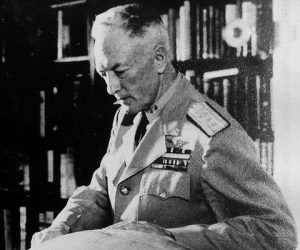
Due to circumstances beyond my control (and what other kind of circumstances are there, anyway?), I recently had to spend a few days alone.  Even as an introvert I’ve never enjoyed “batching it” for long, perhaps because my imagination is so untamed as to belong in a zoo.  Nevertheless, you learn things with time alone.  Particularly in a pandemic.  I’m not inclined to seek the company of strangers, and I don’t know many people here in town yet.  So I introspect.  Of course, Zoom and FaceTime keep me in touch with others, but I can’t help remembering a PBS special I saw about Admiral Richard Byrd.  Byrd famously self-isolated himself in a one-room shack in Antartica for five months when weather made travel impossible.  His contact with the outside world was limited to electronic communication.

Photo credit: US Navy, via Wikimedia Commons

Byrd had been seeking the ultimate isolation.  It turned out to be psychological torture.  Even those of us who are introverts are social creatures.  We just need smaller doses than most.  I can’t recall the name of the PBS series that Byrd was part of, but I do recall the profound impact it made on me.  I was teaching at the time and there was another series on PBS that I was discussing with my fellow professors and it was because of this other series that I had the television on at all.  The Byrd program came next and eclipsed the former.  (We essentially lived without television in our Nashotah House days.  Cable wasn’t available and trying to get reception with an inadequate aerial antenna led to frustratingly snowy, dizzying reception.)

We like to have other people around.  I grew up with siblings and time alone was a rare commodity.  I left home to live in a dorm with roommates for four years.  After that apartments in the Boston area often felt isolating, even with housemates.  It was a time for introspection.  By the time I moved to Edinburgh I was married and I’ve not really looked forward to my time alone since then.  November typically brings AAR/SBL with it’s five nights alone in a hotel room.  I get by because I’m so exhausted by the  event.  Nevertheless I often think of Admiral Byrd and how this mentally strong man began to break down under the strain of not seeing another person for five months.  We need each other.  The pandemic has been teaching us lessons of self-reliance, but hopefully it’s also teaching us to reach out to others.  Even America can feel like Antartica sometimes. 


Bethlehem’s Grinch

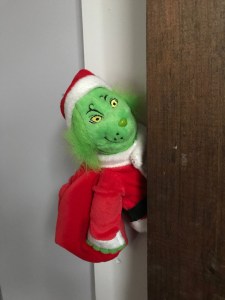
We’ve got a Grinch around Bethlehem, according to Nextdoor.com.  A guy driving around stealing boxes from porches, in broad daylight.  According to home security cams, he wears a mask (which is more than many Republicans do).  The understandable outrage in the comments is at least partially justified.  A Covid-ridden populace is reluctant to go into shops, and shipping is easy.  You pay for a gift for someone you love and a stranger steals it with impunity.  There is anger there.  It’s also troubling to me, however, how people react.

One commenter claimed this guy was stealing from working people instead of getting a job.  Anger often speaks rashly, I know, but I had to exegete this a bit.  Without knowing this masked man, how are we to judge his employment status?  I mean people like Donald Trump have made entire careers of cheating other people for their own personal gain.  Isn’t this the way of capitalism?  And perhaps this man has a job and thieving is simply moonlighting.  Or, more seriously, perhaps he had a job that was taken away when the Republican-controlled White House and Senate refused to do anything about the pandemic and can’t even agree on a deal to help working people out?  Who’s the real Grinch here?  Theft can take many forms, some of them perfectly legal.

This holiday news, of course, makes people paranoid.  With many vendors trying to compete with Amazon’s (generally) first-class delivery system, packages are left on porches past bedtime.  Even without a Grinch about, that makes me nervous.  Just last night an Amazon package listed as “delivered” didn’t show up.  I found myself on the customer service chat pouring out my soul to a stranger halfway across the world.  Knowing my carefully chosen gift might be stolen to be resold by a faceless thief made for an anxious evening.  Amazon assured me it would be replaced if it really wasn’t delivered after all.

So I’d be upset too, if my orders were actually stolen.  Some people have medications or other necessities shipped, regardless of holiday seasons.  Stealing boxes is wrong.  It may not be the only thing wrong, however.  Isn’t a system that forces people to desperation inherently wrong?  A system that makes getting ahead almost impossible for most people so that a very few can control nearly all the wealth is hardly one that doesn’t involve theft.  Those stolen from are rightfully upset.  But who is really doing the stealing in the first place?


Turning Point

As the “Keep Christ in Christmas” crowd gears up for another Yuletide season, its capitalistic brother wonders about how good Christians will shop during a pandemic.  We’re not great materialists in my house, and our holiday spending tends to be modest.  Even so, the stocking stuffer is the kind of thing you find while browsing in stores.  I don’t feel comfortable indoors with strangers now.  Apart from groceries and hardware I haven’t been in any kind of store for at least a month now.  How to get ideas for those little, often inconsequential gifts that are demanded by homage to Saint Nicholas?  The holiday season is a wonderful amalgamation of differing traditions that should, in a perfect world, suggest openness to all and inclusivity.  At least this year we have that to look forward to.

Inclusivity is a gift worth giving.  Many of us are weary of the privileged “angry white man” who has held control of just about everything for the past several centuries but is still never satisfied.  The holidays around the winter solstice—itself the marker of days finally beginning to lengthen again—should be a symbol of the many traditions that make Christmas what it is.  There is no one “pure” idea of what this season represents (beyond shopping) because people all over have traditionally welcomed the return of light after many days of darkness.  Sometimes that darkness of exclusivity can last for years.  Now that we are beginning to spy a sliver a light on a distant horizon perhaps we can see enough to correct the error of our ways.  Perhaps.

That still doesn’t solve the dilemma of pestilence-filled stores where people want to huddle inside because it’s cold out there.  I can’t seem to recall where they hung the stockings in the manger, but surely they must’ve been there.  It’s how to fill them that’s the issue.  Our world has become so virtual.  How do you put streaming into a sock?  How do you stuff that cuddly subscription service into hosiery?  In a pandemic we’re reaping the fruits planted by a technologically-based society.  The art of browsing hasn’t been electronically replicated.  It’s the moment of inspiration in that curiosity shop that seems to be missing this year.  Most of us, I suppose, would be pleased to find a vaccine in our carefully hung stocking.  At least a government that takes the threat seriously will be something to anticipate.  Just a little longer, and the light will be coming.


Bethlehem

Now that the holiday season is upon us, I guess it’s okay to post about the upcoming.  It’s actually pretty hard to avoid, living so near Bethlehem.  While Easton claims the first Christmas tree in America, Bethlehem was settled on Christmas Eve and named accordingly by the Moravians.  It’s a tourist destination for Christmas aficionados everywhere, and, as my wife quotes about 2020, “we could use a little Christmas.”  So we headed to the Christkindlmarkt over the weekend.  Apart from an abundance of consonants, Christkindlmarkt is a chance for vendors to bring their wares to where tightly shut pandemic wallets are willing to open up a bit.  This year, however, the “markt” was completely outdoors rather than under the usual four large tents with heaters running.

It was an enjoyable morning out, with temperatures near sixty—certainly not something you can count on for late November.  There were fewer vendors here for a variety of reasons.  You get a boost, for example, by getting people gathered together.  Our herd instincts kick in.  Seeing others spending, we decide to take our chances.  Outside the great rusting behemoth of Bethlehem Steel’s famed stacks stands sentinel.  This year, however, socially distanced tents and booths meant having to walk and stay back while others browsed, all while wearing masks so that smiles could not be seen.  Gathering without gathering.  With no interest in leading a charge against the disease on a national level, we’re all left to muddle through.

Several of the vendors had novelties portraying the year 2020 as the disaster that it’s been.  Instead of ending it with wishes for national peace, the incumbent is trying useless lawsuits to prevent the voices of voters from being heard.  Stirring up his followers to protest against frauds that never happened, while having hundreds of lawsuits awaiting outside his own door as his actual deeds have been examined seriously for the first time.  Bethlehem reminds us that peace and hope ought to be in the air at this time of year.  Thinking of others rather than ourselves.  Do we see that being modeled by 45 and his ilk?  Instead I’m standing here outside where there used to be a warm gathering tent.  A place where we each donate our body heat to help keep everyone warm.  Giving, even as the Republican-controlled senate withholds any stimulus package they think is too generous.  Yes, we could use a little Christmas right about now.


Wild Oats

The day after Thanksgiving, although it’s too late for millions of industrially slaughtered animals, is a good time to think about plant-based diets.  I’ve been a vegan for three years now, and it has led me to some interesting places.  One of them is oat milk.  Like most Americans, I eat cereal for breakfast most days.  (When I volunteered for the dig at Tel Dor in 1987, however, olives, Nutella, and bagels made quite a passable morning meal.)  Apart from cereal breakfasts being a religiously motivated practice, they’re easy to prepare but difficult to do without milk.  You can (and many sometimes do) eat dry cereal, but we’ve been conditioned to pour milk on it to make a kind of soupy, grainy start to our day.  It feels familiar.

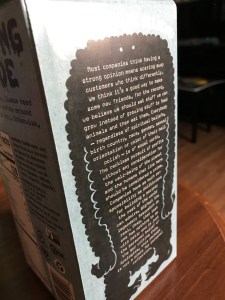
We started out, after much research, using soy milk.  It has to be a particular brand, though, because it can have an oily taste.  We eventually switched to oat milk.  Unlike soy, I can actually drink it like regular milk.  We’ve been buying Planet Oat, but recently we tried Oatly.  Now, I’m one for a working breakfast.  Time is precious and work begins uncompromisingly early.  That means I don’t read cereal boxes or milk cartons any more.  That changed with Oatly.  I found an entertaining and eloquently stated kind of creed on the back of the carton.  When’s the last time someone brought spirituality to the breakfast table (apart from introducing the eating breakfast cereal craze)?  It makes me feel more grounded.

The intricately interconnected web of life makes me think that we should be cognizant of our food.  What we eat should be approached reflectively.  If we had government subsidies for fields of oats rather than industrial farms for the inhumane treatment of “food animals” it seems to me the world would be in a better place, spiritually.  There’s been some comeback of wildlife since Covid-19 forced us all indoors.  I am glad to see it.  These creatures are our siblings.  Even if that seems to be going too far, it’s becoming increasingly difficult to deny that animals have emotions and minds, particularly those that humans eat.  Given the foodieness of contemporary society (everyone’s talking about food rather worshipfully these days) it would seem that pondering at least how we treat animals before we eat them should be a matter of common courtesy.  Being so far removed from our sources of sustenance has done something to us, I fear.  There are great alternatives out there, and some even make you smile while munching your cereal.


Toilet Paper Redux

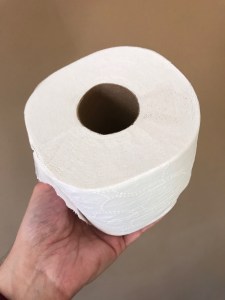
So we find ourselves needing to clean up again.  Maybe you’ve noticed it too.  Since the second wave of the Covid-19 outbreak has wiped across the nation toilet paper has once again become a hot commodity.  Not finding a single roll in Target, I decided to test the waters on Amazon.  Sure enough, many brands are now listed as “out of stock.”  Could it be a coincidence that Trump will be leaving office and we need a lot of toilet paper right now?  Inquiring minds want to know!  Capitalism is like that.  Supply (or lack thereof) and demand.  Instead of making sure people have access to the basic necessities, we would rather have panicky citizens with soiled underwear looking for leadership where none exists.  And voting for lack of leadership yet again.  Flush!

Still, you’ve got to wonder—why toilet paper?  What is it about thin paper on a roll that presses the fear factor?  If people can know to avoid embarrassing smells, why haven’t they plugged their noses when the breeze blows across Pennsylvania Avenue?  Logic fails here.  Have we educated a nation to fear for their backsides but not to see clear and president danger in front of them?  Now that we’re nearing two weeks since the results were announced, we have had nothing but pouting from the Oval Office.  That, and drilling in the Arctic Wildlife Refuge.  Seems like we’ve got to be dirtying the world somehow.  We could use some toilet paper.  Maybe America needs more fiber in its diet.

Those who still support Trump don’t seem to realize that his response (or lack thereof) is the main reason a quarter-million people have died in this country and the virus is completely out of control.  I guess it’s that way with messianic figures.  Ironically the Bible (printed on thin paper itself) warns of someone who acts messianic while lying all the time.  He’s called the Antichrist.  You can tell him because just about everything Jesus did, he does the opposite.  Welcome the foreigner?  Feed the hungry?  Heal the sick?  Talk about God and how to deepen your relationship with the divine all the time?  Have you got any boxes checked yet?  Or are you waiting for the Charmin supply truck to go rolling on by?  Perhaps it’s time to invest in paper.  We print our money on it and hope somehow it will save us.

White gold or pay dirt?


Music Time

Although I love music I rarely have time to listen to it.  My work demands concentration and if I have music on I have trouble paying attention to the task before me.  I awake early to write, and if I try to listen to music while expressing my thoughts through my fingers I find myself conflicted.  I work until supper and the debriefing time that follows work is often fraught—we’re all experiencing frustrations with our new, pandemic reality.  By the time supper’s over, I’m ready for sleep and one of the things that can keep me awake is an ear-worm.  Awake predawn the next day and repeat.  On rare occasions when I have a thoughtless task to complete on my job, I’ll be able to put on some tunes.

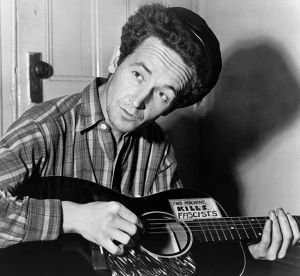
Photo credit: Al Aumuller/New York World-Telegram and the Sun, from Wikimedia Commons

When that rare syzygy came the other day I put on MCR, or, for those who like to spell things out (such as me), My Chemical Romance.  Every time I listen to MCR I wonder why I don’t do it more.  I suppose it’s because I have only two of their albums and I don’t want to wear them out.  What struck me as I listened to The Black Parade was how religious language sometimes creeps in, even when the band is secular.  This is important because rationalists have long been trying to dismantle religious thinking, falsely associating it with only certain amorphous groups such as “Fundamentalists” or “extremists.”  Religion, however, is very much a part of being human.  If we deny it, it simply crops up in another form.  It may take some time for the new shape to be recognized, but when it is it’ll be called religious.

I often wonder why universities, which are supposed to be such curious places, tend to show so little interest in religion.  It’s like that embarrassing uncle at a family gathering—the one everyone else avoids.  Still, our political system is run by religious ideology—take a look at the Supreme Court and try to deny it.  Our daily life is suffused with it like the air in a room with a scented oil diffuser.  Religion is all around us and the academic response tends to be “meh.”  I might be less distressed by this lack if it could be demonstrated that people are becoming less religious, but they’re not.  MCR doesn’t (in the albums I have) exude religious thoughts often, but they are there.  They also appear in other secular music, almost as often as sex and drugs.  If only I had more time I might be able to listen for more examples.  Right now, however, it is time to get to work.


State of the Nation

It has been a long week.  With an incumbent who refuses to tell the truth, we’ve faced three days of knuckle-biting so far and each day stirs up the butterflies of election day.  How we could’ve become a nation that is so easily duped into following a man who’s told a record number of bald-faced lies in the West Wing (and anywhere he appears, in fact) is an inscrutable mystery.  I guess many people don’t read.  Or think critically.  This should’ve been barely a contest at all.  The Associated Press national map is seared into my eyeballs like a computer monitor left on the same page too long without a screen saver.  Going back every few minutes to check for a touch more blue.  A sign of hope.  Meanwhile, 45 is doing his best to prevent votes already cast from being counted.

We’re a nation under extreme stress.  Whoever wins will need to bring deeply divided people back together, but here’s the rub.  We know from four years of terrible first-hand experience that Trump can’t do it.  Won’t even try.  He’s already compared himself to the greatest leaders we’ve ever had.  He has no reason, and no capacity to change.  Joe Biden is about as mild a Democrat as they come.  In saner times he’d likely have been considered a closet Republican.  Still, 45’s supporters rail as if he’s some socialist seeking to overturn the American system.  Excuse me, but look at the past four years—what precisely do you think was overturned during them?  The coronavirus rages, hitting record numbers.  The response from the White House?  Absolutely nothing.

Even with this there’s uncertainty in the air.  I wonder what America’s collective blood pressure is right now?  I know my systolic doesn’t feel too good.  Any legitimate leader would never fear an honest election.  One who tries to tamper with the results has already shown his true character.  And priorities.  And so we wait.  Yesterday the lines from V kept going through my head—“Remember, remember, the fifth of November.”  I finished the poem somewhat differently but the word “treason” remained.  I could use a little fantasy just about now.  As I write this the counters are all asleep.  Biden leads in the popular vote by almost four million, a greater lead than Hillary had just four years ago.  And it is now November 6, but just barely.  At least it’s Friday.  We need to appreciate the small things as they come.


Please Vote

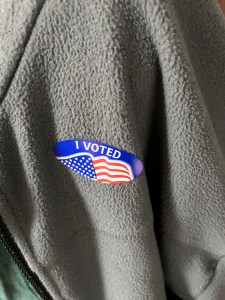
If you haven’t done so already, please vote.  This day has never felt so portentous before.  I’ve been voting since the 1980s and we’ve had some real unsavory choices in some past years.  Never had we had a monstrous incumbent set on destroying the very nation that made him what he is.  Those who don’t, or won’t read the facts haven’t learned what’s obvious even to lifelong Republicans I know—Trump cares only for himself.  His family confirms it.  His policies, such as they are, show it.  He provides lip service to anti-abortion while using stem cells from fetuses to cure his own case of Covid-19 that he caught only by ignoring the science that tells us masks and distancing are necessary.  Even as our infection rates pass what they’ve ever been before, he fiddles while America burns.

Some of us have noticed a profound quiet for the past week or so.  It’s like the country’s running a low-grade fever.  Republicans have been attempting to prevent people from voting, wanting a country more like them, mean and unforgiving, that they can call “Christian.”  To me this feels like 9-11 did, only we have known the plot all along and have been too stunned to do anything about it.  Democracies are founded on the principle of the choice of the electorate.  The only way that we can make that choice known is to vote.  It’s the only way left to be a patriot.

Dietrich Bonhoeffer was faced with a similar situation in his native Germany.  An evangelical Christian, he didn’t acquiesce to Hitler, glorying in the rush of power.  He wrote that when a madman is driving the wheel must be wrenched from his hands.  Bonhoeffer was hanged by the Nazis he tried to displace, but his spiritual eyesight was clear.  Faith can blind believers to the truth.  We’ve seen this happen time and time and time again.  Instead of condemning we need to help them since they cannot help themselves.  This is the truest form of what Jesus stood for.  Read the gospels if you doubt.  This year the decision isn’t for Democrat or Republican, it’s for clear-eyed assessment or self-adoring narcissism.  If a mirror’s held too close, we can’t see what’s truly reflected.  We must vote today to show what we want America to be.  The eyes of both the past and the future are upon us.  How will we want them to be remembered?


Dreamland

I don’t keep a dream journal, but with my odd sleeping habits I’m thinking maybe I should.  You see, waking in the middle of a dream is a good way to remember it.  Often I bolt awake in the middle of the action.  Well, I assume it’s the middle of the action, but how would I know?  Dreams are that way.  Whether in the middle or at the end, I wake up able to remember them in some detail for a few hours.  I have noticed a pattern over the past several months.  Not surprisingly, the characters in my dream worlds know about the pandemic.  It often plays a role in the story.  I have yet to remember a dream where the people are wearing masks, however.  They sometimes talk about it, but never do it.

The subconscious is a slippery place.  Although psychologists are often fascinated by dreams, nobody can say for sure what they mean.  One class of dream that I often have on an annual basis is the AAR/SBL anxiety dream.  The American Academy of Religion and Society of Biblical Literature annual meeting has been a fixture throughout my professional life.  Usually I have a dream where I’ve forgotten something important for the conference, such as forgetting to stop in the exhibit hall to see the new books.  I recently had my annual conference anxiety dream.  This year the conference is virtual so I’m not actually going anywhere.  In the dream I did.  And nobody was wearing masks.  The dream, however, was mainly about keeping my boss happy.  That’s simple enough to understand.

Most years I get several blog posts out of the conference (which takes place in November).  The virtual conference has been postponed until after Thanksgiving, and lengthened out by over a week.  Accommodating all those papers (thousands of them) via Zoom must be a logistical nightmare.  Since editors go to these for meeting people, there’s no reason for me to sign up.  Instead, I’ll be right here in eastern Pennsylvania, huddled down waiting for the pandemic to be over.  I’ll be wearing a mask whenever I venture off my own property.  It is my hope that others might do the same.  I read of covid-weary people burning their masks, putting themselves at risk as the number of infections continue to rise.  In my subconscious mind I’m somewhere else.  Perhaps I can convince them to wear masks in my imaginary world.  After all, anything is possible in dreams.


Is It Really Saving?

Daylight Saving Time has begun.  Or ended, I can never keep track of which.  All I know is that when I’m supposed to being enjoying another hour abed my mind wakes up at the usual time on a weekend only to find it’s even earlier than I’m accustomed to.  I ceased being able to sleep in when the commuting life began.  From where we lived in New Jersey I had to catch a bus well before 6 a.m. daily to get to New York.  Doing this for seven years set a pattern that I still find impossible to break and so I keep apologizing to my associates that no, I can’t attend evening meetings.  The morning after I can’t sleep in.  And then we change the clocks.

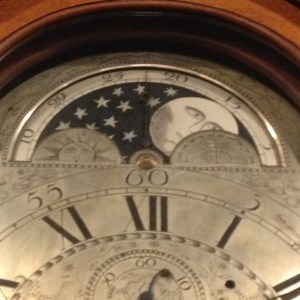
Many of us are creatures of habit.  Twice a year we needlessly disrupt our routines so we can “save daylight.”  What difference does it make when you’re staring at a screen all the time anyway?  Now it gets dark even earlier in the evening.  Well, that part I don’t mind so much.  I feel less abnormal when it’s dark as I get ready for bed.  An hour isn’t enough, however, to make it light when I awake.  The daylight will now last about as long as work does.  We’ve entered the darker half of the year.  Of course, yesterday was Halloween and we’re now facing All Saints and All Souls and el Día de los Muertos.  These are not all the same thing, for religion is very good at parsing things.  Still, who can help but suppress a yawn?

We’re supposed to be well rested but in reality we’re disoriented.  I’ve read that congress has been trying for years to make Daylight Saving Time permanent.  This has bipartisan support, but politicians, being what they are, keep on inserting riders that the other side doesn’t like so we continue the pointless ritual.  I know writers who stay up late to dedicate time to their craft.  Since I’m awake early I guess I’m simply picking up where they’re leaving off.  There are few interruptions at 2:00 a.m.  Soon, I know, I’ll get back into the swing of things and I’ll eventually be able to sleep in to three.  Then when March rolls around the gatekeeper will demand toll.  We’ll lose that hour we were so freely given last night.  But some of us will be tired all the time anyway.