Thoroughly Earth Day

It’s difficult to say, since I don’t get outside much, but reports have come in that the earth is healing itself while we’ve been sequestered.  Rivers usually polluted have begun to run clean.  Smoke-smuggered skies have turned blue.  Animals have begun to explore human-made environments abandoned while we all shelter in place.  Could there be a more poignant statement about the reason for Earth Day?  If our worst behaviors are ceased even for a little while, the damage we do to our home planet begins to come undone.  To me that has been the most profound hope brought to light by this crisis.  Living more simply might be a virtue after all.
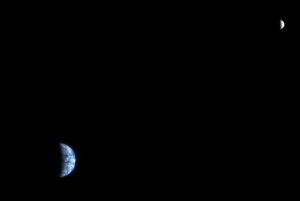
From NASA’s photo library

Going without can be difficult.  Every time the fleeting thought comes that I need to run to the store for this or that—and I’ve been taught that shopping is normal and natural and good for everyone—I have to stop and weigh the options.  Do I really need whatever it is?  Can I do without it?  Even bank accounts, for those fortunate enough to be able to keep working, have started to recover.  The frenzy we normally live under—earning money to keep buying things we don’t really need—is suddenly cast into perspective.  Times like this Earth Day I think of Henry David Thoreau.  Sometimes we like to laugh about our American saints, but his desire to live more simply does have appeal.  

Like many students who find themselves in Boston, I once made pilgrimage to Walden Pond.  The day I went there with some friends I believe we were the only car in the lot.  We lived simply in the way that grad students do, being under the sword of educational debts and loans, but we had come to see the place where nature had called one harried philosopher to solitude.  I knew, even as I stood by the marker of the cabin site that we couldn’t all live like this and still enjoy the benefits of medical science and technology (such as it was in the 1980s).  Perhaps it is possible, however, to reflect on better ways of living now that we’ve all been placed in a kind of enforced solitude.  I’ve begun reading more poetry.  I’ve started painting again.  Life has, in the midst of a pandemic, begun to feel more healthy.  It’s Earth Day.  Normally I’d be looking for an opportunity to join a community cleaning event, or even to go out and pick up trash on my own.  Since these are ill-advised, I stand before my bookshelf and reach for Walden instead.

Bunny or No?

Since we’re in the midst of a smaller holiday season (capitalistic societies can only get away with one major holiday season because the workers must work) many people are wondering whether they should go to church for Easter tomorrow.  I’ll confess I woke up from a nightmare this morning where I accidentally forgot about COVID-19 and went to church.  I stepped inside and the building was full.  I tried to find an empty pew to socially distance myself from all but the Divine, and there was no room.  I felt infected as others started to cough around me.  In real life I’d just read from the World Health Organization’s situation report (number 80, located here, in case you want to see) that we’ve just reached day 100 since WHO received its first notification of this new disease.  The report has guidance for those who feel compelled to gather for religious services.  It makes for very interesting reading.

WHO, like certain political parties, knows that people will listen to their religious leaders rather than reason.  (And still our universities cut positions in their religion departments since, apparently, it is best not to know about such things.)  Recognizing that a secular, science-based organization simply can’t compete, WHO urges religious leaders to spread the word about evidence-based responses to the outbreak.  Don’t gather large Easter-day crowds (they also mention Passover and Ramadan), but, interestingly, do keep the services going.  WHO recognizes the psychological (you can’t say “spiritual”) value of religious belief.  It gives people hope and comfort.  It keeps them going in difficult times.  Call it mental health, but the World Health Organization has wellbeing right there in its title.

Photo credit: ItsLassieTime, via Wikimedia Commons

Ironically, the same day I saw an email from the other acronym in my life, SBL (the Society of Biblical Literature).  They were releasing their annual report showing the dismal job market figures for the discipline over the last year.  These jobs are fading and although WHO recognizes billions of people are motivated by religion our smartest institutions are shifting their money away from understanding it.  The COVID-19 outbreak puts us in this strange place where disjunctures become focal points.  If you look at a field of uniform gray long enough you’ll stop seeing anything at all.  You need contrast for vision to work.  WHO recognizes that religious observance constitutes a major challenge for the effort to keep people isolated.  Universities now in isolation, continue to see no reason to study this.  I’m waiting to awake from this nightmare.


Post-Pandemic

Something I’ve noticed: throughout this crisis business people have been fretting how hard it will be to reestablish everything “like it was” when this is all over.  I wonder if they’re not thinking big enough.  It seems to me that a system as fragile as capitalism is bound to tumble when something suddenly becomes more important than money.  Humans and mortality.  Most people fear death.  Religion, historically, has come to fill in that space, but as we grew more and more confident in our ability to prevent large-scale death capitalism, the real opiate of the people, stepped in.  Make money!  Buy things so that those of us with lots of money will get even more!  We’ll live extravagant lifestyles and laugh at those of you who’ll keep spending to keep us where we are!  Then people stop spending.  Nobody’s laughing now.

Is there not a better way to construct society?  Sure, some means of exchange is necessary, but do we have to give such power to an abstract concept such as money?  Granted, gods are abstract concepts too, but at least they’re spiritual rather than material.  That which is made of mere physical stuff is bound to disappoint eventually.  When our sun balloons out into a red giant, everything we know here on earth will be gone.  The physical stuff anyway.  I know this opens me to accusations of wishful, wistful, escapist thinking—maybe something spiritual will come rescue us—but I assure you it’s not that.  What I’m referring to is meaning.  There’s value in it, and you can’t buy it.

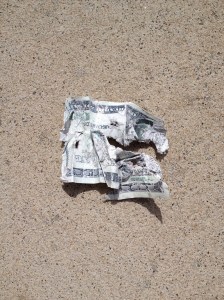
The coronavirus crisis has us all, on some level, asking about the meaning of it all.  God hasn’t intervened, and the numbers are still climbing.  Nature dictates that they will eventually stabilize, and decline.  Our capitalist society, however, is scrambling to figure how to make sure everyone pays their taxes, their bills, and somehow manages to find toilet paper (which is a great investment at the moment).  Are these the bases for meaning in life?  Can’t we do better than that?  Can’t we find a system that values what is truly unique and rare?  Each and every person on this planet.  And some of us would go a step further and include our animal people too.  Life.  Life is value.  Money can be thrown away, as we all know.  Sometimes quite easily.  As long as it lands in the coffers of those with too much, everybody’s happy.  Well, not everybody.  Maybe not even most.  Perhaps it’s a good time to reassess our priorities.


Look, Don’t Touch

It’s spooky.  Going to the grocery store, I mean.  In the best of times I don’t get out much, but since groceries are only really in supply (somewhat short) after senior hour, and since I’m an early riser, I head to Giant at 7:00 a.m.  Nobody’s talking to anybody else, unless the check-out line is long.  Even then it’s brief.  Most people (including myself) are wearing rubber gloves and face masks.  I’m pretty sure I’ve seen this in a horror movie or two.  As in The Body Snatchers, we’re afraid of each other, not knowing who might be “one of them.”  Gun sales, meanwhile, are booming.  Since I get in once the seniors have checked out the toilet paper and high fibre cereal are decimated.  I’m glad I’m vegan because most of that stock remains untouched.

The funny thing is daily life for me is otherwise pretty normal.  I’m an introvert who normally works from home and has no one beyond family check in on me.  I don’t normally buy out the grocery store, however.  I don’t hoard.  (Yes, I have a lot of books but they’ve been bought slowly, over many years.  And only one copy of each.)  So it seems that when non-introverts are forced inside they hoard.  And purchase firearms.  Or maybe I’m missing something.  I think back (if I can) to before this all started.  Going to a crowded grocery store on a Sunday afternoon where nobody was wearing gloves.  You could see their faces.  There was chatter.  Now when we get home we’re supposed to leave our groceries outside where the squirrels will get them before we do.  Then we disinfect them and wash our hands before and after washing our food.

A work colleague in New York City reported seeing grocery delivery individuals wearing hazmat suits.  We can’t see with whom we’re dealing any more.  The truth about introverts is that we’re social creatures as well.  We just require smaller doses than most.  That doesn’t mean we all want to live on a desert island.  Our quietness is a mask, you see.  We observe.  We try to help when we can.  That’s why it’s me in the grocery store.  My special talent is waking up early.  I’m not yet a senior, according to public transit or grocery shopping guidelines.  My hair is turning gray, though, and my beard is white.  You won’t see it though, if we pass in the grocery store.  Like everyone else, I’m wearing a mask to get through this crisis.


WHO Cares?

During this time of crisis my employer has suggested keeping an eye on the World Health Organization website.  I’ve been doing that with a nearly religious fervor.  I’ve been looking over the daily situation reports.  These not only contain advice not poisoned by government agendas, but also list the new outbreaks and provide pages of statistics.  The numbers differ from many news sources, but WHO tracks new cases, the number of deaths, and the vectors of transmission.  I’m trying to make a learning exercise out of this, instead of just further cause for panic.  More secretive world states, WHO warns, are preventing containment by under-reporting.  You’d think that in a time of global crisis that even autocracies would want to cooperate.  You’d think wrong.  

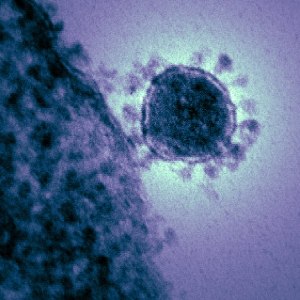
Photo credit: National Institute of Allergy and Infectious Diseases (NIAID), National Institutes of Health (NIH), via Wikimedia Commons

WHO has indicated that some nations (the usual suspects) are keeping numbers down not through effective measures, but through not reporting them.  Since honest reporting helps to trace, track, and understand transmission, such nations are essentially holding out hope that they’ll somehow bend this crisis to their advantage and appear stronger than they actually are.  I’m guessing these nations are male. 

Interestingly, the names of the countries on the overall list don’t always match those I’ve learned in my own study of geography.  The Vatican, for example, is listed as “Holy See.”  I know that’s its name, but it seems kind of odd against Lichtenstein, Peru, and Mozambique.  The Holy See, last time I noticed, had 6 cases.  The number gave me pause.  With a population of just over 600, Vatican City does seem to be a male nation.  It’s a country of clerics. 

Those in ministry toe a difficult line during a pandemic.  Governments are telling people to isolate themselves to halt the spread of disease, and yet clergy, like medical professionals, often have to put themselves in harm’s way.  I think of how Pope Francis had laid hands on the sick, even when it must’ve been difficult to do so.  Local churches have, for the most part, shut down.  Clergy are self-isolating, social distancing.  It is the socially responsible thing to do.  How it fits within an ecclesiastical view of life, however, must be quite a balancing act.  I often think of how I’d be acting if I were a minister.  Would I go to the home of someone suffering in isolation, or would I be afraid of infecting my own family?  Would I be a nation reaching out to the rest of the world with largess, or would I be a holy see cut off from the people?  I don’t have an answer.  I wonder if anyone does.


Disease Divine?

I suspect many religious people are wondering where God is amid the current pandemic.   Theodicy (explaining the suffering of the innocent while defending the goodness of the Divine) has always been the bête noire of monotheistic belief systems.  (Polytheism has the advantage of always being able to blame another god.)   People have been pointing articles out to me that show the religious implications of a crisis.  I’m not at all surprised by the irrationality of the subjects.  The first article was an opinion piece in the New York Times.  It makes a good case that the religious right paved the way for the COVID-19 contagion in the United States.  The religious right is anti-science because they (wrongly) believe the Bible is a science book.  Even a small dose of seminary could cure that ill.  Katherine Stewart nevertheless makes a strong argument that the survivors of all of this will know whom to blame.  Science denial is not the same as authentic religion.

From NASA’s photo library

The other news stories that arise are of evangelical leaders defying government bans or guidance, even when delivered by messiah Trump, to large gatherings.  One of the main reasons for this is that said messiah kept saying the coronavirus was nothing to worry about.  Only when re-election seemed unlikely with all the uneducated dead did he finally start issuing warnings to avoid such idiotic congregating.  In the midst of it all, Jerry Falwell Junior (why did all these evangelists have to propagate?) decided to reopen Liberty University.  No doubt confident that God will keep them from any harm, the university officials decided it would be good to gather students from all over the country and put them together in dorms again.  If you’ve ever lived in a dorm I’m sure you can see why the decision is anything but wise.

It’s sad that evangelicalism has decided to pander to the uneducated.  You can believe in Jesus (many mainstream Christians do) without parking your rationality in the farthest parking spot from the door.  Many of us, huddled in our houses, not having seen other living people for days, are trying to isolate this thing and drive it to extinction.  Meanwhile, those who trust their own version of the supernatural are doing whatever they can to ensure the virus continues to spread.  Why?  They have long been taught that science isn’t real.  Never mind that their cell phones work and they get the news of open dorms through the internet, the science behind it all is bunk.  An entire executive branch administration that doesn’t believe in science is as sure a road to apocalypse as any.


Distance Education

As an exile from academia, I do feel for my employed colleagues who are having to learn distance education techniques on the fly.  I do also feel compelled *ahem* to note that I was trained in online teaching long ago at Rutgers University.  The school declined to hire me then, and I’ve had no offers since.  Now it’s become fashionable for academics with virtually no online experience to look to the hills—whence is their help to come?  It’s not very often that I can claim to have been ahead of the curve.  In fact, I’m usually so far back that I don’t even know there is a curve.  Mismatches like this (someone who’s always been good at teaching, and trained to do so online, who’s been deemed exile-worthy while the unprepared now brush off their virtual bona fides) occur all the time in history.  It’s one of the things that makes it interesting.

Higher education isn’t a luxury.  I disagree with President Obama that all people should go to college, though.  Not everyone needs to.  Everyone should be able to attend, however, if they feel compelled to do so.  There are a number of myths about it that politicians of all stripes should seek to dispel.  One is that the more education you get the higher salary you’ll be able to demand.  As a Ph.D. holder I know that is decidedly not the case.  There are plenty of manual labor jobs that pay better than the options open for a humanities Ph.D. earner.  I also know that universities don’t tell new doctoral candidates this fact.  The old ways are changing.  I’ve often wondered if the collapse of civilization would be slow or rapid.  Living through it I now can see it looks slow from the inside.  Future historians will need to assess for future readers how it looks from the social distance of chronological clarity.

Historically crises have helped people pull together.  This one seems only to have divided us further.  If our government knew how, it could now model kind and considerate behavior.  It doesn’t know how.  The selfish often don’t comprehend how the wellbeing of others can affect their own.  Some companies are beginning to realize that customer loyalty after the crisis may depend on reasonable treatment at at time like this.  For others it’s more difficult than house-training a new puppy.  Nobody wants to go into exile.  When you do, however, you can’t help but notice how it changes your view of things.  Ironically I was hired away from academia the very year I had completed my training in distance education.  I can image how it might’ve been.  But then, I’m living in a land not my own.


New Habits

We are a family of readers.  Still, during the pandemic things change.  Not only is my wife working from home, my daughter is also here, doing the same.  This seemed to be the most logical thing, given that her housemates weren’t working from home, and who needs pointless potential exposure?  What became clear to all of us is that pandemic normal was actually close to our normal normal.  I mean, I don’t get out as much on weekends now, but other than the panic, Monday through Friday are pretty much the same as always.  Awake obscenely early.  Start work before sunrise.  Finish work, eat supper, go to bed.  The real change has been on my reading habits.

When things are “normal” (if that word can ever apply to me), during the time my wife drives home from work, I read.  I also read in the morning and before going to bed, but that latter doesn’t last long if I’m tired.  Now, however, we’re all here and after work is over family time begins.  I don’t begrudge this for a nanosecond, but it does affect my reading habits.  You see, self-isolation has been a way of life for me long before the pandemic began.  Not necessarily because I wanted it this way, but I have always tried to preserve time for books.  I don’t have the reading time of a professor, so I have to carve it out of personal time.  In situations like this even bibliophiles have to admit that people are more important than books.  Still, with only essential businesses open, and Amazon delivering only essential items, books have fallen between the cracks.  Some of us consider them essential.

My daughter said the other day that not being able to buy books was worrying.  Indeed it is.  We’re pretty well stocked here for reading material.  I’ve got plenty of books I want to read, but I lack the time.  Also, one of my reading challenges specifies the particular types of books I need to target, including recent ones.  How am I to get them?  Our local library is closed.  As are the bookstores.  It’s beginning to feel like an episode of The Twilight Zone—being isolated but not having access to new books.  At work they’re suggesting which television shows to binge watch during the long hours of enforced alone time.  Me, I standing in front of my bookshelves staring in wonder and indecision.  Pandemic or no pandemic, it is time to read.


The Essentials

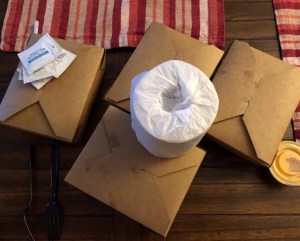
The current crisis, in my mind, dates to Thursday, March 12.  That particular day, at least in my socially distant location, the pandemic became a panic.  Decisions were made to have employees work remotely.  Zoom or Skype meetings were substituted for the face-to-face variety.  Church services were cancelled.  There was a run on toilet paper.  This final aspect has me really vexed.  Why toilet paper?  Experts say if we kept to our usual buying habits there would be plenty for everyone, but the survivalist mentality kicked in and people began hoarding.  If the apocalypse was coming, they wanted to go down fighting with clean underwear on.  We were in Ithaca the next day to see my daughter.  We ordered out from a local restaurant.  When we got home we found a role of new toilet paper in the top of the bag.

According to my amateur dating technique, we’ve been in this state for 13 days now.  Toilet paper, tissues, and paper towels are nowhere to be found.  I looked on Amazon.  They can get you toilet paper, but you’ll need to wait until May.  Why?  Ironically, because it’s being shipped from China.  Yes, the nation where the pandemic erupted has toilet paper aplenty.  Here in the greatest [sic] nation in the world, there’s none to be found.  What does this tell us about a country that self-identifies as “Christian”?  Whatever happened to “if someone demands your coat, give them your shirt also”?  Or perhaps more to the point, “turn the other cheek”?  How has a nation of Bible believers responded to a crisis?  By becoming selfish.  By stockpiling toilet paper.

I’ve spent a lot of time camping.  I’m fairly comfortable with the ways of nature.  Like most other people I prefer a nice, private restroom with all the accoutrements, but if bears can do it in the woods, why can’t we?  I have my Boy Scout guide right here.  But it suggests using toilet paper.  If books could be ordered, I suspect How To Poop [this is the family friendly version] in the Woods would be a current bestseller.  Trump says he wants everyone back to work by Easter, but the toilet paper ordered from Asia won’t even be here by then.  And will offices have access to some secret stash that only those who buy in bulk can find?  Hoarding makes any crisis worse, but this particular one seems especially mean spirited.  It makes me realize just how great America has been made.


Silent Sundays

Since walks in the outdoors are a good thing, according to government guidelines, my family has been taking them.  Actually, we tend to take walks anyway since sitting before a screen all day is anything but natural.  One fact we’ve noticed on our perambulations through town is that many churches, as a standard of caution, aren’t holding their usual meetings.  The governor here in Pennsylvania hasn’t ordered churches closed—the fine line between church and state is easily violated—but many of the civic-minded religious are able to draw their own conclusions.  The church I attend has gone to virtual services.  In any case, I’m seeing news stories of clergy, particularly on the far-right end of the spectrum, insisting that the show must go on.  Ignoring government guidelines, they try to cram in as many people as they can until the police come along to limit the size of gatherings.

Throughout history religion has generally been in league with local governments.  We don’t know all the religions that have ever existed, but it is clear that some of the first counter-cultural believers were early Christians.  They defied government orders and sometimes died for it.  Today it’s more likely to end up in a stern rebuke or simply being sent home where the rest of us are sheltering in place.  I read this week about a church that’s encouraging cardboard cutouts of congregants so they can see themselves sitting in the pews during virtual Sunday morning services.  At times like this I think back over the history of religions and reflect on how the COVID-19 situation is one entirely new; we’ve never had a pandemic with the internet before.  And pastors can announce online that defying the government is on the docket for Sunday morning.

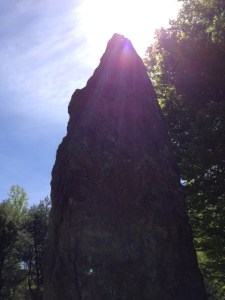
We weren’t the only ones with the idea of visiting Columcille yesterday.  An outdoor megalith park, Columcille is a place for spiritual reflection.  Since the vernal equinox passed virtually unnoticed this year, it was rejuvenating to take a springtime walk in the park.  Yes, others were there, widely spaced, but we walked the trails and visited the standing stones as a family group, keeping away from other gatherings.  We spent some time watching the new life emerging from the forest floor.  It’s only March but spring has sent its signals to the plant world and green shoots are reaching for the sun before trees leaf out and block the light.  It’s a wonder and a source of awe.  And in its own way, it’s a kind of gathering we might call church.


Proceeding 17-108

This is important!  Please share it.  If you don’t like sharing blog posts please at least share this link: https://www.fcc.gov/ecfs/filings/express.  During this time of international crisis, American politicians have decided to discuss making the internet free again.  But because a certain political party doesn’t want this, they are doing it in an obscure way.  Since many people are working remotely and their livelihoods depend on internet connectivity, the FCC is accepting public comments on Proceeding 17-108, whether to restore internet neutrality or not.  The form will take you only two minutes to fill out but you’ll need “Proceeding 17-108” and your zip code plus four.  And you’ll need to hit “enter” after filling in your name.  The very form seems designed to discourage public input.  This is not a joke.

I had sincerely hoped that the COVID-19 crisis would bring out the best in the GOP.  It hasn’t yet.  Hearing the recorded comments of people like Mitch McConnell on how the Republican Party really doesn’t want to offer any stimulus packages but realizes that the economy will grind to a halt without them, my faith in the human spirit tanked.  Not only that, but now that internet neutrality, which is the very way life goes on for many of us, is back open for public input, Ajit Pai is doing his best to make sure people don’t know about it.  Please take just a moment to go to the FCC website and make your voice heard.  And please share this.  If you’re reading this post, remember, you’re using the internet.

Maybe it’s just living life “under the dome” that makes me feel this is so important.  Right now my entire family is working remotely.  Our house looks like a computer lab.  Big Cable, since the end of net neutrality, has been allowed to drop users into “slow lanes” on the web, unless they are supporting causes those companies want.  This has ended up wasting a lot of time for those of us who rely on the net for our daily bread.  You can make your voice heard.  This crisis is the opportunity to say something.  Please do.  In the best of all possible worlds, or even in a pretty good world, governments would listen to the will of the governed.  We’ve been caught in a loop where the governed are exploited for personal gain.  The coronavirus has led to the rare chance to make your voice heard.  Tell the FCC what you think.  And please share the link.


Running with Scissors

I suspect that, like many, I’ve come to see the coronavirus as an indictment of political foolishness.  Electing unqualified officials feels like all fun and games until a crisis emerges and the leadership has no idea what to do.  The Trump administration announced itself as anti-science and began breaking down the carefully built institutions that made our way of life possible.  His fans cheered.  Now they’re huddled in their bunkers with their stockpiled Purelle and toilet paper and Fox News on 24/7.  It’s a good thing that a stable genius is in charge.  He’s trying to get Germany to move production of the most promising vaccine to the land of his anti-vaccers, something Germany’s reluctant to do because 45 has a reputation internationally.  It seems he’s made America infectious again.

As those of us with brain stems try to find some way to comfort those we know and love, we keep coming back to the fact that this kind of pandemic is new in the internet-linked world.  No matter what you try to do right now you have to assess whether it involves meeting other people, potentially infected, and whether it’s worth the risk.  I had to go to a grocery store and Target over the weekend.  I’ve never seen so many empty shelves before.  This is what panic looks like.  The difference is that even W., who will never be considered among the smartest of presidents, recognized that institutions are there for a reason.  America’s greatness grew slowly by building on what’d gone before.  Tearing everything down in a narcissistic tantrum and claiming all we need to do is adore our autocrat, we now see how great this country has become.  Greatly afraid, that is.

Coronavirus closed schools more effectively than Betsy DeVos.  Businesses are reeling as the businessman president fumbles with facts and figures he can’t understand and can’t admit that science is real because, well, global warming and all that.  Internationally people are looking for solid leadership and finding that the autocrats they’ve elected have no idea what to do.  Self-aggrandizement is no basis for leadership.  The Republican senate had their chance just two months ago, but they were banking on their personal bank accounts, it seems.  Even in the face of this crisis Mitch McConnell persists on insisting it’a all a game.  As a child raised in a Republican home I was taught never to run with scissors.  But then, I had all my vaccines.  Mad dictator’s disease hadn’t yet been released upon the world.


Virtual Church

All the way back in seminary my friends and I used to joke about virtual church.  What made it so funny was that the idea seemed ridiculous.  The very raison d’être for church (which essentially means “gathering”) was, well, gathering.  We joshed about putting a communion card into an ATM and getting bread and wine.  Little did we know we’d live to see virtual church become a reality.  While I prefer not to tip my hand as to my affiliation (I began doing this when teaching at secular schools, for if a professor of religion is being academic about their specialization their affiliation should have no bearing on the class) I confess I am the member of a religious community.  That community has become virtual, as of today.

This isn’t a permanent thing.  Unless coronavirus is a permanent thing.  As I spoke with my clergy person about it, I wondered how many people would attend virtual services.  Sermons would need to be stellar.  Who would hear if I tried to sing hymns (this is not a pretty thing, take my word for it)?  My laptop doesn’t even have a disc slot into which I could insert my offering.  Churches, synagogues, mosques—they’re about community.  What does community feel like when you’re sitting there in your pajamas, at least on the part that the webcam doesn’t pick up?  Does the minister see you in virtual church?  Have I, like number 6, been reduced to a numeral?  I suspect the current crisis is going to be a real test for faith communities.  Meeting together would make us all feel like snake-handlers now.

The funny thing was, back in seminary it was a joke.  At Boston University School of Theology in the late 1980s we knew that churches weren’t really growing.  Some megas had started and we now see them following the mushroom cloud to its dissipation stage.  As little as we meant it, we could see devices creeping into the mix.  I did not use a computer until after seminary.  Funnily enough, thinking back to the pre-1990s, we survived without cell phones.  If you were going to church you were going. To. Church.  These days of pandemic in the pews will be a real test of the preacher’s power.  For Episcopalians the mediating of grace had to be done in person.  I remember watching worriedly as the priest, clearly with a sniffle, was the first one to take a sip from the community chalice before holding it out for others to drink.  We wondered about efficacy of ATMs dispensing consecrated hosts.  It was only a joke, then; really it was.


Travel Ban

I’m not at home.  I know in the current crisis that sounds like heresy, but I can honestly say that getting out of the usual routine where COVID-19 is all you hear about feels right.  More and more organizations are instituting work from home policies—many of them mandatory.  I’ve worked from home for going on two years now.  You need to get out a bit.  I know travel isn’t recommended, but I’m really not afraid to die.  Besides, I put a box of latex gloves in the car and when we stopped for a restroom break, wore them until they could be safely removed.  Exposed surfaces in the rest area were being continually wiped down.  Don’t get me wrong—for an introvert like me working at home is fine.  It’s just the idea of feeling like this virus is some zombie apocalypse happening just outside my door that I needed to dispel.

When I told a friend I was no longer going to be commuting on a regular basis he said if it were him he’d only ever buy sweatpants again.  Now that my reality is life with my wife being the only person I regularly see, I’m beginning to realize just how much our clothes purchases are for impressing others.  My haberdashery is akin to that of Henry David Thoreau; I wear clothes until they’re no longer functional.  They can be badly out of date but they still work.  The fashion industry is built on pride.  To put it in the words of my old friend Qohelet, vanity.  We want others to see what we’re wearing.  If we’re still donning last year’s gay apparel we’re not playing the game.  Never mind those of us whose wardrobes could be carbon-dated.  The pandemic can be revealing.

So I’m away from home for what is really the first time in months.  I had to stop in the grocery store for a few things.  Only one person I saw was wearing a mask, but I was wearing prophylactics, so who’s going to cast the first stone?  Many shelves were bare.  The CDC has become our new gospel provider.  I’m limiting my outside exposure.  Driving door to door, greeting no-one along the way (that actually is the gospel, but substitute the walking for the driving part).  I know when this weekend’s over I’ll be back to my cloistered existence as the rest of the world tries to get used to the loneliness of the sweatpants crowd.  If you’re one of them take it from me—the rest of the world is still out there.