Half-Way Through

Here’s a writing phenomenon.  Maybe it only happens to me (I am self-taught), but when I’m writing a book a strange thing happens.  When I’m doing my rewrites, and there are usually several, about halfway through I’ll have an epiphany.  Something I should’ve been doing from the beginning.  Then you’re left standing at a crossroads: should I go back to the beginning again now?  But still need to address a basic rewrite as well as the new approach in the second half, so should I just carry on and then start rewriting from the beginning, catching up with the second half?  That may sound like a trivial question, but I assure you it’s not.  You see, right now I have two books in a complete stage.  “Complete” here means done in draft form.  When I write a book it gets rewritten several times before I consider finding a publisher, but when an important point comes to you halfway through, you’re between worlds.

Now, I work alone.  I am part of a local writers’ group and I’m only now starting to get to know others who’re willing to talk about writing.  I know several writers who don’t talk about it.  They’re still friends, but for me, there are few topics I’d rather discuss.  That’s how I learn.  You see, I have no idea what’s normal.  Do other writers labor over multiple rewrites?  I know some do, but I suspect some don’t.  I know that when I write a short story sometimes the first version seems best to me, but try to get such a thing published.  No, you need to rewrite.  Polish.  Make it shine.  But what if one half is shinier than the other?  This is starting to be a regular occurrence.

Inspiration is fickle.  That’s something we can all agree on.  But when you’ve been scrawling on a topic for weeks, or months, and then a realization dawns, you’ve just added yourself additional weeks or months of revision.  I’m sure a great deal of it is due to my own psychology.  Another part is due to writing under the constraint of a 9-2-5 job.  There are only so many productive hours in a day, and since mine come early they necessarily end when the work day begins.  I’ve tried writing after work but my brain and body feel like a CPR dummy when work’s through with me.  The next morning I start at it again, but the question is still should I finish this up with my new insight, or should I go back to the beginning?
Fragments Etc.

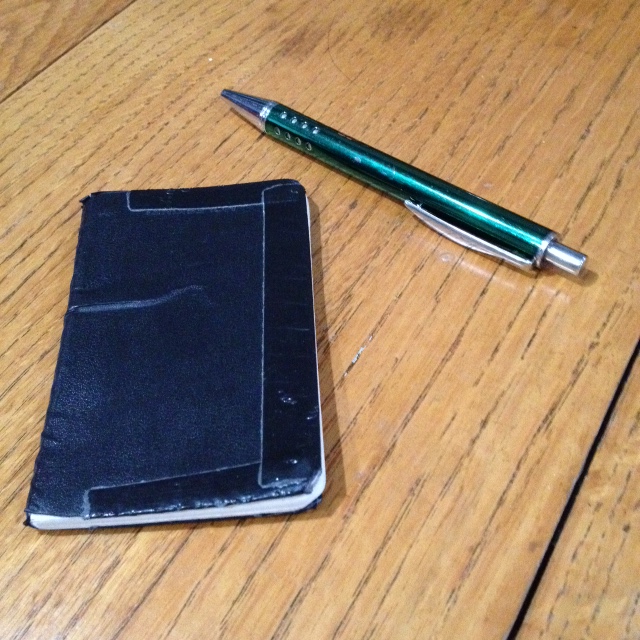
I’ve never counted, but there’s well over a hundred of them.  And a notebook with at least a thousand more.  What have I got in such abundance?  Ideas for stories that remain unfinished.  I’m not exaggerating or inflating numbers, I assure you.  I’ve been writing short stories for a half-century now, many, no, most unfinished.  Thirty-three have been published.  I was reminded of this recently while reading a nonfiction book that suddenly gave me the ending for a story I’d started many months before.  Perhaps even a couple of years.  I started searching through my electronic files for it and couldn’t find it.  Why?  There were too many stories started with frustratingly short titles (my bad).  To find the culprit, I would need to open each one and remind myself what was inside.

A few months ago, I printed out copies of all eight of my unpublished novels.  I also printed out copies of all my published stories as well.  I never got around to the unfinished majority.  I have a feeling that if I printed them I’d find what I was looking for more easily.  This, even with the ease of electronic life, will be quite an undertaking.  I think it may be a necessary one.  Although I’m hardly well known—I’m an obscure, private intellectual, after all—I do have many fiction ideas.  The stories generally come to me with an impression.  The start of an intriguing tale, for instance, or the end of one.  I then begin writing and either write myself into a corner or I scribble until I realize that I don’t know what happens next.  The story sits, unfinished.  Now and again, however, the missing piece is found.  I try to find the story so I can complete it to send out for several rejections.  Such is the writing life.

Now, if I could do this for more than the paltry time allotted to personal pursuits, courtesy of capitalism, I’m confident that I’d have far more than thirty-something stories published.  At current count I have seventeen stories ready to send out to literary magazines, several of them already rejected a time or two.  Another twenty finished and nearly ready to send out.  And forty just finished, but requiring a bit of spit and polish.  And these aren’t the fragments.  Don’t get me started on the nearing 6,000 posts on this blog.  Is it any wonder I can’t find anything?  I grabbed my notebook of a thousand fragments and jotted a physical note of how that particular story ends, in case I ever find it again.


Nanowrimo Night

Nanowrimo, National Novel Writing Month—November—has been run by an organization that is now shutting down.  Financial troubles and, of course, AI (which seems to be involved in many poor choices these days), have led to the decision, according to Publisher’s Weekly.  Apparently several new authors were found by publishers, basing their work on Nanowrimo projects.  I participated one year and had no trouble finishing something, but it was not really publishable.  Still, it’s sad to see this inspiration for other writers calling it quits.  I’m not into politics but when the Nanowrimo executives didn’t take a solid stand against AI “written” novels, purists were rightfully offended.  Writing is the expression of the human experience.  0s and 1s are not humans, no matter how much tech moguls may think they are.  Materialism has spawned some wicked children.

Can AI wordsmith?  Certainly.  Can it think?  No.  And what we need in this world is more thinking, not less.  Is there maybe a hidden reason tech giants have cozied up to the current White House where thinking is undervalued?  Sorry, politics.  We have known for many generations that human brains serve a biological purpose.  We keep claiming animals (most of which have brains) can’t think, but we suppose electrical surges across transistors can?  I watch the birds outside my window, competing, chittering, chasing each other off.  They’re conscious and they can learn.  They have the biological basis to do so.  Being enfleshed entitles them.  Too bad they can’t write it down.

Now I’m the first to admit that consciousness may well exist outside biology.  To tap into it, however, requires the consciousness “plug-in”—aka, a brain.  Would AI “read” novels for the pleasure of it?  Would it understand falling in love, or the fear of a monster prowling the night?  Or the thrill of solving a mystery?  These emotional aspects, which neurologists note are a crucial part of thinking, can’t be replicated without life.  Actually living.  Believe me, I mourn when machines I care for die.  I seriously doubt the feeling is reciprocated.  Materialism has been the reigning paradigm for quite a few decades now, while consciousness remains a quandary.  I’ve read novels that struggle with deep issues of being human.  I fear that we could be fooled with an AI novel where the “writer” is merely borrowing how humans communicate to pretend how it feels.  And I feel a little sad, knowing that Nanowrimo is hanging up the “closed” sign.  But humans, being what they are, will still likely try to complete novels in the month of November.


Night Fears

Have you ever had one of those dreams?  The kind where your subconscious turns on you brutally?  I’ve often said I’m my own worst critic but this one took it to a whole new level.  In real life I’m working on novel number eight.  One through seven haven’t been published (and at least two don’t deserve to be).  I’ve kind of been thinking that this one might see the light of day.  I finished a very rough draft about a couple months ago and I’ve been working on revisions since.  Meanwhile I keep reading novels and seeing how well they flow compared to my story.  That must’ve been on my mind because in my dream I was in a room with five or six publishing moguls.  In the way of dreams it seems that perhaps an agent had arranged this.  I was in the room with them and when they finished, each took their turn telling me how awful it was.  Their critique was brutal.  So bad I couldn’t get back to sleep.  I found tears on my cheek.

Of course, my writing time is early morning.  Work is uncompromising.  So I had to get up and work on what my subconscious had just told me was, in the words of Paul, skubalon.  (Look up the commentaries on Philippians 3.8, if you dare.)  Like any writer, I have my doubts about my own work.  This particular novel I’ve been working on, off and on, for almost three decades.  It’s an idea I can’t let go.  Just a couple months back I was proud of myself for finally finishing a draft of it, and this morning I’m tempted to delete all the files.  Why does one’s subconscious do this to a person?  My very first attempt at a novel, as a teen, was torn up by my own hands.

The other dream that has been recurring, in various forms, is where I’ve been hired back by Nashotah House.  I taught there for a decade and a half, and I wasn’t very happy toward the end, but I did my job well.  In real life I wouldn’t go back, but in my dreams I’m always overjoyed.  I wake up happy and optimistic.  Some version of that dream comes to me at least once a year, I suppose.  Sometimes several times.  Dreams are mysterious.  They’re telling us something, but they’re coy about exactly what.  That’s what made last night’s dream so bad.  There was no ambiguity.  This was pure, unadulterated self doubt in the room with me and it gave me no quarter.  I got up and continued work on the revisions anyway.  Who’s afraid of omens?


Therapy with Books

I’ve been doing this for years and just found out there’s a name for it.  Bibliotherapy is a treatment method that uses reading to deal with anxiety.  It is closely related to writing therapy, which I also use.  Both have been self-moderated, in my case, and both have been part of my way of coping for decades.  I was actually surprised to learn that these are valid methods of treatment that some therapists use.  I knew about journaling (I suppose blogging counts), but the larger picture was never in focus.  We live in stressful times.  We went through a very stressful four years about, let’s see, eight years ago.  This time I’m intentionally using bibliotherapy.  Reading a book (eyes off the screen, please!) is a way of entering another reality for a while.  Already this year I’ve stepped up my reading, as much as work will allow.  (And now, proofs.)

Writing is therapeutic as well.  Both reading and writing engage your mind.  And can remind you that there are other things to life besides headlines.  I’ve been writing a lot of fiction lately.  That doesn’t mean I’ve been publishing a lot of it—that part’s still very difficult for me—but writers do it because that’s what writers do.  And it makes me feel better.  More balanced.  One of the truly difficult things in my life is when I’m on a roll, particularly with fiction, then I have to stop for work.  The whiplash is almost too much some days.  I realize that you can’t make a living out of pouring your soul into words, unless you’re very lucky.  And even then I suppose it might soon start to feel like work.  Maybe some day I’ll find out, but until then reading and writing will see me through.

I know I’m not alone in this.  There are other people out there who spend as much time as possible between the pages and/or with pen in hand.  There’s nothing like it.  These therapies can change your mood.  Give you hope.  Make you feel complete.  And this can happen whether something you’ve written gets published or not.  I admit to having seen therapists from time to time; I probably should do it more.  None of them, however, have suggested bibliotherapy.  It’s something I stumbled onto myself.  That’s probably no surprise.  I bumble my way through life most of the time.  We all know, I suspect, when our brains are firing properly, what makes us feel better.  The shelves that surround me most of every day certainly know.  And there is a name for it.


Mad, Bad

Although epic poetry holds an important place in literary history, I tend to read prose more.  Like most wordsmiths, I do write poetry—more like dabble in it.  Unlike my fiction writing, the poems aren’t intended for publication.  They are too deeply personal for that.  Still, my recent post about Gothic (the movie) had me thinking about Percy Shelley and Lord Byron.  They were known for their poetry, of course.  I can’t pretend to have read a ton of it, but their free-spirited personalities are intriguing.  Back in 2012 I read Edward Trelawny’s account of Shelley and Byron’s last days—neither lived more than six years after the summer when Frankenstein was born, both dying before forty.  I was recently reading about Byron in another context and was reminded (I’d read it before) that an acquaintance once described him as “mad, bad, and dangerous to know.”

Authors, I suspect, are often neurodiverse.  There’s a reason I think this.  The size of the population that reads for pleasure is depressingly small.  It stands to reason that writers are a subset of that small population.  The writers I know tend to have some quirks.  They function just fine in society, but they do seem to operate on a different level.  I’m naturally drawn to them.  I have been trying to get to know writers locally—there are quite a few here in the Lehigh Valley—and sometimes they will let you in.  Often not.  It’s tricky to befriend writers, in my experience.  I suspect I might be one myself.  In the published side of things, I’ve produced six non-fiction books, but I also publish short fiction (and have completed six unpublished novels).  Still, I’m not part of the “mad, bad, and dangerous to know” club yet.  If there is a club.

Over the years I’ve joined three different writing groups.  Their meetings are interesting since many of us are introverts.  One thing we all have in common is that we love to talk about writing.  Perhaps it’s because mainstream success is so difficult to come by.  Publishing houses have consolidated and the “Big Five” are responsible for by far the majority of books the reading public—that most rare group—buys.  One thing that’s true among the writers I know is that most would keep writing even if publication, or hope of publication, was off the table.  It is what we do.  For many years, perhaps too many, my writing was academic.  What nobody knew in my teaching days, however, was that I never stopped writing fiction.  It was there I put my thoughts that I’d classify as “mad, bad, and dangerous to know.”


Type Right

Image credit: Rama, via Wikimedia Commons

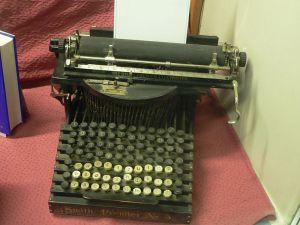
I’ve mentioned before on this blog that I’d like to get a typewriter.  An old one, without electric capacity.  Clacking keys flying before the dawn.  At first this might seem impractical—why buy a typewriter when almost all publishing is now electronic, at least in one stage of its life cycle?  You type something out and you’re going to have to “re-key” it for the hegemony of technology.  But wait—there is a method to this madness.  I’ve heard it said that good writing is just clear thinking.  That sounds right to me, but with a proviso: good writing is edited writing.  The editor may be someone else, or it may be the author, but the point is that something written, with rare exceptions, improves upon rewriting.  Like ordinary stones in a rock tumbler that come out glistening.  Type it, then retype it.

Back in college I wrote all my papers out by hand before typing them.  (Sometimes three lines of handwriting on each college-ruled line.)  “Keyboard composition,” as it was called then, was shorthand for quick, sloppy writing.  The uniformity of type hides a host of syntactical sins.  I used to see the same thing with student papers prepared on a computer in my teaching days—colorful images and fancy type utilized to mask a lack of engagement.  The paper written and rewritten shows itself to be of a higher standard.  I (or others) notice more errors on this blog when I run out of time for editing, often because work looms.  If I have the time, I edit.  And I actually miss writing my thoughts out longhand.  What I need is a typewriter.

Reading has always been a large part of my job.  Student papers and book proposals aren’t so very different.  Many of both come in what appears to be first draft form.  It’s understandable—good writing takes time not only to hammer out a draft but to think, mull, change angles, and hammer again—and we’re all so terribly busy.  The end result is often worth it.  At this point in Nightmares with the Bible I’m printing out my draft so that I can see what I’ve written.  The handwritten comments come after the keyboard composition, but they still come.  The important thing is that drafts require re-reading.  Better, re-writing.  The niceties of pleasing writing can be added or enhanced by an editor.  When editors write books, other editors edit them.  And as I sit here typing this silently on my computer, I’m imagining the satisfying sounds of a manic typewriter early in the morning.


Childhood’s End?

Writers are agents against chaos.  Those of you who read this blog frequently know that chaos has been one of my themes lately.  Moving, which is a process that takes months and months of time, is pure chaos.  Whenever I settle down to write, yet another moving-related task comes to me—this box needs to be unpacked, that gap in the fence must be mended, where did I put the toolbox?  Mundane things.  Writers like to think the world conforms, somehow, to their inner lives.  In reality, things are far more complex than that and don’t seem to be getting any easier.  Starting to learn about house ownership is something best left for the young, I suspect.  Every question (where should we put the television?) leads to a daisy-chain of other issues (but first we need to move that hutch, but it’s too heavy for either of us to lift, etc.).

In ancient times water symbolized chaos.  Before we left on vacation, the main issue was to get all boxes off the floor in the garage.  We haven’t had time to move them safely inside yet, what with planning for vacation and all, so plastic became the order of the day.  We do need, however, to get things inside eventually.  A slow process for two middle-aged people with full-time jobs, even without jet lag.  Writing feels like a luxury item, for what is most required is time—time to move things to their proper places.  Time to figure out what those proper places are.  Time to go to work again.

Had we thought this through, we might’ve used vacation this year to unpack.  We bought our plane tickets, however, before we bought the house.  This latter transaction is one of chaos embodied.  Who knew, for example, that the grass had to be cut so often?  That all roofs leak?  That chaos is constant, and not intermittent?  In biblical times, one of the signs of God’s greatness was the ability of the Almighty to hold chaos in constant check.  The waters were always lurking, looking for any opening—except when you need rain and it just won’t come.  Sitting here writing feels like the giddy irresponsibility of childhood where there’s so much to get done and so little time in which to do it.  And neighbors don’t appreciate the lawn being mowed before the sun is properly out of bed.  The renter pays a price for living with, for at least some stretches of time, chaos-free maintenance.  The home-owner quickly learns that any time left over for writing feels like being irresponsible, and a little bit divine.


All Is Bright

As a Christmas present to myself I finished my third book yesterday. I’ll be posting details once the title is finalized. And “third” is only an approximation. I wrote another non-fiction book before this one which I decided not to send to publishers. That “fourth” book joins the six completed but unpublished novels resting on my hard-drive. Writing, for some of us, is a way of life. Not a way to make a living, mind you, but a way of life nevertheless. Literacy is a gift too often taken for granted. It’s easy to forget that the rapid scientific and technological progress that we’ve made has only come about since the invention of the now nearly defunct printing press with moveable type.

Among the first books printed was the Gutenberg Bible. This was a book of progress, as difficult to believe as that may be. You see, the Bible wasn’t always a means to enslave. It was once a tool of liberation. As I try to steer my thoughts from politicization this holy day, I can nevertheless not neglect to reflect on how Holy Writ has been weaponized. We’re warned to keep Christ in Christmas although we know the story isn’t history. Scripture becomes a blunt object of superiority and supersessionism. We sometimes forget that sacred time is a gift, no matter what anyone believes. Literature has built this world for us—some sacred, some secular. Our proper response ought to be celebration.

I now awake on Christmas morning—from long habit—at a time I would’ve thought a boon as a child. In the pre-dawn stillness of 4:00 a.m., sleeping in for me, I think about the great gift of quiet time. This is my writing time. Book three is done, and books four and five are already in the works. For those of us who write as readily as we respirate, this morning stillness is a gift. Time to compose, arrange thoughts that will only be scattered in the coming busyness of the day. The means are quite different than those employed by Johannes Gutenberg, and the results will be read by far fewer people. None of that really matters, however. Today is a holy day because it involves writing. Angels, shepherds, and wise men may come later with the stories we tell of how this day began, but remember they are stories. And no gift should be taken for granted. Not even the unbroken silence of 4:00 a.m.