Fragments Etc.

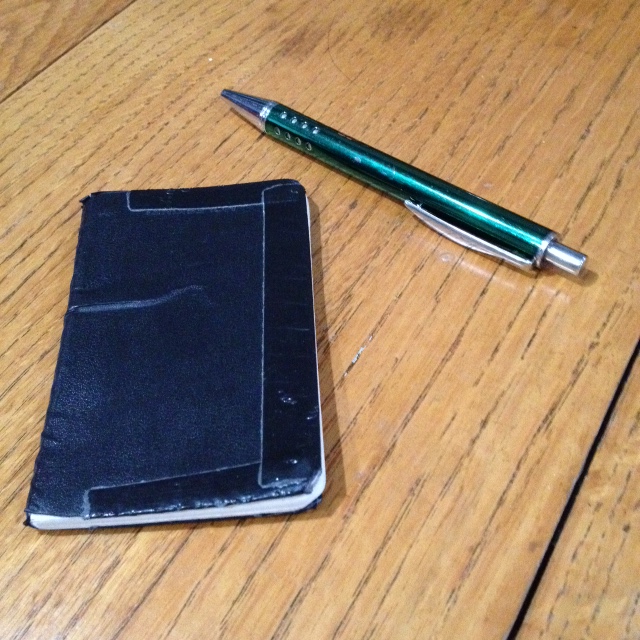
I’ve never counted, but there’s well over a hundred of them.  And a notebook with at least a thousand more.  What have I got in such abundance?  Ideas for stories that remain unfinished.  I’m not exaggerating or inflating numbers, I assure you.  I’ve been writing short stories for a half-century now, many, no, most unfinished.  Thirty-three have been published.  I was reminded of this recently while reading a nonfiction book that suddenly gave me the ending for a story I’d started many months before.  Perhaps even a couple of years.  I started searching through my electronic files for it and couldn’t find it.  Why?  There were too many stories started with frustratingly short titles (my bad).  To find the culprit, I would need to open each one and remind myself what was inside.

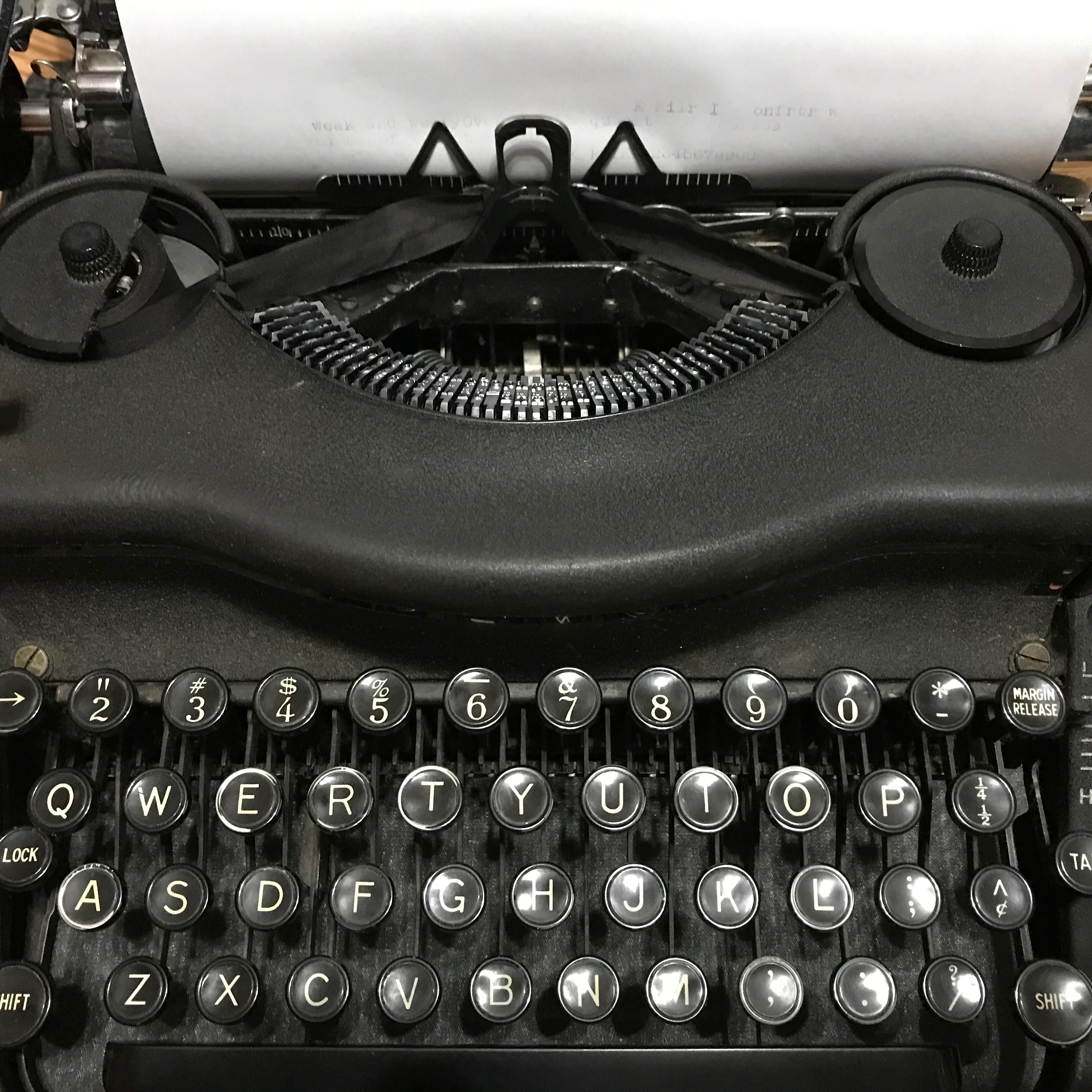
A few months ago, I printed out copies of all eight of my unpublished novels.  I also printed out copies of all my published stories as well.  I never got around to the unfinished majority.  I have a feeling that if I printed them I’d find what I was looking for more easily.  This, even with the ease of electronic life, will be quite an undertaking.  I think it may be a necessary one.  Although I’m hardly well known—I’m an obscure, private intellectual, after all—I do have many fiction ideas.  The stories generally come to me with an impression.  The start of an intriguing tale, for instance, or the end of one.  I then begin writing and either write myself into a corner or I scribble until I realize that I don’t know what happens next.  The story sits, unfinished.  Now and again, however, the missing piece is found.  I try to find the story so I can complete it to send out for several rejections.  Such is the writing life.

Now, if I could do this for more than the paltry time allotted to personal pursuits, courtesy of capitalism, I’m confident that I’d have far more than thirty-something stories published.  At current count I have seventeen stories ready to send out to literary magazines, several of them already rejected a time or two.  Another twenty finished and nearly ready to send out.  And forty just finished, but requiring a bit of spit and polish.  And these aren’t the fragments.  Don’t get me started on the nearing 6,000 posts on this blog.  Is it any wonder I can’t find anything?  I grabbed my notebook of a thousand fragments and jotted a physical note of how that particular story ends, in case I ever find it again.


Burn Out

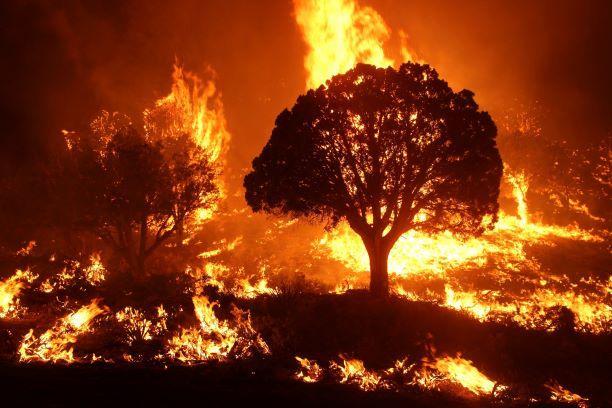
The Los Angeles fires are terrifying.  In my case, I can’t help but think of the Peshtigo, Wisconsin fire of 1871.  I read two books about it, the first because my daughter, in late elementary school in Oconomowoc, heard about the fire in class.  Embers of October by Robert W. Wells is one of the scariest books I’ve ever read.  After we’d safely moved out of Wisconsin I read Denise Gess and William Lutz’s Firestorm at Peshtigo.  Frightening stuff.  I feel for those suffering from the Los Angeles fires.  America is particularly vulnerable to such things since, according to books I read when writing Weathering the Psalms, the western half of the nation exists in, for the most part, a perpetual drought.  (Those who live in Seattle may disagree.)  Rain doesn’t fall evenly across the country.  I grew up in the relatively moist eastern part (we get a lot of rain), but even here fires are a possibility.  We had a very dry October, and a very dry May the year before.

Image credit: Mike McMillan/USFS, public domain as a work of the US government, via Wikimedia Commons

Global warming will only increase the problems, I fear.  Too long too many people in power haven’t taken it seriously enough.  The weather is a large, extremely complex phenomenon that we still don’t understand.  I sit shivering at my desk on a cloudy January day looking at weather apps that tell me it’s sunny outside.  One thing we do know about it is that if we tamper with it in one place, it affects the weather everywhere.  What if, instead of posturing and fussing with people who live in other countries, with larger entities trying to control them, we all turned our attention to that sky we hold in common?  Trying to understand its needs and temperaments?  Realizing that if crops fail in one country there will be shortages everywhere?

The fires aren’t just Los Angeles’ problem.  Large nations posturing about who has the biggest leader has proven ineffective time and again.  We need cooperators and collaborators, not nationalists.  Embers of October, especially, paints a Hell on Earth.  One that couldn’t be escaped by many of the people in this small town that was utterly wiped out by a natural disaster.  Such things should be required reading.  Instead, small-minded people ban books claiming ignorance is bliss.  Trying to avoid a metaphorical Hell, they introduce a real one here on earth.  And yet, some use even this to divide people against each other.  And people who have no will to help one another is Hell indeed.


Doing Without

I’m a creature of habit.  Although I’m no internet junkie (I still read books made of paper), I’ve come to rely on it for how I start my day.  I get up early and do my writing and reading before work.  I generally check my email first thing, and that’s where something went wrong.  No internet.  We’ve been going through one of those popular heat waves, and a band of thunderstorms (tried to check on their progress so I could see if it’s okay to open the windows, but wait—I need the internet to do that) had rolled through three hours ago, at about midnight.  Maybe they’d knocked out power?  The phone was out too so I had to call our provider on my cell.  The robovoice cheerily told me there was a service outage and that for updates I could check their website.  Hmmm.

I can read and write without the internet.  I’m on Facebook for, literally, less than two minutes a day.  I stop long enough to post my blog entry and check my notices.  I hit what used to be Twitter a few times a day, but since people tend to communicate (if they do) via email, that’s how the day begins.  This morning I had no internet and I wondered how tech giants would live without it.  I’m no fan of AI.  I use technology and I believe it has many good points, but mistaking it for human—or thinking that human brains are biological computers—flies in the face of all the evidence.  Our brains evolved to help our biological bodies survive.  And more.  The older I get the more I’m certain that there’s a soul tucked in there somewhere too.  Call it a mind, a psyche, a spirit, a personality, or consciousness itself, it’s there.  And it’s not a computer.

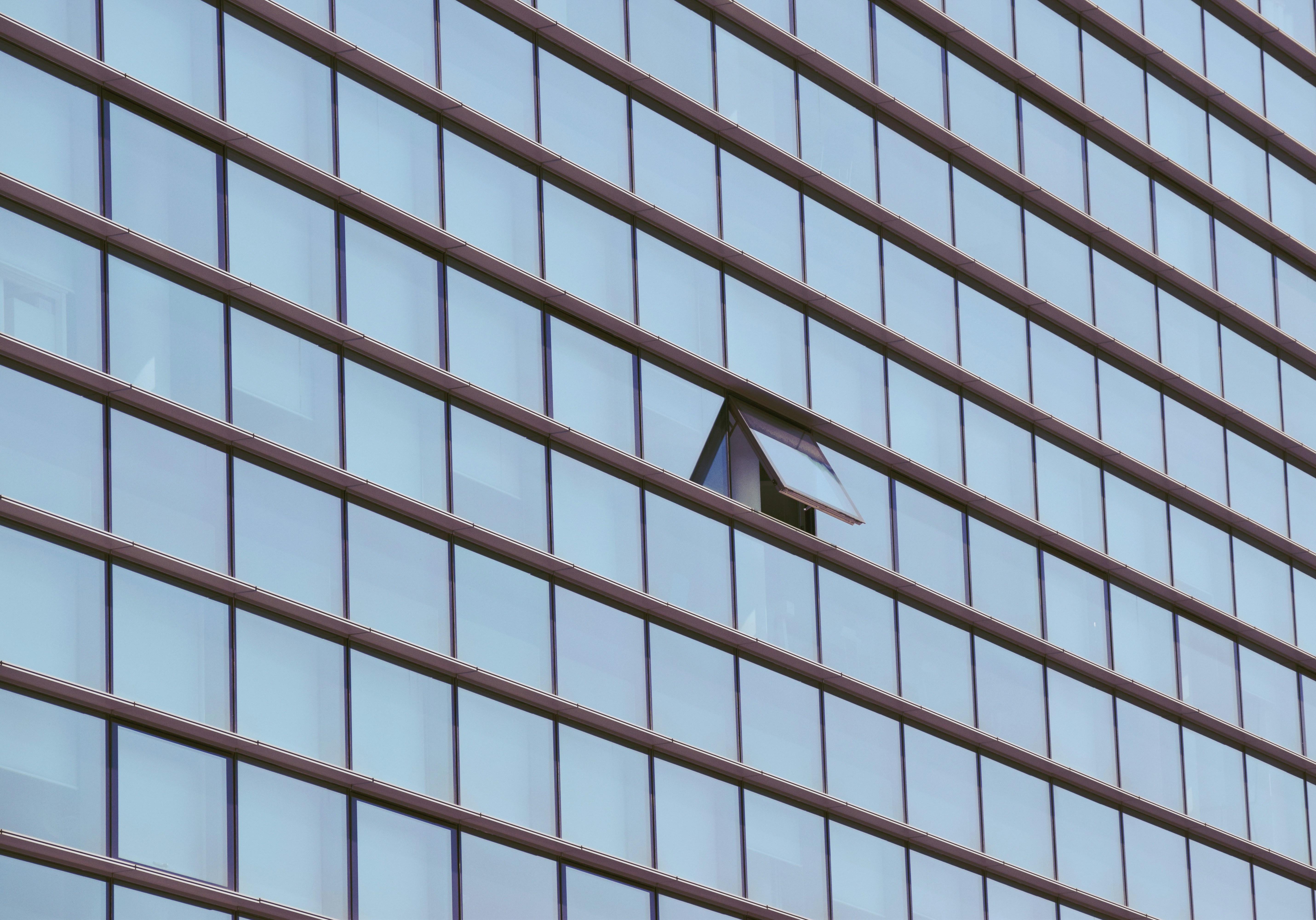
Our brains rely on emotion as well as rationality.  How we feel affects our reality.  Our perspective can change a bad situation into a good one.  So I’m sitting here in my study, sweating since, well, heat wave.  It was storming just a few hours ago and I can’t check the radar to see if the system has cleared out or not.  What to do?  Open the windows.  I’ll feel better at any rate.  And in case the coffee hasn’t kicked in yet, “open the windows” is a metaphor as well as a literal act on my part.  And I don’t think AI gets metaphors.  At least not without being told directly.  And they call it “intelligence.”

Photo by Chris Barbalis on Unsplash

Fear of Big Books

I have to get over my fear of big books (I can’t find an official name for this and so I’ll coin machrysbibliophobia—and why did my autocorrect replace this with machrysbibliophobmia when there’s no such word?  It’s a scary world where my fears go unnamed—go, aporripsophobia!)  I’ve read many large novels with payoff (several by Stephen King and Neal Stephenson) and plenty of nonfiction from which I’ve learned a ton (perhaps literally).  But still, when a book I really want to read is big, I tremble.  I try to decide how to justify the time.  Now, I know I don’t have to justify time reading—that’s a constant activity.  I think it’s more a question of caesura, places to stop and perhaps claim credit for work done.  I’m not a fan of multiple volumes since that drives prices up.  Maybe just say it a bit more succinctly?

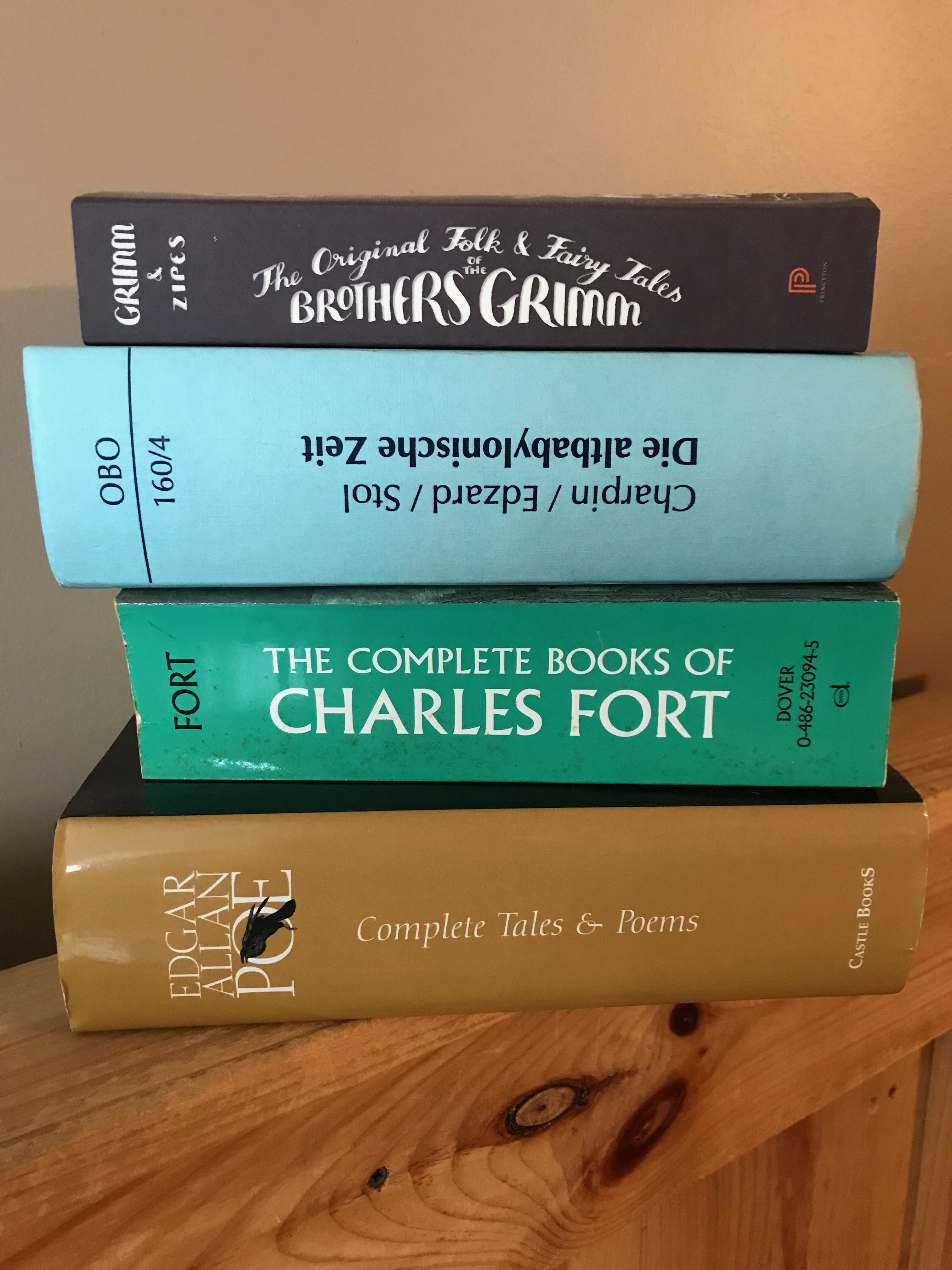
In my case—and I can only speak for myself—it’s all about a sense of accomplishment.  The distinct, discrete book that I’ve jammed into my gray matter along with its companions.  Some of us are driven by the shot of joy that accompanies completion.  I have a few compendia of authors/genres I really like.  I dip into them but never quite seem to have the time to finish them.  You see, recently watching the X-Files got me thinking about Charles Forte.  I have a compendium of his four books and I read Book of the Damned right through.  But I’ve got three more to go.  How are you supposed to count that on Goodreads, without its own ISBN?  Or the collected fiction and poetry of Poe.  It’s nice to have it all in one place, but will I ever read it cover-to-cover?  I tried once, really I did.

Scary books

As I write this I just started a big book.  It’s on a topic I really find fascinating but I’d been putting it off for some time because of my machrysbibliophobia.  I’ve been entrenched from before page 1.  I know it’s going to take me quite a long time to finish it—I have a job that takes its pound of flesh daily, and even when I do get a day off, well, mowing season is here.  And the porch needs painting again.  Maybe if non-Catholic monasteries were a thing I’d have time to devote to the reading I really must get done before my time’s up.  I like big books, but I’m also afraid of their ramifications.  Enough so even to name my fear.


Excess Ideas

I sincerely hope that after I’m gone someone with more sense than me will look through my notebooks instead of just tossing them in the trash.  There are a ton of creative ideas there that I have no time to develop into stories.  I know that writers are frequently looking for new angles and ideas that haven’t been presented before.  I have them in spades.  Of course, unless someone is noticed at least by shortly after their passing, their stuff becomes detritus lost for all time.  I was thinking of family heirlooms recently.  I come from a poor family, not rich in stuff.  Indeed, most of what we still own is made of paper.  The rare family heirloom is something imbued with history.  One of my grandfather’s things (I have two of his books) that survived was a brief account of his life.  (Also paper.)

Members of his family—I’m still uncertain as to who—experimented with photography.  This was in the days of holding still while being shot, but there were some very interesting prints that made their way to me.  (Paper again.)  This was from the time that negatives were preserved on glass.  I imagine this led to storage issues over time.  And I also know that families have to move from time to time.  Things get lost during every move, from my experience.  In my grandfather’s very brief autobiography, he notes that these glass plates were kept under the floor of the barn and were forgotten at the time of a move.  I very much doubt that they’re still there.  Developers greedily come in with their backhoes and knock and dig and dump and pour.

I sometimes wonder what small, local history was lost on those glass plates.  Some families are erased from history—most of us are, in fact.  Generations on down the road there’s little evidence that we were even here.  For writers, a stab is being made at remembrance.  I tend to think of writing as being like a radio receiver for thoughts.  They may not originate with me.  Some of them are quite bizarre—trust me.  It makes me sad to think of them left rotting in some landfill.  My “Kilroy was here” is inscribed in notebooks.  If anybody’s interested, I’ll warn you in advance that my handwriting’s quite small.  And the ideas are uncensored.  There are so very many of them.  I don’t mind sharing, but I would appreciate the opportunity to try selling them myself, first.  If only I had the time to write them all out.  And I won’t be leaving them under the barn floor.


Thinking Thinking

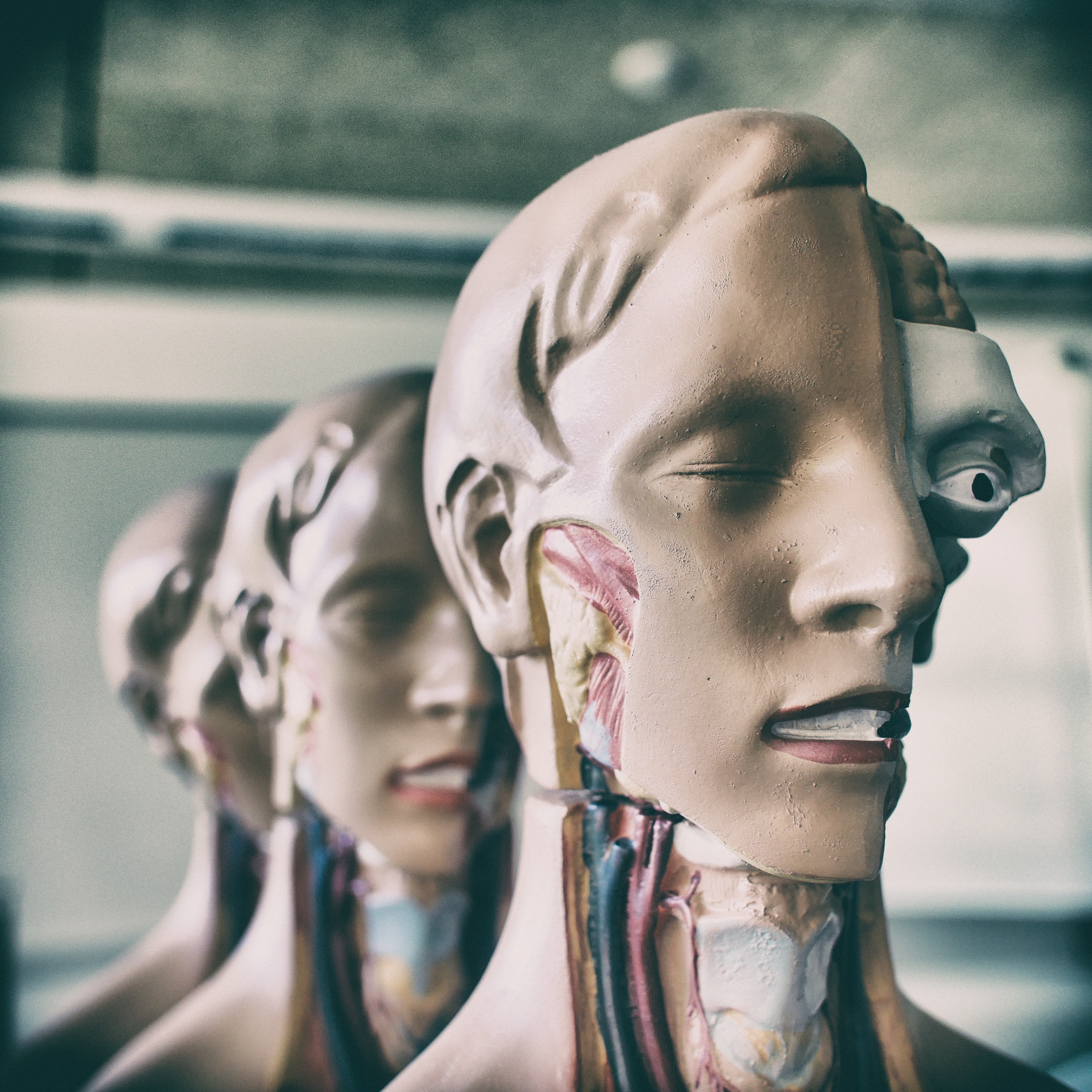
Something that’s been on my mind (anticipatory pun) lately, has been thought.  More especially, the quality of thought.  We are conscious beings, although we’re not sure what that means.  Beyond a Cartesian self-awareness.  Everyone knows what it is to have times when you’re not thinking clearly.  Or are feeling confused.  Those of us who tend to live quasi-monastically (keeping to a routine, early rising, writing and reading daily before the 9-2-5 routine) notice the ways subtle things can influence the quality of our thinking.  For me, first thing in the morning is the best time.  (Although I must confess that lately I don’t wake up with the crystalline clarity that I have for years, as if sleep is beginning to intrude on my earliest hours.)  Once I’m up and going, though, routine, you’d like to think, would provide the same results.  But it doesn’t.

Photo by Pierre Acobas on Unsplash

I’ve written before how the quality of sleep can affect the quality of awake thinking—something we’ve all known all along.  But even when I have somewhat identical nights (same quality of sleep more than one night in a row), the subtleties of difference in thought persist.  To understand this, you need to realize that I’ve been rising well before the sun for a dozen years now.  I awake to a quiet house and spend a couple, sometimes a few, hours writing and reading.  (It’s how I write my books, as well as this blog.  And my fiction.)  Even on “identical mornings” where the weather’s pretty much the same, and all other factors seem equal, the quality of thought differs.  Sometimes it depends on whether I’m writing fiction or non.  As I transition into my reading time, that can make a difference in the reading experience.  I suppose that’s one reason I value good writing.

We don’t understand consciousness.  Identity is also somewhat negotiable at times.  We’ve all known a family member or friend to act “not like themselves.”  More to the point, to think not like themselves.  We have no real way of understanding thinking itself.  I think about thinking quite a bit, and I marvel at how intensely personal it is.  We may, at our will, keep our thoughts to ourselves (and that’s a good thing, in many circumstances).  Thought, it seems to me, ought to be a very high priority in our academic pursuits.  It’s a powerful thing, capable of more than we’re even presently able to imagine.  And it can differ from day to day.  Do you suppose I wrote this after writing fiction or non?


Call Me AI

Let’s call them Large Language Models instead of gracing them with the exalted title “artificial intelligence.”  Apparently, they have great potential.  They can also be very annoying.  For example, during a recent computer operating system upgrade, Macs incorporated LLM (large language model) technology into various word processing programs.  Some people probably like it.  It might save some wear and tear on your keyboard, I suppose.  Here’s what happens: you’re innocently typing along and your LLM anticipates and autocompletes your words.  I have to admit that, on the rare occasions that I text I find this helpful.  I don’t text because I despise brief communiqués that are inevitably misunderstood. When I’m writing long form (my preference), I don’t like my computer guessing what I’m trying to say.  Besides, I type faster than its suggestions most of the time.

We have gone after convenience over careful thought.  How many times have I been made to feel bad because I’ve misunderstood a message thumbed in haste, or even an email sent as if it were a text?  More than I care to count.  LLMs have no feelings.  They don’t understand what it is to be human, to be creative.  Algorithms are only a small part of life.  They have no place on a creative’s desktop.  I even thought that I should choose a different word every single time just to see what this feisty algorithm might do.  Even now I find that sometimes it has no idea where my thoughts are going.  Creative people experience that themselves from time to time.

Certain sequences of words suggest the following word.  I get that.  The object of creative writing, however, is to subvert that in some way.  If we knew just which way a novelist would go every time, why would we bother reading their books?  LLMs thrive on predictability.  They have no human experience of family tensions or heavy disappointments or unexpected elations.  We, as a species tend to express ourselves in similar ways when such things happen, and certain words suggest themselves when a sequence of letters falls from our fingers.  LLMs diminish us.  They imply that our creative wordplay is but some kind of sequence of 0s and 1s that can be tamed and stored in a box.  I suppose that for someone who has to write—say a work or school report—such thing might be a boon.  It’s not, however, the intelligence that it claims to be.


Just Being

You know, I sometimes resent being forced to be something I’m not.  In these days of tolerance and letting people be themselves, the bullies have taken over, forcing the rest of us to clean up their messes.  Take politics, for instance.  I have no interest in it.  From the beginning of this nation to the present the political inbreeding has been obvious.  Wealthy families presuming that riches mean you know how to govern—since the beginning they have set the tone.  Voting is always important, but how can you be anything else when you need to be a constant political activist just to assure politicians are actually doing their jobs?  I’m no micromanager—in fact I’m okay with just getting by.  Still, I feel compelled to spend my time keeping an eye on corrupt politicians.  How are you supposed to write books?  Imagine what we could accomplish if they’d just do their job!

Or consider business.  It’s tax season.  Every New Year marks the time when you need to keep track of what you spend on what because accountants, backed by politicians, can’t keep their noses out of other people’s money.  You want to eat?  Find a place to sleep out of the incessant rain?  Then you have to play the capitalist game.  There’s no opt out short of heading under the bridge and going through trash cans for your next meal.  Those of us who are creative don’t really impose our wills on others.  You don’t like what I write?  Don’t buy my book.  (And I speak with authority on this particular point!)  Nobody forces you to look at art.  (Although they do force you to listen to music in many stores, even if you’d rather shop in silence.  This, I think, is a business decision.)

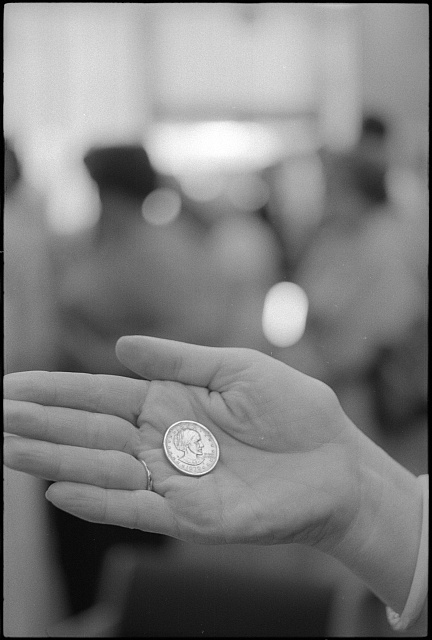
Image credit: Warren K. Leffler, public domain, via Library of Congress

One of the reasons a monastic vocation appealed to me even as a young Protestant was that I need time to think things through.  To contemplate.  To try to make sense of all of this.  I’m not motivated by money or power.  I want to be with others who just want to be.  I’m not lazy and I don’t mind being productive.  It’s just that, well, can’t things not be about money for a while?  Can’t politicians just act like actual adults with a moral center for a time?  The religious leaders who managed to do this were quickly commodified.  In this cloud-smitten winter I’m in the mood for lament.  Some of us want to live authenticly, but those with power and money simply won’t allow it.


Creatio Nihilo

Just when I think I’ve reconciled myself with technology, this goes and happens.  These precise words, in this order, have been written before.  In fact, all words in the English language have already been laid out in every conceivable order.  Technology can be friend or foe, it seems.  The website Library of Babel—with its biblical name—has undertaken the task of writing every conceivable combination of letters (using our standard English alphabet) and putting them into a vast, if only electronic, library.  This was not done by a human being like me, with intent or even any interest in the meaning of the words, but rather as one of those things people do simply because they can.  This entire paragraph can be copied and pasted into their search box and found.

The Library of Babel has made plagiarists of us all, even as it plagiarized everything written before it was programed.  After I learned about this library the wind avoided my sails for a while.  You see, what’t the point in writing what’s already been written?  Then it occurred to me.  Context.  The fact is, had I not scriven these very words, and put them on this blog, they would never have come to the attention of the kinds of people who read what I write.  The words have been spelled out before, but they’ve never been written before.   Those of us who write know the difference.  We spend hours and hours reading and thinking of ways to combine words.  We’re not out to kill the creativity of our species, we simply want to participate.

There should be limits to human knowledge, otherwise we’d have nothing for which to strive.  The internet may make it seem that all knowledge has been found—it is so vast and so terribly diverse—and yet there are people who never use a computer.  Their wisdom counts too.  It may seem that everything is here, but there is material that still has to be looked up in physical books.  There are crates and crates of clay tablets from antiquity that have never been transcribed and translated.  When that finally happens, the words they contain may be found, in a strangely prophetic way, in the Library of Babel.  But they won’t have any meaning there until it is given by the context.  And what can a library preserve if it isn’t the context that a (human) writer has given the words?


Credulity

So I went to see The Incredibles 2. Like the first movie, it deals with the complexities of family life amid the feelings of inadequacy when people are kept from their full potential. The idea of humans being enslaved by their screens seemed real enough. If you’ve ever tried to walk through Manhattan in a hurry you know that one of the clearest dangers is the pedestrian staring at his or her phone. People used to come to New York to see the scenery. Now you can get the full experience all online. There’s little doubt that we do need to be saved from our screens. Meet virtual reality. After only one encounter you can drop the “virtual.” Ironically, we were all sitting in a theater looking at a great big screen.

What was even more interesting was the fact that the film began with an apology for taking so long to make a sequel. An actual apology. As if no movie ever could, or should stand on its own. It’s common knowledge that sequels seldom live up to the originals. Interestingly, the villain in the movie states that people will always choose convenience over quality. That much is certain, and in an ironic way it applies to the film in which it’s uttered. I don’t believe in the crisis for creativity. It’s still out there. Original ideas are endemic to human nature. Ideas that bring in lots of money are more rare, and so we rely on the sequel. Sure things.

Publishers play this same game. Books that are completely new ideas frequently find their way from editors’ slush piles to their rejection piles. Publishers want something similar to what they’ve done before. Even better, something similar to something that sold well last time. The odds, in a capitalistic society, are stacked against creativity. It’s money that’s important, not originality. Yes, there have been books written extolling the wonders—virtues even—of originality. Such books are more easily published if they’re written by somebody already famous. So here was the dilemma in the theater: enjoy the movie or accept the message of the movie? The rare days I’m away from the screen, I’m old enough to admit, I don’t really crave it. When I come back in the door, however, the first thing I do is login to see if I’ve missed anything. Screens can lead to a strange uniformity. As long as we’re willing to pay for it, nobody will complain.


Creative Religion

If you ignore common sense and read this blog, you know that I try to be creative in my approach to the world. It’s bold, in my way of thinking, to claim the mantle of creativity since there are so many people out there that the world has already decided are creative enough, thank you. Who has time to visit all the world’s museums, read all the world’s novels, or watch all the world’s films? Why contribute to the clutter? The answer—in as far as there is an answer—is that creativity is a way of being. My wife sent me a piece by Maria Popova from Brain Pickings. It is about the creative life. I’m reluctant to claim the title for myself, but the essay does match the description of what I’d like life to be.

Writing about religion daily requires a certain amount of creativity. If you think about it, it does make sense. Religion deals with intangibles. “Things not seen.” It also delves into that deep place called meaning and wrestles with issues we all have to face in our lives. It’s really a shame when religion becomes ossified into a system with no creativity or humor. One might make the case that it ceases to be religion then. The other day I was recalling just how powerful a high mass can be. Even now, if the mood is right, the memory of my first experience of it can bring tears to my eyes. It is a pageant of mystery and power. And creativity. The colors, the sounds, the scent of incense, the pressure of the kneeler on your knees, the sharp bite of flame tokay. It may not be the worship the way the disciples did it, but it sure has a creative genius.

When, however, worship became a daily requirement—when the majesty became mandatory—something was lost. Creativity means being willing to try something different. As much as we creative types cherish our friends, we need time alone with our Muses. And when we come back together with those friends, it is all the more pleasant for having been away. Creative people do not control their creativity. It clearly works the other way around. We can’t stop being creative, even if—and I can’t imagine why—we’d ever want not to be. Religion, on the other hand, tends to get stuck in some awkward places. If only it could be brought together with an open creativity without becoming trite it might find a place in a world too busy to take time simply to be.


Veni Creator Spiritus

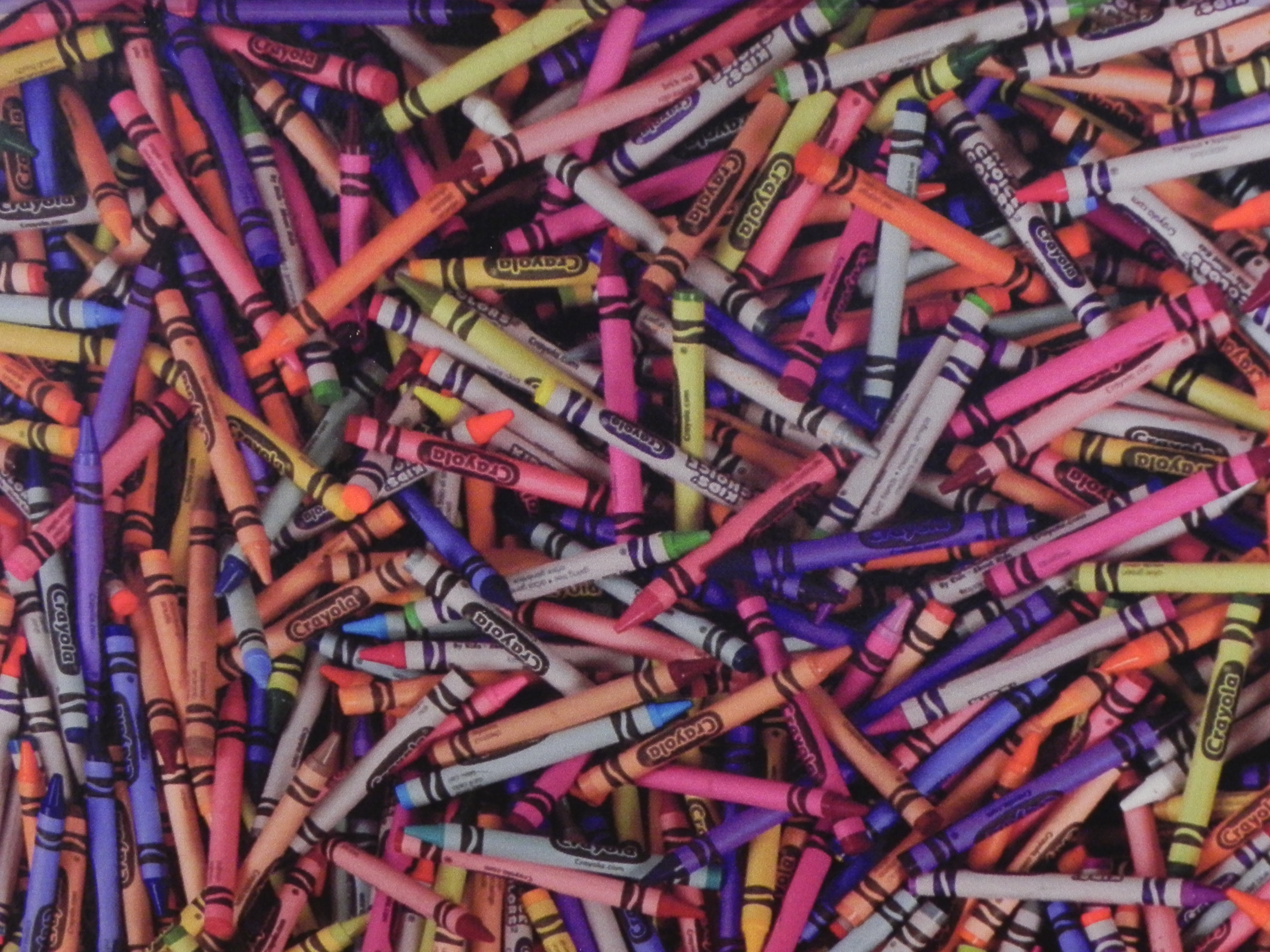
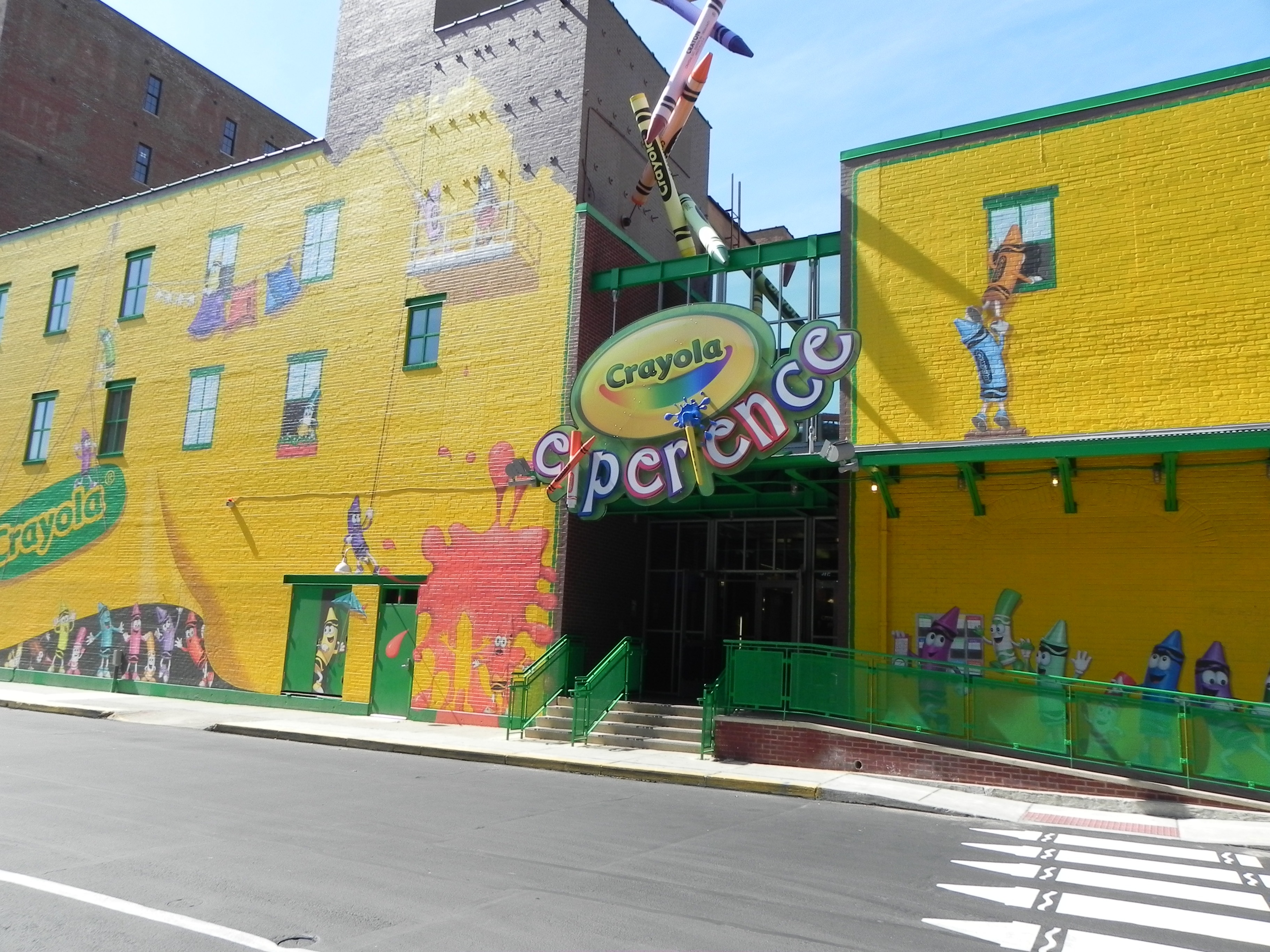
Over 100 billion have been made. Not McDonald’s hamburgers, this time, but Crayola crayons. For many of us, Crayola is one of the distinct scents of childhood, and the vibrant colors Binney and Smith offered were inexpensive keys to creative expression. After a visit to the Crayola Experience in Easton, Pennsylvania over the weekend, I began to wonder how society might have changed due to the introduction of the inexpensive crayon. Reading about childhood in the Victorian era often feels like a Dickensian bleak view of want and wasting. Children learned their lessons in school, when they went to school, in black and white. The world of color was visible to them, but not ready to hand for representation. Maybe I’m under the spell of that Crayola smell again, but I wonder how giving a child a box of color changed the way the world was perceived.

DSCN4604

The Crayola Experience, like the showcase of Hershey, Pennsylvania, is not a factory tour. You’re not shown the inside of the place of business, but rather the public facing side of capitalism: the part that makes you want to buy. Even after the kids are grown. Nevertheless, the experience is one of wonder and imagination for young and old alike. Art is a deeply personal form of expression. Even as I sat at a low, brightly primary-colored table, shading away on my picture, I didn’t want anyone else to see it. This was my own self-expression. On the wall were quotes from children who were not quite so damaged as me, declaring why they decided to color the cow purple or the horse green.

DSCN4607

To participate in some of the activities you need to cash in a token; admission gives you three and more are available for purchase. The motto on the tokens is “In creativity we trust.” It is a motto that I can live with, for it seems that creativity is the realm of the divine. Otherwise, I find it difficult to fathom why a few hours amid such a juvenile pastime could be so utterly satisfying. It’s as if the rainbow, a religious symbol of my childhood, had been fractured out into countless variations and captured in wax for the expression of my soul. Breathing deeply of that paraffin recipe, I think how only the other major aroma of childhood—that of Play-Doh—can take me back to fantasies of innocent hours where the world demands nothing of you beyond being who you are. How quickly that grace period ends. And yet, for a few dollars we can go back for an hour or two, and remember what it was like to create entire worlds.


Animal Mentalism

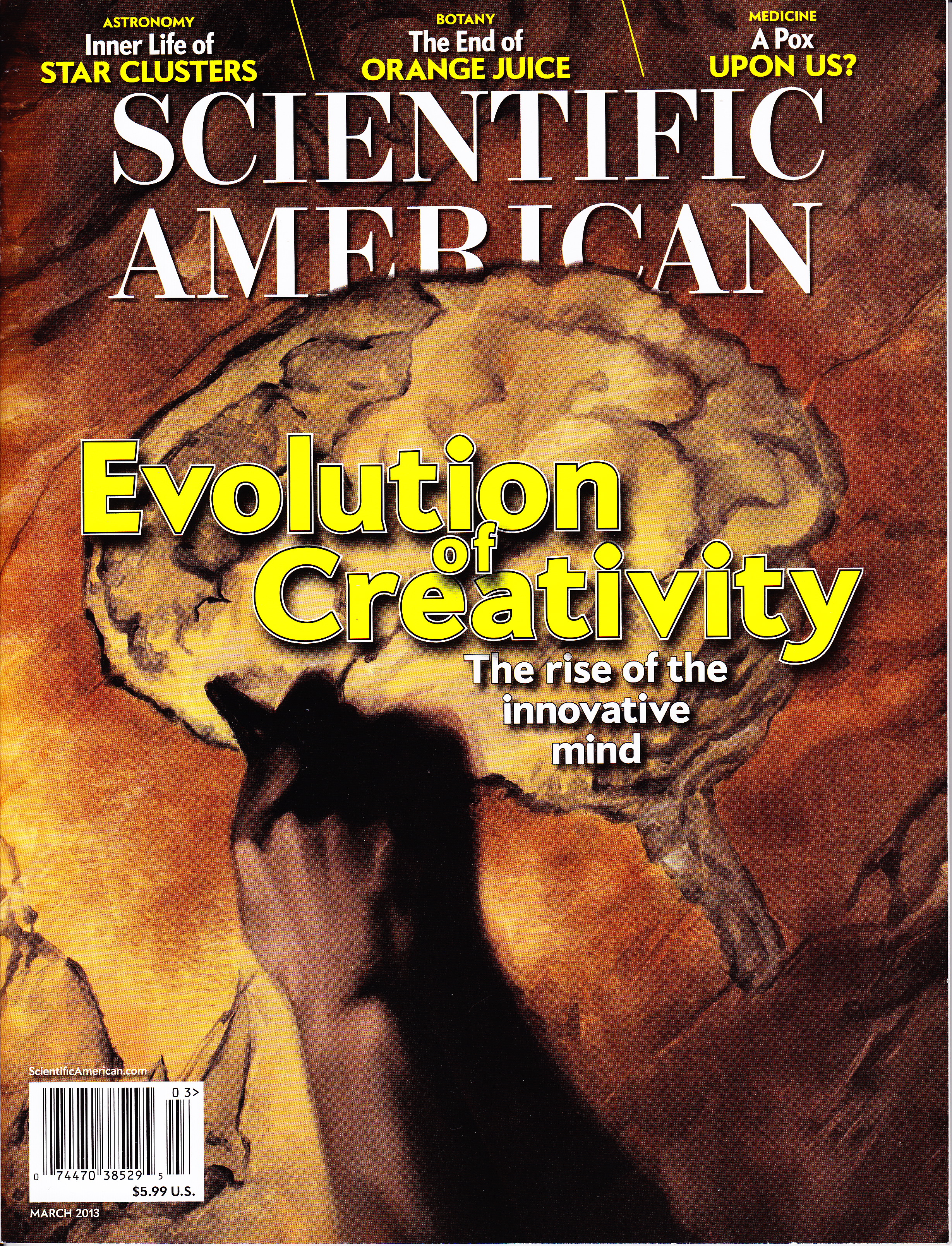
SciAmScience is how we know things. Most things, at least. One of the fundamental aspects of human life not yet grasped by the great empirical method is creativity. We generally have an idea how it works, but, like so much of human experience, it is difficult to describe precisely. When I saw this month’s Scientific American fronting with the headline “Evolution of Creativity”—two of my favorite topics—I knew I’d have to read it. The article by Heather Pringle zeroes in on the archaeology of very early human history. Before modern human, actually. I’d been telling students for years that the development of such traits as artistic representation, burial, music, and an awareness of some forces “out there” could be found tens of thousands of years ago. These, I suggested, marked the beginnings of religious sensibilities. I’d be willing to go even farther, however, and suggest that we share some of these traits with our fellow creatures. Religion may have a biological basis. That’s not where Pringle is going, however, and she addresses not religion, but creativity.

Pringle suggests that evidence for human technology—modest though it may be—stretches back further than the 40K epoch that seemed to house an explosion of human innovation. She shows how sophisticated knowledge of the environment and corresponding innovations were occurring 77,000 years ago, and even earlier. Some of it stretches back before Homo sapiens; stone weapons may be as early as Homo heidelbergensis and kindling fire as early as Homo erectus. Even our Australopithicene cousins seem to have been happily knapping stones two-and-a-half million years ago. The evidence, at the moment, seems to end there. I wonder, however, how far back cognitive development goes. We tend to underestimate the thinking abilities of animals, despite our constant surprise at how smart they seem to be. How very human! How very male, to assume that everything else is here for our use and pleasure.

Scientists often come upon with astonishment ideas that creative folks have been pondering for centuries. Science must be careful—that is one of its limitations. Creativity, the phenomenon Pringle explores, contains, in the words of Lyn Wadley’s team in Science, chemistry and alchemy. Creativity, like religion, isn’t afraid of magic. No doubt, some scientists will claim that true intelligence only begins with humanity. Looking at the way we treat each other, sometimes I doubt that it begins even there. If there is any hope for us, I would humbly suggest, it will come in the form of creativity. It is that very alchemy that keeps me coming back to science, and science will teach us, eventually, that animals are creative too. When we place ourselves among them, we will have created a world.


Toy Story 2.1

Summer is a season for movies. When the weather gets hot, sitting in an artificially cooled dark room for a couple hours, even if it is with strangers, seems like a good idea. Generally the movies I see in theaters are family movies – I’ve never been one to go to a theater alone and my personal taste in movies is unique in my family. The more interesting flicks usually have to wait until DVD release before I see them. Nevertheless, the movies are an experience that many of us remember fondly from childhood and children deserve good movie memories. Since the movie theater was invented it has become one of the signatures of culture in many parts of the world.

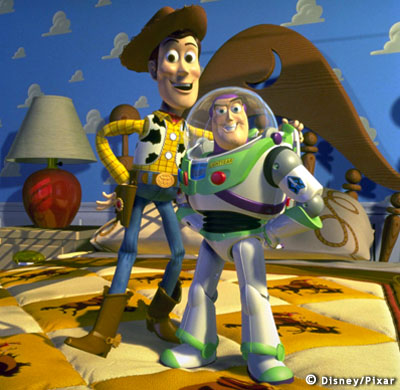
Last weekend, during the East Coast Heat Wave – a weather event so much talked about that it should have had its own theme music – we went to see Toy Story 3. In an unusual departure from my focus on religion, my comments here will focus on creativity. (Good religion is creative, after all.) Toy Story 3 opened to much critical acclaim, so my expectations ran a little high. A little too high. While I found the story to be interesting, it was a bit familiar. For those acquainted with the franchise, it felt like a remake of Toy Story 2. Both films open with the toys worried about their future because Andy is going away. In both 2 and 3 Woody is separated from his friends and has an epiphany that leads him back. Buzz gets returned to factory settings to reprise his humor in the first film. An evil toy in both movies holds the others captive against their wills. Meanwhile Woody makes new friends and with their assistance rescues the threatened toys. The evil toy ends up getting his just deserts and Andy’s toys successfully integrate.

The story line values friendship and commitment, and there is nothing to complain about there. Yet, after stepping out into the harsh sunlight, I felt like I’d just paid to see a movie I’d already seen before. Creativity – the factor that leads to truly new concepts – is not always valued in movies. This is particularly so in children’s movies. Our kids are being programmed to accept recycled stories as something new. It is not only Toy Story that has fallen into such rehashing: how many fresh ideas are shortly followed up by a 2, 3 or 4? Even if 1 wasn’t so good? I’ve even been told by publishers that publishing houses prefer to take few risks – they would rather have a product that is “like” one that has already proven a blockbuster. How many wizards and vampires have populated tween books over the last decade or so? It seems that the safe money is in the recycled story. In a society hooked on convenience, new ideas might seem just a little too dangerous. Once there was a cowboy blog…

Best friends forever and ever and ever