
Coptic Christians have been in the news recently. In a late push to be known as the radical orthodox, it seems, the Copts have arrested the headlines. Tensions in the Middle East appear to have shifted to this ancient group and the media finds itself fascinated by them. In an unrelated development, a Coptic papyrus fragment appears to mention Jesus’ wife, according to CNN’s Belief Blog. Naturally, people are curious (read “upset”) at this revelation, although it is not history, just tradition. For decades, perhaps centuries, scholars of Christianity have noted that Jewish guys Jesus’ age would have been, by all social expectations, married. Celibacy was not really an option in the first century of the common era, and yet, no one explicitly mentions Jesus’ wife. This causes a larger crisis for divinity, because once Jesus was recognized as divine what would you do with a wife? She would complicate things (or at least theology).
The female divine is certainly as ancient as the male divine, culturally speaking, if not older. Despite cartoons of Cro-Magnon man dragging Cro-Magnon woman by the hair, all indications are that early people revered the feminine mystique as life-givers. Naturally, this equates to a kind of divinity. Only when society grew to be dominated by politics, no matter how primitive, did the male usurp the role of life-giving image-of-god-bearer. The male part in procreation was upgraded to being the creator, and the female relegated to a mere receptacle. Male gods alone could create universes, and women were downgraded to incomplete men. Still, in the myths around Israel (and perhaps within Israel as well) gods were married. The divine principle included both genders, although in an unequal distribution of power.
Fast forward twenty centuries and we have movements that encourage young women to consider Jesus as a kind of chaste lover. That’s a little hard to do if he was married—issues of adultery, at least in fantasy land, cause a real complication. The fact of history is that we possess very little of Jesus’ biography. Depending on how we parcel out the Gospels, we know only about one year’s worth (or three very scant years) of his life. Many personal details are left out. The Bible is clear that he had brothers and sisters, and even some of their names are preserved. We know his parents and find out that he was a cousin of John the Baptist. The relationships likely continued from there into other connections, but they weren’t central to the story the Gospel-writers wanted to tell. Adding women always complicates a male religion. Only non-gendered religions can be truly universal.
So this newly translated Coptic fragment comes from centuries later when it would seem natural that any Jewish man of the time would have been married. What was his wife’s name? Here’s the beauty of the revelation: for that, we can still offer the consolation, “fill in the blank.”
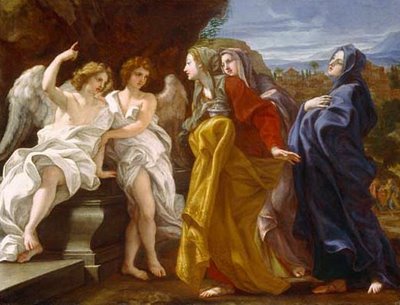
Rounding up the usual suspects?

 Steve A. Wiggins