Bears Repeating

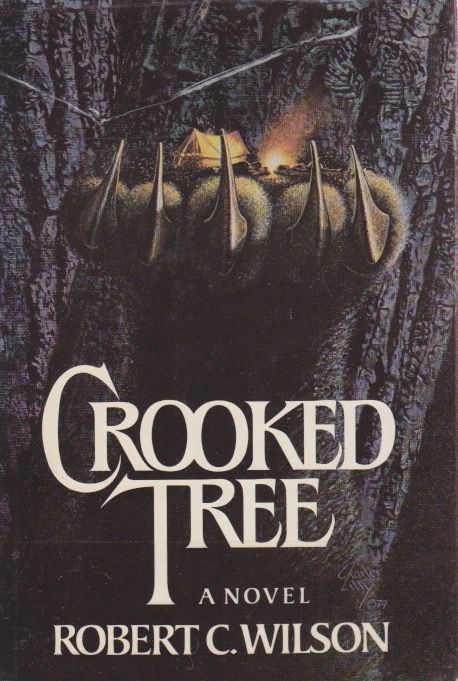
I read Robert C. Wilson’s Crooked Tree before I began this blog, I guess.  I remembered it being better than it seemed this time around, but it works as a horror novel.  In fact, the first third or so was quite unnerving, although I’d read it before.  After that the plot tends to require greater suspension of belief.  But then again, American Indian horror has come a long way since then.  Wilson, according to the limited information about him online, isn’t an Indian.  These days publishers are very concerned with appropriation—something that wasn’t an issue back in 1980.  And these days the work of Stephen Graham Jones, who is both a Blackfoot and an excellent horror writer, raises the bar considerably.  But Wilson is honest about the situation in his laying out of the novel.

Axel Michelson is a lawyer and he’s working to preserve the fictional Crooked Tree State Forest and prevent development.  Many of his colleagues and neighbors in Michigan are Indians, and so is his wife.  Axel’s efforts are hampered by a sudden onslaught of black bear attacks.  The description of the first three or four are scary enough to dissuade you from ever going camping again.  Axel’s assistant is an Ottawa and and he and his family suspect a bearwalk is involved.  This is the reason I read the novel the first time.  As a Native American folkloric monster, the bearwalk is difficult to uncover.  There are a couple more novels—one of them hard to find—that feature the tales, and there’s a university press book on folklore that has some accounts.  Not much more is out there that I can locate.

A bearwalk is a kind of shape-shifter.  A spirit that can control bears, in this case.  Axel becomes the white savior who uncovers the ancient ritual to stop the bearwalk, which has taken control of his wife—his main motivation for stopping it—while the Indians can’t figure out what to do about it.  They do tell him about the ritual, but mourning the loss of their culture, they fear it’s gone forever.  Meanwhile the bear attacks continue but once the shock of the first few attacks has worn off, they don’t scare so much.  There’s also a lot of supernatural involved, mostly drawn from native traditions.  It seems clear that, like Axel, Wilson did quite a bit of research on American Indian folklore.  He treats the Ottawa culture with respect and wrote a novel that might’ve had more influence than it seems. It’s well worth the read the first time around.

Manitous

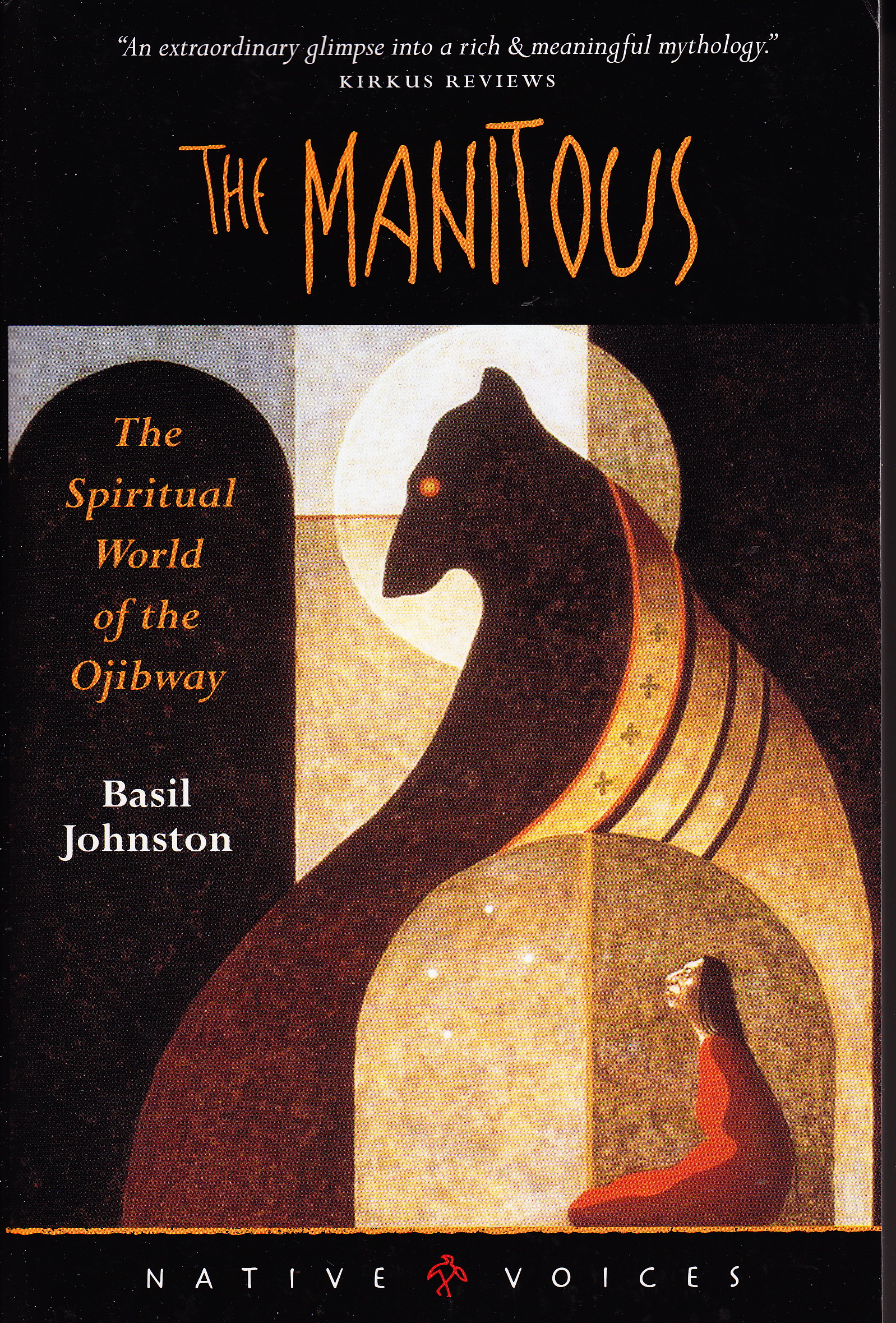
ManitousOne of the yearly autumnal rituals we’ve established is the watching of Escanaba in da Moonlight. It is a silly, crude, and profound movie that revolves around Native American lore—namely, the creature known as the bearwalk. Despite the high level of interest in monsters on the internet, the bearwalk continues to be elusive. Robert C. Wilson wrote a novel, Crooked Tree, about this Ojibwa legend, but academics have seldom explored it. The few resources I found pointed me to the wendigo. Wendigos are frightening spirits of the forest, sometimes presented as skinwalkers, or shape-shifters, who prey on unwary human beings. Some writers call them werewolves, but this isn’t exactly correct. Frustrated at finding no solid information, I picked up a copy of Basil Johnston’s The Manitous: The Spiritual World of the Ojibway. Johnston, who is Anishinaabe, writes to preserve the heritage of his people.

Manitous don’t have a direct equivalent in English. Some have been inclined to designate them as gods or spirits, but they inhabit that strange realm that overlaps with humans as well. The Ojibwa viewed the world as more animate than western science allows. People were part of this larger universe, but were not the sole end of intelligent life. The tales in this book map out an unseen territory where manitous may be found in lakes and streams, in the hearts of trees, in the early prototypes of humankind, and yes, in the wendigo. The wendigo (also spelled windigo or weendigo) is a representation of excessive acquisitiveness. They often begin life as humans, but become cannibals. As they eat other people their hunger grows, along with their bodies, and they cannot be satisfied. The more they eat the more their hunger remains. They are, therefore, extremely destructive, roaming the woods seeking human victims.

Throughout The Manitous, Johnston gives little in the way of editorial comment. One of his stories is a parable for the coming of Europeans and their subsequent treatment of Native Americans, but most of the tales are of the natural world. The wendigo occupies the last chapter of his book. Before putting the matter to rest, however, Johnston makes a poignant and valid point. Although the Ojibwa no longer believe in a literal wendigo, the treatment of the earth by corporations has taken its place. Always hungry, excessively greedy for more to be taken from the earth, industrialists have made the wendigo look as if it were an amateur slaughterer. Living lightly on the land, the Native Americans tried to take only what they needed. Europeans, on the other hand, created new things in order to keep the hunger going. And those who constantly create new needs grow wealthier and wealthier. Instead of naming this inherently destructive system the wendigo, we call it progress and happily invite it to live among us.