World History

I don’t doomscroll, but I occasionally fall down a virtual rabbit hole.  One of the truly interesting things about being an editor is reading proposals from other editors.  China’s been a hot topic for the past several years and so I hopped on over to Wikipedia to find out who this Chiang Kai-shek was, after reading a proposal.  I’d heard his name from childhood on, but I’d never read any history of China.  For my entire life it has been a communist country, often with frosty relations to the United States.  One thing led to another and I landed on the page titled Warlord Era.  This sounded like something out of a fantasy novel, so I thought I’d see what that was all about.  When you scroll down to the Warlord profiles section, you find some really interesting stuff.  One of these warlords was a real eclectic guy known as the “model governor.”  Another was a strict Methodist who banned alcohol and dressed like a common infantryman.  Yet another was known as the “most well endowed man in China,” in the southern regions, that is.
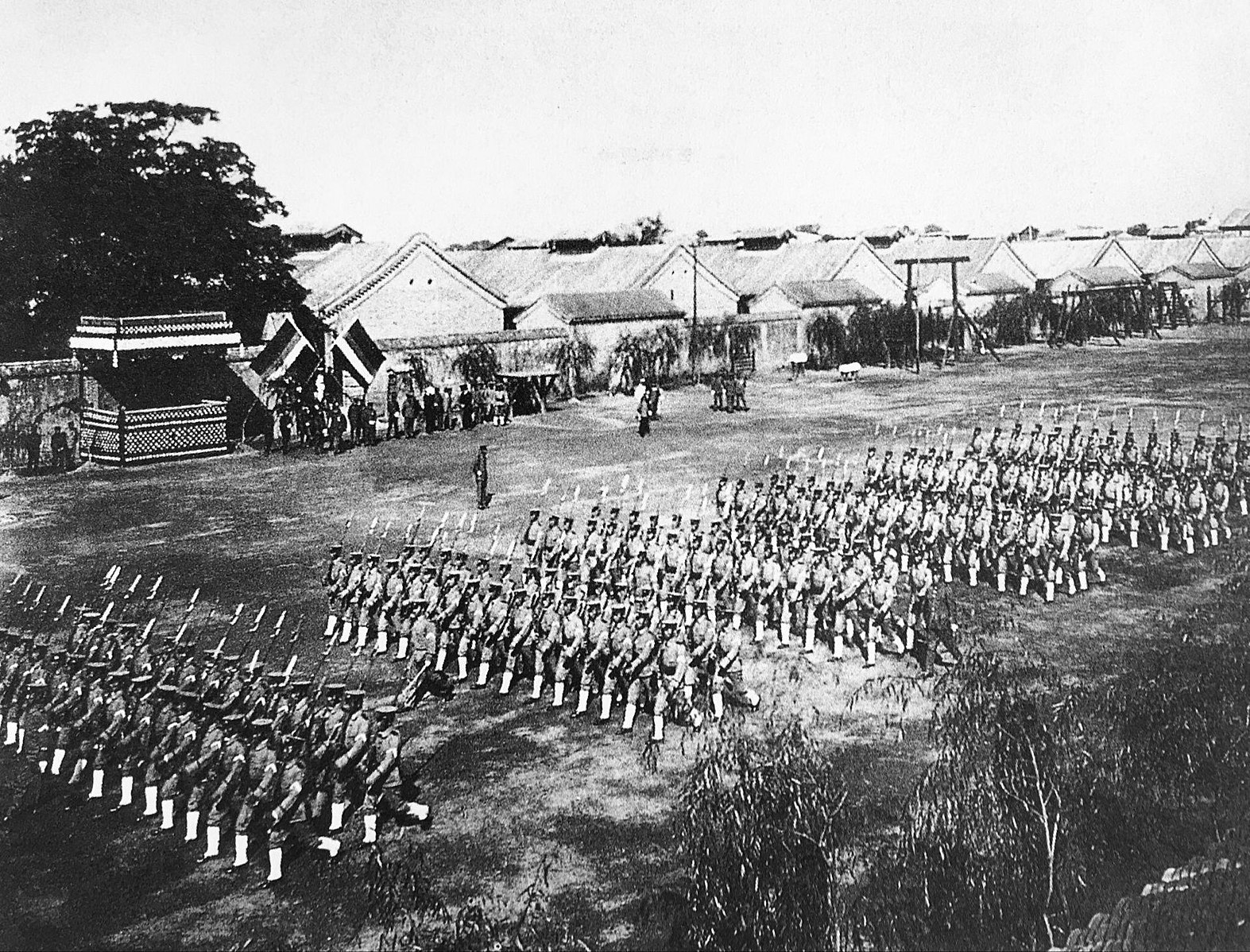
Beiyang Army; image credit—unknown photographer. Public domain via Wikimedia Commons.

Now, I’ve never read any Chinese history, but these guys sound a lot less threatening than anyone you’d find in a Mario Puzo novel.  They may have been terrifying in real life; Fidel Castro wore a common soldier’s uniform, but I’d have been frightened had I found him lurking under the bed.  Of course, I’ve never read any histories of Cuba either.  There’s a lot to learn in this world.  I enjoy reading history, but my writing projects tend to direct my non-work reading these days.  I’ve been acutely aware that my time on this fascinating planet is limited and that none of us can learn everything.  It saddens me that world leaders show so little interest in the planet they “govern.”  Even a little reading on Wikipedia should be enough to grease those wheels.

One of the strange ideas that occurred to me once while reading a different proposal was that China conducts business deals with, for example, nations in Africa, in which the United States is not involved at all.  When this thought launched I realized just how parochial the outlook of many of us is.  I lived overseas for three years, but still, the United States, in better and in worse, is my home.  It’s the place I know (or thought I knew).  Where some of my ancestors lived for over two-and-a-half centuries.  As appealing as Canada often seems, my fate appears to be here, along with my heart.  So I don’t doomscroll.  But I do read about China and realize how little I know.

Seaport Mystic

While at Mystic Seaport yesterday epiphanies of America’s religious life lined up to be encountered. The museum owns the Charles W. Morgan, the last surviving American whaler from the nineteenth century. The connection between whaling and religion is, as I’ve posted about before, Herman Melville’s Moby Dick. Whaling was a barbaric, inhumane business – particularly for the whale – but it had all the justification that BP or Exxon still utilize in the destruction of our oceans: the product is in demand and pockets are very nicely lined indeed. Moby Dick is, however, the story of an inaccessible, at times angry god, who leads to death as easily as enlightenment. The Morgan is dry-docked undergoing extensive restoration, yet is still open to the public. Stooped over in the blubber room, imagining the horrors of the place, Melville was my only comfort that something akin to nobility might have come from whaling.

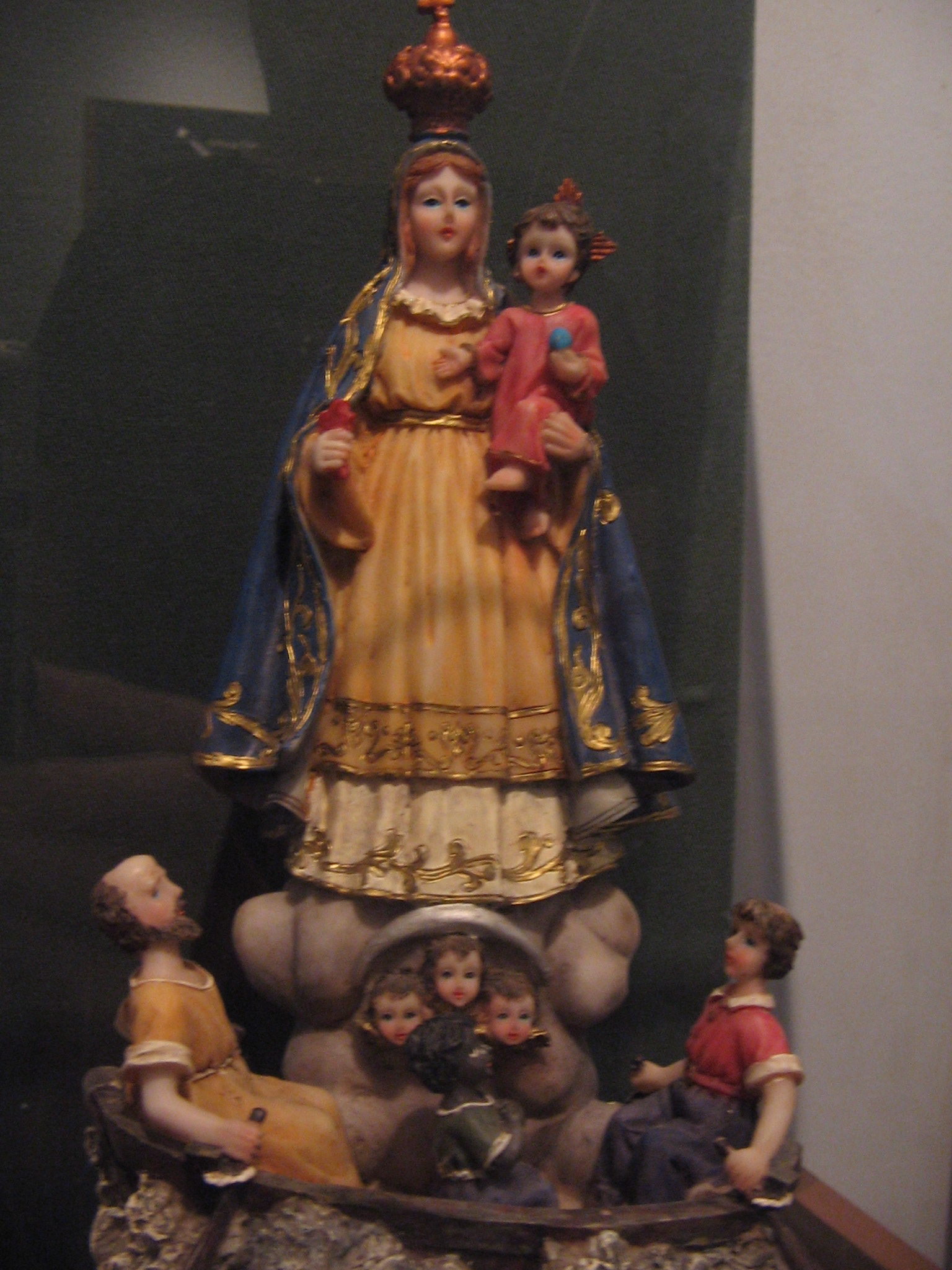
The Seaport also offers an exhibition called “Voyages” – a look at the way the sea has played and continues to play a role in the life of an America that most people associate with a large swath of dry land. The first display tells the story of a family of Cuban immigrants rescued from a tiny fishing boat while trying to get to the United States. A nearby display features Neustra Senora de la Caridad del Cobre. This mythological character is a goddess emerging from the conflation of the Virgin Mary and the African goddess (through the mediation of Santeria) Oshun. The story of the Cuban family associates the origin of this goddess’s concern with seafarers through the chance find of a statue of the Virgin floating at sea near Cuba in 1606. Our Lady of Charity, the Catholic version, is the patron saint of Cuba, and the syncretism of these goddesses has led to a new mythological character on view in Mystic.
Neustra Senora de la Caridad del Cobre

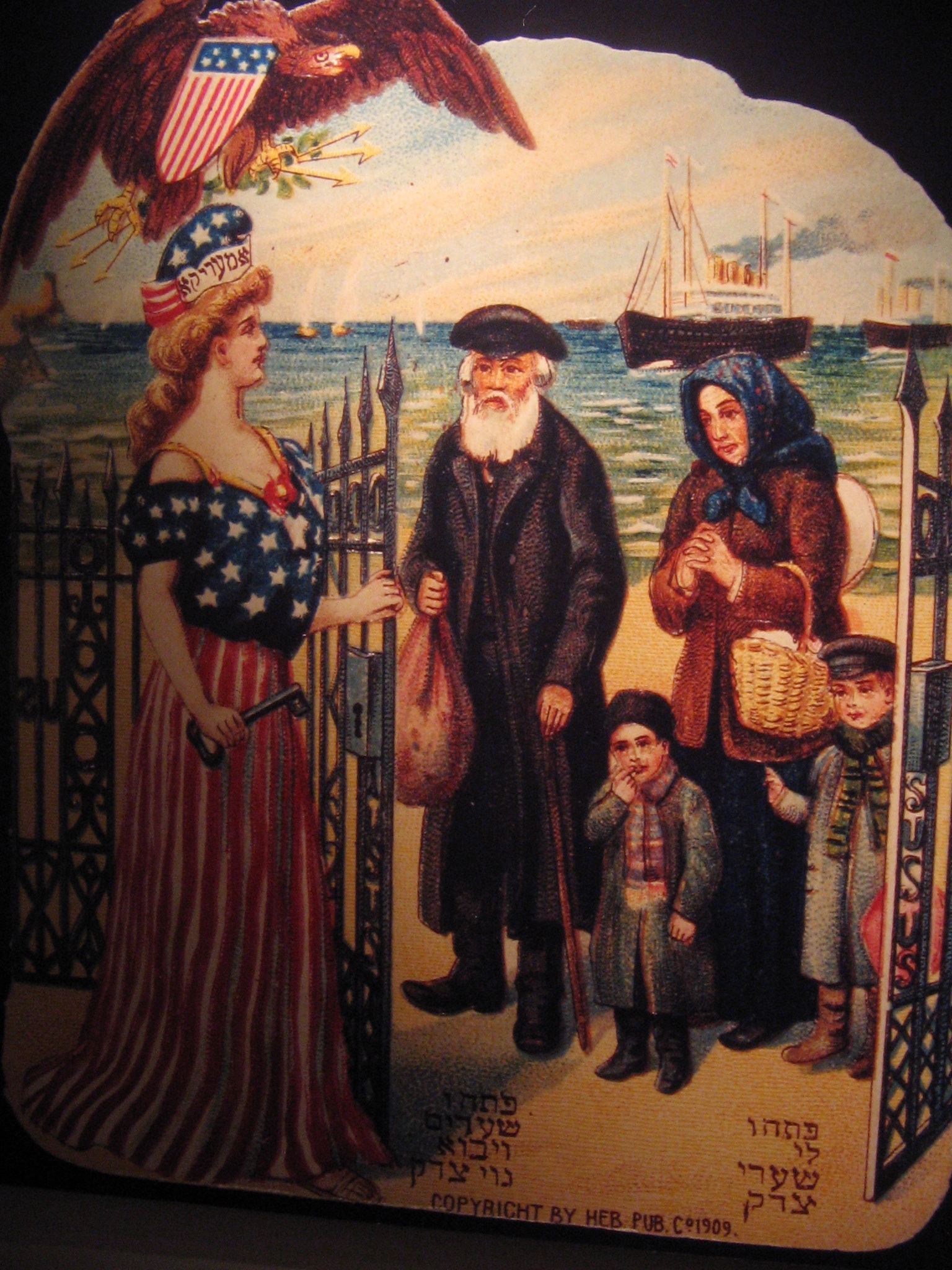
Further along in the same building, in the story of immigration, is the painting shown below. A Jewish family is shown disembarking before a Lady Liberty with “America” written on her crown in Hebrew. The inscription on the sand asks whether the new world has room for the righteous. It is a poignant reminder that acceptance in the United States religious world is often a difficult one. Even today non-Christian religions are viewed with suspicion by many in America. The sea has brought us all together, however, since historically immigration has meant crossing the great waters somehow. One of the gifts of the sea that we are still struggling to grasp is what it means truly to offer freedom of religion to those from far distant outlooks in a world that daily requires less of the gods.