
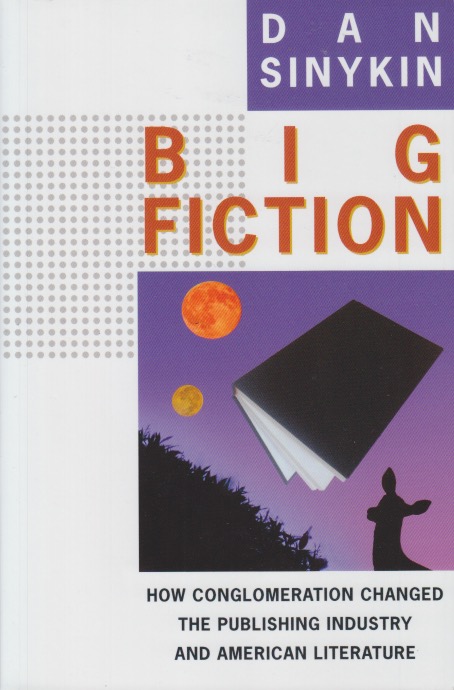
I have tried my hand at fiction writing at least since I was ten. My first attempted novel was at about fourteen. Fiction has always been a large part of my life. Now I work in publishing and still struggle to get my fiction published. I picked up Big Fiction by Dan Sinykin because of another blogger praising his work. Subtitled How Conglomeration Changed the Publishing Industry and American Literature, it is an ambitious book. I learned a lot by reading it but also found myself putting the book down in a huff. Not because of the author, but because of the subject. I grew up in the sixties and seventies, before conglomeration took over big fiction. Conglomeration is simply the practice of companies buying out other companies. Even I know that diversifying your portfolio is considered good business practice. So companies buy one another out. Thing is, that makes a difference as to what is available to read for the general public.
I’m old enough to idealize elements of the past. I’ve worked in the corporate world for nearly a decade and a half now and I miss the time prior. Still, this is fascinating history to read. Currently there are five major fiction publishers (all of which also publish nonfiction). They are Penguin Random House, HarperCollins, Simon & Schuster, Hachette, and Macmillan. How did there come to be only five? Sinykin will answer that question for you. He also explores the smaller nonprofit publishers and the independents. There’s one big independent publisher left, Norton. Reading through this book I realized how woefully inadequate my knowledge of fiction authors is. I read a lot, but there were many, many names I didn’t recognize. Sinykin tells the stories of many people whose individual tastes may very well have decided which authors you’ve read.
Publishing is a vast and sprawling world, but a very small industry. In these days when self-publishing is widely practiced, and some authors make a living writing, publishing, and promoting their own books, it may seem that big fiction is less relevant. Still, these publishers stock the shelves of Barnes & Noble as well as your favorite indie bookstore. A few things stand out for me: all of this development is recent. Most of it happened during my lifetime. There are still powerful editors, but they don’t have the power they used to. And business-speak has become the language of publishers instead of the countercultural impulse that drives many writers. This book is an education in itself, even for those of us who work in the book business.
 Steve A. Wiggins