Vox Humana

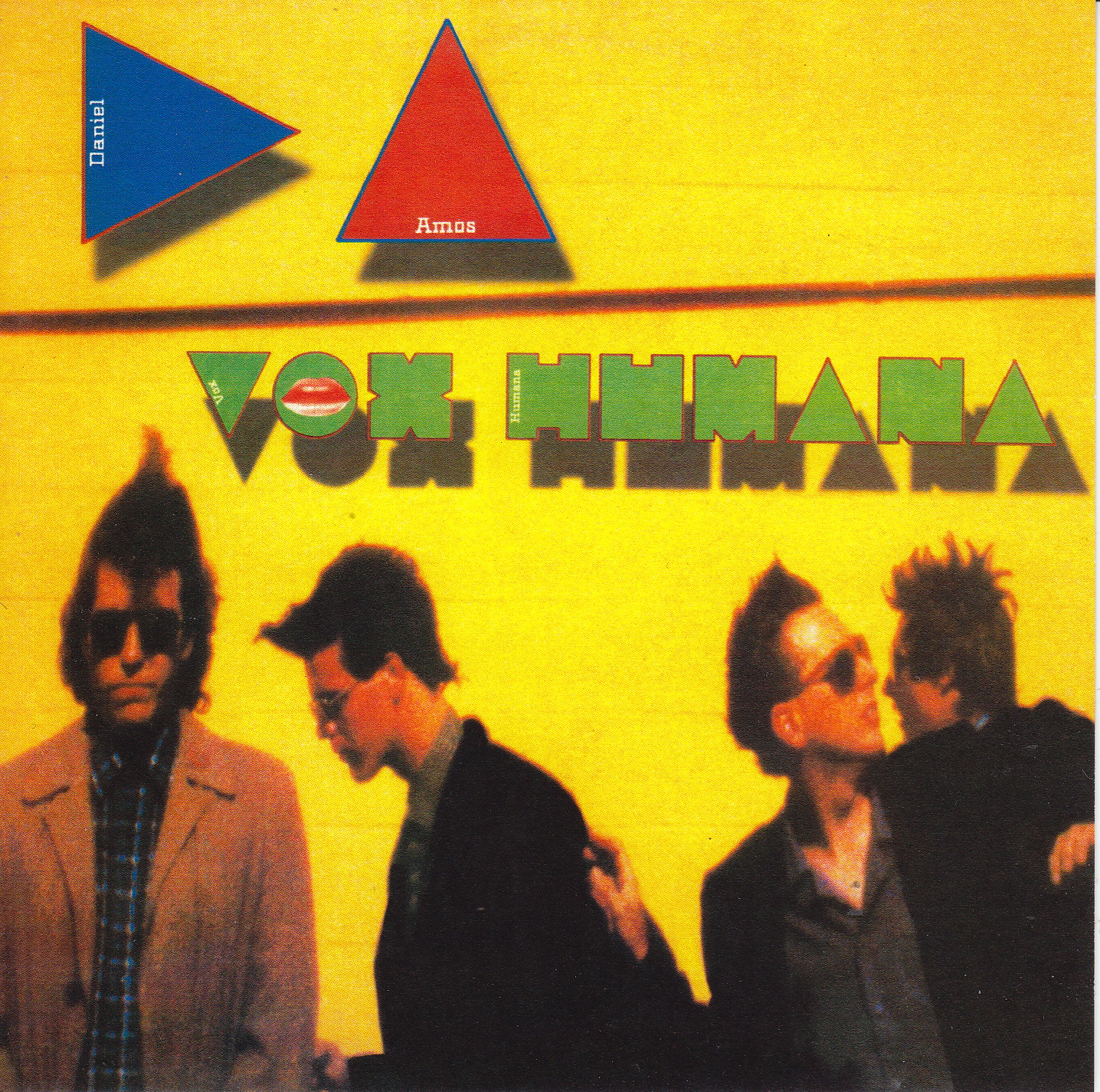
You know how it is when you get a song stuck in your head? This is one of the few scenarios that will actually lead me to buy music. I have very specific (some would say “odd”) tastes in music. I love the originals. Long ago I ceased listening to “Christian Rock.” It was a thing when I was attending a Christian college, of course. Many who feared the terrors of the drugs and sex part felt they could be slightly rebellious with the rock-n-roll side of things by listening to various groups that pounded out evangelistic messages with electric guitars and overheated amps. There were, however, amid those groups pretending they were a saved Metallica, some real artists. Somehow some of the songs of Daniel Amos came to my mind. I had all four albums of the ¡Alarma! Chronicles—still do up in the attic somewhere—but we left most of our sound system in Wisconsin. I hadn’t bothered to buy a new needle for my turntable, and I’m not sure I still have the patch cables to connect it if I did. It’s been at least a decade since I heard Vox Humana. The internet made it too easy.
VoxHumana

To understand my quest, you have to imagine the context. It was 1984. I was a rising senior in college and I hadn’t seen much of the world. Having grown up in humble circumstances, I didn’t have money for travel or many material things. When my roommate took me to visit his house and he introduced me to a friend who had a room dedicated to sound equipment and albums, I felt as though I was on another planet. Daniel Amos’s Vox Humana had just been released. Our host slipped it from its yellow cover and played it with all the blinking green and red equalizer lights flashing and I was completely blown away. It was Christian music unlike I’d ever heard. In fact, it was ahead of much of the pop music of the time. As soon as I got back to campus I ordered it from the Christian bookstore. The songs still come back to me when I least expect them to.

Call it a guilty pleasure. My theological outlook is lightyears away from what it was when I was an undergraduate. I still haven’t seen much of the world, but what I have seen of it has changed me in ways that there’s no means of reversing. Although I really can’t afford to be buying music—we’re only paying for electrons any more—I just couldn’t help myself this one time. It’s no longer the ‘80s, and the 1950s sci fi movies DA references in the lyrics are closer in time to the album’s initial release than that release is to me now, but still large swaths of the lyrics are imprinted in my mind, taking me back over the decades. It’s the music of my youth. And it was edgy then. It sounds more conventional, perhaps even old fashioned now. Still, when you get a song stuck in your head, pagan or Christian, there’s really only one thing you can do about it.


Driving the Point

“I drive my car, it is a witness. My license plate, it states my business.” The words are from a song by one of the most creative Christian Rock groups ever, Daniel Amos. While I don’t listen to Christian Rock much anymore, I’ve always appreciated the fresh outlook of this particular band, which was, at least in the ‘80s, ahead of the curve. The lyrics came back to me when reading about a legal suit in New Jersey concerning vanity plates. Like many states, New Jersey has rules against offensive words being spelled out on license plates. When a woman applied for a license reading “8THEIST” it was rejected as “offensive to good taste and decency,” according to a story in NJ.com by Thomas Zambito. Trying the application with “BAPTIST” led to no objections. Others have tried other variations on the word “atheist” and have come up with rejections as well. In a country that prides itself on religious freedom, this is ironic, to say the least.

I’m a bit too pragmatic for vanity plates, or even bumper stickers. Having had to commute long distances after being dismissed from my post at Nashotah House, I often thought that I didn’t want people to know too much about me by the decoration of my car. The culture wars, played out a few years ago by Jesus fish, Darwin fish, Jesus sharks eating Darwin fish, and so on, seemed an opportunity for aggression to me. Already when I’m driving and someone cuts me off or does some dangerous maneuver in traffic, they frequently bear some paraphernalia advertising Jesus on their bumper. Maybe it’s a prayer for protection that allows for stupid driving. It certainly isn’t a witness to the “others first” theology that characterized Jesus’ teaching.

IMG_1216

Is it an affront to decency to be an atheist, or only to advertise being one? The culture wars that plague the United States are based on instant prejudices that make decisions about a person without bothering to witness their behavior. Behavior, after all, is the true measure of goodness. Even higher education is not immune to this system, especially in religion departments. We only want to be surrounded by those who believe like us. Somewhere in this unholy mix is the neglected idea of doing the right thing. Ours is a culture in love with appearances. We object when Muslims want to build a mosque. We object when Roman Catholics run for President. Weren’t not even sure that we really trust the Presbyterian next door. Our differences, one of the historic strengths of this country, have become a liability. Especially when behind the wheel. How different driving would be if we’d just assume that no what the vehicle says, it is piloted by a human being just like us, no matter who they believe the co-pilot might be.


God Discount

God is great, despite what Christopher Hitchens wrote, at least, that is, if you want to save 15% without having to talk to a gecko. According to Mulder’s World—I want to believe that what I find on this site is true, but often I find myself feeling more like Scully—Mary’ Gourmet diner in Winston-Salem, North Carolina gives a grace discount. Well, perhaps this is believable. Praying in public has a long pedigree. This past Corpus Christi as I was driving back into town after a day out, I saw a procession walking down the street a few blocks from the local Catholic Church. Vested and carrying a monstrance with a humeral veil, the priest led the faithful out in public for a little recognized festival many suppose to be named after a city in Texas. Actually, I was an acolyte for Corpus Christi one year at the Church of the Advent in Boston. The well-heeled of Beacon Hill, however, knew to expect us out on the genteel streets. Private prayer in public, however, is something quite different.

As a very religious teen, I often went to United Methodist Youth events with the other faithful young. We would stop into restaurants on our long drives and make a show of praying amid the heathen. Some of us (not me, I assure you) even left Chick tracts instead of tips. If we’d ever ventured into Dixie, we might have had a discount. The problem with offering a praying in public discount is that it is impossible to tell if such shows are sincere. I have sat through many such episodes, wondering about Jesus’ statement “But thou, when thou prayest, enter into thy closet, and when thou hast shut thy door, pray to thy Father which is in secret; and thy Father which seeth in secret shall reward thee openly.” Well, that was only the Sermon on the Mount. Here we’re talking fifteen percent! “For where your treasure is, there will your heart be also.” This gecko winks.

IMG_1502Public displays of piety are not uncommon. I spent yesterday at the local County 4-H Fair on a rare day off of work. The Gideons, as always, were there handing out New Testaments. Let your light so shine—they are bright orange. Religious freedom ensures that prayer in public is kosher, as is agnosticism in public. Who is harmed by a public prayer? In that diner, who is made uncomfortable? Sometimes the innocuous act of kindness is a sign of mature morality. How many times—isn’t it nearly always?—does that car cutting you off in traffic have a Jesus fish plastered to the back? “I drive my car,” Daniel Amos sings, “it is a witness.” What you truly believe shows up when you’re behind the wheel more than when you’re behind the napkin. The truth may be out there after all. In the meanwhile, my tip’s on the table.


Heavy Metal

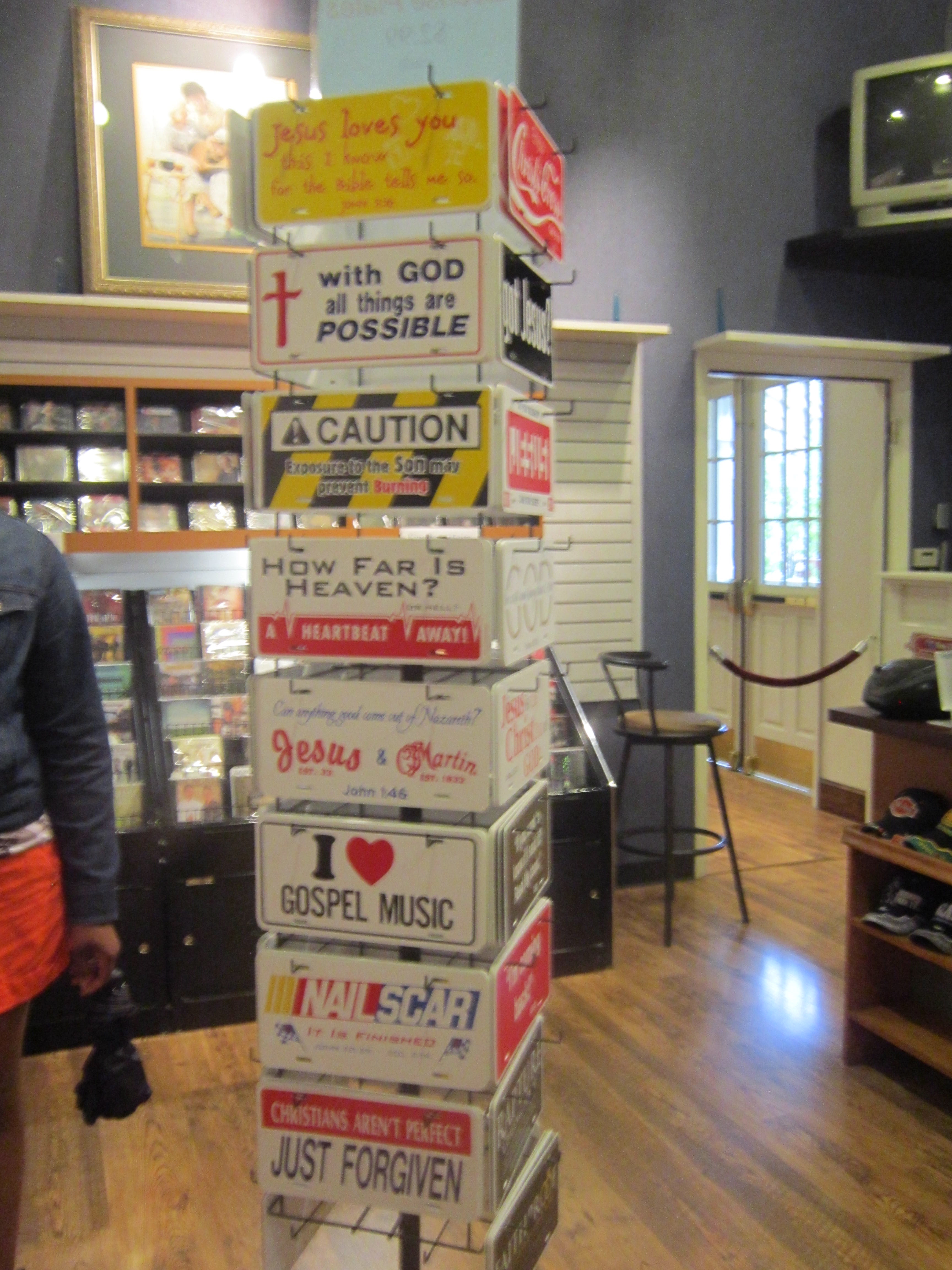
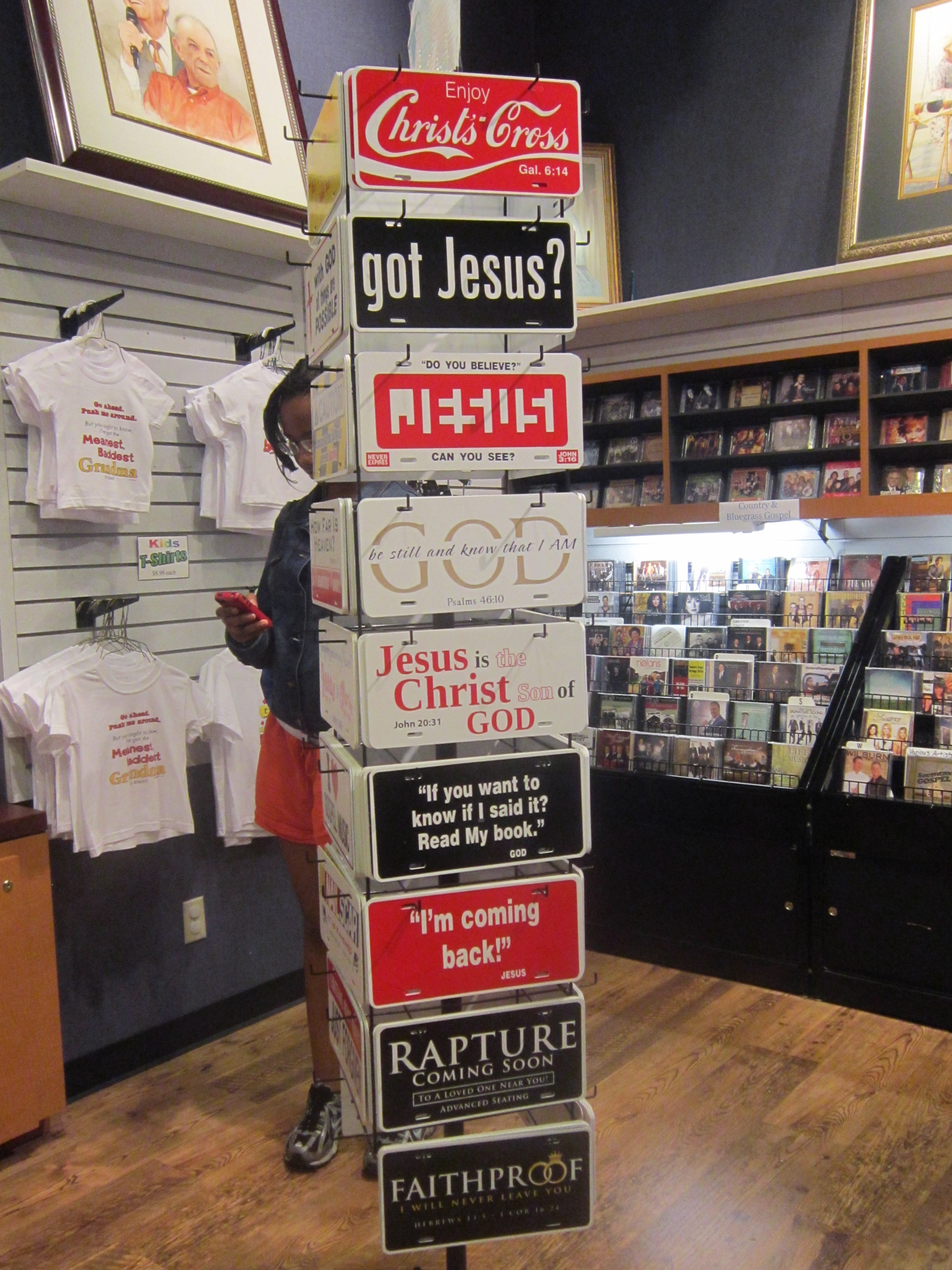
“I drive my car, it is a witness. My license plate, it states my business.” Only the hardcore may be able to place this quote from Daniel Amos’s impressive 1984 album Vox Humana. Even when I moved away from Christian rock after college, I kept Daniel Amos in my head—this is truly inspired artistry. Pop culture and religion courses have become a standard offering in religion departments over the past few years. We are, even as secular as we may be, a very religious society. When my daughter’s high school music program went off on its biannual concert tour, this year they headed south. On the itinerary: Dollywood. I came near to Gatlinburg, Tennessee on the trip I made to South Carolina to see my father for the final time, but I did not stop. I am told, however, that Dollywood is something to see. In one of the gift shops, my daughter snapped a couple of photos for my blog that draw all these disparate thoughts together.

IMG_1213

What we put on our cars is what we want the world to know about us without ever seeing us. This makes cars a perfect evangelistic tool for both the shy and the aggressive. The car becomes a tract. A statement that this vehicle is driven by an evangelical. I’m not sure it makes me feel any safer on the road. How many times have I been rudely cut off in traffic only to find a Jesus fish winking at me from the bumper of the offending car? Sometimes swallowing a Darwin amphibian. Religion speaks more loudly behind the wheel than it does from the pew. In the stress of traffic, what do we really believe?

IMG_1215

Cars are also the ultimate tools of self-assertion. Human beings, with little natural armor or predatory equipment, surround themselves with metal and accelerate themselves at velocities that nature never intended. We feel godlike behind the wheel. That metal box in front of us, driving too slowly, or having just pulled some stupid maneuver, is not a person. It is a thing. And those who choose to declare their faith on that object are under constant judgment. Well I know the evangelistic pressure to witness—fundamentalists are expert at manipulating guilt. Put these plates on your car and the world will know what you really are. But be careful. It’s not how you say, but how you play that will express what you truly believe.


Profit Priest and the King

As a staid academic with the internal passion of a Bruce Springsteen or Lou Reed, if I had any musical ability I’d have opted for a life on the stage. As I struggle to forge my passion into words on paper (or in electrons) I consider those who should have perhaps considered other options as well. I have never really been a fan of Christian Rock. The whole rebelliousness and sense of sticking it to the man lose something when you bow your head in submission the Sunday after and ask some ordained member of the establishment for forgiveness. It tastes even worse than Light Rock, the talc of real rock world. Nevertheless, there have emerged in the strange history of Christian Rock a few true innovators who have not only challenged Christian convention, but who have taken music itself in new directions.

Norman's Iconic Look

Norman\’s Iconic Look

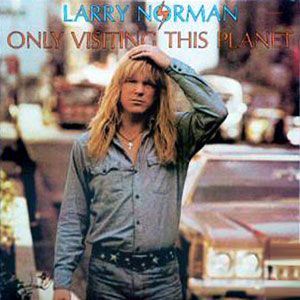
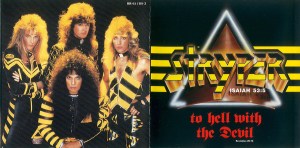
My favorite among the innovators has always been Larry Norman. The original “Jesus Freak,” Norman appeared on the San Francisco rock scene only to be rebuffed by Christian artists who held Pat Boone as a kind of icon, and rejected by mainstream rock as being some kind of Christian fanatic (he was). Norman’s music, however, was a strange blend of tradition and visionary foresight. When they saw there was money to be made, along came other artists trying hard to match Norman’s footsteps, most of them falling far short. Daniel Amos, probably one of the most unusual Christian groups ever, proved themselves way ahead of the curve, and if they’d had a good publicist might have made secular airtime based on their forays into retro and punk before they were trendy. Stryper, a hair band of heavy metal stripe, threw Bibles into the crowd at concerts.

Yes, they're dudes, Father forgive them!

Yes, they\’re dudes, Father forgive them!

They later disbanded because of their concern with hypocrisy, something a true rock-n-roller would never feel compelled to do. Meanwhile, mainstream Christian Rock rendered itself into treacle that would easily wash off with a shower of pure intentions.

Rock addresses head-on those gritty, messy, and even dangerous elements of human life — our emotions. After some 4000-plus years of organized religion we still have difficulty addressing or accounting for their insatiable pull on us. Staring out over the lecture theater and toting up the number of ipods present, I would have to guess that music still meets a need that religion might have missed.

A few years back, in a wave of nostalgia, I went to see Larry Norman in concert. I’d grown beyond any real enjoyment in the genre, but here was a true innovator, one whose name very few Christian Rock aficionados even recognized. The concert was held at a Christian college where there were maybe forty folding chairs arrayed in a depressingly small space in the gym. Norman could still rock, his acoustic guitar and spare band providing all the support he needed. I even had the chance to chat with him after the show; no security guards need apply. As I later reflected, perhaps this is what my life would have been like if I’d had some ability and taken to the stage instead of rocking the glamorous adjunct professor gig. While having my eardrums taken through their paces at an Alice Cooper concert last fall along with a bunch of other fat, balding, wannabe rebels I experienced a kind of secular epiphany. Alice had converted to Christianity some years back — seen chumming with none other than Pat Boone himself — and his music at the time suffered. Now that he’s returned to his macabre fantasy world, his ability to churn out compelling music has returned. Outside, away from the cannabis fumes and liquor-enhanced air, although I didn’t personally participate in their consumption, for a moment it felt like I’d lived my rebellious dream.