
When the same religio-historic event is described in three consecutive books I’ve read on diverse topics, I start to consider what strange form of coincidence is operating here. Coincidences are some of the potent spices that give life flavor—the tragic death of Suzanne Hart on Wednesday when an elevator crushed her to death occurred the very day my bus was late and I took the route directly past her building to avoid the crowds on 42nd Street. What was the series of uncanny events that led me to where someone was about to die? It hardly seems within the divine character. So coincidences have been on my mind of late.
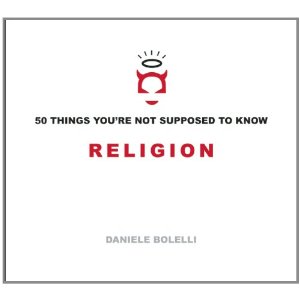
 The last three books I read have all discussed the Taiping Rebellion that took place in the mid-nineteenth century. Despite having studied religion all of my life, I had never come across this religiously motivated violence until reading Daniele Bolelli’s 50 Things You’re Not Supposed to Know: Religion. Unrest in imperial China had existed before, but Hong Xiuquan, the leader of the rebellion, was motivated by religion. Xiuquan was a Christian (no doubt the fruit of missionary activity) who came to believe that he was Jesus’ younger brother. His motivation for the rebellion was based on his aberrant version of Christianity that quickly grew into a full-fledged movement calling itself the Heavenly Kingdom. Basing itself in Taiping, the movement adopted the early Christian practice of communal property and came to rule over about 30 million people. The numbers are what is truly stunning about this tragedy. When the conflict with the Qing Dynasty ended, about 20 million people were dead. The number is so high as to shut down comprehension. So many dead because of religion. It has a corporate feel to it.
Religion evolves. When it is spread into new cultures, syncretism takes over. Many religious believers, through faith, insist that their religion is the same as the founder propounded. Such simplistic understanding is not true. Culture, just like biology, lives and grows through evolution. The American Christian dressed in expensive clothes in a phenomenonally costly mega-church with a shining preacher bearing a million-dollar smile is about as far from a property-less, vagabond carpenter from Nazareth as you can get. Yet we still pretend. If that pastor says he is Jesus’ younger brother, chances are good that many will believe him. Stranger things have passed the lips of televangelists. Emotional involvement in religion easily leads the zealous to extreme action. History has demonstrated this time and again. The Taiping Rebellion of the Heavenly Kingdom proves the point, even if we’ve never heard of it. Maybe it is no coincidence after all.
 Steve A. Wiggins