Okay, Look Now

When you think of Daphne du Maurier’s film adaptations, Alfred Hitchcock probably pops to mind.  He shot Rebecca, Jamaica Inn, and The Birds, based on her works.  One non-Hitchcockian adaptation is Don’t Look Now, by Nicolas Roeg.  I’d made the decision to read the story first—which was a good idea—but it was long enough back that I couldn’t recall many details.  This was also good.  Don’t Look Now was the main release by British Lion, in Britain, with the B movie, The Wicker Man, as its follow-up.  While writing a book about the latter movie I’d wondered why this one was chosen as for lead billing.  It’s certainly more mainstream, and an art film in many ways.  Typically labelled a “thriller,” it’s also called “horror,” causing me to question the relationship between the two.  In any case, the movie.

Since this was released in 1973 I won’t worry about spoilers.  The film is a fairly faithful adaptation of du Maurier’s story as well.  Laura and John Baxter are in Venice, trying to recover from the accidental drowning of their daughter.  John has work there, restoring a church—there’s plenty of religious imagery—and Laura befriends two older women.  They’re sisters and one of them is blind but also psychic.  Heather, the psychic, claims to see their drowned daughter and Laura finds relief and comfort from hearing about it.  John is skeptical, but, Heather claims, he also has psychic abilities.  John begins to think he’s seeing their daughter still alive and she leads him down isolated alleys—this is dangerous because there’s a serial killer on the loose.  John then thinks he sees Laura with the women after she has flown back to England to attend to their son at his boarding school.

Movies, like stories, are open to interpretation.  Mine is that the psychic phenomena in the film are portrayed as real.  I had the same impression from du Maurier’s story.  Much like The Wicker Man, appreciation for Don’t Look Now has grown over the years.  It was fairly well received upon release, but is now considered even better than it was at the time.  Maybe not as essential as some Stephen King movies, it is nevertheless believed to be one of the more important films on the horror palette.  I’d been prompted to watch it by several references I’d recently come across.  Typical for me, however, I took it in the wrong order, having seen The Wicker Man years ago.  Classics back then, it seems, took longer to be recognized.


Flights of Horror

I’m never quite sure where to put him. Alfred Hitchcock, that is. Part of the problem is that “horror” is a very slippery genre. Most people classify much of Hitchcock’s work in the “thriller” genre, wanting to avoid the disrespectful older cousin, horror. I recently rewatched The Birds, a movie I first saw in college. You see, Hitchcock is an auteur demanding respect (never mind that many horror directors are highly educated and sophisticated). Even dainty colleges like Grove City considered him worthy of students’ attention. But while watching the extras it became clear that other horror directors considered The Birds horror, or, as they put it, Hitchcock’s monster movie. With its famously ambiguous ending, the film is still a frightening experience. And yet we consider it safe, because it’s Hitchcock.

I think about this quite a lot.  Even in Holy Horror I wondered whether including Psycho was fair game.  There’s no doubt that the remake is horror, and Robert Bloch, the author, was a horror writer and friend of H. P. Lovecraft.  But Psycho is Hitchcock.  Doesn’t that make it more respectable than mere horror?  Horror is often defined as being, or having, monsters.  That’s a bit simplistic in my book, but it is workable.  Pirates of the Caribbean movies all have monsters in them, but they’re blockbuster adventures.  Have the monsters deserted horror?  Or maybe is it that we have an ill-fitting genre title that we just don’t know what to do with?

The Birds is a scary movie.  Animals mass and attack, with the intent to kill.  Daphne du Maurier wasn’t really considered a horror writer, but her books and stories were adapted into horror films.  Like Hitchcock, she’s often considered above mere horror.  It seems that we’re being a bit dishonest here.  Why are we so afraid of horror?  The category, I mean.  Perhaps because the slashers—which Psycho kinda initiated—gave horror a bad rap.  Too much blood.  But there’s blood in The Birds.  Is it the mindless desire to kill?  Just ask the residents of Bodega Bay after the fire broke out.  It seems we have a real prejudice on our hands.  Horror grew up on the wrong side of the tracks and there’s nothing that can be done to make it respectable.  Horror fans object to recent attempts to call certain films “elevated horror” or “intelligent horror.”  Those who use terms like this sometimes imply that the rest of it is, well, for the birds.  It’s time, perhaps, for a new category.


Okay to Look

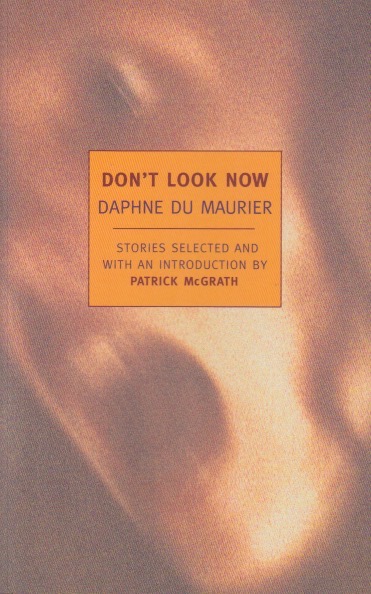
I admit to having learned about Daphne du Maurier from Alfred Hitchcock, and then only after my wife pointed her out to me.  I read our copy of Rebecca with appreciation—a good gothic novel will never steer you wrong.  I saw the movie first, however.  Learning that she’d also written “The Birds” (not the screenplay), I tried to find a book of her stories in various bookshops only to discover that American bookstores tend not to stock her work (beyond, perhaps, Rebecca).  Eventually I started searching online for collections that contained “The Birds.”  I settled on Don’t Look Now, which includes that story as well.  When researching The Wicker Man I learned that Don’t Look Now (the movie) had A billing to the former film’s B place.  I decided I’d read the story first, which I’ve now done.

There are several intriguing tales included in this particular collection.  The one that I found most haunting was the final story, “Monte Verità.”  The narrative of a woman who finds peace in an ancient commune on the titular mountain, it was difficult to read without wanting to find that kind of satisfaction.  Particularly for someone who has had lifelong cenobitic tendencies.  Those of us who struggle against the 925 life, beholden as it is to the great god capitalism, and who require time to think, contemplate, and just to be, this mythic mountain does indeed sound like finding what it is that you’re seeking.  Du Maurier tells the story with such longing that you think she must’ve been there herself.  As a writer I’m sure she had been, in a sense.

Du Maurier was, it should be no surprise, quite a versatile writer.  Some of these stories are gothic and others more naturalistic.  They do tend towards the darkness, but not the kind that leads to despair.  They also reflect a time in publishing when longer short stories were acceptable.  (Most accessible online fiction publishing venues cut their limits far too short these days.)  Some stories really take time to get into.  “Monte Verità” is one such, as is “Don’t Look Now.”  They take time to build up.  “The Birds” isn’t exactly brief either.  The trend these days is for the quick payoff.  We have lost something as a culture with such short attention spans.  This collection of nine pieces provide a good sample of different shades of darkness.  And they encourage further reading.


Dangerous Fiction

At the suggestion of a friend, I recently watched the documentary Daphne du Maurier in Rebecca’s Footsteps.  I confess I haven’t read much of du Maurier’s work, yet.  From a family fairly well off, du Maurier, perhaps unusually for a writer, found early success and was able to make a living from writing.  Like many authors she valued her time alone, but also had basic human needs.  In keeping with her gothic sensibilities, she fell in love multiple times, both with men and women.  And she lived in that kind of fantasy world that fiction writers often inhabit.  For some reason I had it in my head that she had died young, many years ago.  It was somewhat surprising to learn that she lived until I was 26.  I can make the legitimate excuse that I didn’t grow up in a literate family, though.  I learned about du Maurier from my wife.

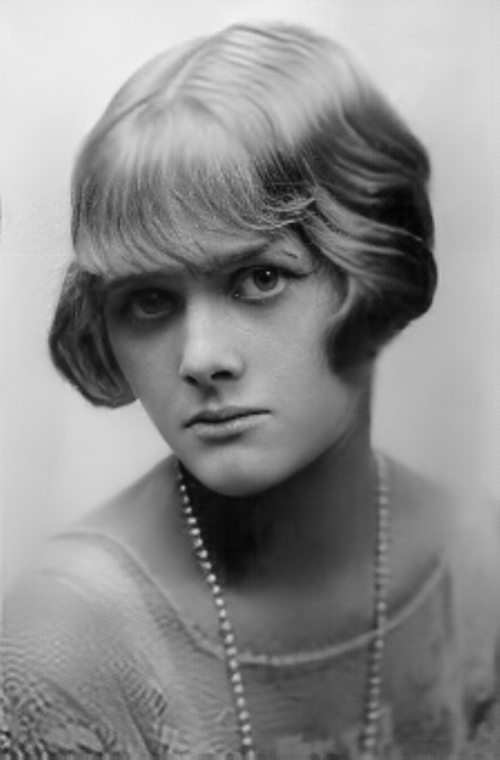
Copyright released photo, author unknown; via Wikimedia Commons

That doesn’t mean, however, that I didn’t know her works.  I first saw Alfred Hitchcock’s The Birds when I was in college.  In those days I hadn’t yet learned to pay attention to who the writer of a film was.  That intimate interplay between written literature and film easily ties me into celluloid knots.  My wife is a Hitchcock fan and together we watched some of his earlier du Maurier adaptations, such as Jamaica Inn.  Then she introduced me to Rebecca, du Maurier’s early and best-known novel.  We watched the Hitchcock rendition.  The documentary makes the point that du Maurier’s life, in some ways, played out that novel.  Writing can be a dangerous business, especially fiction.

My own most recent book, on The Wicker Man, which I hope will see the light of day, brought me back into du Maurier’s orbit.  The Wicker Man was, of course, nearly disowned by the studio that had sponsored it (British Lion).  Half-hearted about the effort, they made it a B movie, showing it after Don’t Look Now, a film I admit that I’ve never seen.  I learned from watching this documentary that this was yet another du Maurier story.  I’ve read one or two of her short pieces—they aren’t commonly found in American bookstores, although I see them whenever I visit England—and clearly I need to read more.  That brings up, however, the age-old dilemma: should I try to read the story before I see the movie?  I think I know what du Maurier’s answer would have been, and I think it wise to follow her advice.


Bird Land

Since I like to blog about books, my usual reading practice is to stick with a book once I start it.  This can be problematic for short story collections because often there’s one in particular I want to read.  Somewhat embarrassed about it, I have to confess that sometimes it’s because I saw the movie first.  So it was with Daphne du Maurier’s “The Birds.”  Du Maurier, the daughter of a father who also wrote horror, caught Alfred Hitchcock’s attention.  Several of his movies were based on her works.  Not all of them can be called horror—a genre that’s difficult to pin down—but they deal with gothic and thriller themes that had an appeal for Hitch.  In fact some analysts date the modern horror film to the period initiated by this iconic director.

I have a collection of du Maurier’s short stories, written in the day when 50 pages counted as a short story rather than “product” that could be “exploited” in various formats.  (Today it’s not easy to find literary magazines that will publish anything over 3,000 words, or roughly 10–12 pages.)  In any case, “The Birds” is an immersive tale.  The movie is quite different, of course, set in America with a cast of characters that can only be described as, well, Hitchcockian.  Du Maurier’s vision is much closer to the claustrophobic pandemic mindset.  A single English family, poor, tenant farmers, far from the centers of commerce, must figure out how to survive the bird attacks on their own.  The suddenly angry birds attack their hovel in time with the tides (they live near the coast) so the family has to gather supplies between attacks and try to last another night of pecking and clawing.

The story is quite effective.  Reading it suggests the importance of self-reliance and willingness to accept a changed reality on its own terms.  No explanation is given for the birds’ change of attitude.  Human intervention in the environment is supposed but how would a simple family living of the fringes of the fabric woven by the wealthy know?  Forced to react, they try to keep the kids calm while knowing, at some level, this can never end well.  The movie maintains the ambiguous ending, which is probably what makes it so scary.  Corvid or covid, there are things out there that drive us into our homes where we must shelter in place.  Although I didn’t read the whole book, this choice of story seems strangely apt for the current circumstances.