Elementary, Academia

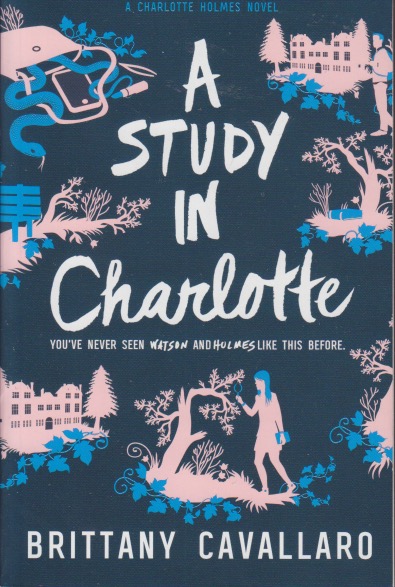
Continuing my dark academia streak, I enjoyed Brittany Cavallaro’s A Study in Charlotte.  Although I’m not really a Sherlock Holmes fan, I know enough of the lore to appreciate how deeply steeped this novel is in Sherlockiana.  In the world of the novel Sherlock Holmes and John Watson were real people.  Watson wrote the books authored by Sir Arthur Conan Doyle in real life.  The books are well known and widely read in the universe of A Study in Charlotte.  The adventures in those novels and stories are, here, factual.  The book is narrated by Jamie Watson, a descendant of John Watson.  While at Sherringford Academy in Connecticut he finally meets Charlotte Holmes, descendent of Sherlock.  They become friends and have a campus murder to solve (thus, dark academia).  I have to confess that I had the image of Jenna Ortega, of Wednesday, in my head as Charlotte.  The two (Wednesday and Charlotte) are similar in many ways.

Although flawed, Charlotte is an inherently likable character.  The story contains enough fun to prevent it from being too grim, even with the death of a Sherringford student and the violent attack of another.  The murderer goes to great lengths to frame Charlotte, and the novel introduces some of the Moriarty descendants as well.  Watson tries to get close to Holmes, but she holds everyone at a distance.  The story includes some family dynamics—the Holmeses rational to the point of being cold, Watson’s mother constantly warning him to stay away from Holmeses while his father eagerly observes how Charlotte works.  Putting the action in Connecticut allows for a trans-Atlantic element since both families are, naturally, British.  The story is well told.

The novel should appeal to those who enjoy detective stories and who appreciate a smart, if troubled female lead.  In this latter aspect, Cavallaro shows herself a perceptive Doyle fan.  Sherlock Holmes isn’t always a perfect character.  He uses drugs and is an eccentric.  This story transfers all of that to Charlotte but making her a young woman while Watson is a rather love-lorn young man, opens the potential for a relationship unlike the classic Holmes and Watson.  I don’t say “romantic” relationship, because Charlotte isn’t really receptive to romance, although her strict rationalism wears thin when something goes seriously wrong.  We all like to believe that there are people a few steps ahead of everyone else, as long as they’re good.  The Moriartys are also masterminds but the novel doesn’t allow us to decide that they’re all bad.  This is an intriguing tale that fits into dark academia in an elementary way.


Spades Are Trump

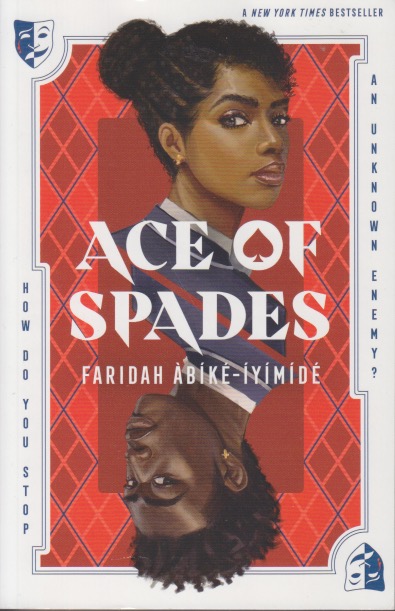
Sometimes it feels like the world is against you.  I can imagine that if you’re African American it feels like that much more often than if you’re not.  Racism, systemic and horribly pervasive, should disappear with education and with exposure to other people and cultures.  Still it persists.  Faridah Àbíké-Íyímídé’s novel Ace of Spades, conveys what it feels like to be singled out because of race.  This it does in a dark academia setting.  Nevius Academy is a private school where typical teen concerns loom large—sex, drinking, getting into a good college.  Chiamaka is a queen bee, a hard-won position that she struggles to keep her senior year.  Devon is also a senior, but from a poor family.  His mother works hard to keep him in the music program there, with the hopes that he’ll make it into a premier program to develop his talent.  Then threatening things start to happen.

Not natural allies, Chiamaka and Devon eventually team up when they realize that Nevius Academy’s secret society, Aces, attempts to destroy the lives of students of color.  The plot runs very deep; a white supremacist faction runs the school and for the pure thrill of it, ruins the chances of the two Black students they admit every ten years.  These two victims fight back.  Added to the racial drama, Devon is also gay.  As the story unfolds, Chiamaka discovers that she is also.  This proves yet another facet of life that leads to ostracism and, in Devon’s case, beatings.  In other words, this isn’t exactly a cheerful story.  Given what has happened politically in the past year it becomes believable that such places might exist.

The darkness of this academia is right there on the surface in this novel.  Our high school years are formative ones and the decision to build up only to destroy during this period is a particularly monstrous one.  In this case the school itself almost becomes a monster.  Fueled by the collective hatred of generations of administrators and alumni, it consumes students of color.  Of course, this story was likely intended as a parable.  Fiction is often where we cry out to be heard.  Àbíké-Íyímídé’s novel became a bestseller a few years back, so hopefully that cry has been heard.  To be effective, however, hearing is nothing without action.  Books can be agents of change.  Our current climate of trying to ban them only perpetuates misplaced hatred.  If only we could encourage reading and understanding instead.


Hunting Season

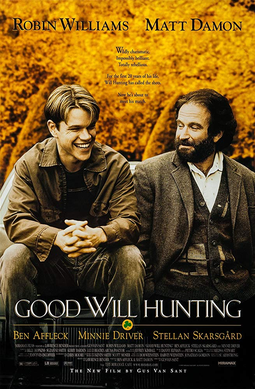
Back when it came out in 1997, I’d heard that it wasn’t a particularly happy movie.  It was a good movie but it dealt with two damaged men.  I was frightened off from seeing Good Will Hunting until it became associated with dark academia.  Will Hunting is a genius but he was born in a bad part of town and earned himself a police record.  He works as a janitor at MIT, but he also solves proofs instantly that professors labor over for years.  The only way he can keep out of jail, however, is with the help of a therapist.  Sean Maguire, who teaches at Bunker Hill Community College, is a psychologist who shares the background of Will’s rough neighborhood, but who recently lost his wife to cancer.  He’s been traumatized by his life and the two come to realize, once Will learns to trust, that they have helped heal each other.

The darkness in this academia is mostly social.  Even today, those of us who grew up in rougher locations don’t easily fit in academia.  We’re blithely ejected from it in favor of those with more proper backgrounds.  And connections.  There were a few personal triggers for me watching this movie, but I had been wanting to see it for some time.  Robin Williams, who plays Maguire, had starred in what may be the epitome of dark academia movies, Dead Poets Society.  In both he plays his part convincingly.  The term “dark academia” wouldn’t be coined, however, until the year after he died.  Education is supposed to lead us out of darkness, but given what humans are, it creates its own form of gloominess.  That’s probably why some of us find the category of dark academia so intriguing.  Compelling enough to get us to watch films that will perhaps come with their own brand of trauma.

Children born into similar, or nearly identical situations may react to it quite differently.  Although both in academic settings, Will and Sean have different experiences of it.  With his life experience as a war veteran, and an educated world traveler, Sean invested his life in love and helping others.  Will struggles with his fear of rejection to finally try to love someone more than upholding his own walls of self-protection.  There’s some real depth here.  It’s no wonder that the screenplay won more than a couple awards.  It would take another couple decades, however, until the category of dark academia would be named.  And if it hadn’t, I wouldn’t have risked watching this amazing movie.


Not Personal

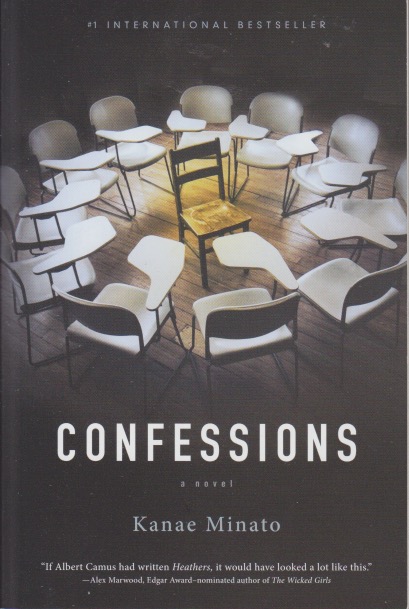
I’ve read that horror and dark academia go together.  You might almost say like peanut butter and chocolate.  One example of this is Confessions, a novel by Kanae Minato.  There are no monsters in it, but two people driven by revenge.  The difficulty with such a book would be to describe it without giving too much away.  So I’ll start by placing it in the category of dark academia.  It is a middle-school story with a distinct darkness and dread to it.  As a kind of epistolary novel, it’s told in several voices, beginning with a teacher in Japan and her final lecture to her students.  The lecture is final because her four-year-old daughter had died on the school grounds.  More than that, she was murdered by a couple of the students.  The novel explores the motivations and actions of the students involved, and sometimes their parents.  The school setting makes it dark academia.

The horror part comes through the slow building of the ruined lives that follow in the wake of the murder.  Believing that one form of revenge is at play, the reader finds subtle shifts as characters become monstrous.  One is clearly a sociopath.  Another is becoming one.  The idea of people harming one another because of their grievances is real enough.  We are emotional beings and sometimes our pain for those we love reaches a point of striking out.  Most of us learn to refrain, accepting that suffering comes into every life.  A minority insist on bringing others into their personal hell.  This novel explores people like that.  This makes it a horror story.

Originally written in Japanese, it has a kind of gentleness to it.  A decorum.  Underneath, however, trouble is brewing.  It accumulates over the novel as additional perspectives join the narrative of what happened.  Stories like this take a bit of rethinking for those of us who like to believe our narrators.  Most events have more than one outlook and Confessions ably guides us through several, reaching a conclusion that is both satisfying and chilling.  This is one of those novels that underscores what a fraught time middle school is.  Powerful emotions are at play and even though they may be sublimated for adults in society, they still exist.  We learn when we can and can’t act upon them, and how we may do so.  That’s a large part of education, beyond simply learning from books.  As reading becomes more and more electronic, I do wonder if we’re ushering in a new darkness that hasn’t been fully considered.


Writing Ghost

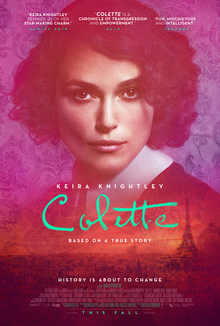
Despite AI, one of my great regrets is not having learned additional languages in high school.  I took four years of German and the one classmate I knew who was able to convince the administration took two languages, both Spanish and French (gasp!) to become a translator.  In any case, I regret being able to read French only haltingly, with a dictionary.  I watched Colette because it is the biopic of a writer, but I’ve never read any of her books.  I also watched it because it’s considered dark academia, but you already knew that, didn’t you?  Colette lived from the last quarter of the nineteenth until the mid-twentieth century.  Her first husband published a successful series of books she wrote under his name.  The two separated and Colette went on to become a reasonably successful writer in her own regard.

As with most biopics, the details are exaggerated, but still, this is the world of books where fiction and fact aren’t always so far apart as might be supposed.  Interestingly, articles on her husband (Henry Gauthier-Villars), known by the pen name Willy, state that he is best known as the first husband of Colette.  A self-promoter, he had other people do his writing for him.  The movie focuses on what happens when he tried to bring his wife, not yet established in her own right, into his band of ghostwriters.  Not having French, I have never really studied French literature.  If life allowed a bit more time, that is something I’d like to have done.  In any case, Willy was a libertine as well as a self-promoter, the sort that occasionally enters high government position.  And since he was involved in many affairs, Colette explored relationships with other women.  In other words, this is a story that is still very relevant.

Dark academia sometimes involves a literary life rather than a strictly academic one.  I applaud its love of books and book culture.  Some of us miss the days when it was possible to have publishers eager for new material, when books were generally respected instead of widely banned.  The darkness here is clearly the manipulative relationship Willy has with Colette.  He uses her lack of experience in the publishing world to his own advantage, and habitually making poor financial decisions, puts their living situation and security at risk time and again.  I sometimes wonder about my high school friend.  Did she become a translator?  And, if so, is her job, nearing retirement age, under threat from AI?  And this, in the span of a human working life.  A life of books.


Hallowed Halls

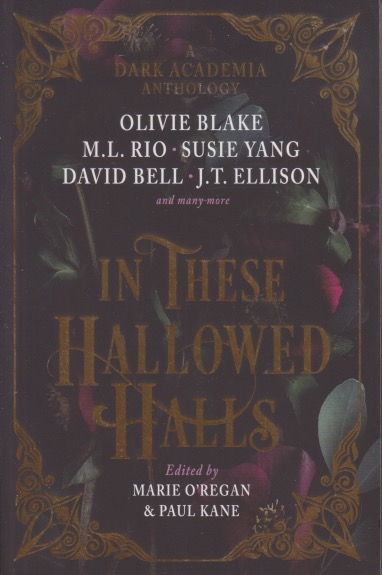
Every time I read a short story collection I tell myself I should do so more often.  Knowing that you’re only committing yourself for maybe thirty or forty minutes at a time is one way to incorporate more reading into a life that’s incredibly busy.  I read In These Hallowed Halls, edited by Marie O’Regan and Paul Kane, because, as its subtitle declares, it’s A Dark Academia Anthology.  As with nonfiction anthologies, it is a mixed bag.  The stories are all well written and all were enjoyable to read.  They also display some of the breadth of dark academia.  Most of the stories are literary (as a genre), others dip into science fiction and horror.  Dark academia doesn’t specify whether a book (or story) will be speculative or not.  As someone who writes short fiction, it seems that some of my tales might wag that way.

In any case, discussing a collection is tricky because there is such variety.  Some of the stories stayed with me beyond reading the next, which could be quite different.  Others I have to go back to remind myself what happened.  These days it can take several weeks to finish a book and a lot can happen in real life in that time span.  The stories that stay with me the most have obsessive narrators, or characters who are obsessed.  This kind of story, I know from experience, is difficult to get published.  Many of us who write, I suspect, do get obsessed.  An idea latches on and won’t let go.  Of course, most of us also have jobs that force the jaws open and drop us down in the world of the ordinary again.

Another thread that runs through many of these stories is how students struggle for money.  That’s true to life.  Thinking back to both college and seminary, there were times in both settings that I was working two part-time jobs as well as being a full-time student.  And living like, well, a student.  That experience, except for the truly privileged, is fairly common and our writers here recognize, and perhaps remember, that.  The other unavoidable theme when writing about young people in college is, shall we say, hooking up.  For many of us, college is that period in life when, thinking of our futures, and following our hormones, we start looking for love.  (I know, high schoolers do that too, but college has a way of focusing your energies.)  All of that swirling around the darkness that sometimes falls over our tender years makes this dark academia collection worth reading cover to cover.


Dark Pliny

My current dark academia kick has me looking at the Classics again.  I taught Greek Mythology for three semesters as an adjunct at Montclair State University.  In the course of my New Testament studies I’m sure I encountered some of the classical Greco-Roman writers, but being focused on the Bible at the time, I never really followed through.  Then my doctorate got me interested in even earlier classics.  In any case, I’ve been trying to self-educate myself about Pliny the Younger.  To be honest, this is because he wrote one of the most famous Roman ghost stories.  Pliny wasn’t some guy into woo-woo subjects.  He was a magistrate and a lawyer and a noted orator.  His most famous work is the collection of his letters.  One of those letters tells his ghost stories.  Others describe Mount Vesuvius’ eruptions.  So, Pliny.

Image credit: Daderot, Angelica Kauffmann’s Pliny the Younger and his Mother at Misenum, 79 A.D. (detail), public domain via Wikimedia Commons

My fully-loaded bookshelves don’t have any Pliny.  I’m sure he’s mentioned in many of the books on these shelves, but I don’t have a copy of his letters.  I used BookFinder.com to search for used copies only to discover that the Loeb Classical Library divides his letters into three volumes, which feels like too much for casual reading.  Then I realized that most editions are edited, leaving out some of the, I suspect, less interesting missives.  Even as an editor, I don’t trust editors.  What if they left out the ghost stories because, well, serious scholars pay no attention to such things?  I discovered that Penguin Classics has an edition and from what I can tell, it seems to be complete.  I mark books that I want to remember on Amazon because they have pages even for the obscure stuff.  I try to buy the actual books from Bookshop.org.

What makes all of this noteworthy is that as I was on the Amazon page I noticed that you can “follow the author”—Pliny the Younger himself!  He must be a ghost by now.  So what the heck?  I clicked “Follow.”  I’m not in the habit of following authors on Amazon; I find my books in many different ways and most authors I know don’t like to talk about their writing, so why add another social media commitment?  I’m hoping that Pliny will be more willing to chat about writing.  He may be dead, but I’m not a prejudicial sort of individual.  I won’t hold it against him.  Who knows, maybe in addition to ghosts, I’ll learn something about Vesuvius?  And if he ghosts me, well, at least he’s a professional.


Dark History

I wouldn’t have watched The History Boys had my current interest in dark academia not emerged.  A comedy-drama based on a play by Alan Bennett, it’s set in a British boys’ school where the seniors who’ve made record-breaking A-levels, are set to try to get into Oxford and Cambridge.  The movie revolves around two teachers, “Hector,” who is unorthodox but full of humanistic spirit and Irwin, who urges the boys to stand out in originality, even if it means bending the truth, or outright lying.  The darkness, although played lightly, is that Hector gropes the boys.  This has led to some criticism of the film since Hector is presented in a positive light.  Bennett, who also wrote the screenplay, pointed out that the “boys” are actually consenting age, and know that Hector does nothing more than fondle them when fully clothed.  This hasn’t protected the film from the furor of those who find the idea offensive.

Beside the divergent approaches of Hector and Irwin’s completely opposite angles, although understated, remains the middle voice of Mrs. Lintott, the history teacher.  She does make the point as the boys prep for their entrance exams, that women have been silenced in history and they should never forget this.  The Cutler’s Grammar School boys all win entry to Oxford, and the movie ends by each of them saying what has become of them.  There’s really too much going on in the movie to chase down every plot line.  For example, the very religious physical education instructor’s story.  He’s brought up short while using Jesus to urge the boys on when one of his students is Jewish and another Muslim.  Of course, school life is all-encompassing, and vignettes are the most that movies might offer.

The History Boys is a film that would bear rewatching for the words alone.  Since the movie is based on a play and the playwright wrote the script, it is naturally very well written.  The dialogue contains many potentially quotable bits.  Dark academia tends to be that way.  At least some of it is.  Often set in educational locations, it recalls how we came to understand our world.  It really is a fraught journey.  Here the coda showing what happened to the boys is a reminder that our fates choose us rather than the other way around.  And that’s what dark academia explores—we may set out to do one thing, becoming an expert, only to find ourselves scratching out a living doing something else.  I know I’d see this again, to continue my own education.


Disney Dark

I write a fair bit about dark academia, but one of the strangest higher education events in my life was when the American Academy of Religion and Society of Biblical Literature held their annual meeting in Orlando.  At Disney World.  Seeing the world’s top academics in the field against a backdrop of Snow White, or whatever, was surreal, expensive, and just a bit off.  I guess others felt that way too, because the conference never returned.  I have never had a desire to visit any Disney theme parks.  It is something that simply has no appeal to me.  As much as I appreciate fantasy in my reading and movie watching, in real life I prefer to visit places with home-grown authenticity.  At the same time, I realize many people adore Disney attractions.  (I just can’t get over why you’d want to visit a manufactured Main Street when there’s a real one not terribly far away.)

The Dark Side of Disney by Leonard Kinsey is one of those books that grew out of a blog.  Believe me, I’ve been tempted more than a time or two to pirate my own work here to try to make something that people would pay to buy.  In any case, Kinsey is a Disney fan.  Growing up poor, I was never accustomed to summer vacations.  One year we made a memorable trip to Washington, DC.  I didn’t realize it then, but that was where my grandmother, who lived with us, had been born.  I remember aspects of that trip and realize that it was my model of what a vacation was meant to be.  Kinsey grew up not far from Disney World and with a mother with a bit more free cash than mine.  This book is his exposé of the less-expected aspects of Disney.  Not only an exposé, but a “how to.”

I do understand the desire to be a “bad boy”—I suspect most of us do (chose your gender-appropriate nouns, of course).  The thing is, I’m not a rule-breaker.  Realizing that the guardrails in life are generally set up to help people, as much as I’m curious about what goes on behind the scenes, I prefer legal means of finding information.  I’m no fan of large corporations, but if they set the rules (you have to pay to get in, and once you’re here agree to uphold the illusion) then that’s the right thing to do.  In my opinion.  Then again, when you’re with a bunch of academics of religious studies there’s a limited amount of trouble to be had.  Unless you read about dark academia.


Brutal Boys

Some time back I posted about Steffanie HolmesPretty Girls Make Graves.  It was a first book in a duology and since I’d been trying to keep up with dark academia, it was a recommended exemplar.  As I mentioned in that post, the book ends with a cliffhanger, so I got to Brutal Boys Cry Blood as quickly as I could.  Holmes is a prolific self-publishing author and I found Pretty Girls much better written than the majority of self-published material I’ve read.  Brutal Boys picks up right where the previous novel left off, freeing George Fisher from her predicament and moving her into new ones.  At Blackfriars University, George is investigating the death of her former roommate.  The Orpheus Society, consisting of old money blue bloods, seems to be involved in more than wanton destruction of property and orgies.

Much of the first half of Brutal Boys sets the scene for a relatively happy period in George’s life.  She establishes a polyamorous relationship with the uberwealthy student William Windsor-Forsyth and Father Sebastian Pearce, a teacher and college chaplain.  The three of them are mutually in love, but even as George is admitted the Orpheus Society, a deeper part of the sect emerges.  This group is even more insidious and has designs on human sacrifice.  But I’ve already said too much.

Reading is, of course, a subjective exercise.  My personal experience of this duology is that the first book is better than the second.  It’s not that I feel Brutal Boys is a bad story—it keeps your interest pretty much the whole way through—it just seems to be far more improbable than the first novel.  It is fiction, of course, and there is nothing speculative here.  There are no ghosts or monsters or divine intervention.  Speaking strictly for me, it might’ve helped with believability if there were a little of this.  I was not one of those swept away by Donna Tartt’s inaugural dark academia novel The Secret History, but she did include just a little of a speculative element that allows for a reader to perhaps convince him or herself that this might just possibly happen.  Some writers and readers prefer not to use that escape hatch.  I’ve read good dark academia both with and without speculative aspects to the story, but to me, such mystery adds a little depth to what might be happening.  And I admire self-publishing authors who write well enough to draw you into a second book, which can be a rare thing.


City Children

Some movies are very difficult, if not impossible to classify.  City of Lost Children is one.  One label that seems to have stuck is steampunk, and I think that’s accurate.  A touch confusing, not least because it’s in French, it is visually stunning.  So, the lost children are kidnapped by a kind of mad scientist who cannot dream.  He takes the children’s dreams (with pre-echoes of Inception).  The initial dream sequence of multiple Santa Clauses could be horror—much of the film is unnerving, as well as disorienting.  This mad scientist is attended by a set of clones, a tiny wife, and a brain in a fish-tank.  Meanwhile, thieving orphans, controlled by women who are conjoined twins, steal valuables.  A circus strongman, One, sets out to find his kidnapped “little brother,” and finds the orphans.  He helps them on one job but one of the lead orphans, Miette, takes pity on him and tries to assist in finding his brother.

The brother is in the hands of the mad scientist.  Miette is nearly drowned but saved by an amnesiac submarine pilot.  She leaves to fine One, whom the twins tried to kidnap.  One and Miette team up once again to rescue “little brother.”  They find the mad scientist’s lair, but the submarine pilot is about to blow it up.  One and the children escape, but at the last minute the submarine pilot regains his memory and realizes that he was the creator of the mad scientist and clones, but he is blown up along with the lab.  Accompanying this there are striking visuals in a world that is a cross between Existenz and The Matrix, but with steampunk overtones.  I suspect multiple viewings may be needed to get it, but the cinematography would make that a pleasure.

The cyclopses (did I mention them?) are the religious part of this world.  They believe in the plucking out of eyes in order to see.  This they do with eyes from the scientist and the cyclopses, in turn, capture the children for him.  Their religion is violent but somewhat biblical.  Although this is an alternate universe, it’s one where such features as religion might cross over.  Often religion is neglected in world-building, even though it comes naturally to our species.  It’s easy to get lost in this kaleidoscopic world.  Even so, you come to care for One and Miette and the value of loyalty.  Funny, creepy, confusing, and emotional, City of Lost Children is a movie that has to be seen to be believed.


Discovering Witches

On a number of best of dark academia novel lists, A Discovery of Witches was a book I knew I had to read.  Frightened by the size of the tome, I put it off.  Although it says it on the cover (by which I don’t buy a book) that it’s part of a trilogy, I was hoping it’d be self-contained.  Of course, it ends without resolving what happens to the main characters, more or less coercing the reader into the remaining two volumes.  Now, this is not unique.  Many authors do it.  Publishers especially like books with series potential—assured sales.  My eight novels (none published) are stand-alone.  One is over 200,000 words, but the rest are reasonably svelte.  Big books take a large commitment of time and, well, at my age you have to make some choices.  This one took me nearly a solid month of daily reading, sometimes multiple hours at a stretch, to finish.  I have some decisions to make.

Set initially in Oxford, this world created by Deborah Harkness contains three kinds of humanoid creatures besides humans: witches, vampires, and daemons.  The daemons aren’t really defined, but they don’t seem to be the kind that possess girls like Regan McNeil.  The witches seem pretty traditional and the protagonist/narrator is one.  The vampires are quite different than the Hollywood version, as well as the traditional sort.  Vampires can be out in the sunlight, they aren’t affected by crucifixes, and, indeed, can be quite religious and Christian.  They can eat things other than than blood.  The protagonist, Diana Bishop, is a witch who doesn’t use her powers.  A professor, she’s doing research at Oxford where she meets, and eventually falls in love with Matthew Clairmont, a vampire.  An ancient pact between witches, vampires, and daemons forbids them from consorting closely, and herein lies the tale.

The dark academia aspect comes in a couple of guises.  One is that much of the first part of the novel takes place at Oxford University, and even in the Bodleian Library.  Also, vampires seem to be quite compatible with dark academia as a whole.  The dark aspect comes not only from the creatures, but their situation.  There is ancient animosity and tension that results in murders.  The novel ends with a war starting and Diana and Matthew taking a risky journey.  I may be content to let this state of affairs stand.  From the look of things, the sequel is also a long book and I am content to let my imagination fill in the blanks.  I’m glad to have read it, but I’m going to look for a novel with a little less time-commitment next.


Another Picnic

It’s curious, the desire to see a movie based on a novel you’ve already read.  I was intrigued to see how Peter Weir might handle Picnic at Hanging Rock.  As my post about the novel points out, the book, as it stands, is ambiguous about what happens to the missing girls.  It was only as I saw the film that I realized just how complex a story was crammed into a relatively brief novel.  Film directors have to make choices and although this one follows the book to quite a large extent, some elements were more clearly implied in the cinematic version.  The suspicion on Michael Fitzhubert was clearer, as was the fear that the girls had been molested.  The character of Mrs. Appleyard, although not exactly kind, is treated somewhat sympathetically.  It’s not implied that she might’ve killed Sara, for example.  Her treatment of the orphan, however, does lead to suicide.

This story isn’t simple to untangle even in the book.  Being literature, it isn’t clear exactly what is happening throughout.  It allows for ambiguity.  The novel never explains how the girls went missing or what happened to them.  Hanging Rock is presented as mysterious, almost a portal.  One way the movie deals with this is by invoking Poe.  It begins with a voiceover reading “Dream within a Dream.”  Indeed, the movie is shot with a dream-like quality.  The roles of the male characters is, appropriately, understated.  The story is about women and coming of age.  It’s often considered an example of dark academia.  Appleyard College isn’t a school at which fair treatment is doled out and Miranda, the most accomplished student, is compared to an angel, adding to the dreamlike quality of it all.

Using Poe to frame a film may not be entirely fair.  It does signal the viewer that what follows may or may not be reality.  Although Wikipedia can’t be considered the final authority—anyone can edit it—it lists (as of this writing) the movie Picnic at Hanging Rock as an adaptation of Poe’s famous poem.  Maybe by implication, but the story is clearly that of Joan Lindsay’s novel.  She presented this, in the sixties, as an account of an actual event, which it is not.  I found it interesting that dialogue was added to the film that doesn’t appear in the novel.  Overall, however, this seems to work as an art film.  The movie has been hailed as the greatest Australian movie of all time, and just this year was rereleased in theaters.  I’m glad to have seen it, but remain curious.


Dark Romance

My study of genre leads me to believe that there really may be no such thing.  Or at least many aspects of genre are open to question.  In the case of Steffanie HolmesPretty Girls Make Graves, there’s no doubt that one genre is dark academia.  Indeed, this is book one of a duology titled “Dark Academia.”  Although self-published it is quite well done.  There’s a lot of backstory, and George (Georgina) Fisher, the protagonist and narrator, is a character from a previous series by Holmes.  Another genre that fits here is romance, although this novel is more than that.  Maybe a bit of the story will help.  George is a new student at Blackfriars University in England.  From California, she has trouble fitting in among the blue bloods that are the usual make-up of the student body.  She soon learns about the Orpheus Society, the secretive organization that pulls the strings on campus.  Then her roommate, the girlfriend of a prominent Orpheus Society member, goes missing.  George decides to investigate. 

Consciously aware of dark academia, Holmes aims directly at the heart of it and offers a compelling story that keeps readers interested from cover to cover.  I was never quite sure what was going to happen, and I do have to add a warning—this first book does end on a cliffhanger, so be ready to commit yourself to book two.  George is so well drawn that it’s not hard to care for her and start rooting for her against the secret society types who can buy themselves out of anything, including murder.  (I have to say, that part is a little too close to reality in the current US of A, so it may be a trigger for some.)

My regular readers (if any) know that I’m on a dark academia kick at the moment.  There’s so much to like in the genre.  Holmes makes clear the close ties between dark academia and horror; they share a common ancestor in the form of gothic literature.  The sheer variety in the novels classified this way means that not all of the books will contain every element associated with the genre, but Pretty Girls Make Graves comes close.  Holmes also effectively writes the ostracism of the outsider into the tale.  Anyone who’s had trouble fitting in (or may still have trouble fitting in) will recognize the scenario and its fallout.  Let’s hope, though, that they don’t end up like George at the end of volume one, even when they enjoy reading the book.


Dark Introduction

Since I’ve discovered that I live in dark academia, I’ve grown curious.  Kara Muller has put together The Little Book of Dark Academia as a kind of first step in the discussion.  I have learned that some academic articles on dark academia are starting to appear, but this is pitched more toward those who maybe need some tips on how to get started.  By the way, this is a full-color, heavily illustrated book.  In practical terms, that means it doesn’t take too long to read it.  It’s also self-published, so less expensive than many books, but without editorial shaping.  It begins with history and definitions.  The term came into use in 2015 but the concept had been around much longer than that.  Sometimes a label is necessary to bring together thought on something that’s been floating around for a while.  As Muller points out, it tends to revolve around books.

My imagination isn’t so constrained as to believe that ebooks have no place in dark academia; they have their own special kind of darkness.  Still, the setting for these stories often takes place in real life, in studies and libraries full of books.  This is not a Star Wars paperless universe.  Muller gives a list of acclaimed dark academia titles with a brief paragraph or two about them.  In other words, a reading list.  And also a movie viewing list.  She also includes some television series that fit the aesthetic.  If you’re in the mood for dark academia, you’ll find plenty of places to indulge your hunger here.  The lists aren’t comprehensive, of course.  A bit of searching online indicates that many such lists exist, not all of them in full agreement.

Muller then presents a section on style and design.  Dark academia is, in many ways, like cosplay.  There’s a look and feel to it that can be emulated.  And I can’t help but say it’s backward looking.  A longing for classical education, the way that it used to be.  To me, this seems to be behind much of the current fascination with it.  This lifestyle is rapidly disappearing.  Even professors are now using AI instead of getting their hands dirty in the library.  And publishing online rather than in print form.  Showing up to class in tee-shirts and jeans.  Some of us, and I count myself in their midst, miss the feel of armloads of books and professors that wore tweed and could read arcane languages.  And nobody was trying to cut their funds because, well, the world was smarter then.  And everyone knew education was important.