Dark Academia

Over the weekend I “dropped” a new YouTube video on my channel (you can see it here, or by visiting my “YouTube” page in this website’s menu).  It ended up getting a little flurry of interest (1,800 views in the first three days), prompting a friend to tell me that if you pay attention to what’s hot on the internet, you can actually get attention.  That makes sense.  What’s so hot?  Dark academia.  Of course, my video really moves to dark academia adjacent, to what happens to real people when they try to teach religion and run afoul of “doctrine.”  There’s a real disconnect here because if you earn a good Ph.D. you’ll be taught to question everything.  If you’re a doctrinal believer, you’ll question nothing.

I stopped posting on YouTube a few years back because my cheap camera no longer worked.  It lost about three episodes I shot and, discouraged and too busy with writing projects, I gave it up.  I started again because I realized my phone was capable of recording and I had a holder that would stop it from slipping.  So why not?  Topics aren’t really a problem, but shooting and editing a video take a lot more than the eight minutes that result from it all.  Finding the time to edit, and learning how to edit in iMovie, are tasks in themselves.  And I’m an old dog.  Still, I miss that classroom audience.  I’ve been told that blogging is passé, and podcasts take even longer to record.

Some people make a living vlogging.  In fact, “YouTuber” can be a profession.  Those who succeed are often young.  And let’s be honest, a middle-aged white guy in a book-lined study is a tired trope.  Well, it is, in reality who I am.  A teacher at heart, I now try to imagine a virtual audience.  When I first started doing YouTube videos I had a very difficult time imagining an audience.  I fumbled a lot—I don’t script my videos.  If you’re interested in scripted I’ve got this blog right here.  The bump in interest in my dark academia post doesn’t translate to my other videos about my books or related topics.  Still, those are the things I know best and so it’s easiest to talk about them.  And possibly reinventing yourself.  I guess that’s what I’ve tried to do here.  Sloppily, stumblingly, but nevertheless, I’ve been changing my identity.  My YouTube channel’s not that active, but if there’s interest I can explore further reflections on dark academia.

Dark Academia

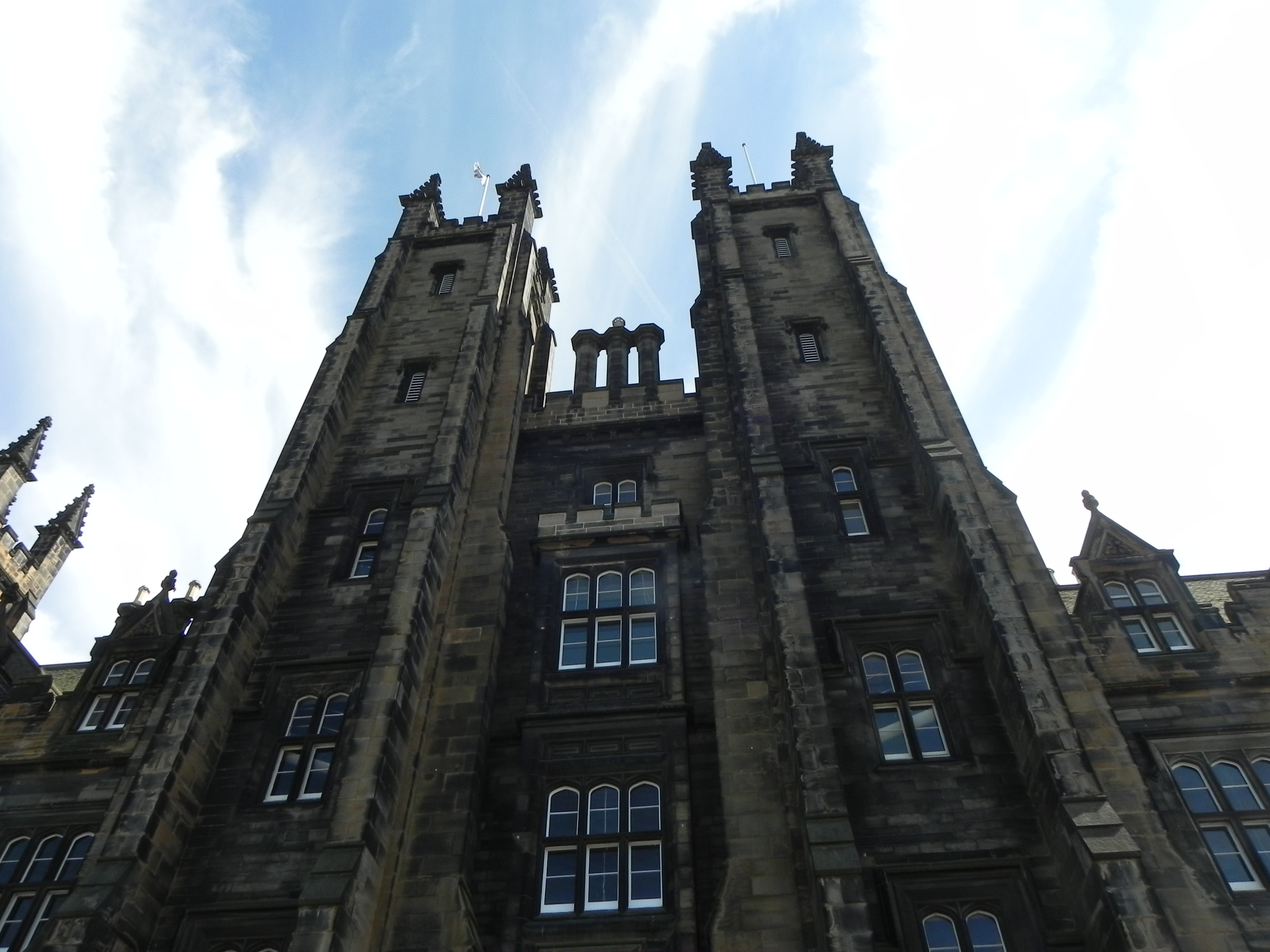
Genres can be slippery things.  Those of us who dabble in fiction sometimes find it difficult to describe what we do.  Writing is individual expression and it may have elements of this and that.  Given my disposition, much of my fiction has some horror features but I tend to think of it as something else.  My wife recently sent me an article on Book Riot about the genre Dark Academia.  The piece by Adiba Jaigirdar begins by asking the question of what exactly dark academia is.  The label conjures up books about something untoward happening in the halls of learning, and that certainly qualifies.  It’s difficult to be more precise because it’s different things to different people.  Some of my fiction, in my own mind, falls into that category.  Things go wrong in higher education all the time.  Why not preserve it in fiction?

I’ve attended, and worked at some gothic places.  The contemporary university, such as Rutgers—although it’s old by American standards—has continuously modernized and although I don’t know it’s history well, I suspect gothic was never its aesthetic.  The same is true of Boston University where I went to seminary.  Edinburgh University, while also modernizing, has retained much of its gothic feel.  That’s certainly true of New College, where I studied, in the heart of the medieval old town.  There’s a gravitas to such dark settings.  They invite strangeness.  My first teaching job was at the intentionally gothic Nashotah House.  Although I didn’t agree with the politics I loved the setting.

I seem to have slipped from Dark Academia into Gothic Academia.  Indeed, it’s difficult to keep the two distinct in my mind.  When I taught I maintained the tweed jacket and somewhat disheveled look of someone who has something else besides grooming in mind (this is entirely genuine).  Indeed, that’s one of the great charms of higher education.  You need not constantly worry about each hair being in place—they’ll take care of that when they shoot the movie.  Not many people, and probably a diminishing number given the state of things, experience full-time life in academia.  It can be well lit and modern.  If done right, however, it should take you into odd places.  Discovery is generally messy.  Perhaps that’s part of the dark of dark academia.  When we use our brains we end up in unexpected places.  I’m not sure I understand dark academia, but I have a feeling that I’ve lived it even without my fiction.