Data Protection

I learned to type on an actual typewriter.  For many—likely the majority—of those my age or older, that was the case.  Schools in the seventies, perhaps anticipating the computer revolution, emphasized that both boys and girls should learn typing. At least my school did.  Those were the heady days of electric typewriters that smacked the paper with a satisfying thwack at the slightest touch on the keys.  In circumstances whose details I simply can’t remember, my mother bought me an old, manual typewriter at a garage sale or something.  One thing is certain—it didn’t cost much.  It worked, however, and I typed away writing stories and plays and even attempted letters to editors.  I’d been writing long before that, of course.  Some of my early fiction was in pencil on school tablet paper and I think I still might have a few survivors from that era in the attic.

The image of the noisy newsroom full of clacking typewriters still conveys a kind of power.  Writers in those days, if they were prominent enough, could bang away at the keyboard, jerk the results out, put them in an envelope and be assured of publication.  Everything seems more difficult these days.  Computers have made writers of so many people that it’s difficult to get noticed.  More important, however, is the fact that print preserved data.  Newspaper was cheap, so perhaps the newsroom isn’t the best example.  Kept dry and in climate-controlled environments such as libraries, books keep a very long time.  Longer than the life of the author, or so it is hoped.
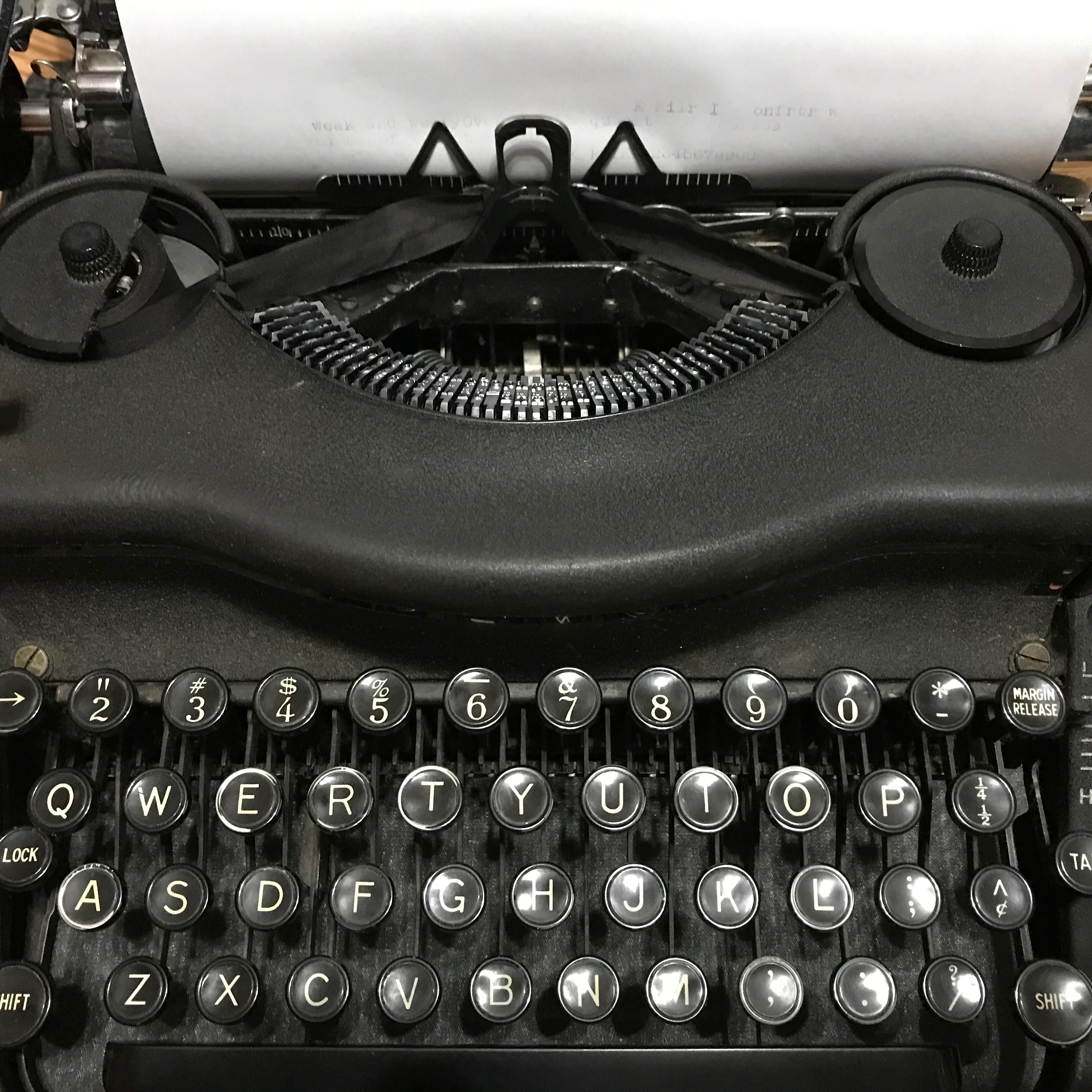
Data backup is now a constant concern.  A couple years back, an unfortunate bump on my own terabyte drive led to a quite expensive data recovery bill with some information lost forever.  Throughout the process I kept thinking, if all of this were printed out at least I’d be able to access it.  So true.  The vinyl market demonstrates that not everyone is willing to put up with the artificiality of electronic media.  Those who promote it tend to shy away from discussing its fragility.  Even now when I have a story published I print it out so that if the data becomes corrupted it can at least be retyped.  My most recent double-backup took an entire Saturday to accomplish.  Who knows what memory-intensive software lies behind each keystroke?  I look at the humble typewriter and tell myself that certain plateaus were perhaps more stable than the majestic mountains with their landslides and crevasses.  And I always found that clacking noise soothing, as ideas were preserved in solid form.

Byte Fragility

A few weeks back—context is always important—I mentioned how a storage drive slipped off my sleek laptop and went insane.  That is to say, it stopped working.  Unfortunately at the time it was the only backup method I was using.  And since my laptop forced me to move a huge amount of data so that it could do its regular updates, all my vegan eggs were in one basket.  (I feel like a bit player in this drama sometimes—it’s really the tech people who are in charge.)  There were literally years’ and years’ worth of data on that slipped disc.  Since then I’ve purchased two back-up drives and I’m backing up onto older discs and drives that are still readable.  It cost more than I care to confess to recover most of the data.  Some of it is gone forever.

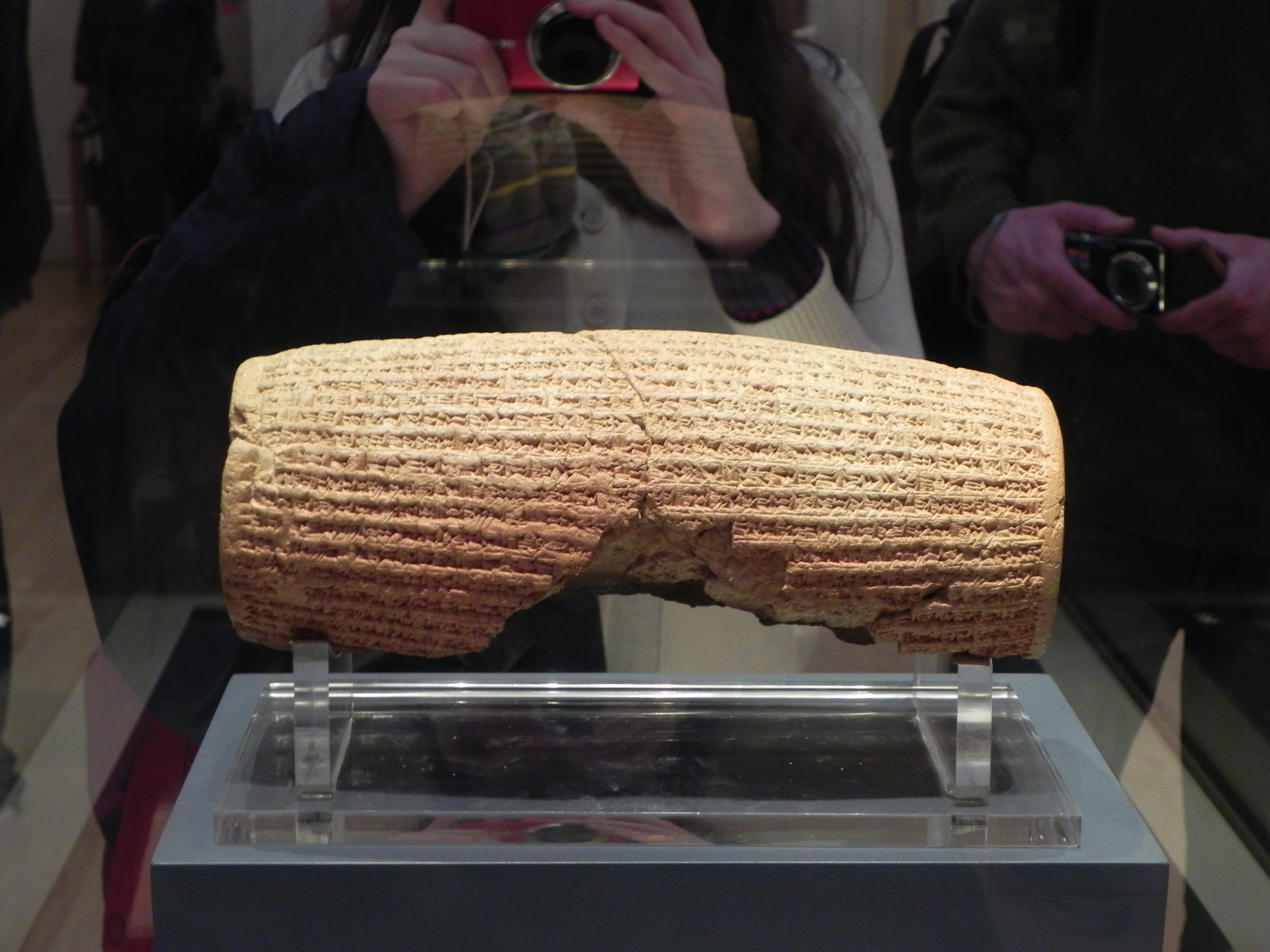
Although I can’t go into all the details here, the data recovery company I used—shout out to Tri-State Data Recovery—was able to recover about 99 percent of the information.  They were kind enough to suggest very solid-looking data backup systems so that a slipped disc could never happen again.  This all sent me back to my roots as an ancient West Asia scholar.  Scribes whose data still exists 4000 years later, simply got clay for free from the river.  The first writing material was the best.  I’ve quadruple backed up my recovered files now.  I’ve mourned some of the missing.  Still, I realize that if anything goes wrong I haven’t the technical skill to recover my ideas.  Or my photos.  They’re mere electrons.

I want to save trees.  I try to print only what’s necessary, but incidents like this reinforce my love of print.  Paper has its problems too.  Three years ago, when we moved into this house, torrential rains destroyed a couple hundred books in the garage waiting to be brought into the house.  Data were destroyed.  Granted, a flood can destroy clay tablets too.  In fact, if nature sets her mind to destruction there’s pretty much nothing we can do.  Just ask the dinosaurs.  Still, it disturbs me that all our data are so terribly fragile.  I write things down to be creative, but also because I can’t remember everything I want to.  If a drive falls off a slippery laptop not only does it make a sound, it also puts a dent in your bank account.  Down at the river bank, however, there’s clay free for the taking.


Anything Free

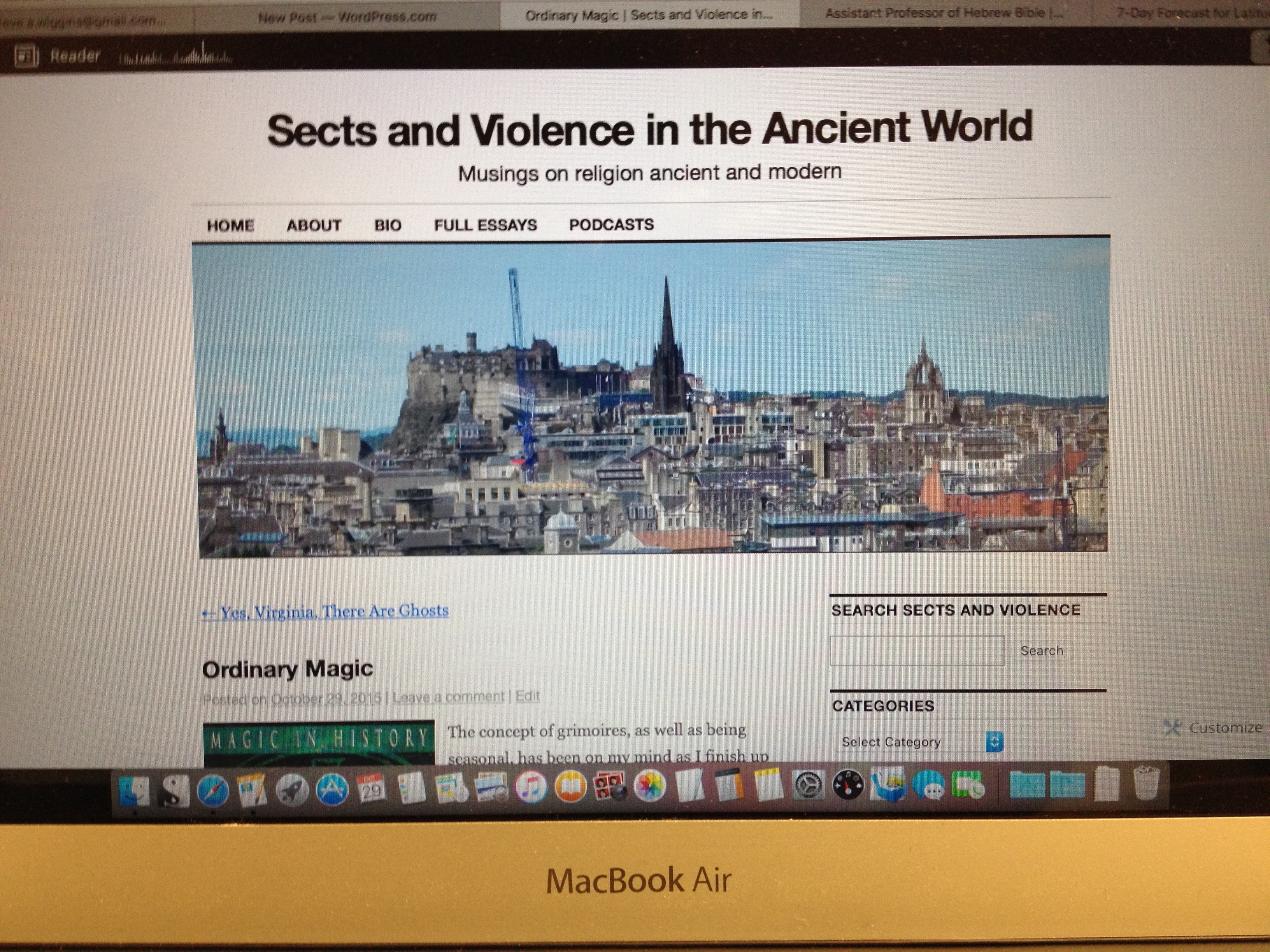
“Anything free is worth saving up for.” That’s a bit of wisdom I picked up some time ago. There’s another side to free, however. That other side is called the hook. So, I started this blog with the help of my niece, back in 2009. Word Press offered free web hosting and, at first, support. Nearly every single day for about six years I’ve been posting here. Well over half-a-million words offered, rent free, to the world. Lately Word Press is giving me trouble. Somebody’s system isn’t working well with somebody else’s (I’m having trouble loading pictures, for instance) and I have to login and post about three times per blog entry. It takes up most of my free time before the bus comes. Finally I decided to call for help. Scanning the website I learned that help is indeed available! Only for premium customer, however. If you want to pay, your free website will be available to the world. The hook.

I can’t remember exactly when things got cloudy. It was a laptop ago, in any case. Suddenly I was receiving emails about starting up my iCloud account. In fact, now your devices can’t communicate with each other unless you have an iCloud account. The benefits: it’s free. You can access your pictures, music, and documents on any device with the correct app. So I click “okay.” Anything free… Then I receive the dreaded red-colored alarm. My iCloud storage is full. Any attempted transaction will lead to the modern equivalent of Hell—data loss. There is a solution, however. If I pay for an upgrade I get lots more space an my files will be secure. Let the music play on. It will only cost you a song.

Examples could be multiplied. Since internet fame is the only kind of fame attainable to most of us—only if something goes viral—we buy our lottery tickets and stoke our social networks and write our blogs. Then the bill comes. Call me a curmudgeon, but I remember when you could lease a phone without having to take out a mortgage to afford the monthly bills. Bakelite was the old silicon. I remember when if you wanted to write someone a letter you knew up front it would cost you 13 cents. I remember when Blog was a radio station on the Twilight Zone. Don’t worry, I’m not planning to quit the blogging just yet. I do have to warn you though; it’s free.

IMG_2591