
I learned to type on an actual typewriter. For many—likely the majority—of those my age or older, that was the case. Schools in the seventies, perhaps anticipating the computer revolution, emphasized that both boys and girls should learn typing. At least my school did. Those were the heady days of electric typewriters that smacked the paper with a satisfying thwack at the slightest touch on the keys. In circumstances whose details I simply can’t remember, my mother bought me an old, manual typewriter at a garage sale or something. One thing is certain—it didn’t cost much. It worked, however, and I typed away writing stories and plays and even attempted letters to editors. I’d been writing long before that, of course. Some of my early fiction was in pencil on school tablet paper and I think I still might have a few survivors from that era in the attic.
The image of the noisy newsroom full of clacking typewriters still conveys a kind of power. Writers in those days, if they were prominent enough, could bang away at the keyboard, jerk the results out, put them in an envelope and be assured of publication. Everything seems more difficult these days. Computers have made writers of so many people that it’s difficult to get noticed. More important, however, is the fact that print preserved data. Newspaper was cheap, so perhaps the newsroom isn’t the best example. Kept dry and in climate-controlled environments such as libraries, books keep a very long time. Longer than the life of the author, or so it is hoped.
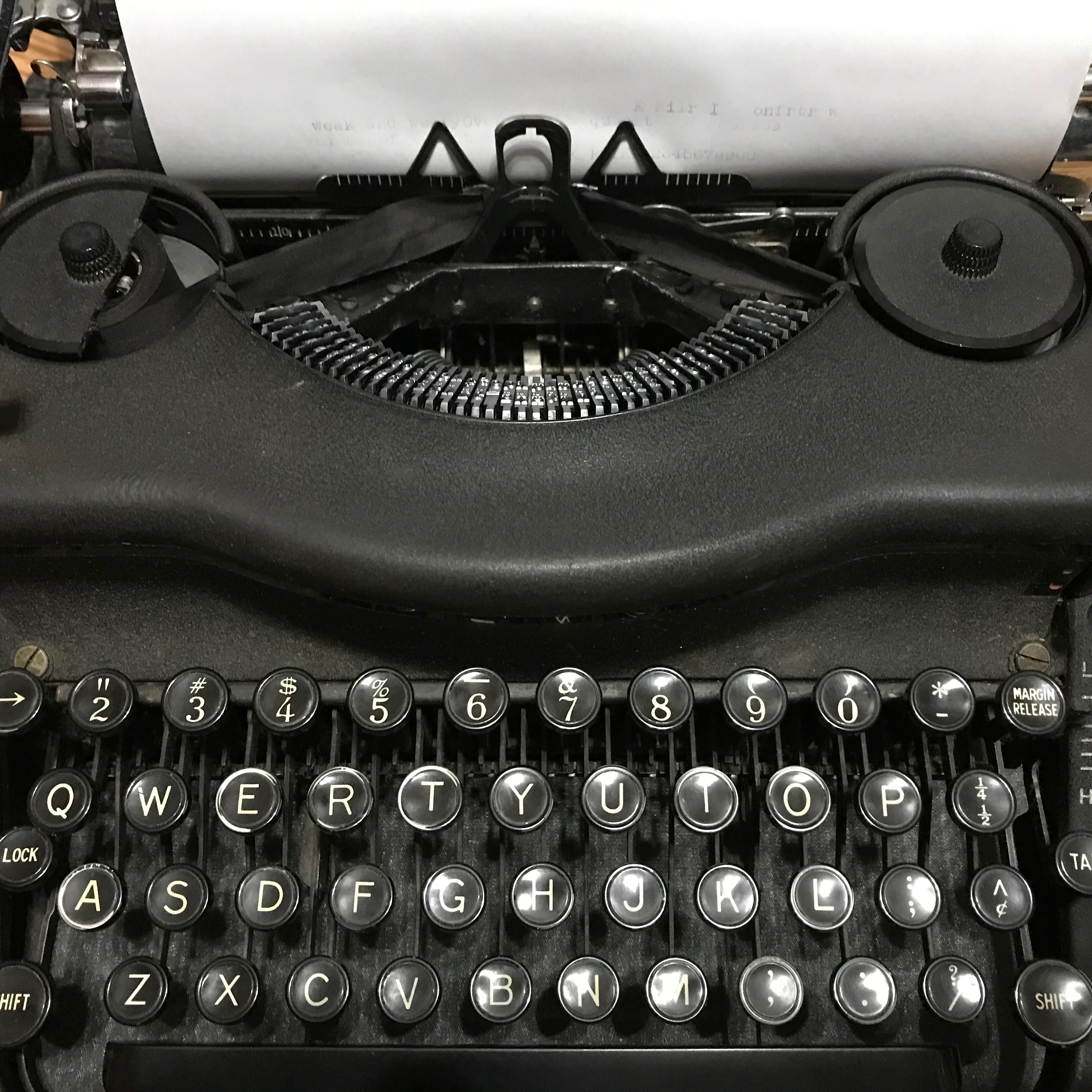
Data backup is now a constant concern. A couple years back, an unfortunate bump on my own terabyte drive led to a quite expensive data recovery bill with some information lost forever. Throughout the process I kept thinking, if all of this were printed out at least I’d be able to access it. So true. The vinyl market demonstrates that not everyone is willing to put up with the artificiality of electronic media. Those who promote it tend to shy away from discussing its fragility. Even now when I have a story published I print it out so that if the data becomes corrupted it can at least be retyped. My most recent double-backup took an entire Saturday to accomplish. Who knows what memory-intensive software lies behind each keystroke? I look at the humble typewriter and tell myself that certain plateaus were perhaps more stable than the majestic mountains with their landslides and crevasses. And I always found that clacking noise soothing, as ideas were preserved in solid form.

 Steve A. Wiggins