One of Those Days

I recently lived a day directed by David Lynch.  Or at least it felt like it.  While I’m not at liberty to discuss the details, I can say it was a surreal experience that left me questioning everything.  Ever have one of those days?  It happened smack in the middle of work, forcing me to take an emergency personal day, if there is such a thing.  I’ve self-identified as an existentialist for many, many years—that may be changing in the light of Frankl—and the part I most identified with was the absurd.  It became clear to me, starting at least in seminary, how absurd my life was.  Strange things happen to me.  Always have.  I had a weird childhood and it hasn’t become any more normal since then.  Even so, some days are brought to you by David Lynch.

When I proposed to my wife, I told her that I couldn’t promise her much (I was functionally unemployed at the time, but applying for Ph.D. Programs) but that our life together would be interesting.  I doubt she would argue the point now, some 36 years later.  Even in a life defined by the odd—let’s use the existentialist word—absurd, some days stand out.  Days when, as Bruce Springsteen might say, you’re toppled over by “things you don’t even see coming.”  This particular day it was the direct consequence of the internet, our electronic metaverse, to borrow a term from Neal Stephenson.  The older I get the more I wonder if the blessing of constant connectedness is more a curse in disguise.  For thousands of years society got along without it.  Yet, as with most devils, there are definite advantages to dancing.

The next morning I saw a great horned owl while out jogging.  I know owls are difficult to spot and I’ve read enough about screen memories to make me wonder if something truly cosmic was going down.  I’d only seen one great horned owl before, and that was while jogging at Nashotah House.  I have been pondering my David Lynch day.  It actually grew into several days in which I felt completely out of control of my own life.  And the pneumonia vaccine didn’t help, donating a restless night and fuzzy head.  Some people, it seems, are magnets for the odd.  We don’t ask for it—it simply happens to us and we have to figure out how to respond.  Recognizing the absurdity may be a good start, right, Mr. Lynch?

Image credit: Alan Light, under the Creative Commons Attribution 2.0 Generic license, via Wikimedia Commons

LA Story

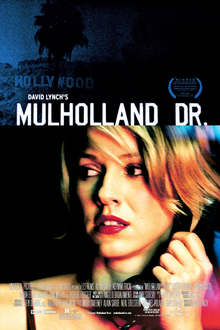
David Lynch movies aren’t always easy to understand.  Last year we watched Twin Peaks, including the movie Fire Walk with Me.  Some time before that I’d watched Eraserhead.  My earliest, and unwitting, experience with one of his movies was Dune, which I saw in a theater in 1984.  I had no idea of who Lynch was at that time, however.  As I began exploring the horror genre I found a contingent strongly denying that Lynch directs horror.  Still, there were enough elements in Twin Peaks and Eraserhead that some viewers do move in that direction.  Now, I’d heard of Mulholland Drive many times over the years and I’d seen it classified as horror a time or two, but mostly as a thriller.  Over the holidays I actually had time to sit down and watch it.  And I’m still not sure how to classify it.

I’m not even sure that I can say what it’s about.  Since I watch movies alone most of the time, I turn to the internet to have “discussion” about them.  IMDb and Wikipedia are often good starting points.  There is a tremendously long article in the latter on this film.  Quite often Wikipedia provides not a ton of information about films, but here’s a case where contributors simply can’t say enough.  And none of them know for sure what it’s about either.  I suspect that’s why David Lynch is so highly regarded as a film maker.  He’s an artist.  What artist can explain what their work really means?  Lynch has been notably tight-lipped about what he intended this movie to say, but if you’ve watched Twin Peaks through, you get an idea of what you might expect.  It’s certainly an intellectual experience, and a surreal one.  But is it horror?

One of the terms often used to describe the movie is “nightmare.”  That seems like a horror-laden word, doesn’t it?  It’s often a matter of the characters not knowing who they really are (and the viewers don’t know either).  The thing that ties most of them together is that they’re involved in a movie in some way.  I’ve come to believe that things like books and movies and songs—things we mentally “consume”—become part of our minds, just like food becomes part of our bodies.  Some of the films we see are like junk food—fun, but all fluff.  A David Lynch movie will give you something of substance to chew on.  And finally having seen Mulholland Drive, I’d say it’s a much horror as Lynch’s earlier work has been, however you interpret that.


Lost Decade

The nineties, it seems, got away from me.  Personally, they started with living in Edinburgh with my newlywed spouse. We had no television and no money, and limited time to finish my degree.  Then we landed at Nashotah House for the remainder of the decade.  Our daughter was born, and we settled into the role of new parents as the world went on around us.  The internet hadn’t made its way to that part of Wisconsin and television reception was quite poor.  Now bear with me as I’m trying to reconstruct things.  Twin Peaks ran from 1990 to ’91.  We were in Scotland at the time and had no television.  Northern Exposure (’90 to ’95) started a few months later, and was still running when we returned to the States.  We began watching it because family recommended it, mostly on VHS.  Some family members had watched Twin Peaks, but it was darker, and we opted for lighter fare when we could see TV.  (I hadn’t undergone my horror reawakening yet.)  Then came Picket Fences (1992 to ’96), which I still haven’t seen.  The X-Files, original run, broadcast from 1993 to 2002.  What a decade to lose!

Northern Exposure and Twin Peaks had some things in common, I noticed as we watched the latter, but then they ran at about the same time.  It also seems Twin Peaks and The X-Files shared some secrets.  I can’t say about Picket Fences, but it seems that speculative elements infiltrated these nineties shows.  What’s more, they all received critical acclaim.  I would feel like I lost much of the nineties, except that I was having a great time being a parent.  Although Nashotah House rubbed me the wrong way, I was employed doing what I had pictured myself doing.  Wisconsin was a beautiful state and offered lots of outdoor opportunities, particularly when it wasn’t forty below outside.  What I really lost was pop culture of the nineties, living in a monastic setting.

I recently discovered that I’d also missed much of the music of the nineties.  I’m not a radio listener.  Too many distractions—I can’t listen to music when I write, let alone with some announcer talking.  I don’t listen to music when I jog because I find the natural world so interesting.  It occurred to me just a few months ago that I had very little knowledge of 1990s rock. (Not the preferred genre at Nashotah.)  Some of it is pretty good, I’m discovering just now.  Like a typical academic, I began to shut out the outside world when working on my Ph.D.  Now I spend my time trying to catch up.  Not that I have much time to watch television, or listen to music, but I hate to miss something that everyone else seems to know about.  Then, of course, after the X-Files, Lost ran from 2004 to 2010 and we didn’t catch that either.  Maybe I missed the first part of the new millennium as well…

Photo by Everyday basics on Unsplash

Second Peak

It all started with The X-Files.  You see, we hadn’t watched television since about 1988.  Part of that was practical—we couldn’t afford cable and then when we landed at Nashotah House there was no cable service anyway.  Bouncing from job to job after that, when money was tight, we figured cable was a luxury we weren’t used to anyway.  Then came DVDs.  I should also say that my family heard other people talking about certain shows—some of them quite good—but we hadn’t seen them.  Then we decided to watch The X-Files.  This was followed by Lost.  Then the X-Files again.  On my lonesome I watched Kolchak: The Night Stalker.  But people had talked a lot about Twin Peaks.  Curiosity got the best of me.  We decided to see what it was about.

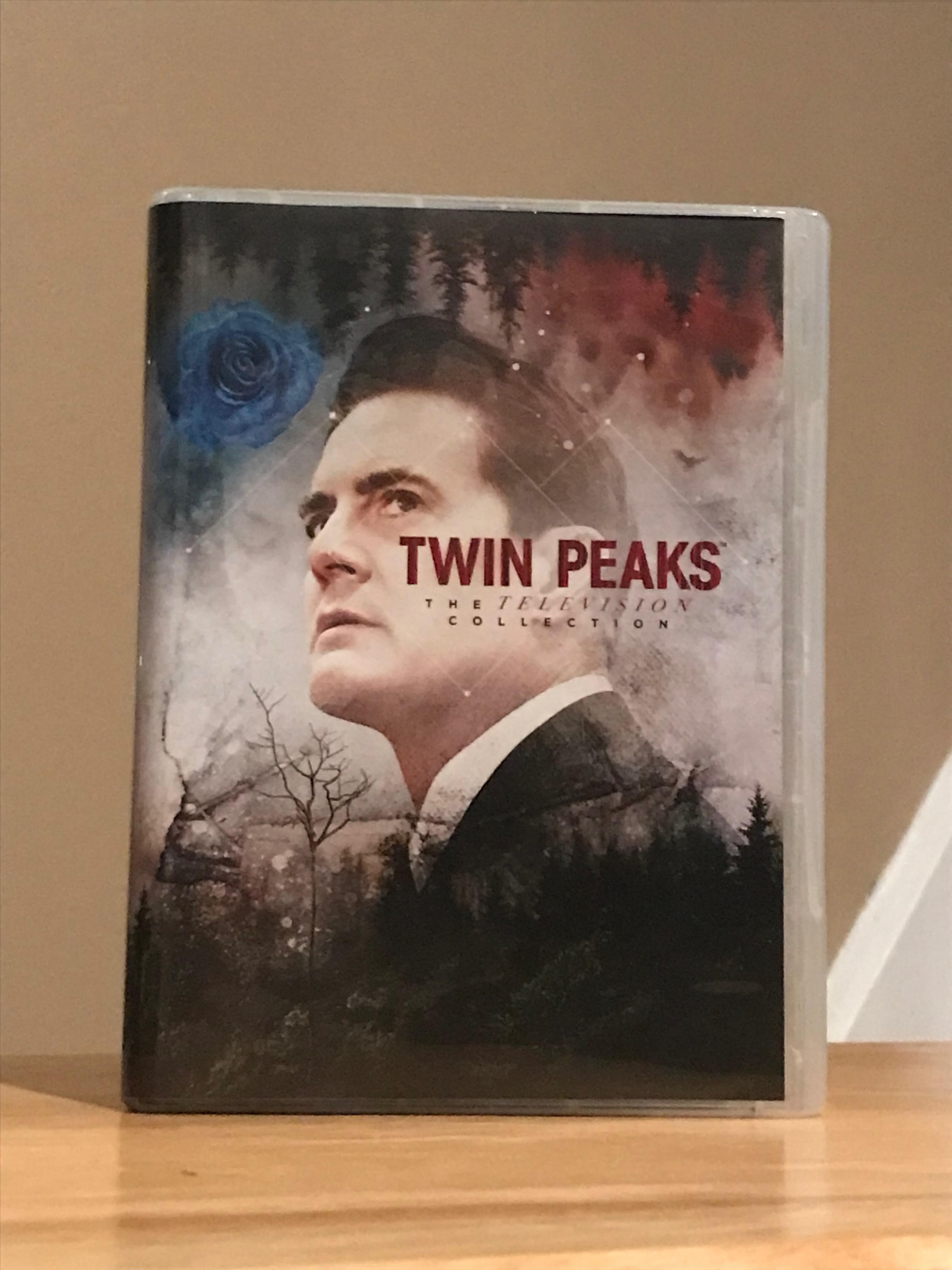
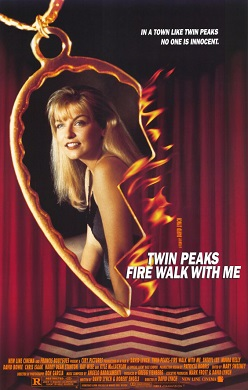
I knew that Chris Carter had cited various inspirations for The X-FilesKolchak was a major one, but another was Twin Peaks.  It helps to have watched a David Lynch movie or two before jumping into the deep end here, but the first season (it only lasted two) started out like a regular drama.  Like Northern Exposure, it had quirky characters.  Then after a couple episodes paranormal aspects began to appear.  Things were not what they seemed in Washington.  It turned out to be an evil spirit possessing people in the town.  Laura Palmer’s murder was more or less solved.  Dale Cooper, however, had been trapped in the Black Lodge in the cliff-hanging end of the second season.  We then watched Twin Peaks: Fire Walk with Me at the point it settled in the sequence.  Like the aforementioned X-Files, a reboot occurred many years later and the DVD set we had included the renewed season.  Things really get weird there.

It turns out that we had indeed missed some good television during those Nashotah House years and later.  Actually, doctoral years and later—Twin Peaks originally aired when we were living in Edinburgh, so we had a legitimate excuse.  Boomers, particularly late boomers, grew up with television.  As an adult (so I’m told) I can see that television had a big influence on my life, even though I stopped watching in my late twenties.  Do I understand all of what happened in Twin Peaks?  Of course not.  Then again I scratched my head after watching Eraserhead too.  The first of David Lynch’s movies I saw was Dune, which, unfortunately, wasn’t that good.  I’ve come to trust him, however, and I suspect that telinema will lead me to watch more of his films.  And we’ll probably be on the lookout for other television we missed, that, in retrospect, we probably shouldn’t have.


Fire Walking

Telinema is a strange place.  (This is my word for television and cinema, since apparently no such term exists.)  My wife and I have been making our way through Twin Peaks.  We missed this when it first aired, being somewhat preoccupied living in Scotland.  As with most telinema involving David Lynch, there’s quite a lot to ponder.  (I’m less familiar with Mark Frost’s oeuvre.)  The show only ran for two seasons, but as often happens with substantial short-run shows like this, it became classic in retrospect.  Lynch had made movies before, and the initial series was like watching a several-hour film.  Then the movie came.  Twin Peaks: Fire Walk with Me tells the backstory of what had happened before the series began.  Like the X-Files, you kind of need to interlace the movie in with the series.  So we have.

Knowing me, I’ll probably write up a reaction after watching the third season, but I want to reflect a little on telinema.  Visual media have been around at least since cave drawings were first made and their power recognized.  People are captivated by images.  When movies started, they were short and sprinkled in with other entertainments until the idea of a feature-length film developed.  If you were going to spend an hour or more with a movie, there had to be a story.  (Some of those stories, early on, seemed to involve quite a lot of pedestrian activities, of course.)  Then television happened.  Movies could be shown on TV and movies could be made specifically for TV.  Then impressive series, like Twin Peaks, required a theatrical movie to get part of the story across.  They became hybrids.

Lately I’ve been realizing just how much “how a story goes” matters.  We are story-telling creatures.  Our lives are the stories we tell ourselves about ourselves.  And some of us are obsessed with the true story.  What really happened?  Telinema sometimes makes this difficult.  Dan Curtis, for example, made House of Dark Shadows—a theatrical movie—as a version of what he’d already produced in television land as the daily Dark Shadows.  Since there’s no word doing the work telinema does for me, I’m not quite sure how to search to see what the earlier examples might be.  The point is a compelling story will draw fans.  And being visual creatures we’ll watch if the story interests us.  Sometimes we have to watch across “platforms.”  Get out of the house into a theater to see how the story goes.  Yes, we need a word for this and we need to study just how far we’ll go for a story.


Erase This

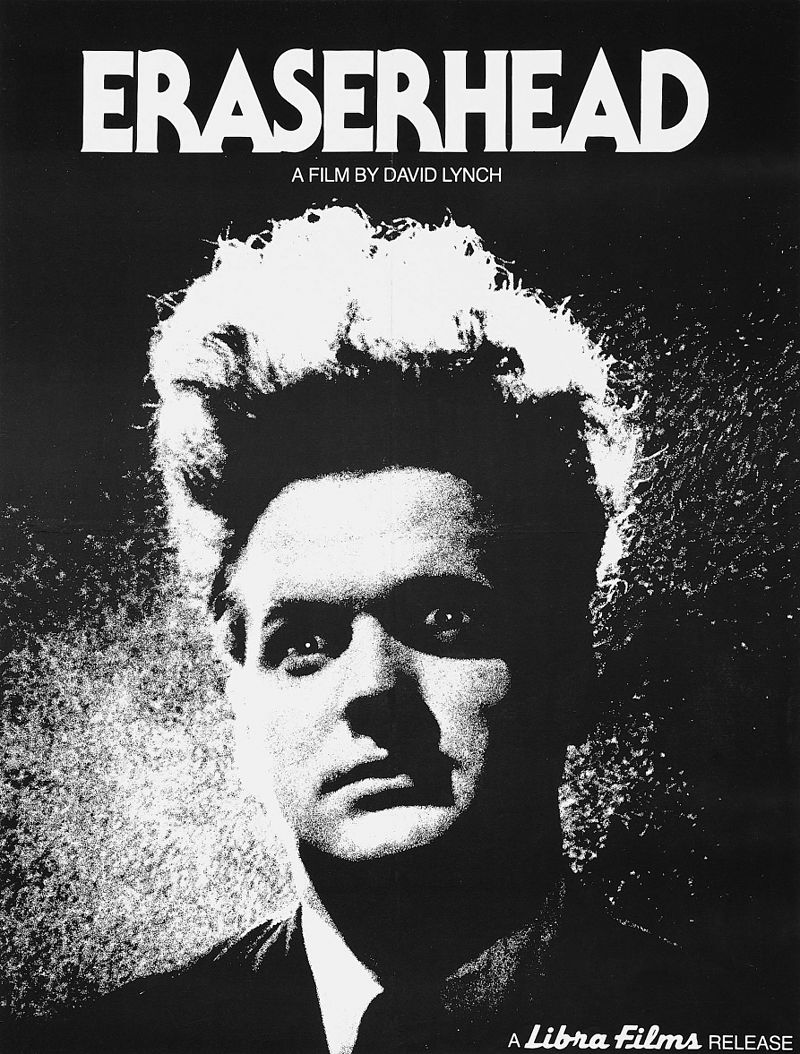
Over the years I’ve read a fair bit about Eraserhead without having ever seen it.  Approaching it I had little idea what to expect—normally classified as body horror, there’s a fair amount of debate as to whether it should be considered horror or not.  Now that I’ve finally seen it, I’d probably call it existential horror.  There are no jump startles, and the quirkiness makes it almost funny at times.  To me it suggests the horror of finding oneself in a world where the most desirous things are also those that scare us the most.  If you’ve not seen the movie this may not make sense to you.  David Lynch, the writer and director (and producer), went on to find fame in more mainstream media, but Eraserhead made the National Film Registry’s preservation list, which says something about it.

Comparison is sometimes fittingly made to Kafka.  Life itself can be traumatic.  Body horror tends to focus on the abject aspects of being incarnated.  We associate intimately with our bodies, but they do things we don’t understand and which sometimes alarm us.  The absurdity of this situation wasn’t lost on the great existentialist writers of the last century.  Faced with these circumstances we carry on because it’s not clear what else to do.  So Henry Spenser doesn’t emote very much.  Life does weird things to you and sometimes just watching the strangeness unfold is the best option.  This level of vanity brings old Qohelet to mind, for even the Bible realizes that some things just can’t be explained.

In an interview on the film Lynch cites the “little torments” of those in the workaday life.  It’s difficult not to feel like a mere cog when your wage is premised upon the amount of time you spend on the clock.  Even for professionals.  The stark divide is like the industrial wasteland the film so ably portrays.  This isn’t where anybody wants to be—no, it’s where one finds oneself.  Comforts are few and the background noise is constant.  Although Eraserhead isn’t widely known among the general public, its influence on other filmmakers is clear.  I could help thinking “oh, this is where that idea comes from.”  Probably most strongly that related to Brazil, a film I saw twice in one week in the theater (something I’ve not done with any other movie).  Having worked within the system, following all the rules only to find they don’t really mean you’ll end up where you hope, the theater of the absurd has always felt natural to me.  I should’ve watched this sooner.