Forewarning

The Devil’s Advocates series, as you learn from pitching and writing one, promotes alternative views on horror films.  Adrian Schober’s treatment of The Omen doesn’t disappoint.  Each time I read one of these little volumes I’m always amazed at how many ideas can be packed into such a small space.  Schober’s take on the film is that Damien’s role is left intentionally ambiguous.  There was disagreement between the screenwriter (David Seltzer) and the director (Richard Donner) on that point.  Donner wanted it to be left up to the audience whether Damien was the Antichrist or not.  Seltzer, not being a believer himself, wanted to be clear that the boy was evil.  As portrayed in the final film, however, Damien seems awfully vulnerable, in retrospect.  (I rewatched the movie before reading the book.)

I’ve seen The Omen a number of times.  It has never been my favorite movie and I actually read the book (a novelization) before I ever saw the film.  Having grown up as a fundamentalist, I believed that we were in the end times (which only really seemed likely starting in November 2016).  The movie had to wait until I was an adult (I read the novelization when the film first came out).  I can see the ambiguity now, having read this book.  There remain, however, some things difficult to explain about the presentation—how Fr. Brennan knows Katherine is pregnant and that Damien will be the cause of her miscarriage.  The extreme coincidence of both the priest and the boy having the same birthmark that looks like 666.  And that someone would go through the trouble of burying a jackal and Thorn’s actual son in an obscure Etruscan cemetery just in case the Ambassador ever got suspicious and wanted to check it out.  

Interestingly, different markets altered the ending, enhancing the ambiguity.  The final scene had originally been shot with three coffins rather than two, and that changes things, doesn’t it?  Movies are, of course, subject to interpretation.  Any form of media is.  The fact remains that many viewers flocked from theaters believing Damien was the Antichrist.  Schober’s book would give pause, however, about rushing to conclusions.  The idea for the movie was suggested initially by a marketer who was a true believer in premillennial dispensationalism (essentially the worldview of Keith Jennings in the movie), and some Catholic officials objected.  Different Christian sects have very different interpretations about the end of the world.  And this movie is subject to different interpretations.  This brief book might just change your mind.


Documenting Horror

Watching documentaries always seems to raise questions.  I recently found A History of Horror with Mark Gatiss on YouTube.  Produced by the BBC in 2010, the set of three episodes is a selective walk through the horror genre through the eyes of an insider in the film industry.  Divided over three segments, he covers early horror (primarily Frankenstein-related movies), British horror, and the American horror revival beginning in the late 1960s.  It occurred to me while watching this that horror is often—but not always—an intellectual genre.  Many of the plots and ideas are sophisticated and puzzling.  At one point Gatiss says it is nearly the perfect genre for movies.  I would tend to agree.  Many of the payoffs of horror are the reasons I go to see a movie.

Of course, documentaries involve interviews.  While discussing religion and horror—the two are closely related—in the third segment, he considers the impact of what I termed the “unholy trinity” in Holy Horror: Rosemary’s Baby, The Exorcist, and The Omen.  His primary interview for this set was with David Seltzer, the screenwriter for the last of these.  At this point my memory took me back to an interview on one of the extras for my DVD edition of The Omen.  In that interview Seltzer mentions that the antichrist is at that moment (clearly this was shot shortly after the movie came out) walking the earth.  In my mind I compartmentalized this to interpret his stance as that of a religious conservative.  The idea of the Antichrist, after all, is post-biblical, at least in the sense that end-time scenarios are developed.

The Gatiss interview was filmed many years later and he asked Seltzer if he believed in the Devil.  “No,” Seltzer laughed, stating that if he did he wouldn’t work on movies like The Omen.  People’s opinions change over time, of course.  And the Devil and the Antichrist are two separate characters as they develop after the Bible was completed.  Still, I had to wonder if his earlier interview included that comment about the Antichrist being alive now wasn’t intended as a bit of spooky propaganda for the movie.  It’s difficult to know what someone really believes.  Most people mouth what their ministers say, not really considering where said clergy get their information.  For these many years I’ve been thinking that The Omen was considered as some kind of documentary by the screenwriter.  Documentaries always seem to raise questions.


Ends and Beginnings

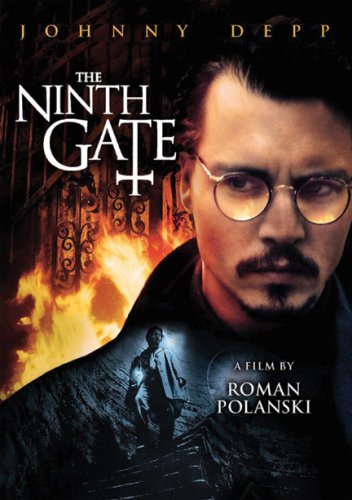
The Ninth Gate, a Roman Polanski film from a bygone decade, portrays a world the director doesn’t believe in. Typical of “devil movies,” the story involves a personified evil that not only seeks world domination, but who also writes books. I’ve been working on a book review for Relegere, the new online journal of Studies in Religion and Reception. In part the book addresses how the devil is portrayed in movies, although this particular film is not cited. Perhaps it is difficult to take seriously a film where the screenwriter is not a believer.

As a young teen I listened with horror as friends described The Omen, a movie that I never saw until just last year. The premise of the movie, that the Antichrist has already been born and is now walking the earth, ready to usher in Hal Lindsey-esque last days, is frightening to those who find a biblical basis for the idea. When finally watching the film the scariest part was viewing the extras. David Seltzer, author of both the book and screenplay, eerily tells the interviewer that he believes the Antichrist to be here now. His acceptance of mythology is admirable, but it is the problematic acquiescence to a modern reconstruction of disparate ancient views that is troubling. Like many late-twentieth century westerners, Seltzer has been influenced by attempts to construct a coherent account of the apocalypse from tattered bits of ancient traditions that never belonged together.

If education included a serious, critical look at how religious ideas developed, the world might be spared this sad predilection for seeking its own end. Apocalyptic ideas thrive in cultures of persecution, such as those very real torments of Jews under Antiochus and Christians under Nero. Their hopes for a brave new world of righteous rule, borrowing freely from Zoroastrian traditions of a new age, offered scraps of expectation of a better tomorrow to those dying today. When nineteenth-century evangelists saw the advances of industrialization and Darwin’s rational explanations of human origins, they felt the need to reconstruct the biblical demise of the world. Modern day apocalypticism, so evident in the Y2K, 9/11, and 2012 scares, is often ready to accept uncritically a supposed future already scripted by a sadly misunderstood Bible. If the world ends it will be our own doing, and maybe Roman Polanski will have to rethink whether or not a devil can actually write a book.