Good Book Selling

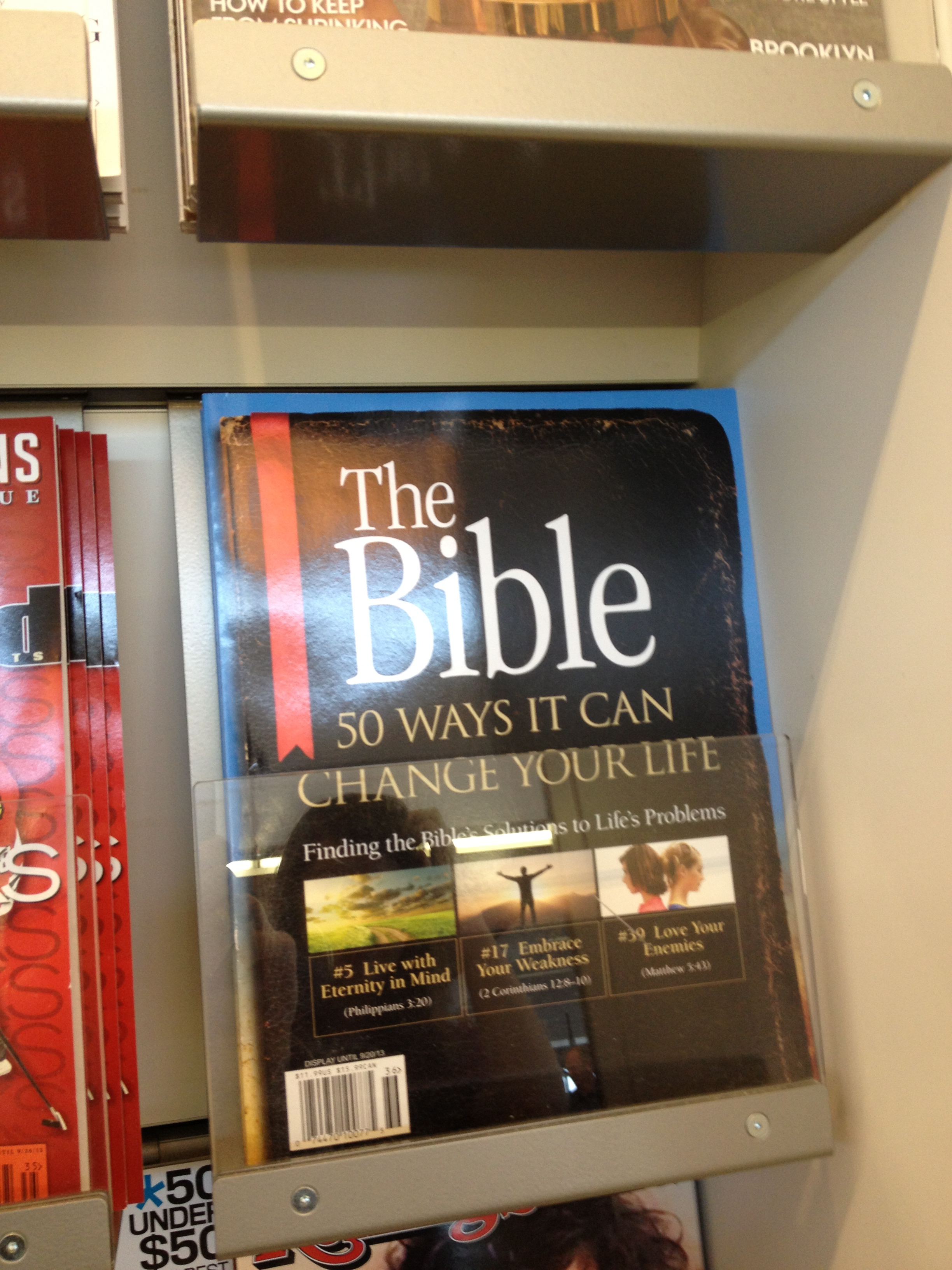
A few weeks back, probably several now actually, the New York Times ran a story about the Bible.  In this age of declining interest in the Good Book such things catch my attention.  Of course, the reason that the story ran was because of the money involved.  Let me explain.  Or at least give the headline: “Oldest Nearly Complete Hebrew Bible Sells for $38.1 Million.”  Money talks, even when it comes to Scripture.  The story was about the auction of the Codex Sassoon, which went to a museum.  Most regular Bible readers aren’t aware of the textual criticism behind their favorite translations—yes, even the good ol’ King James.  You see, no original biblical manuscripts survive.  Not by a long shot.  Every biblical manuscript in the world is a copy of a copy of a copy, etc.  And these copies differ from one another.  Often quite a bit.
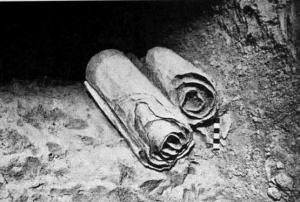
Textual criticism is the job of comparing manuscripts and using scientific—yes, scientific—principles to determine which one better reflects what was likely original.  Since we don’t actually have the original we can’t say.  Those who hold views of extreme reverence for one translation or another have to resort to divine guidance of the textual critics to make the case.  For example, they might argue that God inspired the translators of the King James to follow one manuscript rather than another.  The King James was based on manuscripts known at the time (only about six of them) and far older manuscripts—inherently more likely to reflect earlier views and potentially closer to the original—have been discovered since then.  And are still discovered.  That was one of the reasons behind all the fuss over the Dead Sea Scrolls.  They represent some of the earliest biblical manuscripts ever found.

The Bible is an identity-generating book.  In this secular age, the failure of “the educated” to realize this simple fact often leads to underestimation of the importance of religion.  It motivates the largest majority of people in the world.  We should pay attention to it.  It doesn’t make headlines too often, though.  Instead, politicians who pretend they respect the Bible but live lives about as far from its precepts as possible, gather the limelight.  When money gets involved the Bible becomes interesting again.  We think about that thirty-eight-million.  What we might do with that kind of money.  How we might be able to pay somebody to paint that fence that desperately needs it, or better, to help those in desperate need.  The many victims of capitalism.  Where their heart is, there their treasure will be also.

Finding Fakes

The Museum of the Bible has been a source of controversy since well before it even opened.  Many people don’t understand what biblical scholars actually do, and this leads to misunderstandings and not infrequent accusations.  Turning no basic critical thinking skills toward a museum intended to champion certain social causes (claimed to be “biblical”), those who support it can’t understand why a “biblical” scholar would object.  What do biblical scholars do all day, anyway?  We’ll come back to that in a moment.  The reason I’m writing about the Museum of the Bible in the middle of a pandemic is an article on National Geographic’s website, “‘Dead Sea Scrolls’ at the Museum of the Bible are all forgeries,” by Michael Greshko.  The Dead Sea Scrolls have captured the public imagination for decades now.  Having seen the collection at the Shrine of the Book in Jerusalem, I know it can be an awe-inducing experience.  One thing biblical scholars do is ask questions.

Artifacts are becoming increasingly easy to fake.  Some biblical scholars were fooled by these fake Dead Sea Scroll fragments.  Now, my own specialization was Ugaritic.  Ugaritic is a cuneiform language with clay tablets as the substrate.  One of the things that you learn from looking at a specialized body of material closely and for a long time is how they were written.  Some of the Ugaritic tablets have writing along the edges, like marginal scrawls.  Some are written with large characters in a clumsy hand, while others are clearly done by a professional.  With some practice you can learn to recognize handwriting even in cuneiform.  The Dead Sea Scrolls, mostly written on vellum or leather, are similar: specialists know just how they were written and close examination can reveal if they were made in antiquity or simply made to look antique.

Biblical scholars often get accused of taking the life out of things.  Would it be better to believe in something that is exposed as a fake?  Not exactly debunkers, scholars are those who ask pointed questions of unstated assumptions.  If some antiquities dealer claims to have access to material kept out of official hands, and is willing to charge you a lot for it, it’s best to call in the skeptics.  It works the same in most fields that keep our society going.  We need to trust those who’ve studied a subject in depth for many years.  Devoted their lives to it, in fact.  Many museum items around the world are forgeries and fakes.  It’s not too often, though, that someone specializing in really old stuff gets called in to make an evaluation.  There’s a risk involved—the risk of learning the truth.


Scrolls Not Living

Of the many ancient finds in Western Asia, none captured the imagination like the Dead Sea Scrolls.  The timing and romance of the find itself, the scandals that almost immediately broke out, and the subsequent “secrecy” over the contents made the secular news.  I’m convinced that a large part of the mystique has to do with the somewhat spooky name—Qumran scrolls never caught on, even though it is more accurate for many of the documents.  Their discovery came after the Second World War when people were wanting good news, and, perhaps, an indication that all of this stuff was somehow predicted.  Enter the scrolls.  No doubt, these documents gave us quite a lot of information on the Second Temple Period—the time from the rebuilding of the Jerusalem temple in the sixth century BCE until its destruction under the Romans in the first century CE.  Now the scrolls are back in the news.

A story by Nicola Davis in The Guardian announces that the origin of the scrolls is once again open to interpretation.  The reason is somewhat technical—scrolls that were written on vellum (animal skins) had to be prepared for writing.  One of the steps involved chemically treating the writing surface with a fine powder (the details are beyond me) so that it could be written upon.  We’ve reached the point where the salts left behind can be tested for place of origin.  The Guardian story notes that the Temple Scroll—one of the important non-biblical texts—was not prepared at Qumran (the site where most of the scrolls were found).  That means that the scroll itself came from elsewhere, depending upon with whom you speak.  The scrolls gather controversy like the Ugaritic tablets gather dust.  

Part of the charm here is that there are many unanswered questions about these ancient texts.  Who exactly wrote them is debated.  Their find-spot suggests they were hidden away by the quasi-monastics who lived in nearby Qumran, but this doesn’t mean they necessarily wrote them.  It’s still debated whether the Qumran community was made up of Essenes or not.  One thing we do know about them is that they were able librarians.  The scrolls themselves are symbolic of the strife in the region, having been discovered just as Israel was declared a nation.  The scrolls were quickly politicized.  They were kept under the auspices of a small group of academics and priests for many decades.  And they still have a way of catching headlines.  Even when its a matter of who powdered their faces.


If Onlyists

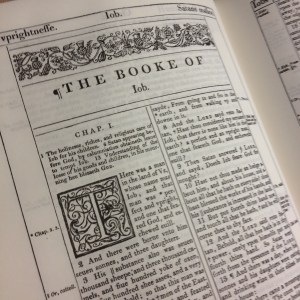
A special brand of Fundamentalism called King James Onlyism is a particularly odd variety of faith simply because of its required backing and filling.  In brief, this particular evangelical position claims that the only inspired translation of the Bible is the King James Version.  It’s best not to look too closely at the KJV, however, or the problems start.  Primary among them is that the version most Onlyists cite is not the original King James.  Published in 1611, this translation is immediately evident by its use of “I” for “J” and for the long s (the one that looks like an f).  Perhaps more troubling for Onlyists, it also includes the Apocrypha.  There was still some debate at the time concerning the status of these deuterocanonical books, and they were part of the actual KJV.

The typical King James used by Onlyists is a revised KJV.  In England, where the translation was done, revisions were made from time to time, leading to an Oxford version (Blayney text of 1769) and a Cambridge version (Scrivener text of 1873).  On these shores further adjustments were made leading to the rather strange situation where there is no single King James Version of the Bible.  There are many King James Versions.  Attempts to control Scripture often end up like that.  The underlying problem is the belief that there is a single version of Holy Writ.  Inerrantists are pledging their faith to something that doesn’t exist.  Defending this approach many would claim that the revisions are minor, but small changes can make huge differences.

The belief in one single version relies on the belief that God inspired not only the original writers, but the translators as well.  It denies that the better manuscripts that have come to light since the early seventeenth century (including the Dead Sea Scrolls) contain any authentic information of what the Good Book says.  Textual criticism, in the absence of any original manuscripts, is the best way we have of discovering what the original likely said.  Onlyists argue that the manuscripts from which King James’ translators worked were the divinely selected ones and their work was inspired—a position against which no empirical proof can be offered.  This faith trades in certainties that only bringing in direct heavenly control can achieve.  And it means that Catholics are wrong, despite King James’ inspired error to include the Apocrypha.  That’s the thing about a trump card like inspiration—once it’s played there’s no way to overcome it.


Ancient Perspectives

Around the holiday season, on social media, stories relating to the Bible tend to pop up. When my wife mentioned a New York Times story about “Gabriel’s Revelation” on the second day of Christmas, I was suspicious. The story, which was nearly a decade old—the internet keeps things in circulation far longer than those old library tomes consisting of physical newspapers bound together—describes the unprovenanced inscription as predicting a messiah will rise after being dead for three days. I assumed this meant evangelicals would be overjoyed, but it turns out that the artifact, if authentic, predates the New Testament. That means that it can’t be traditionally ascribed as a prophecy, since it’s not in the Bible, and therefore it becomes a threat because it suggests Jesus’ story isn’t unique.

Image credit: The Telegraph, from Wikimedia Commons

This is an interesting dynamic. A potentially important ancient artifact can only have value if it’s in the Bible or proves the Bible “true.” When that happens the faithful crow about how the evangelical position was right all along. If such a document implies that the gospels were borrowing from widespread cultural assumptions, however, it becomes just another unimportant bit of junk from days gone by. Confirmation bias, of course, is something in which we all indulge. Nobody likes being wrong. The difference is that the scholar is obliged to admit when the evidence overthrows his or her position. New options have to be considered.

Since I was between jobs in 2008 when the inscription was announced, it escaped my notice. Now that nine years have settled the dust a bit, there seems to be no sustained case for declaring Gabriel’s Revelation a forgery. Neither does it appear to have changed Christianity at all. The period known as that of Second Temple Judaism has shown itself to have been rich in messianic expectations. We know little, historically speaking, of Jesus of Nazareth. We know from the Dead Sea Scrolls that some were expecting a messiah along the lines of what Jesus was said to have been. But those documents aren’t part of the magical book that contains the truth, the whole truth, and nothing but the truth. In as far as they back the Bible up, they are celebrated. When they call the Good Book into question, they are rejected. I have no idea whether Gabriel’s Revelation is authentic or not. It seems pretty clear, however, that a faith that’s based on one unquestioned source might be more fragile than even other artifacts that have managed to survive, somehow, from ancient times.


Not So Gnostic

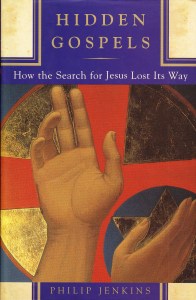
A certain, amorphous indignation comes over those of us trained in history when we encounter abuses of the same. In my case, some thought me conservative when I argued in my first book that Asherah as Yahweh’s wife wasn’t nearly the slam dunk some scholars were making it out to be. Don’t get me wrong, I wanted to see Yahweh as happily married as the next deity, but it was a matter of the evidence being weak and not thoughtfully examined. That is to say, I sympathize—maybe even empathize—with Philip Jenkins. His book, Hidden Gospels: How the Search for Jesus Lost Its Way, is an historical dressing down of many in the New Testament scholarly community who’ve perhaps let a bit of historical rigor slip in order to understand the world of early Christianity.

You see, once upon a time, scholars took the Gospels as, well, the gospel truth. Contradictions were simply harmonized or glossed over. When newer ancient material began to be discovered, however, adjustments had to be made. Perhaps the “orthodox” story of Christian origins wasn’t the only option available. In the twentieth century some spectacular manuscript finds were made, including the “library” of Nag Hammadi—largely Gnostic—and the Dead Sea Scrolls. New understandings of early Christianity were possible when these texts were considered. Some scholars engineered sweeping theories about revolutionary ideas concerning Jesus and his buds. Jenkins laments the lack of historical precision that many of these reconstructions demonstrate, and he comes across as somewhat annoyed.

Sensationalism, as we all know, sells publications and gets presidents elected. We all like a good story. In the case of Jesus, this means that the reconstructions of scholars often challenge traditional views, and popular publications love it. Jenkins finds it distasteful. Although this book is well written, as all of Jenkins’ material tends to be, it probably doesn’t do his arguments any favor to have retained the tired trope of heresy. Heresy means nothing without a supernatural bias, something that historians must avoid. Heresy, after all, assumes that one and only one version is correct (orthodox) and the four Gospels demonstrate that such a simple dichotomy is more difficult to sustain than it might appear to be. Yes, the Gnostic texts may not be as early as the traditional Gospels, but the ideas may have been circulating from near the beginning. We know surprisingly little about Jesus, so it’s not unexpected that rumors would’ve flown, even in antiquity. A solid source of information on some of the early “other gospels,” Jenkins’ book serves as a useful reminder that history is almost never as simple as it seems it should be.


Dead Sea, Live See

501px-1qisa_b

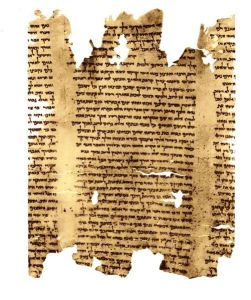
Nothing fascinates quite like the Dead Sea Scrolls. That is, unless you’re a disgruntled Ugaritologist. Mention the Dead Sea Scrolls and the journalists will form a queue. Never mind the relative importance of Ugarit. But I digress. There is something quite dramatic about the discovery and recovery of the scrolls. It involves science and sculduggery and that utterly captivating name “Dead Sea.” This past week the scrolls were in the news again as a new technology was used to read an illegible roll. The New York Times story by Nicholas Wade describes how something like a CT scan can be used to find the ink on an unrolled scroll and software can be devised that associates the ink to its nearest surface. A little virtual unrolling and you have a legible document that has no visible letters that the naked eye can see. Turns out this one happens to come from Leviticus. Figures.

You might think this would lead to joyful leaping on the part of someone who used to make a living reading ancient documents, but such are the times in which we live that even silver linings turn to lead. Years ago I learned about Van Eck phreaking from Neal Stephenson. I thought it was sci-fi, but in fact it is a legitimate—or illegitimate—method of reading a person’s electronic device without being able to see the screen. Since so few people are eager to read my blog, I can’t think anyone would be wanting to spy on my laptop. Nevertheless, with the advent of new technology that can—think about it—read a closed book, I have to wonder about the implications. Reading some dead scribe’s Dead Sea Scroll is one thing. Your sister’s locked diary can be quite another.

Being more of a clay-and-stick man, I was pleased when it was discovered that rapid flashes of light around the circumference of a clay tablet could lead to a virtual computer model that could be rotated 360 degrees with illumination from any angle. The technology had other applications as well, of course. (It certainly wasn’t developed to read forgettable texts.) With a clay tablet we can be reasonably certain that nothing too private was being impressed. But then that’s what you’d expect an Ugaritologist to say. It seems that my days of reading ancient documents are a closed book anyway. But that’s just the problem. Not even a closed book is safe any more. If I were in any danger, I’m sure it would show in my stats before anyone bothered to park a nondescript van outside my door and scan through all the countless tomes with which I surround myself daily. But I do wonder.


Dead See Scrolls

Despite her ability to overlook my obvious deficiencies, my wife has good eyesight. Last week she spotted an article carried by the Associated Press entitled “Dispute over ancient scrolls changes modern law.” Although many ancient documents (notably those from Ugarit) outweigh the importance of the Dead Sea Scrolls for understanding the religion of ancient Israel, the Scrolls have continued to be headliners. There never seems to be some sort of scandal very far from the Scrolls, and this article by Jennifer Pletz reaffirms that assessment. The name of Norman Golb is familiar to just about any Hebrew Bible scholar. His work on the Scrolls is highly regarded. The story, however, brings the scandal down a generation to Golb’s son Raphael, a lawyer and literature scholar. In a case whose details rival the minutiae of the Scrolls themselves, the younger Golb is accused of sending emails putatively said to have been sent from his father’s rivals confessing plagiarism. To what point, beyond alleged family honor, one hesitates to speculate.

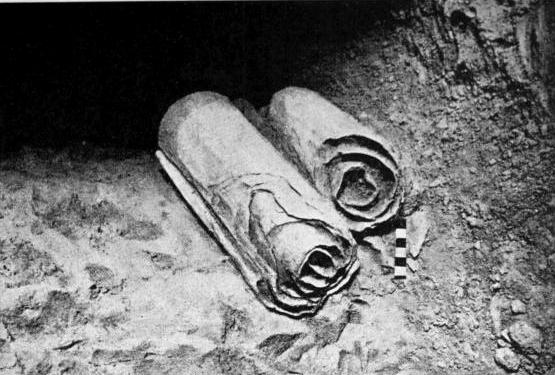
Dead_Sea_Scrolls_Before_Unraveled

“Sculduggery,” J. C. L. Gibson once said, “is always just around the corner in archaeological circles.” The same might be said to apply to the Scrolls. Episode after episode of scholars behaving badly have attended the controversial documents since their accidental discovery on the eve of Israel becoming a state. Ironically, the Scrolls in some symbolic ways represent the struggles of the Israelis. No one doubts their importance, but access has always been an issue. Careers were made and secured by the Scrolls, reaching to the highest academic offices in the land. And yet, we can learn more by turning back the pages of history just a little further.

The Scrolls date from that troubled time period when Christianity was just beginning to emerge from Judaism. Tempers flare at implications masked or insinuated. As if the Scrolls were really the much sought philosopher’s stone. The original generation of Scroll readers is going the way of all nature. Those associated with the more solid tablets of Ugarit have long passed that way already. And yet we still have Bible museums being built and implications left dangling. Law suits are filed and ownership of the Scrolls is disputed. In the twenty-first century scholars are still willing to risk it all on some parchment fragments that have the appeal of the esoteric. Hidden truths, almost apocalyptic, squirreled away in desert caves. Knowledge is indeed money, unless, of course, you actually know how to read the Scrolls for yourself.


Manuscript Madness

A friend recently pointed me to a story of a “new” manuscript, recently discovered, that portrays Jesus predicting the advent of Mohammad. The article on sott.net, suggests that the manuscript, wanting to be seen by the Pope, may be the Gospel of Barnabas. Of course, the Gospel of Barnabas is already known from a medieval Italian manuscript and a new, authentic discovery would be of great excitement to epigraphists and text critics, but few others. Barnabas is not a canonical gospel and is considered by the majority of scholars to have come from centuries after the fact. Quite apart from the sensational headline “1,500 year-old Bible found in Ankara, Turkey: Vatican in Shock!” (posted in September of last year, before Francis came along), the manuscript raises a number of questions concerning what one colleague calls “the iconic book.” To be sure, there are documents yet to be discovered. The Bible, however, will not be reconstituted and the door has long been sealed shut on written revelation. What remains is the perception of sacred books.

How many movies and novels are based on the premise that an ancient document has been discovered and suddenly everything about the world changes? It is a common enough theme. This idea is based on the magical concept of scripture—the hidden wisdom of the ancients somehow overrides all that we know of the world. It lies in some cave or monastery or synagogue, waiting to be discovered, unleashing divine power. No doubt the dramatic (and dramatized) discovery of the Dead Sea Scrolls plays into this mythos. Nobody knew they were there, but suddenly, new information! How many people on the street today, however, can say anything of what was contained in the Dead Sea Scrolls? They’ve been mulled over by furrowed-browed scholars for over half a century, but haven’t triggered any apocalypses, at least not yet.

There are hidden documents. Working for Gorgias Press put me in the place where I could learn about some texts kept under lock and key in remote monasteries in Syria. They are generally kept for their monetary value rather than their spiritual revelations. The manuscript on sott.net made me think of those manuscripts for the first time in years. In all likelihood, if a manuscript is being hidden it is lucre, not illumination, that is at stake. The Vatican library, researchers who’ve been there tell, requires immense patience and a willingness to be repeatedly turned away. There’s just something about those old texts. No surprise that the Bible and Qur’an lead to such fiercely protective sentiments in some believers. In the meanwhile, I wouldn’t advise selling all your possessions and anticipating the apocalypse. Unless, of course, you take some ancient documents literally.

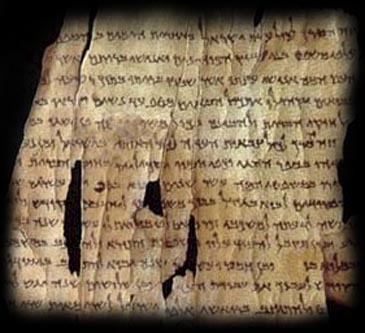
An ancient manuscript (not the hidden one).

An ancient manuscript (not the hidden one).


Genesis Gender-Bender

“Male and female created he them; and blessed them, and called their name Adam,” so reads Genesis 5.2 (5.2a, for those sticklers among the crowd). Long ago I lost track of how many times I’d read Genesis. It has a privileged place in the Bible partially because of our modern method of reading books. We assume that the beginning should be read first and that it should lay the groundwork for what follows. The Bible, however, was compiled over centuries and the story may begin at Genesis, but not all that follows is in agreement with it. “Called their name Adam” sent me scurrying back to dust off my Hebrew of the Bible. The King James Version, after all, was translated from manuscripts that are sometimes inferior to many that have been discovered since then, including the Dead Sea Scrolls. Maybe this was one of those strange Elizabethan passages, for after all, Queen Elizabeth I did have a bit of a reputation. To my surprise, however, “their name” remains plainly in the Hebrew, suggesting that the first couple were both Adam.

Since just a verse later Adam and Adam have a son called Seth (and since the genealogies seldom mention their women at all), presumably Adam here means Eve. Literalists beware! The creation story in Genesis 1, as opposed to Genesis 2.4b, pictures the genders created simultaneously. Women and men together are humanity. The second creation story offers Adam a generous dollop of primacy; he gets to be first and even gets to name the animals and the wife; he is the lord and master of his domain. And people refer to eating the fruit as a fall! Now at Genesis 5 we have humanity reunited in the person of Adam, the bi-gendered representation of humanity.

Of course Adam is a play on words. The Bible begins with humanity as a joke. Adam is just one syllable short of the word for “ground” (adamah), and so Adam is the original groundling, or earthling. Yet Adam is never given as a proper name until Eve appears. It is only with the creation of woman that man becomes man. I suspect that may be the underlying of logic (if it is even right to call it such) of the plural, “their name Adam.” It might be easier just to recognize that the Bible doesn’t give us the endpoint of the discussion of human nature, but the starting point. There are those who insist that the Bible has all the answers. In my experience it is primarily full of questions. And the questions require both female and male to answer them. Otherwise, humanity is indeed a joke.

“Adam, I’m Adam”


Dead Sea Souls

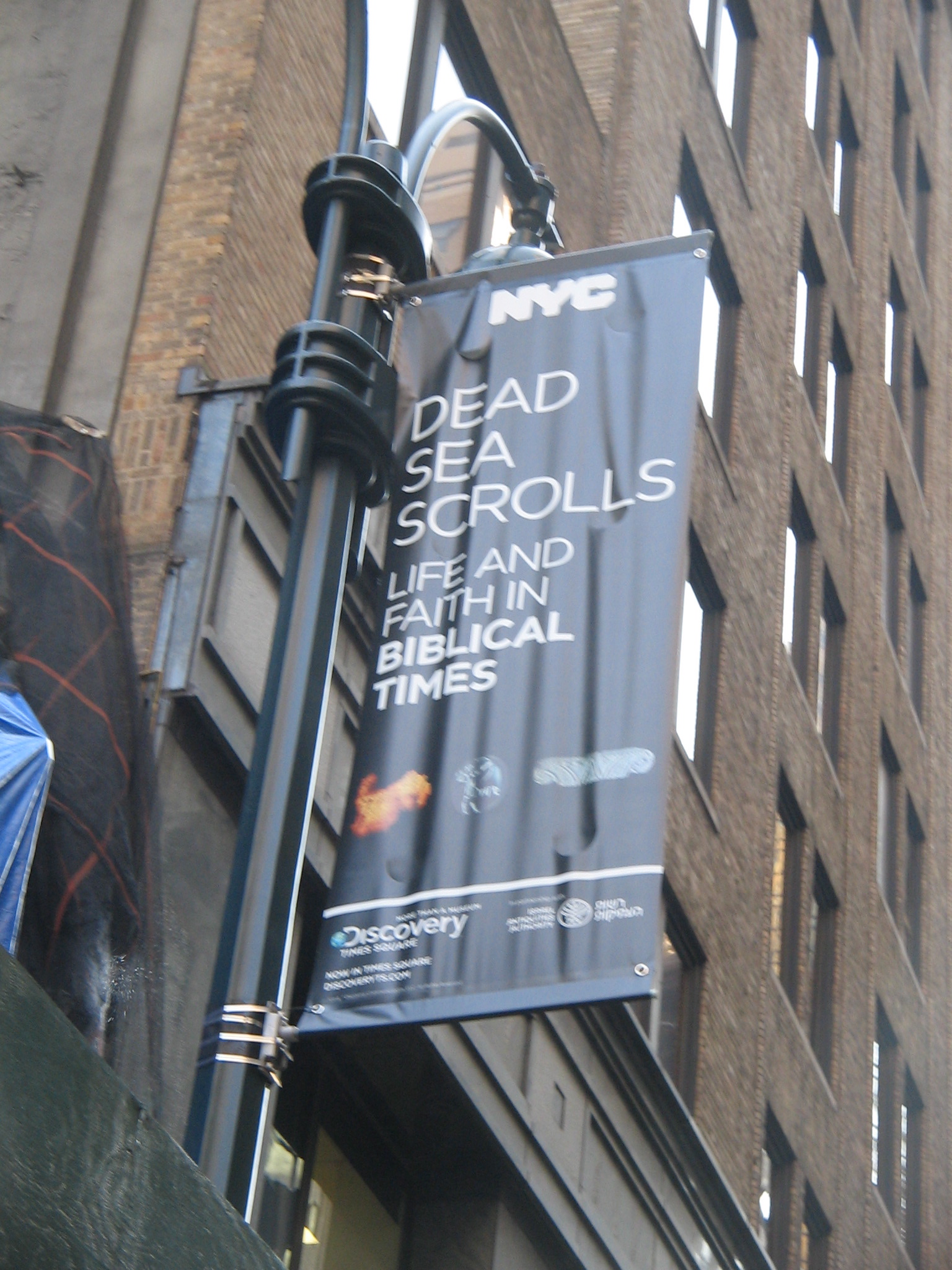
The Dead Sea Scrolls are coming to Times Square. Times Square is the kind of place where you know your being sworn at, but you’re never really sure in what language. It is a place of the people. So the sacred meets the profane. Mircea Eliade would be scratching his great head with his pipe firmly in hand. The Dead Sea Scrolls are the sexiest of ancient documents. Their story has it all: mystery, intrigue, conspiracy, romance—well, maybe not romance. A chance discovery by dirt-poor Bedouin in a desert, ads being taken out in the Wall Street Journal, clandestine meetings with ancient texts being viewed through a hurricane fence in a forbidden zone. And do those scrolls ever get around! I first saw them (those that are accessible to the public) in Jerusalem. The next time was in the Field Museum in Chicago. Now I’m feeling a bit blasé about the whole thing.

Those of use who’ve spent much time (too much time) with ancient documents relating to the Bible know that the Dead Sea Scrolls require no introduction. The far more interesting (and sexy–yes, literally sexy) Ugaritic tablets still receive slack-jawed stares of unrecognition, despite their importance. Those who read the stories of Baal, Anat, El and Asherah wonder why the “Classics” only begin with Homer. People have been creative with the gods since writing began. The theme of the human race might be summed up as, “if the gods are so powerful, what am I doing in a dump like this?” Fill in the blanks—that’s religion. From the beginning, once we’d come up with gods, we began to wonder why they treat us so. People are on the receiving end and so many things can put gods into a bad mood. It’s your basic dysfunctional family.

No doubt the Dead Sea Scrolls are important. We have learned much about the context of early Christianities from them. They provide the earliest manuscript evidence for the Hebrew Bible. And they’ve got that Dead Sea mystique. When I read the story of their discovery, I understand why crowds will flock into a tight room to stare through the glass at a bit of shriveled parchment that most of them cannot read. It’s like standing next to someone famous and powerful; maybe Moses or King David. Or more famous and powerful, like George W. Bush. I know, that was the last administration. But the Scrolls come from an even earlier one. I just hope somebody will give me a call when they find one that tells what happens when Baal meets Astarte. That will be worth the price of admission! And, who knows? It might even fit in with the spirit of Times Square (pre-Disney, of course.)


Crimeless Victim?

Anyone who’s spent much time with the Dead Sea Scrolls knows the name of Norman Golb. Long-term Oriental Institute professor at the University of Chicago, Golb has been active in research on the Scrolls for decades. Tuesday the New Jersey Star-Ledger ran a confusing article about the trial of Golb’s son for identity theft. After reading the piece several times it is still not clear what Raphael Golb has done that is either newsworthy or illegal. It does involve the Dead Sea Scrolls, however, and that is always enough to draw the attention of the Associated Press.

Is the truth in there?

The Dead Sea Scrolls continue to fire the imagination of the general public in a way that is somewhat baffling. The scrolls themselves are largely obscure and fragmentary, the information they contain is often arcane, and the published pieces raise excitement mostly in scholars rather than a general readership. The fact that it is not too difficult to fill a class on Ancient Near Eastern religions at Rutgers University seems to indicate that people are still avidly interested in the past, particularly in that conflicted part of the world where civilization began. While the media report the more sensational finds, interest quickly peters out while new and more exciting stories hit the wires. It’s fun to imagine what the field of studies would be like if sustained media interest told the public what to find fascinating in the ancient world.

This article, however, represents the unfortunate reality that scandal is often the drawing point for ancient studies. People are attracted to scholars behaving badly, intellectuals receiving their timely comeuppance. It is disappointing that the subject matter itself doesn’t receive more attention. The Ancient Near East is, after all, the source of what we continue to recognize as culture. Reading the article over again, the most disturbing element is not that Raphael Gold has allegedly committed identity theft. The most disturbing element is that a professional journalist describes him, apparently without a hint of irony, as “a brainiac.”


Everything but a Name

As we once again near the Ugaritic session of Ancient Near Eastern religions, I ponder the strange wonder that the city has all but completely escaped modern notice. As far as ancient city-states go, Ugarit had it all: drama, sex, violence, everything but a memorable name. Many ancient sites capture the imagination by their names alone: Nag Hammadi sounds exotic, the Dead Sea Scrolls bespeak a hidden mystery. Even Nineveh and Mari suggest hidden riches, but Ugarit? How short-sighted our ancient founders of civilization could be!

To begin with, nobody knows how to pronounce a word that begins with “u.” Vowels are notoriously amorphous, but never more so than when initiating a word. Is it “Yu-” or “Oo-”? The name then launches into the morass of uncertain syllabification. We moderns like to stress the first syllable of a word. Ancient Semitic language speakers tended to throw the emphasis back a syllable or two. How to say “Ugarit” with emphasis on the last syllable without sounding utterly pretentious and affected? Many of my colleagues pronounce the word with an emphasis on the penultimate syllable, “Harvard style.” To me this smacks of a pointy-nosed fish.

In a society that prefers the quick and superficial, stopping to think about pronunciation before barreling ahead into the substance of the matter is a decided detriment. If that ancient society provided us with our earliest complete alphabet and the nearest analog to stories from the Bible, well, it would gain some notoriety if it had a recognizable name. The Israelites forever changed the world that followed their appearance in the Levant. They borrowed concepts, characters, and ideas from their neighbors. Their associates to the north, gone by the time the first Israelite appeared, had chosen a forgettable name and have quietly fallen by the wayside until somebody unafraid of initial “u”s might come along and resurrect them.


Who Owns History?

Jordan has been asking for the Dead Sea Scrolls to be given back by Israel. During the Six-Day War of 1967 some of the ancient documents were absconded by Israel, according to the Jordanian point-of-view. (Nothing in the Middle East is every truly neutral or non-biased.) According to the newspaper, now Jordan wants them back.

This controversy is part of a larger trend for nations to demand “their” antiquities from foreign powers who have claimed and displayed them (in many cases) for large numbers of people to see. They are part of the world’s heritage and the modern day countries from which they emerged want them back. Why? To bolster national pride? Because of their inherent cultural value? To draw in tourist crowds who are interested in antiquities? The ownership of history is a touchy question. History itself belongs to the entire human race while individual artifacts may be stolen, purchased, or destroyed. Some are in the hands of major museums, minor museums, or in the houses of private collectors. Nations struggling for international respectability often want their heirlooms back, and this is only natural. At the same time, these nations may not have the infrastructure to preserve the artifacts securely. Think of the Baghdad Museum. When any government becomes unstable national treasures are at risk.

The Dead Sea Scrolls owe much of their public appeal to scandal. The story of their discovery and sale, rich with intrigue and skullduggery, is widely known. They capture headlines like 2000-year-old sex symbols; their chic name and aura of mystery assure public interest. As a scholar of the Hebrew Bible, however, I have always found the Ugaritic texts to be of far greater importance. Nevertheless, while living in Wisconsin some years back, and teaching at Nashotah House, I arranged a field trip to the Field Museum in Chicago where a roving Dead Sea Scroll exhibit was settled for a limited time engagement. The seminarians were excited, and we decided to make a family trip of it. My daughter was a pre-schooler at the time, and we towed her along to be acculturated. In a dimly lit room, the feeling of an authentic Middle East chaos attended the display, people wandering blindly around, not quite sure of what they were looking at (this based on overheard conversations). People wanted to be near history, even if they didn’t know why. I had seen the famous scrolls in the Shrine of the Book some years before, but it was easy to feed off the excitement. When we got home we asked our daughter what she enjoyed the most from the bus ride and day out. “Seeing the Dead Sea Squirrels,” she replied.

History involves seeing what we want to see. Nobody owns it. Everybody owns it. Who should keep the artifacts? I don’t know. It seems that history is larger than petty desires for cultural fame. But then, that is what history records — our desires to stand out from the crowd.