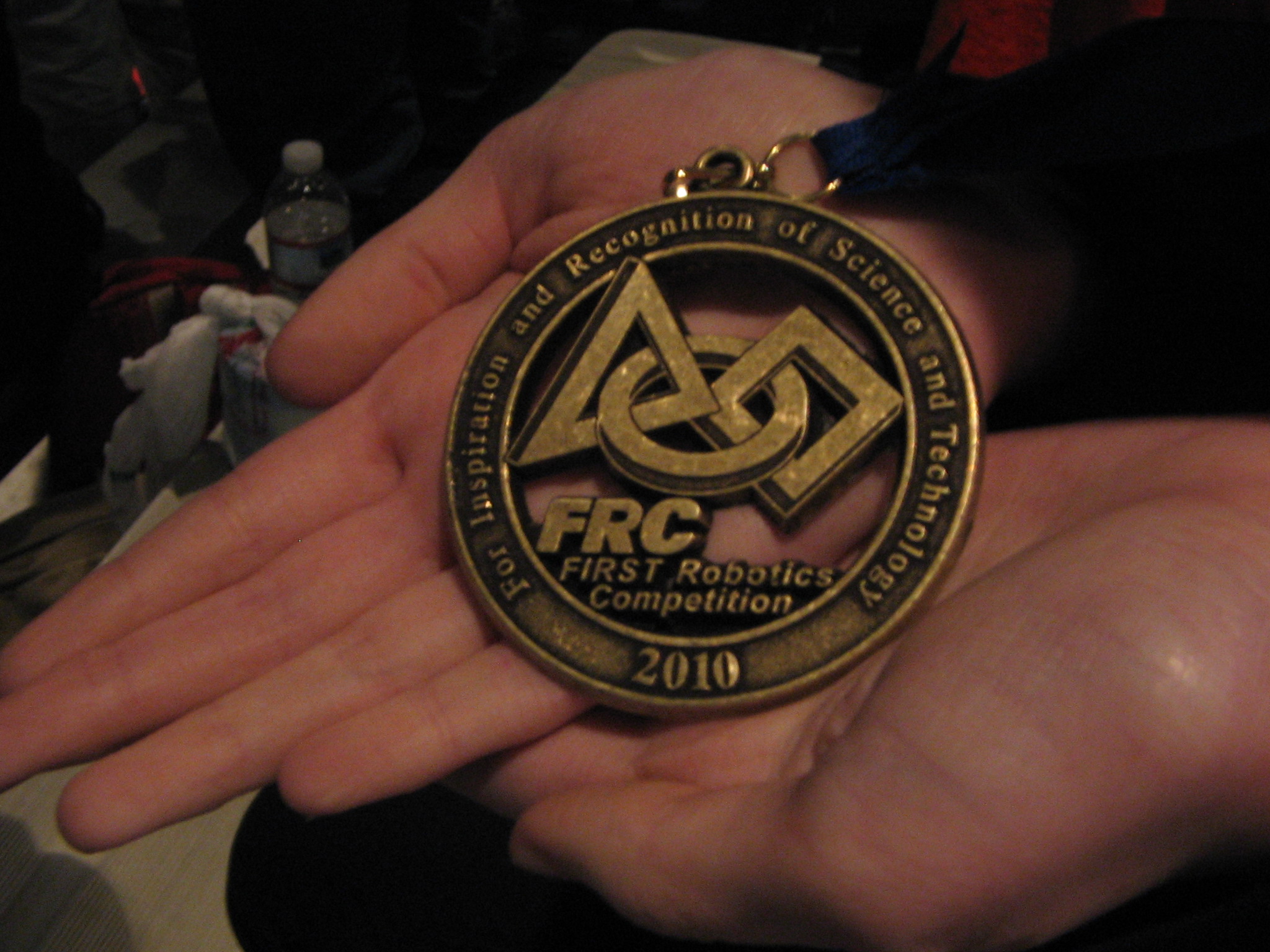
First Stronghold

FIRST Robotics has a way of getting into your blood. Like many people of my generation, I learned about FIRST Robotics through my daughter. Our local high school has a robotics team and, as we quickly learned, the decision to join FIRST is a four-year family commitment. My wife and I were both involved at some level, despite being the world’s least likely engineers. I even served a term as the president of the foundation (responsible for funding the team). We made lasting friendships and grew in the lingo and odd humor that is FIRST. The founder and chief promoter of FIRST, Dean Kamen, is an unapologetic geek and has helped develop what some journalists are calling “the new cool.” Yesterday was launch. If you are a FIRST follower, I don’t have to explain that. In case you’re not, “launch” is the revelation of this year’s game. Teams now have six weeks to plan, design, and build their robots.
IMG_3125

Launch is a big deal. We haven’t been part of the competition for three years now and we still watch the live web-broadcast. The major players (Kamen, and Woodie Flowers) get in character and meet kids from various teams. They give inspirational talks. Dean Kamen told the kids “Don’t get stuck into today.” Technology changes too fast. What you learn in school are tools, because facts are available instantaneously on the internet. Those of us who retain facts are so yesterday that we’ve become the trivial pursuit generation. Any computer, let alone robot, could beat us. Woodie Flowers told the young audience thinking about careers that they must do what machines cannot do, otherwise their jobs will become obsolete. What could be more human than religion? What’s religion got to do with it? This is science and technology!

This year’s competition is FIRST Stronghold. The entire buildup of yesterday’s launch was a takeoff on Monty Python and the Holy Grail. What is this I see before me? History? The Middle Ages were nothing if not religion run wild. This was a world ruled by bishops, popes and nobility. It was a world where no matter who you were, God trumped all. Technology meant that a trebuchet was a pretty sexy device and long distance communication traveled at the speed of a horse or human runner. (Or, I suppose, a trebuchet missile.) Now that the humanities have fallen victim to science, we look back to them for inspiration. It reminds me of John Keating in Dead Poets Society: “And medicine, law, business, engineering, these are noble pursuits and necessary to sustain life. But poetry, beauty, romance, love, these are what we stay alive for.” This hasn’t changed since 1989. Or even 932 for that matter.
Robotics FIRST

Wired

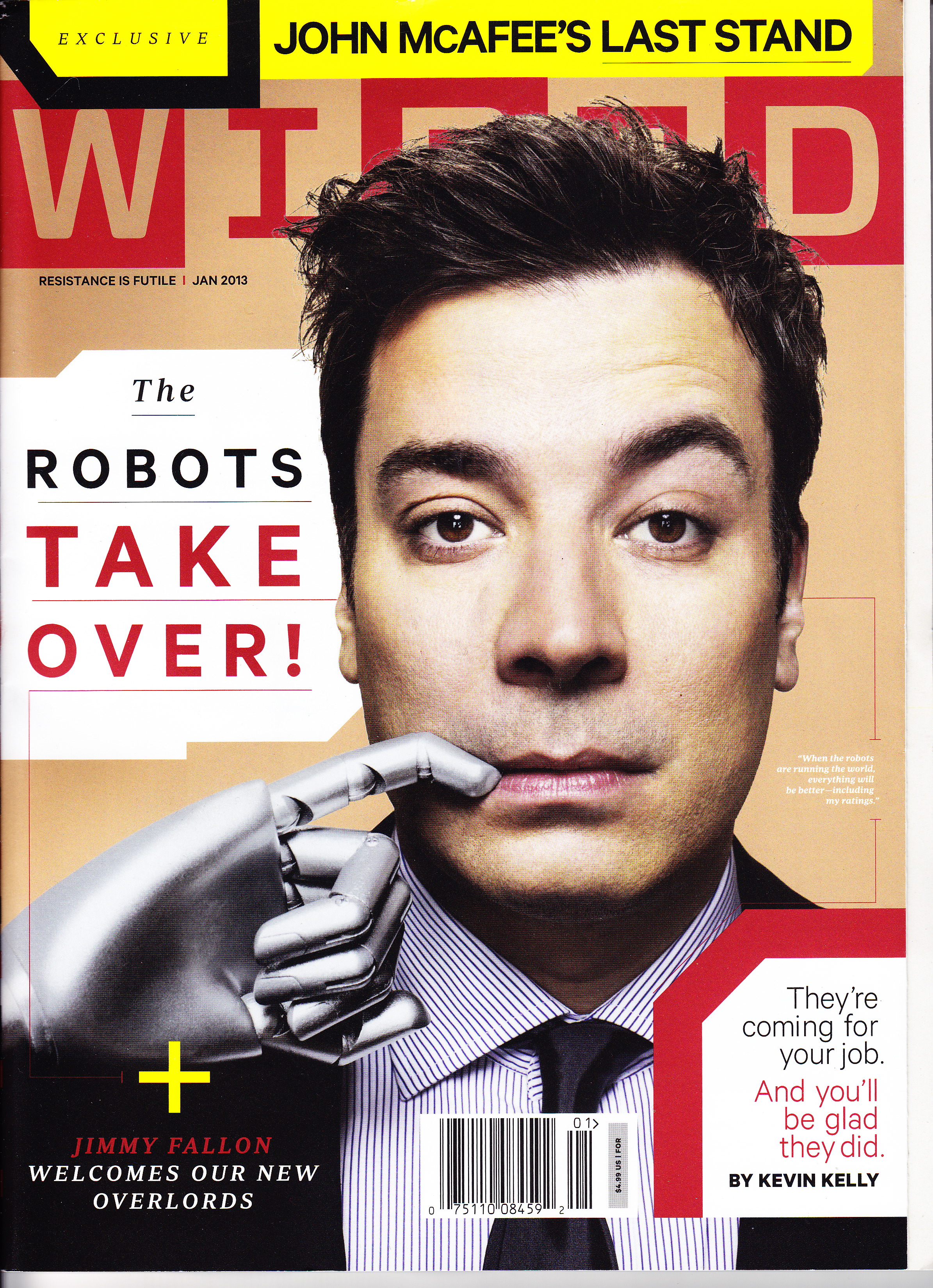
I knew it! It was right there on the cover of Wired magazine. “The Robots Take Over.” And it is also the very day of the FIRST Robotics kickoff, the day when Dean Kamen and his team announce to thousands of high school kids, teachers, engineers, and interested parents, what the 2013 FIRST robotics competition will be, spurring us into six frenzied weeks of designing, planning, and building a robot to take to competitions. First Atlanta, then the world! It must’ve been their plan all along.

The article in Wired, by Kevin Kelly, does have hints of cheekiness throughout, but for the most part is on target. How many of us already use computers or some kind of robotic devices to complete our jobs? Kelly points to the inevitable: robots can do it better. The upside is that when robots take away jobs they create new ones, like Charlie Bucket’s dad getting a job repairing the robot arm that took his job away at the toothpaste factory. If you don’t want a tech job, too bad. That’s what the new definition of work is becoming, since labor is already being taken over by robots. Those who can look far enough ahead can see robots doing, as Kelly puts it, any job. What makes this sound apocalyptic to me is the fact that we, as a society, undervalue education. What will the undereducated do? Their jobs are the first to go. I feel the tremors of a revolution that hasn’t even started yet. People need something to do.

It is apparently without irony that Kelly suggests that any job people do, including in the service industry, can be done by robots. I am an editor. A robot may be able to find grammatical errors (Word and Pages already do this), but they can’t capture the soul of a writer. We write for the enjoyment of other people who experience being people in the same way that we do. There is an inherent arrogance in the Artificial Intelligence movement that believes (yes, it is a belief) that intelligence and mind are the same thing. There is no room for a soul in this machine. Many biologists would agree: we’ve looked, no soul. But even biologists know that they’ve got an identity, aspirations, contradictions, and emotions. It is the unique blend of these things that make, what we can for convenience call, the soul. There are entire industries built around the care for that soul.

Many scientists are still betting on the end of religion, the ultimate repository of those who believe they have souls. Religion, however, is not going away. When we see robot psychiatrists, robot social workers, robot clergy, robot writers and artists, and robot Popes, we’ll know the apocalypse has truly transpired.


Send in the Robots

The FIRST Robotics kickoff is an event that is difficult to describe for those who’ve never attended. First, it must be noted that FIRST Robotics is sometimes described as “the varsity sport for the brain.” While engineering students with a penchant for athletics are not unheard of, the majority of robotics team students are not cut from the same cloth as the athlete. The FIRST kickoff, the first Saturday in January, is the opportunity for these kids to be told it is cool to be smart and that application of brain power is not the liability that many of the electorate seem to think it is. At this event the competition for the year is unveiled, and the kids (with some adult help) have six weeks to design and build and program a robot to do some very complex tasks. It is a season of sleep deprivation, programmed Saturdays, and the celebration of learning. Before NASA shows the game animation—the competition for the year—celebrities and other people in the public eye endorse the program. It is a time for praising the benefits of science.

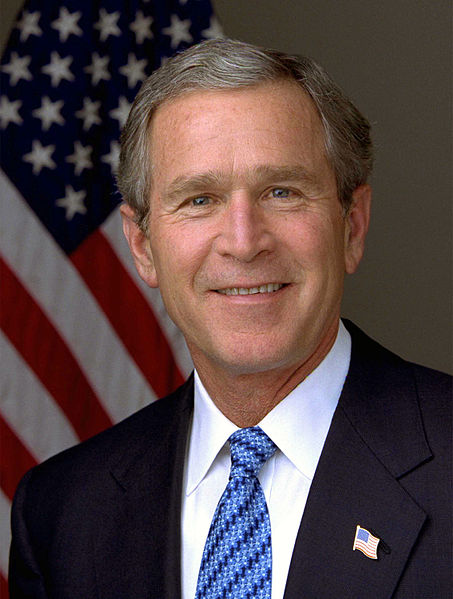
Yesterday’s kickoff, however, was marred by the appearance of one of the guest celebrities. When George W. Bush was announced as a supporter of the program, a sense of disbelief fell over the room. This man who advocated for creationism in the classroom, who fought to stop research in cutting edge disease control, who began a war as a personal vendetta, was showing his dully beneficent face on the big screen telling the kids what a great program it was. A chance, as he said, to use your “God-given talents.” He ended his brief—and obviously scripted—sound-byte with his characteristic “God bless you.” I could not stomach the hypocrisy. I’ve blogged about religion and the science of robotics before, but to have a president who did nothing to strengthen the cause of higher education and fought science with eight years at his idle hands was just too much. If I was Dean Kamen, I would have insisted that that clip be left on the cutting room floor.

The former W represented religion in its guise as the enemy of science. It should be clear to my readers that I do not believe science has all the answers, but I also believe it is wrong for religion to stand in the way of knowledge. Science is something that we shouldn’t give lip-service without backing it up with programs and funding. That one minute of disingenuous, religion-riddled speech trumped all the other endorsements, including the sensible one by Bill Clinton who emphasized the need to work together even with those who are your opponents. This was a point W obviously missed. There comes a time when some public figures, like overused cattle, should be put out to pasture. There are some cowboys that should just stay on the ranch. I understand that presidential endorsements are important to FIRST, but in this case integrity should not be compromised. Especially when most of the teenagers watching the kickoff possess far greater potential than a mere politician elected on religious sentiment and dubious counting.

Does this face inspire science?


Soccer Moms and Robot Dads

Long past Halloween, the air is taking on its terminal, winter chill. High school football teams have moved off the fields (although the “pros” will keep at it until the Super Bowl in sunnier climes). What are sports parents with an excess of aggression and competitiveness to do? It is the time of year when some parents start thinking about the FIRST (For Inspiration and Recognition of Science and Technology) robotics competition. It is a good sport for the hibernation season.

My daughter is on the FIRST Robotics teams in her high school. FIRST was invented by Dean Kamen (along with many physical inventions) as a way of stirring up interest in STEM careers. Interest in science and technology careers, inexplicably, is faltering in the US, while many of us who grew up enamored of science but without any natural ability sit by and scratch our heads. Careers in robotics are very hot—especially since machines can do things we mere biological units can’t. We are that squishy, organic chemistry with a mysterious plan that serve as gods to the mechanical beings we create. Woe to humanity when the robots become atheists! But that’s a point for another post. Sports—and FIRST clearly is a sport, as much as racecar driving or horse jockeying—take on a religious devotion among people of leisure that rivals the commitment oppressed peoples have to their more tradition forms of faith. The easiest means of seeing this is in the fans.

“Fan,” of course, is an apocopated form of “fanatic,” a word wielded with derision against those who take religious belief too seriously. In sports it is a venial sin, if not a downright virtue. Consider the continuing news stories still swirling around a non-necessary sports figure at Penn State. Even the name of the school evokes football rather than academic performance. The same thing applies to FIRST. FIRST robotics is a sport for the mind, and it has its share of analogues to the soccer mom, what I might call the robot dads. These are parents who are particularly driven to win. In a sport involving band saws, hydraulic lifts, and multiple motors, parents are actively involved in building robots suitable for competition. And the competition can be intense. It becomes a kind of robot religion. Dean Kamen, the Susan Calvin of FIRST, has tried to instill commandments of sportsmanship and gracious professionalism into the competitions. That is something the kids understand. As I attend the competitions, however, it is the religious parents that I worry about.

My worry includes the kind of gender disparity that characterizes the work place. Why should not the scientists and engineers include more women? The field strives to do so, but our society still discourages the participation of women in the men’s room of heavy equipment and intense mathematics. Isaac Asimov, frequently a writer with distance vision, made a woman the head robopsychologist of U.S. Robots and Mechanical Men, Inc. If Dr. Calvin were to look back from her fictional 21st century to the actual 21st century she would see women still struggling for equal voice in both science and religion.

Let's hear it for the boy


Waiting on a Miracle

A Google search for Morgan Freeman and FIRST Robotics will bring up an online invitation to the FIRST Robotics national championship in St Louis. After having spent yesterday at the Philadelphia FIRST Robotics regional competition I was once again struck at how emotional such events can be. I reflect on how emotion often drives religion and it is obvious that humans crave this kind of fulfillment. We look for something to believe in. Science and technology fields of inquiry are offering answers to age-old questions and present-day problems. God has been removed from the machine, but a divine residue remains. Whenever I attend these competitions I am alert for how religion manages to cling on to this highly humanistic art of robot building. I’m never disappointed.

The Dean of Temple University’s College of Engineering (which was hosting the event) spoke of the emotional rescue of the Chilean miners last year and how the press hailed the feat as 75 percent engineering and 25 percent miracle. The Dean espoused that the goal of engineering is to bring the engineering factor up to 100 percent. A world where we no longer rely on miracles. Any of us who’ve every waited on a miracle know that the outcomes are chancy at best. And yet the religious language was not over. DuPont, one of the corporate sponsors for FIRST Robotics, had a promotional slide on the projection system reading “The Miracles of Science.” Of course, that is one of their corporate logos, but the question left lingering in the air is: does the miracle come from God or human engineering?

Teams from a wide variety of high schools participate in the FIRST Robotics Competition. The founder of FIRST, Dean Kamen, was present yesterday to celebrate the final regional event. Several parochial schools compete in the competitions, and religious language is evident in team names, logos, and mascots. One of the winning alliance members yesterday was the Miracle Workerz (I didn’t catch what high school they were from) making a hat-trick of miracle references. Another team mentor was caught on the camera making the sign of the cross as he left the robot to make its way into the finals. Even though my team did not make it out of the elimination rounds this time, I left feeling inspired. Dean Kamen revealed new ways that FIRST is promoting technology to better the future while the headlines remind us how dangerous religious extremists can be. At the same time, even in this future that our engineers are designing, God is still hidden in the machine.

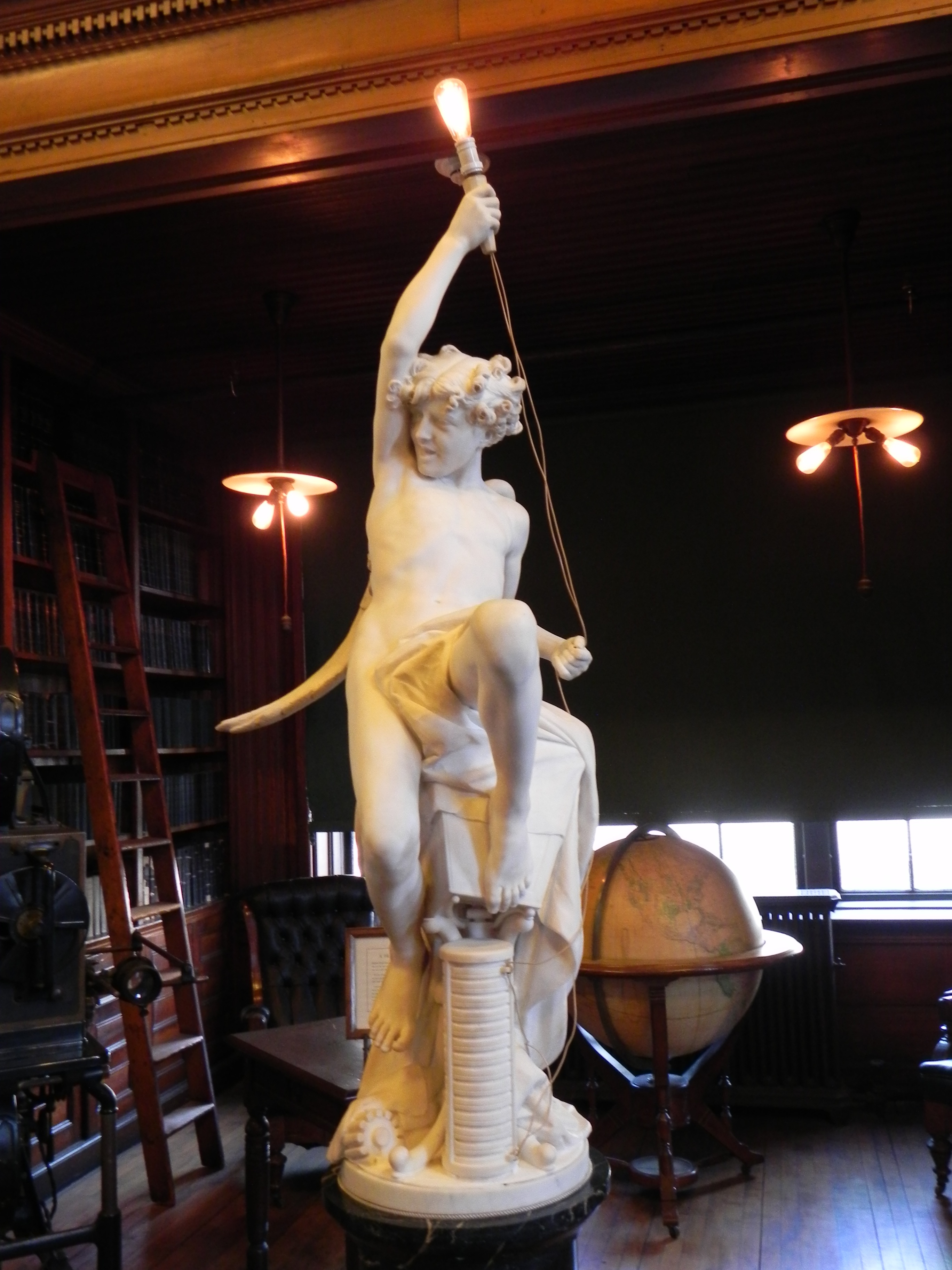
A gift of the gods or human innovation?


FIRST Things First

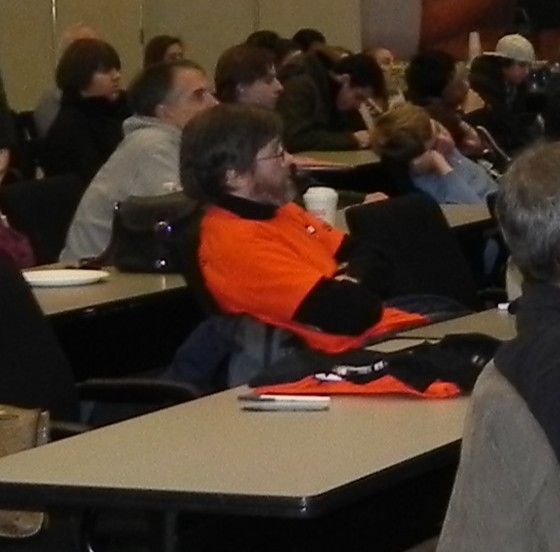
Being a religion specialist in a crowd of engineers is a surreal experience. Indeed, the clash of worldviews could hardly be more apparent, shy of crossing the border into Iran. I support the efforts of FIRST Robotics because they encourage children to excel in science, math, and engineering. My own childhood, however, was dominated by an overbearing religion that forever scarred me with a fear of Hell that I still can’t quite shake. Somewhere out there behind the stars there must be a horrid place engineered for the eternal torment for sinners like me, for the Bible tells me so. Speaking of stars, the live feed to kick off the FIRST Robotics Competition is sponsored by NASA. Yesterday was the international kickoff for this year’s competition, and as president of my daughter’s robotics team, I naturally sat among the well-paid engineers and professionals as we watched Dean Kamen unveil this year’s assignment.

The kind of guy who stands alone at parties

The FIRST kickoff video is available online for those who missed the event. The organization grants millions of dollars in scholarships to deserving students, funding college careers for the future of humanity. As I watched the live feed yesterday, a profound angst settled on me. Successful guys my age working for companies flush with money described how the latest medical and humanitarian breakthroughs were being made in the sciences. I have a part-time job with no medical coverage, and know, somewhere deep inside, that if something goes seriously wrong I will be permitted to go the way of all flesh, without benefit of these great technologies. And without the benefit of spiritual reward. A lost child of the cosmos. A life spent in the pursuit of truth, yet ending up with empty hands at the end of the day.

The eye in the sky is watching you

As a child I was a charter subscriber to Discover magazine. One of my earliest career ambitions was to be a scientist. One of my favorite classes in high school was physics. I was, however, haunted by the knowledge that the clergy had divined Hell behind all of this; only those who sought the keys to the kingdom would be spared. In college I majored in religion and took classes in astronomy, still flirting with my first crush. Now, an unemployed religion professor, I watch as day by day my specialization become more and more obsolete. No matter how far our telescopes peer into the universe, they just don’t spy God in an unguarded moment, captured by candid camera. Those with the money say truth lies in the progress of science, others in the unethical life of corporate America. The future lies anywhere but here in the world of religion. As I tell my students: be very careful in choosing a career. The best of intentions will lead to the worst of anxieties unless the way of the universe is truly comprehended.