Cinematic Demons

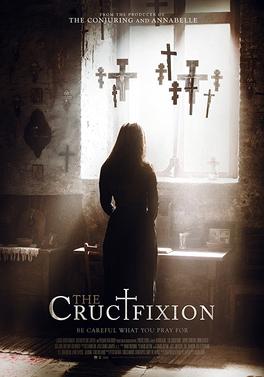
It was because I read The Exorcist Effect.  I realize that there are lots of movies that I could’ve watched for Nightmares with the Bible, but with limited time, limited budget, and limited social contact, I made choices without all the data.  I guess no one ever has all the data, really.  In any case, I could’ve discussed The Crucifixion.  I’ve been taking a bit of a break from exorcism movies, but since this one was based on a true story I’d not heard before Exorcist Effect, I decided to give it a go.  Although highly fictionalized, the movie crew did pick up on significant details from the case of Maricica Irina Cornici, who died after an exorcism in Romania.  The framing story is that of Nicole Rawlins, a journalist who wants to learn the truth.

In fact, the story is really about how Rawlins comes to faith after confronting the demon Agares.  Rawlins has guilt over being an atheist, unable to convince her dying mother to try new treatment and then by letting her die with the knowledge that her daughter has no faith.  In Romania Rawlins drives around a lot and, in one of the most difficult to accept aspects, everyone freely gives information.  Sister Adelina Marinescu, the victim, we’re led to believe, picked up a sexually transmitted demon in Germany.  Her brother, and friends, even the bishop, all freely share their opinions.  Rawlins develops a crush on the local priest, Fr. Anton.  He wants her to regain faith since, as an atheist, she’s an easy target with a demon on the loose.

It turns out that the demon was actually transmitted from a possessed priest, who got it from a possessed farmer.  It then passed to Sister Adelina and from her to Rawlins.  Her possession becomes apparent on the farm of the original possessed man and Fr. Anton performs an unplanned exorcism to save Rawlins from the same fate as Sister Adelina.  Rawlins comes to believe; she saw her mother during a brief moment when, it’s implied, Nicole died.  The film has a rather convoluted plot and many scenes where logic seems to break down, but it is certainly a passable horror film.  Rawlins earns sympathy as the lead, and the Romanian setting is a nice (if historical) touch.  The local festival “like Halloween” adds intrigue.  The movie didn’t rock the critics, but it seems like it works for what it is.  And if I even write a follow-up to Nightmares, it will definitely be included.


Gateway Horror

I’m in two minds about The Gate.  Part of me says “bad movie” while another part says, “Yeah, I’d watch it again.”  A third part of me knows I probably will.  It came out in 1987 as family-friendly horror.  There’s far too much going on for the run-time and the acting is lackluster (child actors who can really pull horror off are rare; perhaps those with more life experience make it believable).  It does have some Poltergeist vibes, though.  So, Glen (12) and his sister Al (15) are allowed to stay home without a babysitter for three days.  A couple nights before, a storm blew over a tree in the backyard, and Glen, with his friend Terry, accidentally open the eponymous gate at the hole by breaking open a geode, allowing demons to come into the world.  And, of course, the parents are gone.

Glen fears he is losing his sister to, well, growing up.  They used to do model rockets, but now she’s interested in boys.  Terry listens to heavy metal and discovers in an insert to an album of a European band, Sacrifyx, that they’ve opened the gate.  As night falls, the stop-motion demons attack.  They’re little and can be blocked by doors.  Al, Glen, and Terry have to figure out how to stop the demons and seal the gate without the Dark Book insert from the Sacrifyx album.  What to do?  They grab a Bible and try reading a bit.  When it doesn’t seem to be working, Terry utters an expletive and throws the Bible into the hole.  It works!  But, ah, this is only the false resolution.  The really big demon bursts through a hole in the living room floor after Terry and Al are both taken.  Glen, left to his own devices, launches a model rocket at the demon, destroying it.

Okay, sounds bad, right?  The reason, it seems to me, is that it doesn’t put religion to work for itself.  The instincts seem good—use the Bible—but the demons are too corporeal and too physical.  There’s no possession here.  In fact, the demons are the old gods (we’re in Lovecraft territory now) who want to take over the world once again.  There’s some good material to work with in The Gate, and if I ever get around to a sequel to Holy Horror I’ll have to include this one.  Overall, the message seems to be that if the Bible doesn’t work, use a rocket.  Oh, and don’t give up on your sister.


Learning too Late

Threads of this, crumbs of that.  My life has been a grasping at small bits.  I know the things I like, but which circumstances keep me from.  Nobody is paid to read only, and writing brings in so very little money.  I’ve read Edgar Allan Poe since I was a child, but I haven’t read all of his written works.  (The same is true of the many other writers I admire.)  When I wrote Nightmares with the Bible, I tried to tie the theme of demons to Poe.  I began a chapter with an epigram from “The Raven”—“And his eyes have all the seeming of a demon’s that is dreaming.”  At this point in my life I had not read, or if I had I’d forgotten, “Alone.”  Not published in his lifetime, Poe wrote the poem at 21.  It ends with words that would’ve been appropriate for my Nightmares venture:

From the lightning in the sky

As it pass’d me flying by—

From the thunder, and the storm—

And the cloud that took the form

(When the rest of Heaven was blue)

Of a demon in my view—

Some printed editions end the poem with a period.  The ambiguity of that final em-dash, however, would’ve made particularly well the point I was struggling to convey.  Demons are not what we think they are.  As I continue to read about The Exorcist and its impact, it becomes clear that media mediates reality.  That view of demons has become canonical, but many, from Poe both backward and forward, have wrestled with them.  Not every entity with which we struggle through the night ends up blessing us in the morning, disjointed hip or not.  “Demon” is a very slippery word.  And concept.  In a materialistic world we boldly claim there are no such things.  As Poe wrote, “Of a demon in my view—”

There’s more going on beneath the surface than most people would be able to guess.  This is perhaps why I have a penchant for staring at the ocean.  Misunderstood, certainly.  But never, I hope, shallow.  There are great depths to be explored, but as the ocean teaches us, humans can’t stand the immense pressure at the bottom of the sea.  No, our lives are more like the bits and pieces of seashells plucked from beaches.  We don’t have the whole picture.  All writing reflects a stage on a journey.  Those who embark must earn their keep as they go.  And finding validation after the fact is one of the small joys of life that keep the traveler moving forward.


A Tumble

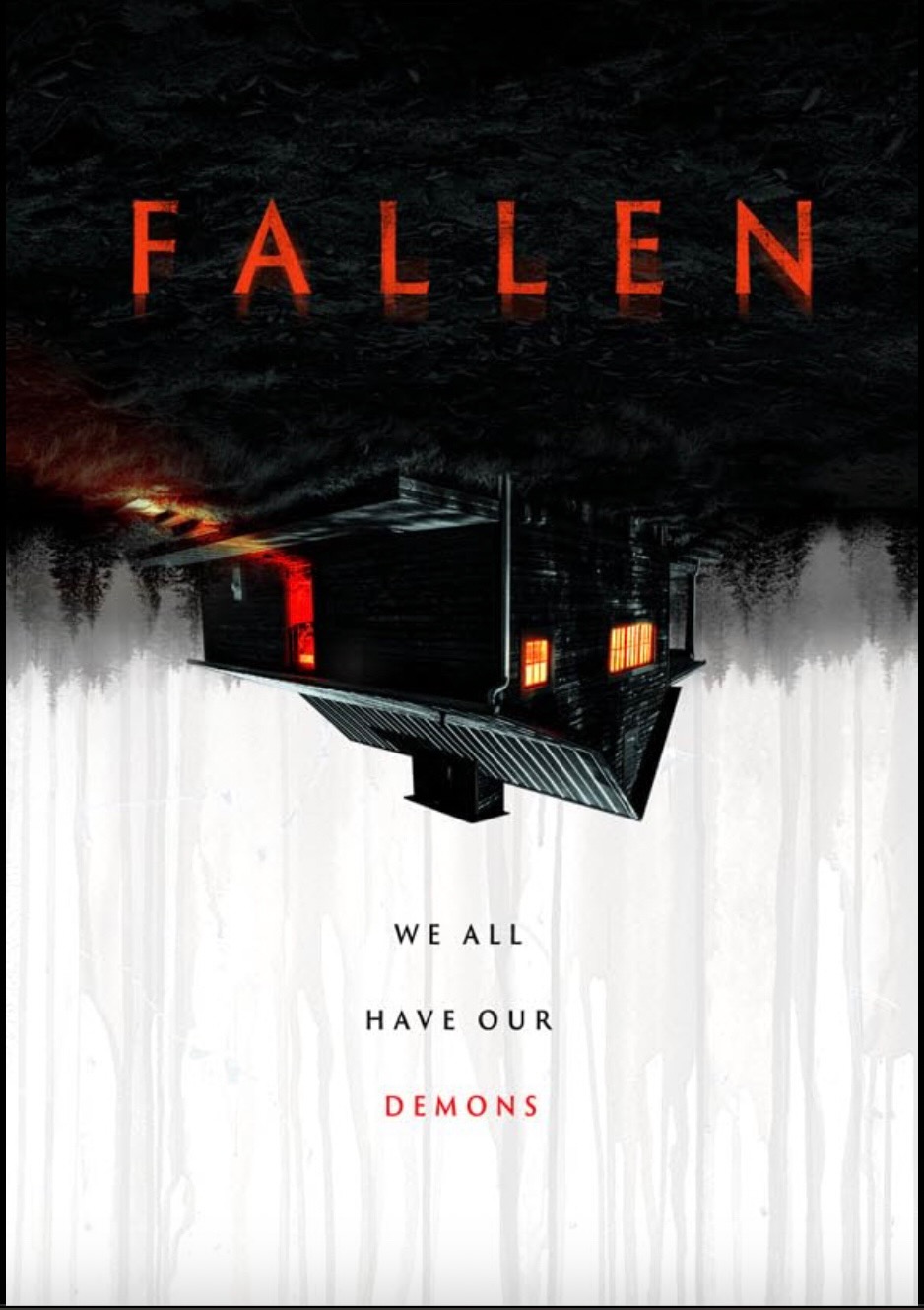
So beautifully shot, Fallen is a movie worth watching despite its disjointed plot.  Worth watching for horror fans, that is.  Apart from the night scenes, this is art house cinematography, and that may be because it’s an independent movie.  What’s it about?  That’s difficult to say, definitively.  The night scenes are so dark that you can’t tell what’s happening and the plot seems to have been intentionally obscure.  (That’s hard to substantiate because the 2022 film hasn’t generated too much discussion.)  This may have been another case of mistaken identity, like The Entity, because my notes only had the title down.  There are at least three movies with this title.  I’m learning my lesson to jot down the year when I add a movie to my “to see” list.  In any case, here goes…

A young priest (?) is warned by an older priest that it is time to take up violence because the darkness has started.  The younger priest is called “Father Abraham,” but he wears a tie in church services, and a small pectoral cross, making identification of the denomination difficult.  Since this is religion-based horror you’d think that that much, at least, ought to have been sorted out.  The heavily accented dialogue is often delivered so low that it’s difficult to follow.  In any case, this minister, after fighting “darkness” for many years, is in an isolated farmhouse with his disabled daughter.  He hunts and traps for their needs and a local boy delivers groceries, and is secretly in love with the daughter.  The minister, who seems to be presented as a tortured soul, isn’t really likable.  At night the house is attacked by physical demons.  There will be spoilers in the next paragraph.

It’s finally revealed that Fr. Fallen (apparently that’s his surname) had killed his wife for being a witch.  His daughter is also a witch, out for revenge for her mother’s death.  She summoned the demons and eventually kills her father and leaves the farm.  Religious imagery is everywhere in this film and begs for interpretation.  The lack of coherence, however, makes that very problematic.  The disabled daughter is the only survivor at the farmhouse, and is healed at the end.  By the demons?  Or because she’s a witch?  The influence of M. Night Shyamalan is evident, but his clean plotting is absent.  Online discussion is minimal, but there could be something of substance here.  If only it were better put together.  If only it were more discussed.


Entities

When you’re a regular scholar, you take notes.  I’m not a regular anything, I guess, and I’ve fallen out of the habit of noting who makes movie recommendations to me.  Many of these come from books, but I don’t always remember which book made what suggestion.  In my list of movies to watch is The Entity.  The thing is, there are at least five movies by that title.  One of them was free on Freevee, so that was the one I watched.  I’m not sure it was the right one, but since it featured something like a demon it represents my interests in Nightmares with the Bible.  This one was, for the record, from 2016, or 2015, and directed by Eduardo Schuldt.  Like Paranormal Activity, it’s “found footage” from hand-held cameras and it made me more woozy than scared.

Based in Lima, it’s in Spanish and claims to be from the dark web.  I don’t have any desire to go there (the dark web, that is.  Lima would be okay), but the movie wasn’t that frightening.  It was like Sinister and Ringu’s unholy offspring.  With a bit of Blair Witch Project as a sibling.  A curse from the Inquisition brings this into the realm of religion and horror.  Film students working on a class project learn that those who see a certain film are going to die.  Being modern people, they’re skeptical so, of course they watch it.  The thing about religion is that it’s unrelenting.  It doesn’t give up just because people stop believing.  Movies like this underscore how we keep turning back to religion to frighten ourselves.  You can guess what happens to the students.

The thing is, I’m not sure that I watched the correct one.  Film scholars now make a habit of citing movies by not only title and year, but also director’s name.  There are a lot of “Entities” out there, and if you take the article off there are even more.  I’ll probably end up watching a few of them, but since I didn’t write down which book, or which friend, made the recommendation, I’ll never know if I got the right one.  I keep a list to try to prevent myself from just going for whatever’s free on the weekend because you generally get what you pay for when you do that.  Even though I ended up a bit nauseous (from the camera movement) I was glad to have seen this.  There were some good moments in it.  And I can tick one off my Entity list. 


Creepy

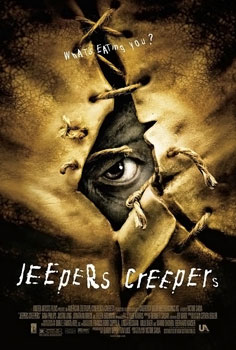
There’s some symbolism here that I haven’t had time to sort out.  (Some of us need time to just sit and think—time that work won’t allow.)  I’d been wanting to watch Jeepers Creepers for quite some time but streaming services said it was unavailable.  I suspect that was because a sequel has been running in theaters and those who own the rights want to capitalize on it.  So it goes.  When it finally did show up on Freevee, so you have to subject yourself to commercials, I had to see it.  Now I need some time to think.  In case you’re even slower than me, the film involves a couple siblings driving home for spring break when they encounter a monster/demon, Creeper.

Creeper smells peoples’ fear and consumes parts of those who have something it needs to regenerate itself.  The brother and sister encounter Creeper on one of those long stretches of road without civilization that you find in parts of America (in this case, the unspecified south).  I won’t spoil the ending, but for my money (or actually, Freevee patience), the first half is pretty scary.  The whole is not bad either.  So what do I need to think about?  Well, Creeper stores its victims’ corpses in a church basement.  The church is abandoned, but still.  This overlap between religion and horror is an aspect that has fascinated me time and again.  Shouldn’t a church be a safe place?  (For many of us, that’s a myth long debunked.)  Is it because it’s abandoned that a demonic monster has moved in?  Or does religious symbolism not bother it?  Or perhaps attract it?

Not only that, but the movie also has a prophet.  While she’s not called that, this local woman has dreams of things involving Creeper that haven’t happened yet.  Like Cassandra, however, everyone ignores her.  It seems that Jeepers Creepers experienced a budget cut during production that led to a rewritten, and cheaper, ending.  While I won’t spoil it, I will say that it is a bit of a letdown from how the film started.  A lot is left unexplained, but the story is pretty good and the acting, at least by the siblings, and the always entertaining Eileen Brennan, was impressive.  They have a way of conveying fear that’s believable and contagious.  The religion theme, however, appears to have been dropped once the church burns down.  It may be that it was somehow revisited in the ending that money forced to change.  Regardless, it is worth watching, and, if you have the time, pondering.


On Offer

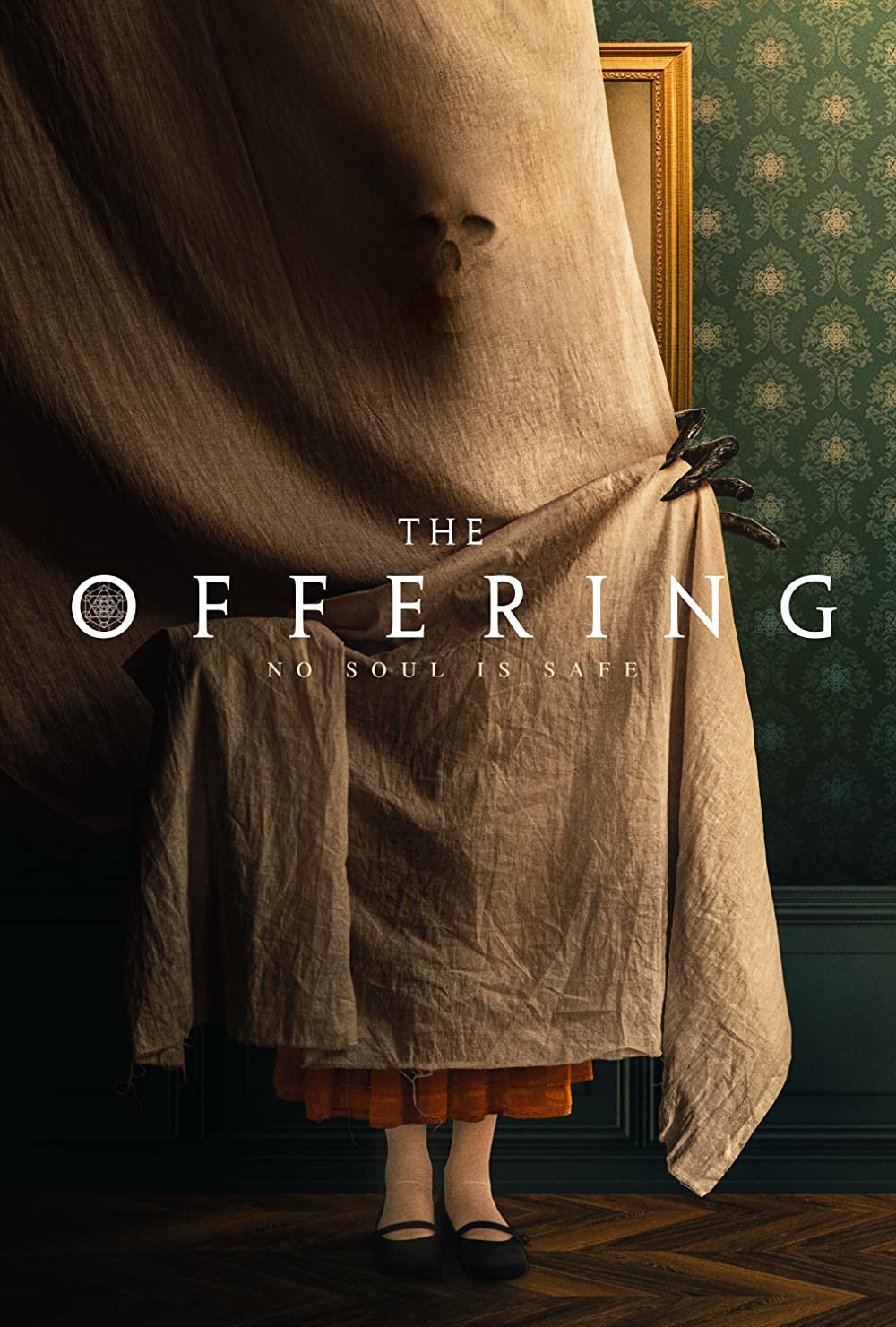
Feeling a bit overwhelmed by various January blues, I took me to my homegrown therapy of watching horror.  The newly released The Offering raises many questions regarding religion and horror, focusing again on Hasidic Judaism.  I say “again” because several movies from the past decade have begun to reflect Jewish monsters, often in Orthodox settings.  This is fascinating because Judaism tends not to emphasize spiritual entities, and perhaps that’s why they’re so surprising in such a framework.  I’m not a specialist in Judaism, and I worry about cultural appropriation, but horror is open to all people.  Religion often plays a central role.  A former author of mine, with Routledge, wrote a fascinating chapter in his book that dealt with Buddhist horror films.  So, The Offering. (I have an article on the movie coming out soon on Horror Homeroom, so be sure to check there for more.)

Like most Jewish-themed horror, The Offering is intelligent.  A Hasidic Jewish scholar, wishing to see his recently deceased wife again, accidentally raises a demon.  While demons aren’t especially plentiful in Judaism, this one happens to be Abyzou, a character familiar to anyone who’s seen The Possession, or, perchance, read Nightmares with the Bible or Holy Horror.  Abyzou targets children and so when Art, a non-practicing Jew, takes his pregnant wife to visit his religious father in Brooklyn, the tension is lined up.  Also, did I mention that Art’s father runs a funeral home out of his house?  The scholar’s encounter with Abyzou lands him in the morgue in the basement where, as demons are wont to do, it escapes.  And it wants that unborn baby.  There are also other family tensions which add to the complexity of the story.

I’m not in a position, without committing a lot of research time that I don’t currently have, to gauge the authenticity of Jewish lore associated with the demonic attack in this particular movie.  It is a film, however, that uses many familiar tropes in the service of horror that’s fueled by religion.  Demons are, after all, religious monsters.  Unlike The Exorcist, the goal here isn’t to exorcise but rather to trap the demon.  Exorcism always raises the troubling question of where a demon might go once it’s expelled.  The famous gospel story of Legion entering a herd of swine makes that abundantly clear.  The Offering also makes the threat to a pregnant woman a key element in the tale, and since we know that Abyzou wants the young, we’ve got built-in suspense.  There may not be a ton new here, but the movie addresses some important issues.  The dialogue about religion deserves some in-depth consideration—perhaps after I finish the book I’m currently writing.


Holy Nightmares

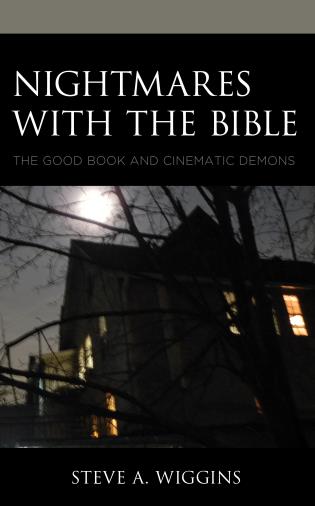
The thing about ratings, as John Green astutely notes in The Anthropocene Reviewed, is that they are in many ways arbitrary.  From the very few reviews of my own Nightmares with the Bible, I get the sense that people misunderstand the book.  Or it could be that they just don’t like it.  To each their own.  To me it is quite a personal book.  It is also a bookend to Holy Horror.  They represent first steps into a new kind of endeavor for me—saying something (hopefully) intelligent about horror films.  And writing books with no institutional support at all.  There are several intentional interlacings between these two books and to understand one it helps to read the other.  For those who want to get a sense of the way this addled brain works, in any case.

Holy Horror was literally one of those “if you see something say something” books.  I had noticed something that apparently nobody else had—the way the Bible is presented in horror films tells us something about the Good Book.  I have not seen every horror movie made.  I know of nobody who has, or even can.  I’d noticed a commonality, however, among those films.  The Bible isn’t rare in horror.  In fact, it’s quite common.  I’ve done quite a lot of reading about religion in horror since then, and this is something that has to be taken into account when considering the effects of Christianization.  It brings fear in its trail.  Nightmares with the Bible is a bit more ambitious and a bit of a hybrid.  That may be why its been reviewed so poorly.  It is a continuation of the thesis—if you want to understand how people really believe, look at what popular culture teaches us.

What do we believe about demons?  What The Exorcist taught us to believe.  Anyone who looks at the history of the idea sees that this concept really only took off, after the Middle Ages, when movies reminded us of the threat.  From the early modern period on, belief in demons and their impact on the world had been in decline.  Anyone looking at the headlines today will have to wonder about the wisdom of that loss of interest.  When The Exorcist hit, it struck a nerve.  Since then demons have been back on the big screen time and time again, each showing providing more information on what to believe.  I suspect those who’ve been rating the book really don’t get what I’m trying to do.  At least, I tell myself, somebody’s reading my work.


Free to Listen

It was a delightful conversation, as always.  Robin and Debra from The Incarcerated Christian podcast always amaze me with both their program and their enthusiasm.  I’m still bit nonplussed that they find my work interesting.  They invited me back for an October discussion around Nightmares with the Bible, located here.  Although the book has not yet sold enough copies to have earned any royalties (i.e., it hasn’t covered the cost of its own publication yet), it has nevertheless led to four interviews and even had a Choice review.  Granted, a good part of the lack of enthusiasm is its Elon Musk price point, at least that’s what I tell myself.  I’m still hopeful that a paperback will be out next year.

I suspect people are interested in demons.  Considering that movies keep on being made about them and doing well, I hope it’s only a matter of time.  While I’m waiting, however, I’ve got some good listening over at The Incarcerated Christian.  The podcast addresses a couple of issues: one is spirituality and the other is the effects of being raised in a religion that boxes or cages a person in.  The proprietors are among the few who realize that there’s a spirituality to horror.  I’m reading a book just now that considers thzt question.  And I know of others, active ministers among them, who find spirituality in horror.  I don’t know their backgrounds well enough to know their carceral status, but to me the connection makes sense.

Photo by Marco Chilese on Unsplash

I’ve written before that I’ve come to rely on experience as a source of knowing.  Not entirely, of course, but it’s clear that those who don’t trust their experience end up incarcerated.  My experience of organized religion suggests that it has many issues that require professional help.  That’s one aspect of having been a seminary teacher, and administrator, that has fed into my experience.  Having seen how that happens, and knowing the kinds of people who rise to the top—just look at politicians, particularly on the right-hand side—my experience suggests that ecclesiastical corruption is far more common than most people suspect.  In order to accomplish big things humans have to organize.  And in any organizational structure there will be climbers.  In general you don’t get to be clergy (apart from those non-denominations that’ll hire anyone making certain claims) without seminary.  And seminary isn’t what it seems.  To me, watching horror makes far more sense than befriending the jailer.  Take a moment to listen; it’s free.


Incorporeal

I’ve been struggling with the concept of incorporeality.  Well, not me personally, but in how it fits into demon movies.  Specifically the Conjuring universe.  I’ve recently been watching the series through again and the corporeality of demons strikes me as problematic.  As spiritual entities demons don’t have bodies—that’s why they possess people.  Yet in these films they can be contained by blessed spaces, or objects.  The doll Annabelle, in particular, has to be kept in a locked glass case to prevent the demon (apparently Valak) from gaining its full power.  Annabelle Comes Home discusses this directly.  After the priest blesses the doll, Lorraine Warren says it’s not enough.  The evil has to be encased in another layer.  In this case, glass from “Trinity Church” which has, ironically, been torn down.

Watching the entire series, as it currently stands, Annabelle appears in four of the eight films and is named in a fifth.  Annabelle: Creation implies that the demon in the doll is Valak (a.k.a. “The Nun”), and she has her own movie as well.  In each case the demon has to be contained within a sacred space.  Once out, it manifests in corporeal form with the ability to harm, or even kill, human beings.  Now, I know this is movie magic.  I also know these movies have been carefully pieced together.  The corporeal/incorporeal question is a standard of seminary training.  While the topic of ghosts, and demons for that matter, was never raised in the curriculum, we did have to deal with God and angels and what it means for a being without a body to become incarnate in one.  These movies could use some seminary.

Is it like this?

In Holy Horror, and especially Nightmares with the Bible, I wrote quite a bit about The Conjuring and the universe it’s building.  I’ve seen demons physically attacking characters, and even taking on classic demon shape.  The viewers wants to see the monster.  If they’re truly incorporeal they can cross between glass cases, doors, windows, and walls.  Some of them do, when it suits their purpose.  Yet they can be quieted by being locked into a glass case, as long as it’s been blessed.  Of course, I’m trying to figure this out on my own.  There are entire fandom wikis out there based on the films and they probably have much more detail than I could ever find on my own.  But then, in a sense, information on the internet is, well, incorporeal.


Being Vigilant

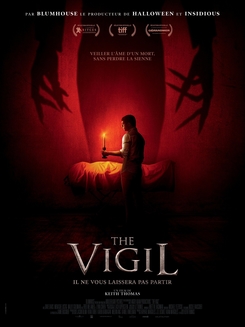
While keeping to a budget, I’ve been tying to sample some new movies as therapy.  Interestingly, Hulu has had three on my long-time “to see” list, including The Vigil.  I heard about this one as soon as it came out.  Religion and horror have been a recent area of fascination, so how could I not?  A horror film partly in Yiddish is a novelty for me, and the haunting, endlessly haunting holocaust is never far from the surface.  Jacov, a young man with psychological issues caused by the death of his much younger brother, has left Orthodox Judaism.  He’s hard up for money, however, and agrees to sit as a shomer, a watcher who keeps vigil with a corpse of a person who has no family to do it, for pay.  The rabbi informs him the shomer he hired left because he was afraid, but since Jacov has done this before, he’s sure he can handle it.

Sitting in a creepy Brooklyn house with a corpse is made even more difficult by the widow’s Alzheimer’s disease and Jacov’s seeing things.  Unsettling events take place.  The problem is revealed to be a mazzik, a kind of Jewish demon.  As I explore in Nightmares with the Bible, and Holy Horror, the Jewish idea of demons took quite a different track from the Greek-inspired Christian concept.  Jesus was Jewish, but living in a Roman context.  What we in the west understand as demons is largely based on The Exorcist.  In Judaism demons weren’t the same obsession they were for Christians.  The dybbuk tends to be the soul of an evil person that can’t rest after death.  A mazzik is more a demon sent to harm, as a form of divine punishment.

The Vigil presents Jacov in that pincer of having left a religion only to find himself needing it in a time of crisis.  His Orthodox upbringing hasn’t prepared him for the world of having to interact with women, or even gentiles (as wicked as they can be).  The mazzik has haunted the man who’s just died—a holocaust survivor—and is now looking for another broken person.  Ever since the death of his brother, Jacov has been broken.  The film make effective use of several horror tropes, and is quite claustrophobic in the small house.  Even though set in New York City, isolation is the real threat.  More than that, the movie eloquently articulates how religion and horror rely on one another.  And how they might learn from each other.


Nightmares with Poe

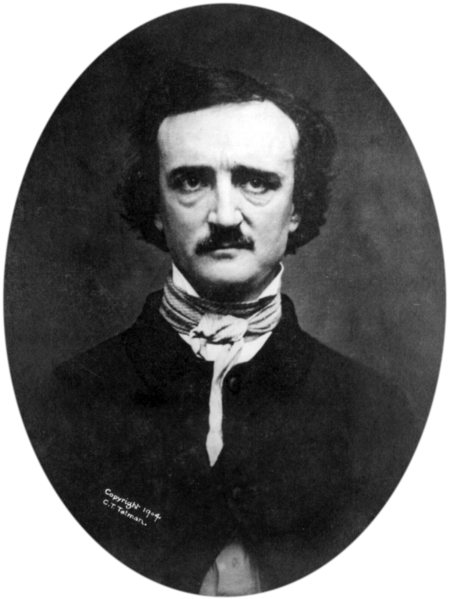
A review of Nightmares with the Bible recently appeared in which the reviewer said he didn’t get the Poe references.  Indeed, the anonymous reviewer said the same thing.  What neither of them understood is that Edgar Allan Poe has been formative for my life and that book was a tribute to him.  Did Poe write about demons?  Not really.  Did he once claim that the death of a beautiful woman was the most poetic theme?  Yes.  I saw the opportunity, in discussing possession movies, to draw Poe’s observation into the conversation.  Could the book have been written without it?  Yes and no.  Yes, I could’ve written a book on demons without mentioning Poe.  No, I would likely not be writing books at all were it not for Poe.

Today is Poe’s birthday.  What is this strange attraction I have for him?  It began, as most things do for me, with growing up poor.  We couldn’t afford bookstore prices, and that’s even assuming there was a bookstore nearby (there wasn’t).  I found the majority of my reading material at Goodwill in Seneca, Pennsylvania.  The shop had a book bin or two with prices I could afford (books were a quarter, if I recall).  I found a copy of Poe’s Tales of Mystery and Terror there.  I probably heard about Poe from my big brother—he’s a good source for scary information.  Reading Poe, I wanted to read more.  We couldn’t afford Scholastic school fare rates, but I did find a four-or-five volume collection of Poe’s writings at Goodwill.  Foolishly, I bought only two—those with his stories.

By high school I was checking out biographies of Poe from the library.  Perhaps as the child of an alcoholic I identified with a man who seemed so tormented.  I count his stories still among my favorites.  My favorite short story is, I believe, “The Fall of the House of Usher.”  It has come back to me at several points in my life and I find myself thinking about that gloomy house.  Particularly the narrator’s arrival there.  So full of possibilities.  So much potential fear.  Those of us who consume horror have a gateway to it—some event, or influence, or person who introduced the aesthetic of fear to us.  For me it was Edgar A. Poe.  Nightmares with the Bible is of a piece with Holy Horror.  To leave Poe out of it would’ve been the worst kind of sacrilege.


Taking Part

It’s always a pleasure to be invited, even if not as a proper guest.  To an academic conference, I mean.  Most of us sit around feeling pretty obscure most of the time, even if we do write books.  I am literally genuinely surprised when sometime contacts me to tell me they’ve read my work.  It was, therefore, a complete surprise to be asked to attend the “Ancient and Modern Ideas of Possession” conference hosted by the University of Innsbruck.  I wasn’t an official participant, but the organizers, somewhat surprisingly, knew of Nightmares with the Bible and thought I might be interested in, well, possession.  Because I work “nine-to-five” and because Austria is several hours ahead of the Eastern Time Zone, I couldn’t Zoom in for all of it, but what I did hear I really appreciated.

One of my suspicions was confirmed, and that is that the idea of possession remains an outlier in academia.  The sixteen or so presenters represented several academic fields, none of which boasts of being interested in such things.  What surprised me, but then really didn’t, was that a comment or question came up several times: do any of us believe in the ontological reality of demons?  At least for the time I was able to sign in the question was never fully discussed but I had the sense that one or two of these academics were willing to lean in that direction.  We all know that individual observation is often faulty and subject to biased interpretations.  We may, however, know that many such accounts have been written by highly reputable individuals with nothing to gain by making spurious claims.  Academics should remain curious.

I learned that at least two of the presenters had written books that it would’ve been useful to have read for my own book.  Books are part of a conversation.  Seldom is any single volume the last word on a subject.  It was a privilege to be among other academics, if I may classify myself as one, even if erstwhile, that had come to a similar place in their explorations of the world of spirits.  Women and men who were willing to ask that most shunned of questions, “what if?”  Human experience moves ahead and some ideas are left behind.  That doesn’t mean those ideas should never be revisited.  Nobody at the conference mentioned my book, but at least one person in the room was aware that it was, in some form, part of the discussion.


More Conjuring

It was an almost surreal experience.  First of all, it’s been well over a year since I’ve been in a movie theater.  Secondly, I’ve never been to this particular theater before.  And in the third place, I’m absolutely alone in here.  I didn’t rent the theater out or anything, but I’ve been wanting to see The Conjuring: The Devil Made Me Do It since June 4.  Actually, since September when it’s initial release was delayed due to the pandemic.  Everyone else around here must’ve seen it already.   I knew the story of Arne Johnson and the Warrens, having found and read Gerald Brittle’s book, The Devil in Connecticut.  Loosely based on that event, this story focuses on the actual fact that this was the first time not guilty by reason of demonic possession was proffered in a US courtroom.  The story is a strange one and the movie, as movies do, makes it even stranger.

I’ve been anticipating The Conjuring: The Devil Made Me Do It, despite the title, for a few years now.  If you’re familiar with Nightmares with the Bible you’ll know that an entire chapter is devoted to The Conjuring franchise.  You may also know that it is the most lucrative horror series of all time, apart from Godzilla in its many, many iterations.  One of the points in Nightmares was to try to make sense of the demonic world presented in the Conjuring universe.  The franchise, for the most part, deals with actual case files from Ed and Lorraine Warren.  Some of the episodes are pure fiction, however, and the explanations given in the films are all, well, conjured for the big screen.  The movies call attention to the Warrens’ work, but in a way that requires an entire chapter to untangle.

My initial impression is that this isn’t the best movie in the series.  I can’t replicate my previous work here, and I’ve only seen the movie once, so there are details I certainly missed.  The demon isn’t named this time.  Indeed, the backstory proposed is drawn from the spin-off film Annabelle.  A fictional satanic group called Disciples of the Ram is posited as causing the trouble.  Like the demon behind Annabelle, they’ve placed a curse on the Glatzel family for some unknown reason.  During the opening exorcism Arne, in an Exorcist move, asks the demon to take him instead of the young David, the brother of his girlfriend.  The movie leaves the Warrens to find out who put the curse on the Glatzels in the first place, and break it.  With some time for pondering I’ll likely come back to this movie again.  I do have to say that the book was probably scarier, although sitting in a theater alone to watch a horror movie is not something I hope to make a habit of doing.


Just Justice

Like many people raised to believe in democracy, I’m distressed to see that the right wing, worldwide, has taken to a full-on attack against it in an effort to keep power.  In the United States Republicans that stood up against the cult of Trump (who was no architect, but a figurehead only) are now being run out of Dodge by their own party.  Meanwhile a friend in Britain sent me an article about the open and obvious corruption of Boris Johnson and how the Tories are completely overlooking it in an effort to keep “democratic authority.”  It wouldn’t be so bad if the right wing came right out and said “we want to run things, no matter what it takes,” but instead they appeal to religious ideas and try to make it seem like their side alone appeals to “justice” while doing the exact opposite.  Paging Mr. Orwell…

The best test case is Jesus.  Have you noticed how Jesus has fallen out of right-wing Christianity?  Apart from occasionally taking his name in vain, the principles they stand for generally go against the core teachings of the Gospels.  The fascism of the right wing has taken what good there was in Christianity and jettisoned the kernel to keep the shell.  It’s like a bag of pistachios where all the nuts have been discarded, leaving only the hard casings behind.  The really sad thing is that both in the US and in Britain, these power-mongers are in the minority.  They use political loop-holes to make their strong-arm tactics look like the will of the people.  Things like restricting voting access, made possible by courtroom politics.  Isn’t Justice supposed to be blindfolded?

We know for a fact that many of these same people are fully cognizant that fascism led to World War II.  They know Hitler used the same tactics to gain power.  They know that millions and millions of people died.  And now they trumpet the one thing that brought this nation together—the recognition that fascism was evil—as the way of true Christianity.  I’m sometimes asked if I believe in demons, having written a book on the subject.  Demons are, if you look closely, are considered the source of evil in the world.  Quite often stories about them have them possessing good people by pretending to be something that they’re not.  Can demons take over entire political causes?  Did we not see naked evil in the Nazi regime?  How do we not recognize it now that it has taken root in one political party that has claimed the name of “Christian” while simultaneously discarding the teachings of Christ?