No Changes

It’s one of those polarizing movies.  Well, maybe middling-polarizing.  For certain kinds of people.  I didn’t see The Changeling when it came out, but I watched it about a decade ago.  It struck me as lackluster then, but I decided to give it another try.  One of the reasons is that I’d read a couple of things about it recently and thought that maybe I’d misjudged it.  There are those who say it’s a very good haunted house movie—one of the most influential Canadian films of all time.  Hyperbole aside, it’s one of those vengeful ghost movies and the most affecting scene, to me, is when George C. Scott is crying in his bed about the death of his wife and daughter.  There are a couple startles, but nothing really that scary overall.  It is slowly paced and sophisticated, but not terribly so.  It still strikes me as lackluster.
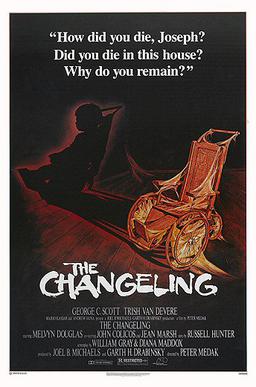
I’ve seen many movies since that feature a child murdered seeking to have their story told.  The end result is, however, a feeling of “so what?”  The boy’s father got away with the murder and the beneficiary—who may or may not know all or part of the story—dies in revenge.  There are just too many questions left unanswered.  The haunted house tropes are fairly conventional, and the wheelchair chase scene is a bit strange.  I wondered if there might’ve been something I was missing.  There are critics with a “meh” response, but others rate it highly.  I did learn that, although the film makes no such claim, it is purportedly based on actual events.  That I’d like to know more about.

Playwright Russell Hunter (who lends his name to Scott’s character), alleged that these kinds of things happened to him while living in the Henry Treat Rogers mansion (in Denver).  A local, Katie Rudolph, has done some fact-checking that casts doubt on the story.  Hunter claims to have found human remains (as in the film) and this would seem to be something that could be checked out as well.  In all, there’s not a ton online about the story and its supposed authenticity.  The house was torn down some time ago.  It would seem that any author (Hunter co-wrote the movie) would see the benefits of claiming actual events.  Even if the film doesn’t play that card.  Was there a murder in the mansion?  From what I’ve been able to find, there are about as many unanswered questions as there are in the movie itself.  Although next time I’m in Denver, that’s not to say I won’t be tempted.

Denver Memories

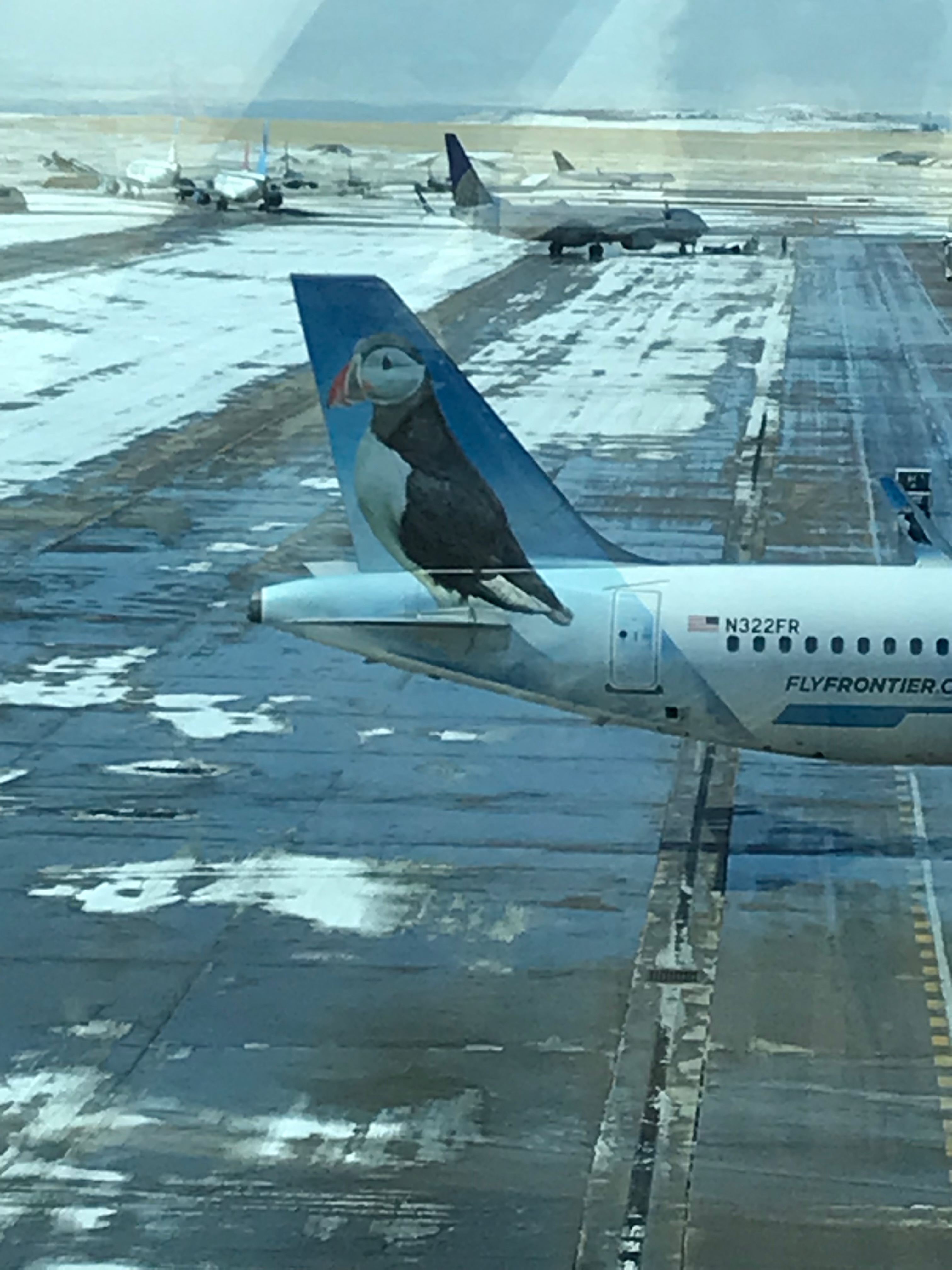
It may be a strange thing to say (or write, as the case may be) but I was kind of hoping to spend some extra time at the Denver Airport.  When I traveled to Denver for a conference last year, I arrived to a workload (attending AAR/SBL as an editor is all work, not play).  I had no time to hang around the airport.  I knew, however, as a recent New York Times piece states, that the airport has a reputation for the paranormal.  While the Times article focuses on Luis Jimenez’s sculpture “Mustang” to start, it quickly moves on to “conspiracy theories.”  And the parts of the airport passengers never see.  The place has a reputation for being weird.  During construction in recent years, the usually anodyne partitions that block construction from the view of passengers, housed images of aliens, bolstering rumors that Denver, and its airport, have some connection with our extraterrestrial neighbors.

The Times story points out alien graffiti in parts of the Denver Airport where travelers can’t go.  And it also points out that although the fiery red eyes of “Mustang” are to represent Jimenez’s father’s start in the neon business, they give the giant horse a demonic aspect.  The artist died working on the sculpture.  A piece fell during construction, severing an artery.  But the conspiracy theories began earlier.  The southwest has a reputation of being the home of the shapeshifting reptilians that have made it onto mainstream television.  Is it any wonder that Trump stands a possibility of getting the nomination while yet more crimes are actively stacked on his record?

Of course, I was in Denver to work.  I claimed my bag and got a taxi on a snowy southwestern morning.  While there I worked, of course.  It was cold, in any case, back in November, so getting out to see the sights didn’t particularly appeal, especially since it was getting dark by the time the book stalls were closing and I was there alone.  I always want to be on time, and since I’m an early riser, and since Thanksgiving was just a couple days away, I went to the airport three hours before my flight home.  I was thinking I might have some time to do a bit of X-Filing while waiting.  Alas, it was not to be.  The helpful flight attendant put me on an earlier flight and I ended up with a three-hour layover in Chicago.  But I also knew that several “mothman” sightings had taken place at O’Hare over the preceding months.  When you’re a traveler, however, they keep you away from the interesting parts of the airport.


Holding Still

For some people today is the start of the “holiday season.”  Thanksgiving begins what often becomes a rush up until Christmas.  Moods tend to be more festive, if not carefree.  As for me, I always save up vacation days so that I can make my own mini “semester break” late in December.  From the onset of the holiday season I can see far enough to be able to make it through the rest of the year.  For me the season seems to begin at Halloween.  It’s not a federal holiday and I don’t know anyone who gets Halloween off of work, but I take holidays seriously, and Halloween, Thanksgiving, and Christmas are all anticipated days.  And in the spirit of the day, I’m thinking of the many things for which I’m thankful.

Family, friends, and health go without saying.  I really don’t need a holiday to remind me to be grateful for these things.  This year I’m thankful to have made it back from Denver unscathed.  Since it was over twelve hours of travel (less than three of those hours spent in flight) to get home, it was a long, weary, mask-wearing day of travel.  Denver Airport is nearly an hour from downtown.  The American Airlines agent was able to get me an earlier flight to Chicago.  My reading was disrupted by sleepiness and the fact that the woman next to me was watching Jordan Peele’s Nope on her laptop.  I’ve been meaning to watch it again, so I hope I wasn’t obvious when I didn’t strictly observe the custody of my eyes.  The most grueling part, however, was the four-hour layover in Chicago’s O’Hare.  

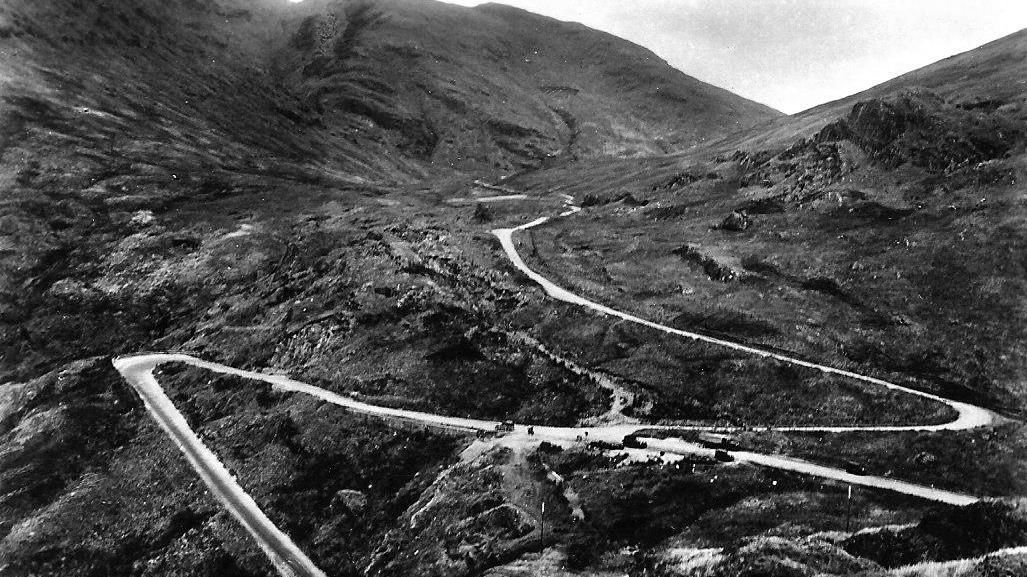
No matter what the owners do, there’s a limit to how comfortable airport waiting can be.  You have to keep a constant eye on your bags.  Very, very few people are wearing masks.  And two days before Thanksgiving is a busy travel day with people trying to avoid the busiest travel day of the year (yesterday).  I’m thankful to have gotten home and not to have been too much the worse for the wear.  And I’m thankful to spend a day not having to wear a mask.  It’s funny how having to wear one for five straight days all day long can become a point of dread.  I like being able to take a drink of water without having to pull down a mask.  Returning to life as usual will take some adjustment—it always does.  So much travel after spending years not doing it is a bit of a shock to the system.  I’m reminded of one of the most colourful place names we encountered in the highlands of Scotland, and it is my theme this Thanksgiving: Rest and Be Thankful.

Rest and Be Thankful, unknown photographer

Religion in the Air

There’s a physicality to it.  Being in Denver, I mean.  My hotel was a mere four blocks from the convention center and the short walk inevitably found me huffing and puffing.  My first night there it had me wondering if something was wrong—should I call a doctor?  I jog on a regular basis and try to stay healthy and so I’m not used to being winded by an inconsequential walk.  My second scheduled meeting saw me with a seasoned scholar.  He pointed out as we slowly made our way to the seating area that the altitude was probably to blame.  The mile-high city does lack the oxygen more abundant down where we lowlanders dwell.  I often wonder if my first trip here was beset by altitude sickness.  I met a colleague at the conference, on his first trip here, who had the same non-Covid symptoms I had all those years ago.

We’re used to our own air.  The familiar atmosphere we breathe each day.  Taken out of that context we’re not exactly fish out of water, but we’re not exactly not either.  The combination of back-to-back meetings, the effort it takes to walk around city center, and the constant chill in the air during my time there dissuaded me from exploring.  Or even finding places to eat.  I started to worry that they’d recognize me at the Chipotle where I ordered carryout the first three nights in the city.  I know there must be other places to get some good, vegan options, but it was always dark by the time I was done with work and I was still waking up on Eastern Time.  On the positive side, I didn’t get sick this time.  And I would really like to explore the place further.

Many years ago, on a family driving trip from Wisconsin to Idaho, we drove through Colorado on the way home.  High above Denver, in the Rockies—driving through Rocky Mountain National Park—I told my wife I felt strangely elated.  “It’s like a religious experience,” I said.  Perhaps it was the physicality of that altitude, mountains spread out before us, that led to that brief moment of rapture.  It’s so closely related to that acrophobia that whispers the warning not to fall off the edge of this globe when you’re so high in the air.  Even now as I’m heading home from Denver when I’ll be even higher in the sky for a few hours, I reflect on what it means to be a physical being enveloped by the air.  And I’ll appreciate with wonder the planet of mountains, endless plains, and eroding hills on which I live, and I’ll be thankful for every breath.


Reflections of a Hermit

Although I acknowledge that Covid has made even more a hermit of me—I won’t deny it—and I often complain when I have to travel for work, I generally end up glad that I have.  (As long as I avoid Covid.)  Being at the AAR/SBL annual meeting is like being in a living library.  You meet and talk with so many smart, smart people and their ideas and yours begin to blend in an amazing kind of way.  I suspect that it shows that my books have been written by a guy in isolation.  That is, they could be improved by other eyes on them.  That’s what peer review is about, of course, but there’s something exciting about talking to my monster friends and engaging them about their ideas.  Frequently they will ask about mine.  I’ve even had colleagues mention that they’ve read some of my work.

The only real problem with how this unfolds is that I have so many meetings in a day that I sometimes lose track of the many ideas that crowd into my head.  Hastily-scrawled memos in my notebook—I’m too busy paying attention—mean that only fragments remain the next morning.  Each of them a gem.  (Fitting for Denver.)  When conversation comes around to what I’ve been working on, no matter how obscure it is, my monster friends know the root story and even have ideas that help shape my work.  No one scholar can read everything, and those of us who tend towards being hermits have the limited sources of one human imagination.  When imaginations get together, however, these ideas blossom.  I learn so much from these brief days that I think I might’ve been dangerous if I’d remained in the academy.  The man with an exploding head.

I sincerely hope that I give as well as receive at these meetings.  It’s really unfortunate that we don’t support humanities scholars in this nation.  These are some of the bright stars in our national constellation, yet they struggle with underfunding, and pressures such as “metrics,” as if you can quantify the influence on young brains and the potential future of our collective imaginative life.  Although I grouse, as is perhaps to be expected of an aging hermit, I can’t help but be enriched by the fertile minds I encounter, even if behind a Covid mask.  I’m never quite sure how to thank all these idea-conjurers properly.  I wouldn’t have met most of them had my career not taken the strange turns it has.  Now I realize that even hermits may have many friends.


Day Two

You have your suspicions when you first spot them, but you have to wait to confirm it.  You’re flying in mid-to-late November and they’re concentrated around one particular destination.  They won’t be the only ones going there, of course—families with kids, late vacationers, others traveling for business—but they will be among them and you can learn to spot them.  The attendees of the American Academy of Religion and Society of Biblical Literature annual meeting.  Pre-pandemic there were reliably about 10,000—a biblical myriad—of them.  We’ll have to wait to get the figures on them this time around.  In any case, I make a game of spotting them at the airport.  Well, if you’ve got a connecting flight you need to wait until the final leg.  It’s possible some got on with me in Allentown, but I didn’t spot any likely candidates.

The male of the species is easier to identify at a glance.  Bearded, serious demeanor, slightly out of touch when it comes to fashion.  Incongruously sometimes they’re wearing jeans but you know that’s just their traveling raiment;  once they arrive and get tweeded up they’ll be easier to place.  Otherwise you can identify them on the path by their talk.  If they enter into discussion with a seat mate or someone walking to the baggage claim or getting onto the public transit, or even in restaurants, they will speak of strange things.  Their language will grow technical and their frowns will be discerning.  They are assessing, you know, assessing the ideas that don’t fit with their personal theories about samsara, or Origen, or Jeremiah.  And they don’t mind saying so, right out in public.

As important as I know religion to be, and as much as I know that to understand it deeply you must spend years and decades studying it, I sometimes wonder just how others must view us.  I still dress like them, although I travel in my tweed because it makes my suit-bag too bulky to pack it.  On the plane I read an actual book (likely about religion, but that’s not a guarantee), and once in a while someone who hasn’t realized that the conference is over will want to talk business in the airport while waiting for a flight when all I want to do is pull out a novel and try to get the shop talk out of my head for a little while.  This is the unusual experience of attending AAR/SBL.  I’m sure there’s enough material here for a sociological study, but I think the sociologists have conferences of their own to attend.


Remember November

I didn’t get his name.  I could have, because he was wearing a name tag.  I was too busy thinking, “that won’t be me.”  I ended up being wrong about that point.  He was sitting in that depressing place at the AAR/SBL meeting in Kansas City.  That room for those waiting to see if they’d scored any interviews.  “I’ve got publications,” he told me, “I’ve got years of teaching experience, but no interviews.”  Our capacity to fool ourselves should not be underestimated.  I was just sure that once I was in that place—publications, teaching experience—I would be able to find a professorship.  I did find one that lasted about fourteen years, but after that, my nameless friend, I have to say “you were right.”

I can’t help but think of that when I attend this conference.  It’s a place of lost dreams for me.  I can see my books on display here.  I can see literally hundreds of people that I know.  I’ve gone from a vocation to a job, and there’s no going back.  Sometimes I wonder if adjacent careers are a good idea or not.  I’ve put some books under contract from new Ph.D.s who eventually decide to disappear.  Not to be found anywhere in academia, their books left unpublished.  Perhaps they met my mysterious prophet.  Maybe they came to realize that working in a job right next door to where they want to be will only ever remind them of loss and regret.  We continue to the glamour of a conference that reminds many of what they never found.  El Dorado.

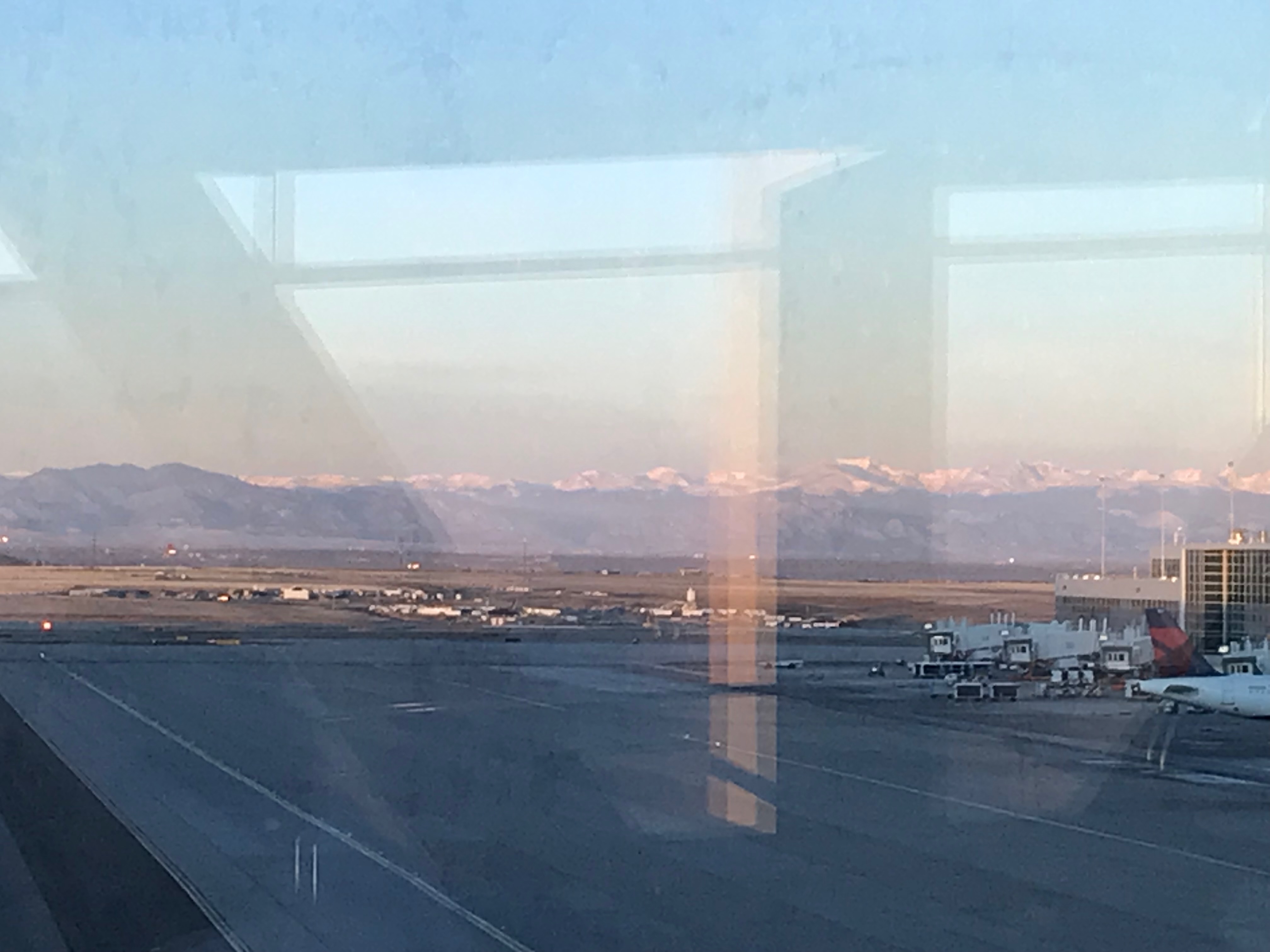
So as I sit here in Denver with my past.  I actually made it to Denver, which is, I suppose an improvement over last time.  There was snow, in Denver, but the locals seem to be fine with it.  Not many people are wearing masks these days, I’ve noticed.  There were a few stalwarts on the plane(s) and a few here at the conference who did.  The pandemic doesn’t bend to the will of people, not even religion scholars.  Viewing Denver from the airport (it’s a considerable way out), it looks so small and insignificant backed by the front range of the Rockies.  Maybe that’s what all of this is about: significance.  My association with this conference spans 31 years.  Perhaps there’s a bit of weariness here too.  The pandemic may never really end, not in any meaningful way.  I do wonder if my nameless friend ever found a job and if he still attends.  If he does I wonder what he would say about all of this.


The Denver Curse

I’m posting this early today because I’m flying to Denver for the American Academy of Religion and Society of Biblical Literature (AAR/SBL) annual meeting.  At least that’s the plan.  I don’t have a good track record with Denver and this conference.  I’d been attending AAR/SBL since 1991.  I can’t recall what year it was when I first attended in Denver.  I was still a professor then and had a paper to read.  I also had free time (something editors don’t have at conferences).  I decided to view the world-famous mineral and dinosaur exhibits at the Museum of Natural History the morning of my paper day.  While at the museum something very embarrassing happened—I got sick in public.  It was scene-from-a-cheap-movie bad.  Literally sprinting to a public waste can to throw up in front of strangers.  I’d never been sick at AAR/SBL before, despite the November timing.  When I went to read my paper that afternoon, the motion of my eyes made me sick again and I had to sit with my head between my knees while a bunch of biblical scholars looked on with what passes for concern in academic circles.

The second, and last, time I was flying to Denver  for the conference there was a small snowstorm.  I was flying out of Newark on an evening flight.  Because of the snow (which ended up being about two inches) my flight kept getting delayed and delayed.  They made the decision to cancel the flight after 11 p.m. by which time all local hotels were full from the earlier cancelled flights.  To make matters worse, there was no way out of the airport.  All public transit shut down.  Even if I could’ve caught a taxi where was I to go?  I live in Pennsylvania.  With no other choice, I slept on the floor of Newark’s Liberty International Airport.  I awoke early, having used my briefcase as a pillow (a step up from a stone, I expect) and found my way to Somerville, where we used to live.  My wife picked me up at the train station there and drove me home.  I missed the conference, needless to say.

And so you see that I’m a bit dubious about trying this again.  I have nothing against Denver.  Before getting sick I was enjoying my time there.  So, if things go according to plan, I’ll be on a plane headed that direction by the time I usually post my daily thoughts on this blog.  Will the Denver curse be broken?  Only the next few days will tell. Watch this space.

Photo by Acton Crawford on Unsplash

Outside In

Work duties necessitate my attendance at the American Academy of Religion and Society of Biblical Literature annual meeting, starting Friday, in Denver.  Given the state of the pandemic I can’t say that I’m thrilled to be attending, but work is work.  What really prompts this post, however, is the travel arrangements.  The agency I used is based overseas.  They customarily send a fact sheet about the country to which you’re traveling—in this case, my own.  It was fascinating to read how the rest of the world rates the United States.  Overall we receive a pretty good score, but there are a few items of concern.  One is that mass shootings are not uncommon.  The guide laconically states “Due to the wide availability and proliferation of arms across the United States, high-profile shootings occur.”  This is not wrong.

It goes on to note that if you can avoid being shot, crime rates are overall low in the US.  Disease, apart from Covid-19, is well under control.  While organized crime and gang problems are mentioned, it notes that open conflict between states does not exist.  It seems that, despite the rhetoric of certain politicians who like to use hatred to get their way, we do tend to cooperate pretty well.  We have plenty of micro-cultures here, and I know that I’m only comfortable living in a northern one.  I like four distinct seasons, and I don’t mind shoveling snow, but I’m getting away from my guide.  Hurricanes are a risk on the east coast through November and wildfires are possible in the west, also largely through November.  Earthquakes are localized and infrequent.  We live with a heightened risk of terrorism, but our medical care is good.  If expensive.  We have good dental.  

While I didn’t really learn anything about the United States per se, I did learn a little about how others view us.  We are a nation with tremendous resources and great potential.  Our melting pot nature is, I believe, the source of our cooperative strength.  We are still, after two centuries, suffering growing pains because there are some who want things the way they used to be in spite of the incessant, almost daily, changes that take place.  There is no turning back.  After the apple has been eaten you can’t unlearn that knowledge.  The recent elections spoke pretty clearly: we believe in democracy and we support women’s rights.  That’s how we see ourselves.  How the world sees us, however, may be quite a different interpretation.


Daylight Saving Time Zone

One or two of you out there—you know who you are—put yourselves through reading my musings on a daily basis.  I haven’t missed a post in nearly a decade, but travel always complicates things.  Yes, it’s that time of year again—I’m on my way to AAR/SBL.  The American Academy of Religion and Society of Biblical Literature Annual Meeting is the trade show of the guild.  This year we’re meeting in San Diego, California.  The hope of many of us is that it’ll be sunny and warm.  Last year, of course, I missed the conference for the first time, exchanging the Denver Hilton for a night on the floor of Newark’s Liberty Airport.  This year I’m flying out of a different venue—one where egress is possible in the case of snow.

I always like to post a reminder to the faithful few that normal service on this blog may be interrupted.  One never knows what might happen when away from the regular routine.  And three time zones will surely wreak havoc with circadian rhythms that haven’t yet caught up with the end of Daylight Saving Time.  Or is it the beginning of Daylight Saving Time?  It makes no difference, because it lead to lack of normal sleep, no matter what we call it.  In any case, San Diego may make usual posting unusual.  At the very least it’ll be a few hours off.  I’ve become a creature of habit, posting my thoughts between six and seven on weekdays.  On weekends I’m up just as early, but I give the web a chance to sleep in.

These annual meetings are exhausting when you go on behalf of a publisher.  Unlike the leisurely experience of a paying customer, you don’t get to go back to your room for a nap, or even to sleep in.  Every year colleagues ask me to receptions but I decline because every day is a school day.  And I have appointments from 8:30 until 6:30 daily.  Sometimes even later.  You, my gentle reader, have been given advance notice.  I’ll try to continue my daily chronicle of life inside this particular head as thousands of scholars of religion mill about, wondering about the answers to the big questions.  Right now the big question is whether I’ve packed everything I’ll need.  I’ll gain three hours on the way out, but I have to leave them at the desk when I get back.  Along the way I’ll scatter posts like breadcrumbs to help me find my way home.


Eternal Return

For those of you who don’t live, eat, and breathe academic religious studies, it’s my duty to point out that the American Academy of Religion and Society of Biblical Literature (AAR/SBL) annual meeting begins this week.  For those of us in the biz it’s like the sun holding still at Makkedah as we try to prepare for our various roles.  This year the conference is in warm and sunny Denver, so be sure to dress in layers.  The meeting was held in Denver many years ago now, and I remember very little of it other than it being the year my final published paper from my Nashotah House days was read.  Or started to be.

I don’t know whether it was the altitude or the time of year, but I wasn’t feeling well the last time we met in Denver.  Although it may not show on this blog, I’m really into geology and the city has a great mineral collection in the Denver Museum of Nature and Science.  I went out to look at the collection the morning of my paper and had the great embarrassment of being sick while in the museum.  I went back to my hotel for a nap and when it was time to read my paper I had to excuse myself because running my eyes across the lines of text made me nauseous.  Concerned-looking philologists didn’t know what to do as I sat through the session with my head between my knees.  That’s how I remember Denver.

Perhaps this year will offer redemption.  You see, it’s very different attending the conference as the representative of a press instead of an institution.  Your time is completely booked.  People want to discuss their book ideas with you.  For a few short days of the year you’re one of the popular guys.  But for me, there are colleagues from every stage of my career on hand.  Not too many people from Nashotah House come, although there are more now than there were when I was about the only faculty member who went.  I see those I knew from Oshkosh and Rutgers, Gorgias and Routledge.  Those I knew as friends before we became professional colleagues.  They’re not after me to publish their books, and sometimes that’s all it takes to make three days of popularity really count.  Later today I’m off to Denver and I won’t have time to see the sparkling minerals this time around, but hopefully I’ll remember it more fondly when its over.


In the Morning

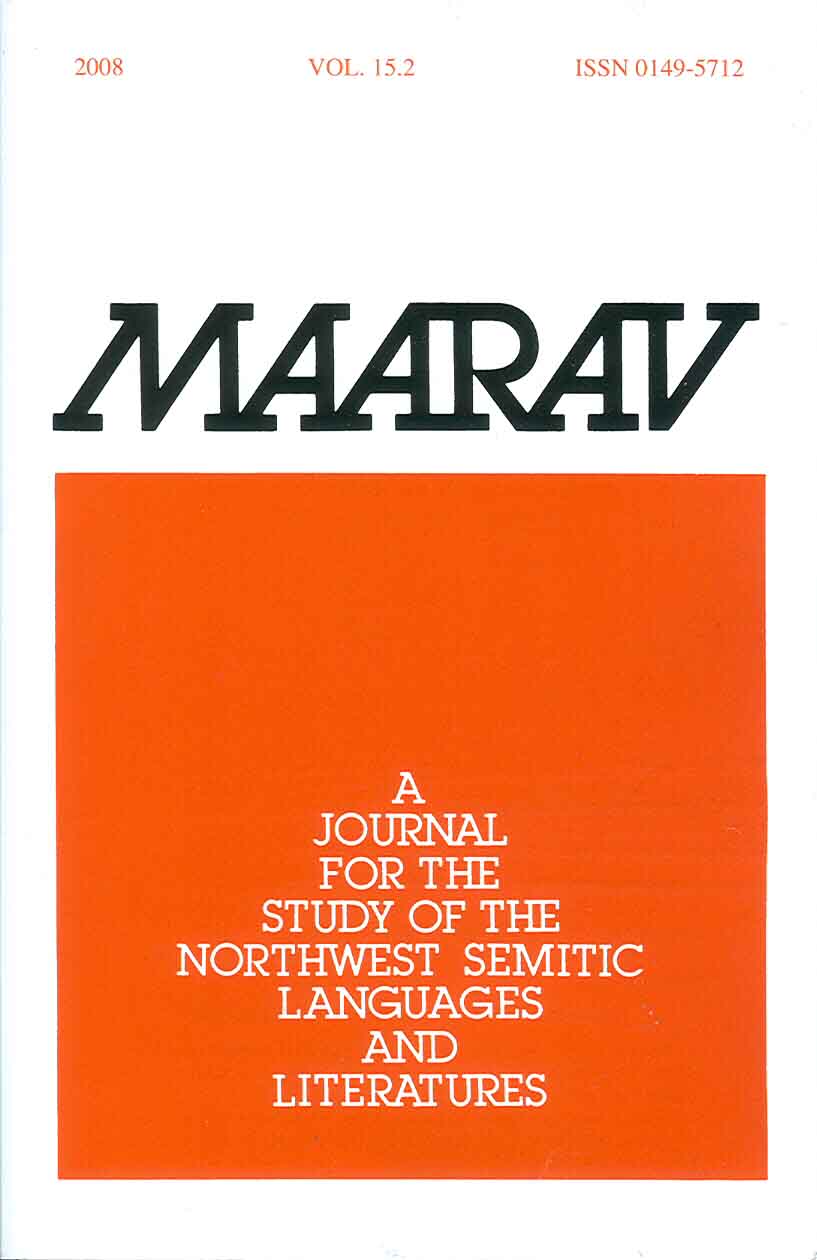
The arrival of the most recent issue of MAARAV (15.2) was a poignant blend of joy and melancholy. Joy in that my article about the odd Hebrew word galgal was finally published, and melancholy in that this will likely be my last academic article. I began publishing academic pieces back in the early 90’s and kept a steady stream going until being abruptly dismissed from Nashotah House. Research requires a regular, steady employment situation with access to obscure materials and a somewhat predictable teaching load. Since being cast into the outer darkness of the adjuncts’ world, well, it’s awfully dim out here to try to devote the scant free time to in-depth study. Such is the world of academics.

This article was a spin-off of a much larger project – a book that was completely written and rejected by a noteworthy publisher and lies dormant on a hard-drive somewhere – on the weather terminology in the Psalms. Several publishers expressed minimal interest, and this article was an effort to demonstrate how weather language has been sublimated due to faulty methodology. The unusual word galgal likely derives from a root with connotations of circularity. Nineteenth-century travelers in the Levant associated the word with tumbleweeds, and this association has stuck ever since. In my article I sort through the lexical information seeking some kind of consensus in the West Semitic language family for a more solid understanding of this troublesome lexeme. To the unbiased observer, the earlier favored translation of “whirlwind” still holds a considerable amount of evidence.

This particular paper holds an enduring place in my memory. I first read it at the Society of Biblical Literature Annual Meeting in 2001 in Denver. Well, I started to read it. The morning of my paper I’d visited the Denver Museum of Nature and Science to see the famed dinosaur and mineral exhibits. While in the museum I became violently ill and had to take a taxi back to my hotel. When I tried to read the fated paper that afternoon, nausea swept over me and I couldn’t finish it. Somehow, returning to a project that had made me physically ill held little appeal, no matter what its academic merits. The paper sat, forgotten, until I thought to submit it to MAARAV a couple years back. Now it awaits the criticism of others while I move on to other things. I do hope that this humble contribution to Hebrew lexicography might be taken seriously since like Denver’s dinosaurs, it is the last of its kind.