More Proof

They’re here!  The second proofs for The Wicker Man have arrived.  Nothing makes you feel like a book will actually happen than seeing the stages unfold.  In the meantime I’ve begun seeking an agent for the next book.  This is always a tricky process—work a ton on a pitch, send it, and try to forget about it because most agents simply won’t respond.  If they do it won’t be for a month or two.  And even then they may not like what you’ve written.  It’s a weird system.  Meanwhile at least I’ve got proofs to read.  Proofreading is stressful enough.  I’ve read my new book proposal lots of times.  It was only after I’d sent it to a couple of agents that I found the typos.  You are your own worst editor.  Even if you’re an editor.
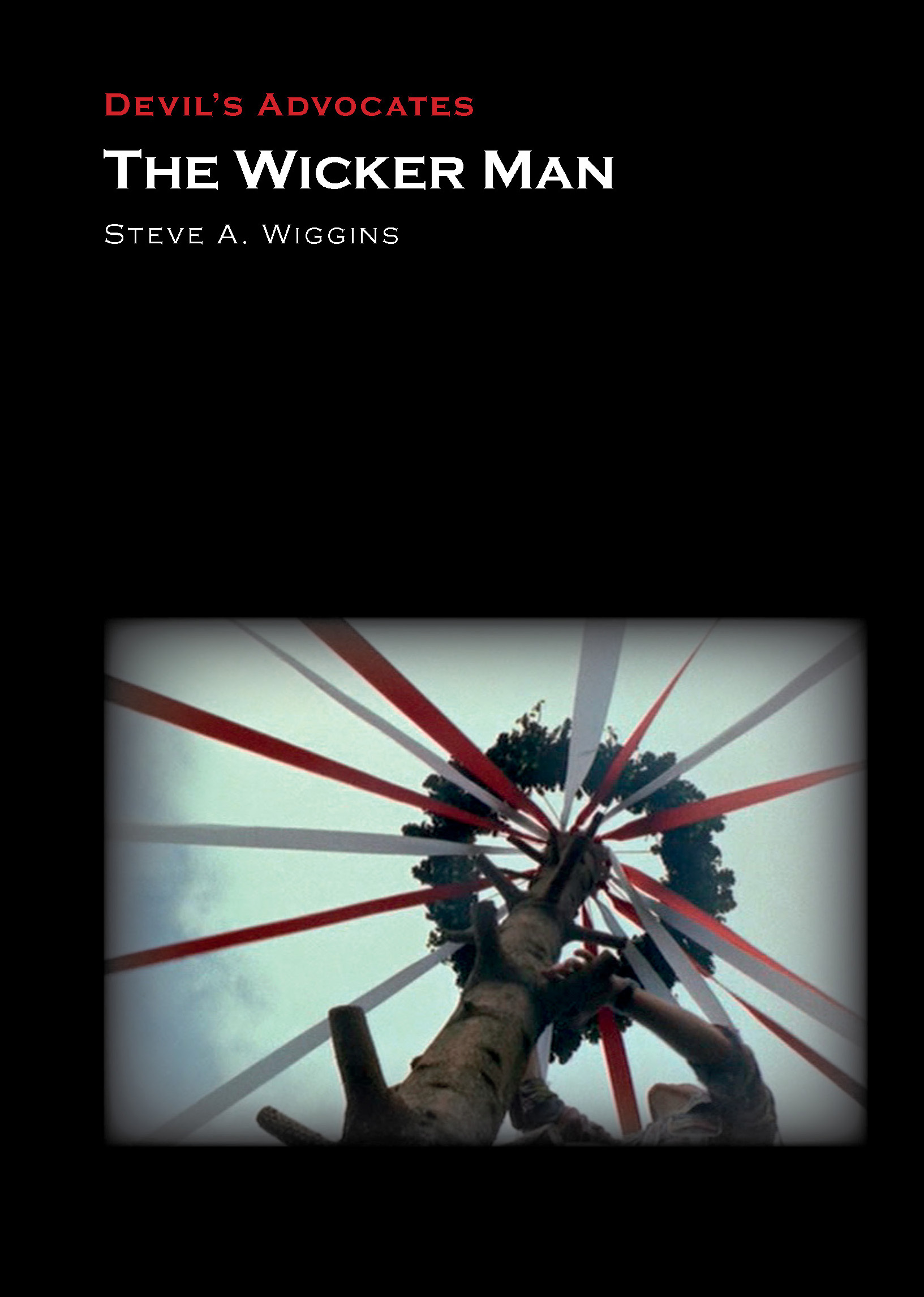
Still, you feel like proofs arriving should be occasion for a day off work.  Like your boss would say, “That’s quite an accomplishment!  Why don’t you take a day off to get started with it?”  I live in a fantasy world, I guess.  The proofs arrive with their shot of adrenaline and then you’ve got to read other people’s ideas for less interesting books (or so it seems).  Maybe this is why not so many editors write any more.  It’s exhausting.  Of course, I’m writing this post instead of reading the proofs.  Every diet should have some variety, even the literary kind.

I’m not a fussy author.  Some turns of phrase I will fight over, but I know copyeditors mean well.  I’ve done some copyediting myself, and I meant well.  Authors are people who are in for the long haul.  From the time you start working on a book (and if finding an agent is part of the process, you need to add several more months) to completion is generally measured in years.  It’s not unusual to get no pay at all for this work.  As Ivan Klima wrote: “A truly literary work comes into being as its creator’s cry of protest against the forgetting that looms over him, over his predecessors and his contemporaries alike, and over his time, and the language he speaks.  A literary work is something that defies death.”  If you can forgive the sexist language, there’s a great deal of truth there.  And part of that process is the effort to locate an agent who shares your vision.  And, of course, getting proofs back to the publisher on time.

Wicker Proofing

I’m currently reading the first proofs of The Wicker Man (due out in August).  While necessary, proofreading is a pain (and I work in publishing!).  You have to put everything else aside and concentrate on what you’ve already written, and if you’re like me, moved on from, to get your earlier work out.  I’m extremely time conscious.  I have many things that I would like to accomplish in the time I have left.  Right now one of my priorities is book six.  It’s already written, but I’m revising it for the umpteenth time.  Then the proofs come.  This is one of the issues a graphomaniac faces.  It’s part of trying to make a life from words.  And it distorts time.  I submitted my Wicker manuscript back in December.  Since then my mind has largely been elsewhere.

Proofreading—or is it proof reading?  I’m not a proofreader—isn’t the same as it used to be.  These days you proofread a PDF and use the markup tools for changes.  I had developed a kind of nostalgia for the old-fashioned proof markings.  Now you highlight the offending text and add a note to explain what you would like changed.  This makes me worry about time too, since I’m probably among the last generation who will even known what proof markings are, apart from historians of publishing (and yes, there are historians of publishing).  I am fortunate in having had a good copyeditor for The Wicker Man.  S/he didn’t change much but pointed out where my wording was ambiguous.  Those of you who’ve read me for a while know that some of that ambiguity is intentional, no?

A quick turnaround time on proofs is necessary.  Of course, mine would arrive on a Wednesday.  That very same day I was asked to be a reader-responder to a journal article, also with a brief turnaround time.  I wanted to say “No,” but as an editor I know how difficult it is to find reviewers.  Anyone who publishes should consider it a moral obligation to review when asked.  Just like jury duty.  Thursday and Friday mornings were spent reviewing the article (which I hope will be published, whoever wrote it).  All of this was done without picking up a pen (as much as I wanted to) or leaving my laptop.  As much as I enjoy those proof markings, nobody has the time for them anymore.  Even now I’m playing hooky from proofreading to write this blog post.  I’d better get back before someone notices that I’m gone.


Wicker Wondering

Why The Wicker Man?  It’s a fair question.  My book is now starting to appear on Amazon and other venues (it’s on Goodreads!), so it’s time to try to get the word out.  The BBC ran a recent story, “Why The Wicker Man has divided opinion for 50 years,” and that offers a springboard into the “why” question.  I’m not Scottish, but my wife and I lived in Scotland for a little over three years.  That’s one reason.  While there I did some research into Scottish folklore—historians of religion are curious people—and traveled widely, and that’s another.  As one of those writers who’s never been able to break out of the academic market, the third and most direct reason is that I’d begun a book on holiday horror.  A friend pointed the series Devil’s Advocates out to me.  Back then the series books were priced in the twenty-dollar range, but the pandemic put an end to that!

I’ve always thought The Wicker Man derived its fear from the strangeness of the holiday.  I’ve also often wondered why Anthony Shaffer and Robin Hardy didn’t make more use of “Beltane” in the dialogue.  Maybe the unfamiliar was too unfamiliar?  I suggest a different reason in my book, but I won’t reveal that here.  Writing a book on The Wicker Man would allow me the opportunity to share my thoughts about holiday horror without trying to convince an agent that people actually do like to read about horror as well as reading horror itself.  Come on, agents!  It’s called pop culture because it’s popular!

I pitched the idea and the series editor liked it.  So did the reviewers.  They were tired of hearing/reading about The Wicker Man as folk horror, as if there was nothing more to the movie.  Like most films that grow an afterlife, this one is complex and can be approached from many angles.  In fact, there’s another book, one by John Walsh, coming out on the movie just weeks after mine.  I wasn’t the only one who knew the fiftieth anniversary was on the horizon like a Beltane sunset on Summerisle.  For those who prefer a more television-like explanation, I’ve posted a video on The Wicker Man on my YouTube channel.  This blog, I realize, doesn’t get enough hits to drive traffic that way, but it’s nevertheless part of the package.  Why The Wicker Man?  The answers likely lie in several posts on this blog, a few years in Scotland, and a love of strange movies.


The Importance of Sharing

Growing up with siblings, I remember it well—my mother instilling the message of sharing.  If something good came my way, I could count on hearing “Share that with your brothers!”  These days sharing is easy and it only costs you a click.  And it’s very important.  Especially to those of us with soft voices.  You see, there is another new Wicker Man book coming out this year.  This is the 50th anniversary of the movie and there’s a lot of interest.  The other book is getting quite a bit of free press because the publisher knows the importance of sharing the information.  Click that share button!  Meanwhile I’m watching what we in the biz call the NBA (New Book Announcement) creep very slowly out of its box.

A couple days ago I wrote about how Amazon isn’t aware of the book, and Google can’t seem to find it.  In the intervening days it has now shown up on Lehmann’s bookselling shop in Germany.  You here, reading this, are the only people in the United States (if you are) who know about this book.  My voice isn’t very loud.  I don’t get retweeted and I don’t even have a cover image to share yet.  I’m still waiting for it to appear on the publisher’s website.  (This is one of the reasons I’m (hopefully) moving on from publishing with academic presses—they tend to be a touch slow.)  What can you do to help?  Share this post.  It’ll only take you a second.  Look down below this post and you’ll see this:

Of course, I can accept that you don’t like what I’m saying.  But if you’re on Reddit, Facebook, Twitter, or Pinterest, you can share the misery.  All it costs is a click.  The thing about the internet is that little things can add up to a lot.  That’s the whole idea behind websites that take a small cut to get the item you want out to you.  Life by a thousand cuts.  If enough people share, even those with a “Yop” to utter can save all Whos, right Ted?  I used to think all those YouTubers were a bit gauche with reminders in each and every video to click the “like” and “subscribe” buttons.  Now I’m coming to understand that that’s the way life on the internet is lived.  And May Day is just around the corner. Notice for my book will continue to creep out slowly.  Meanwhile I’ll look at Lehmann’s website and hope for the best.