Eschew Stupidity

Dietrich Bonhoeffer was a certified evangelical Christian.  His theology often feels a bit pat to some of us who work in religious studies, but there’s no doubt that Bonhoeffer was a brilliant man.   Bonhoeffer believed in Jesus but resisted Hitler.  In fact, that resistance cost him his life.  My brother recently sent me a Facebook Reels video on Bonhoeffer’s observations about stupidity, which Bonhoeffer believed was far more dangerous than evil.  I shared that video in my feed on Facebook yesterday, and it is well worth listening to.  Stupidity isn’t a badge most people would wear proudly.  We all do wear it from time to time since we’re only human.  The real problem, according to Bonhoeffer, is when crowds start becoming stupid.  We’ve seen it time and again.  We’re living in such a time right now.  The antics coming out of DC right now have thinking people everywhere wondering how this is even possible.  Listen to Bonhoeffer.
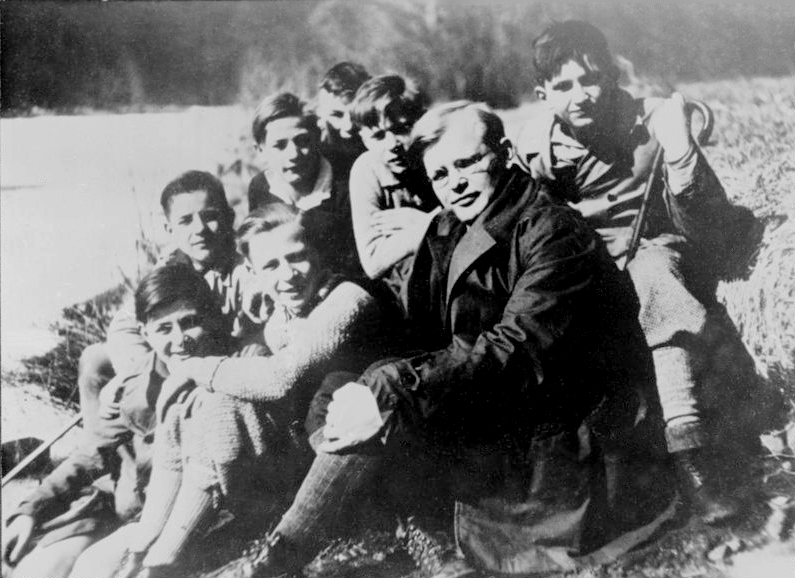
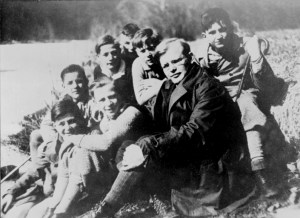
Photo source: Bundesarchiv, Bild 183-R0211-316 / CC-BY-SA 3.0, Wikimedia Commons

I don’t take Bonhoeffer uncritically.  Some of us—generally without tons of friends—think critically by default.  (The women in college all broke up with me because “You’re too intense.”  I credit my wife with sticking with me, although she tells me they were right.)  Anyone can learn critical thinking.  The problem is, keeping the skill is hard work.  And the internet doesn’t help.  Whenever anyone makes a claim, personally, my default response is “How do they know?”  Yes, I do look up references.  With my particular brand of neurodivergence, I seldom trust other people to know something unless they’re experts.  (This is something the current administration is a bit shy on.)  I even question experts if their conclusions look suspect.  “Nullius in verba” is written in my academic notebooks.  Something, however, is obviously clear.  Bonhoeffer was right about stupidity.

I’m not sure what an unfluencer like myself hopes to gain by discussing this.  I do hope that folks will listen to Bonhoeffer if they have concerns about my thought process.  My deeper concern is that the church often encourages stupidity.  Unquestioning adherence to something the facts expose as untrue is often lauded.  It makes some people saints.  Churches require followers and often distrust critical thinkers.  That once cost me my job, sending my career into a tailspin.  This was well pre-Trump, but some in authority didn’t appreciate critical thinking on the part of faculty.  (Ahem, that’s what we’re paid to do).  I’m not anti-belief.  Anyone who really knows me knows that I believe very deeply in the immaterial world.  And I know that Bonhoeffer did too, right up to the gallows.


In Sheep’s Clothing

Evangelicals supporting Trump must experience some cognitive dissonance when they read Dietrich Bonhoeffer, one of their heroes.  Bonhoeffer, who could easily have remained in comfort in the United States, went back to his native Germany because he was deeply troubled by the fascist regime of Hitler.  Involved in Operation Valkyrie, the attempt to assassinate Hitler, Bonhoeffer was hanged for his faith.  He wrote, “If I sit next to a madman as he drives a car into a group of innocent bystanders, I can’t, as a Christian, simply wait for the catastrophe, then comfort the wounded and bury the dead. I must try to wrestle the steering wheel out of the hands of the driver.”  How far we have fallen!  Now evangelicals support someone with all the signs of being a madman.  A man who has said he intends to dismantle democracy itself, if elected.  How quickly Bonhoeffer and his important work is trampled underfoot by his own.

Some people express surprise that I still appreciate evangelicals such as C. S. Lewis and Dietrich Bonhoeffer.  They were believers who stood by their convictions, but who used reason to do so.  And yes, Hitler had messianic delusions as well.  A poor carpenter once warned of wolves in sheep’s clothing, but then, what did he know?  And can we compare Trump to Nazism?  Have you read the Project 2025 agenda?  An agenda so explosive that the publisher for the book on it (HarperCollins, with a foreword written by J. D. Vance) has put off publication until after the election.  You don’t want people to know what they’re voting for, now do you?  Wolves dressed up like what?  You can’t pull the wool over our eyes.

Photo by Tanner Yould on Unsplash

I have no problems with Evangelicals.  Faith is exceptionally important in people’s lives.  My concern is the weaponizing of religion by political cynics.  They select issues that they know will rile up religious conservatives and use them to glean votes.  One of the oldest tricks in the book—known by every stage magician who’s ever stood before an audience—is misdirection.  Get people to look over there so you can pull a trick over here.  I spent my formative years reading Bonhoeffer, and his reasoned evangelicalism made a lot of sense to me.  Of course, this was when the biggest threat we faced was characters like Richard Nixon and Ronald Reagan.  Now even they are trampled under the iron claws of what has become “conservatism.”  Even Dick Cheney has said he’ll vote for Harris.  If Hitler hadn’t had Bonhoeffer hanged, modern evangelicals, it seems, would’ve done the job.


Please Vote

If you haven’t done so already, please vote.  This day has never felt so portentous before.  I’ve been voting since the 1980s and we’ve had some real unsavory choices in some past years.  Never had we had a monstrous incumbent set on destroying the very nation that made him what he is.  Those who don’t, or won’t read the facts haven’t learned what’s obvious even to lifelong Republicans I know—Trump cares only for himself.  His family confirms it.  His policies, such as they are, show it.  He provides lip service to anti-abortion while using stem cells from fetuses to cure his own case of Covid-19 that he caught only by ignoring the science that tells us masks and distancing are necessary.  Even as our infection rates pass what they’ve ever been before, he fiddles while America burns.

Some of us have noticed a profound quiet for the past week or so.  It’s like the country’s running a low-grade fever.  Republicans have been attempting to prevent people from voting, wanting a country more like them, mean and unforgiving, that they can call “Christian.”  To me this feels like 9-11 did, only we have known the plot all along and have been too stunned to do anything about it.  Democracies are founded on the principle of the choice of the electorate.  The only way that we can make that choice known is to vote.  It’s the only way left to be a patriot.

Dietrich Bonhoeffer was faced with a similar situation in his native Germany.  An evangelical Christian, he didn’t acquiesce to Hitler, glorying in the rush of power.  He wrote that when a madman is driving the wheel must be wrenched from his hands.  Bonhoeffer was hanged by the Nazis he tried to displace, but his spiritual eyesight was clear.  Faith can blind believers to the truth.  We’ve seen this happen time and time and time again.  Instead of condemning we need to help them since they cannot help themselves.  This is the truest form of what Jesus stood for.  Read the gospels if you doubt.  This year the decision isn’t for Democrat or Republican, it’s for clear-eyed assessment or self-adoring narcissism.  If a mirror’s held too close, we can’t see what’s truly reflected.  We must vote today to show what we want America to be.  The eyes of both the past and the future are upon us.  How will we want them to be remembered?


Cheap Faith

“If I see a madman driving a car into a group of innocent bystanders, then I can’t, as a Christian, simply wait for the catastrophe and then comfort the wounded and bury the dead. I must try to wrestle the steering wheel out of the hands of the driver.” Many of my conservative Christian friends may be surprised to learn that these are the words of Dietrich Bonhoeffer. Evangelical hero and firm believer in costly discipleship, Bonhoeffer lived, and died, during the Nazi takeover of Germany. A promising young theologian, he escaped Germany to come teach at Union Seminary in New York City. Increasingly disturbed by what was taking place back home, he forsook safety and returned to Germany to try to wrench the hands of Hitler from the steering wheel. Bonhoeffer didn’t write empty words.

The above quote comes from a letter he wrote to his sister-in-law Emmi. Bonhoeffer’s book, The Cost of Discipleship, well deserves its status as a classic. In it Bonhoeffer declares that a cheap faith is not a faith worth believing in. The Prosperity Gospel would have made him ill. You see, Bonhoeffer believed that the religion preached by Jesus didn’t allow for shirkers. Those who get rich and claim God helped them to it. There’s a reason some people say Mammon is a demon. This was in the days when Christianity still had a conscience. When leaders of religious movements weren’t afraid to speak out against accommodating with evil when that was the more comfortable course to take. And his wasn’t empty rhetoric.

Bonhoeffer was arrested back in his native land. Sent to Buchenwald and then to Flossenbürg, he was hanged on April 9, 1945. He was 39 years old. Two weeks later the Allies liberated the camp. Bonhoeffer knew evil when he saw it. Now, some seventy years later our vision has become blurred. We live in a country that declares itself “Christian” but, unlike any religion Jesus taught, declares itself to be first. “America first,” we’re told. Flipping through the pages of the Gospels my eyes fall on a forgotten verse. “The first shall be last,” it reads, “and the last shall be first.” Scholars argue over the authentic words of Jesus, to be sure. What we do know is that he too was executed by his government before he reached 40. And they killed him for the radical message that what God requires is loving your neighbor as yourself.

Photo source: Bundesarchiv, Bild 183-R0211-316 / CC-BY-SA 3.0, Wikimedia Commons

Photo source: Bundesarchiv, Bild 183-R0211-316 / CC-BY-SA 3.0, Wikimedia Commons


Celestial Politics

Two things about my childhood: I grew up religious, and I grew up learning you didn’t talk about religion or politics. Now I see that that combination leads to tremendous potential for abuse. Many conservative Christians believe that their faith only ever endorses a Republican candidate, no matter how bad. This is a strange idea and it goes back to some strange people. If I can talk about it.

We live in a cult of celebrity. This is nothing new. People have always admired the individual who could get him or herself noticed. As early as the epic of Gilgamesh, the guy willing to show his bad self managed to capture the public imagination. We’re still reading his story some five millennia later. Of all places this tendency to treat a human being as authoritative should be considered strange is evangelical Christianity. This religion grew out of a largely Calvinistic backdrop where no individual could be assumed to be good. Indeed, total depravity was part of the theological environment. Mix in this stern outlook with the revivalism of the two “great awakenings” and an uncanny alchemy takes place. People, who used to be bad, now found enthusiasm in religion. The first real superstar in the United States was George Whitefield, a preacher. He had a massive following and was, in every sense of the word, a celebrity. This culture became the social substrata of the new nation. Open to all religions, yes, but mostly belonging to this one.

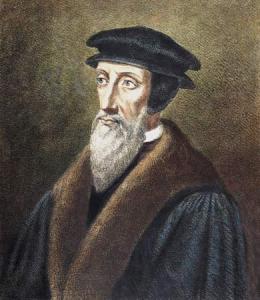
Once American religion became based on popularity, singular figures emerged as defenders of this faith. “Trusted” leaders and authors. Not all of them home-grown either. Names like C. S. Lewis, Dietrich Bonhoeffer, and Francis Schaeffer—not to mention Billy Graham—grew to a status they never had in their lifetimes. Well, Schaeffer and Graham came to be evangelical gurus in their own rights and Graham remains among the living, but Lewis and Bonhoeffer were really adopted by conservatives only after their deaths. The interesting point here is that Lewis and Bonhoeffer often wrote things that directly challenge the easy evangelicalism that accepts them as celebrities. The problem is, we don’t talk about religion any more. We use it for voting, and for feeling good about ourselves. Superior, even. It seems strange to think that Calvinism had some safeguards built in that have been knocked down for the sake of the polls. I can’t imagine John Calvin casting a vote for Donald Trump. But then again, Calvin became a celebrity in his own lifetime, so I might be wrong about that.

calvinjohn


Real World Ethics

Do yourself a favor. Spend five minutes watching this video:

(note: the video has been removed and a “family friendly” version is here: Kai)

Although it has a whiff of the apocryphal about it, I choose to believe that Kai is really who he claims to be. I don’t know what actually happened here, but this is ethics divorced from armchair pundits and congressional committees. Sometimes you see something and know it’s just wrong. Most of us wring our hands and await some authority figure to sort it out. When Kai met someone claiming to be Jesus, he was willing to be “the Antichrist” to save innocent people with no regard for himself. I am very impressed.

No, vigilantism is wrong. In fact, I wouldn’t trust a who coven of Republicans to ever arrive at so parsimonious a solution as Kai. He saw evil, he confronted it. I don’t know the backstory here, but I know that I feel a lot less threatened by the street people I see nearly every day than I do by those hiding away in limousines. Ethics is all about figuring out what is right. Kai has his head on straight here. If he could go back in time to stop “Jesus” reincarnated from harming an innocent bystander, he would. No regrets, no questions.

I have watched, and personally experienced, religious leaders intricately plotting how to ruin the life of their neighbors to maximum effect. I have read about politicians who shamelessly increase their earnings while knowing that some of their constituency live in poverty and persistent hunger. I have seen a president declare a war to fulfill a personal vendetta. And I have seen Kai lifting a hatchet to save a person he didn’t know.

There will certainly be those who would condemn such quick thinking and right action as immoral. For those who object from a Christian outlook I would remind them of Dietrich Bonhoeffer, one of the darlings of the Evangelical world. Bonhoeffer was hanged by the Nazis because he did what he knew to be right. Even though his bomb plot failed to kill Hitler, Bonhoeffer knew what Kai knows—those who sit around and watch evil happen as just as guilty as those who perpetrate it. And that’s like trying to surf when the ocean’s at a dead calm.


Under God

As one of the more flamboyant of national holidays in the United States nears, there is a whiff of discontent in the air. The North Carolina Secular Association has been sponsoring billboards that provocatively read, “One Nation Indivisible.” Those who, since 1954, have grown accustomed to reciting the “pledge of allegiance” with the words “under God” inserted after the “one nation” bit, grumble that one more icon of civil religion has come under fire. I first became aware of civil religion as a student in a self-identified Evangelical Christian college. I was astonished that the religion faculty, all believers, suggested that civil religion was not true religion at all. True religion was an inner commitment, not social bravado – often in the service of political aims. I was pointed to the writings of Richard Niebuhr and Dietrich Bonhoeffer and told to think for myself.

Since that time, I have kept a wary eye on civil religion. It is a dangerous force in society since few people think deeply or seriously about their religion. It fosters knee-jerk mob mentality. Civil religion is a slurry of a variety of religious outlooks, mostly Christian, predominantly Protestant, but now gaining a dose of conservative Catholicism. No one denomination would accept all its tenets as true faith, but weighed against the “godless alternatives” most conservative believers would much prefer the shallow public display of religiosity to “one nation indivisible.”

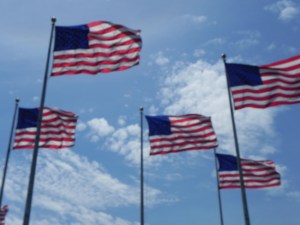
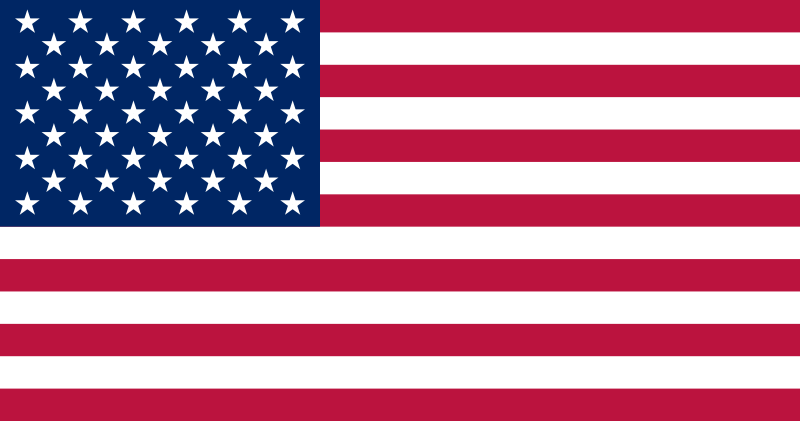
The Pledge of Allegiance was first composed in 1892. It read, “I pledge allegiance to my flag and the republic for which it stands: one nation indivisible with liberty and justice for all.” (That flag didn’t have 50 stars.) The North Carolina Secular Association has, arguably, simply reverted to the original formulation. In 1954, with Cold War concerns heating up and decent Americans associating themselves with Evangelical Protestant values, the phrase “under God” was added – take that you godless Communists! That other great icon of civil religion, the United States motto, “In God we trust,” was placed on currency during the battle-torn era of the Civil War. Once again, the Cold War brought it into prominence. In 1956 the Congressional Record noted that “In God we trust” should be designated as the United States motto. With the collapse of many of the Cold War threats, the fully charged civil religion front had to find a new outlet for its excessive energy. One needs only a casual glance at the American political scene to see where this insipid, lukewarm version of civil religion has resurfaced. One nation indivisible?

Does it really stand for freedom of religion?