Raptor Attention

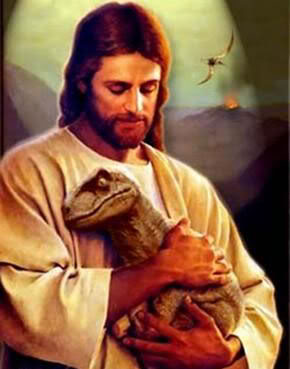
Comments on internet sites are quite revealing. Not that many comments ever make their jolly way to this blog, but, like many people I spend too much time on the internet, and you can’t help but read a few now and again. My wife sent me an ad for the Jesus-raptor tee-shirt offered by Six Dollar Shirts. The image has been floating around the web for some time now, but I haven’t been able to determine its origin. It could be from creationist groups that believe dinosaurs coexisted with people as an end-run around evolution, but more likely it represents an effort to belittle that view. Creationists are the ultimate backward-looking crowd. Fearful of Hell, they see evolution as tantamount to damnation, and must eradicate the biological evil for the sake of their immaterial souls. Reading through the comments on the Six Dollar Shirts page, I had to wonder. Why are we so concerned with getting the past right?

Don’t get me wrong—I have an undying interest in the history of religions and the origins of religious thought. Nobody wants to get the past wrong, otherwise the present is incorrect. Dinosaurs, however, are the great corrective to a major historical error. It is easy to assume that homo sapiens represents the highest point possible on the earthly scale of measures. Dinosaurs remind us that anything can happen. Up until about 65 million years ago, there would have been no reason to suppose that dinosaurs wouldn’t be here forever. Of course, Adam was over 65 million years in the future, and even if he evolved, his primate lineage was tiny and trying to avoid the gigantic footsteps of their distant Jurassic cousins at the time. Some scientists theorize that if the asteroid never hit, the dinosaurs may have evolved distinctly humanoid features. After all, we’re clearly at the top.

The past must always be approached with humility. Relativity may tell us that it is still here, but I can’t even access the moments just seconds ago as I typed these words. The delete key is a dangerous thing. Science has pretty much unequivocally demonstrated the evolution is a fact of life. It is our past. No matter what Ken Ham says, I’m pretty sure even Moses would’ve noted the spectacle if dinosaurs trudged aboard the ark. So Jesus never met any raptors in real life. Some of the commentators on the tee-shirt page appear offended at the blasphemy of the joke. Or maybe they’re just being ironic. In either case, that’s now the past and the best that any of us can do is comment on it and watch out for the big feet that are stomping this way.
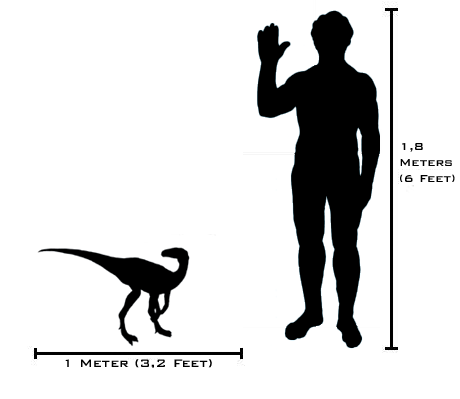
Image credit: Dropzink, Wikicommons
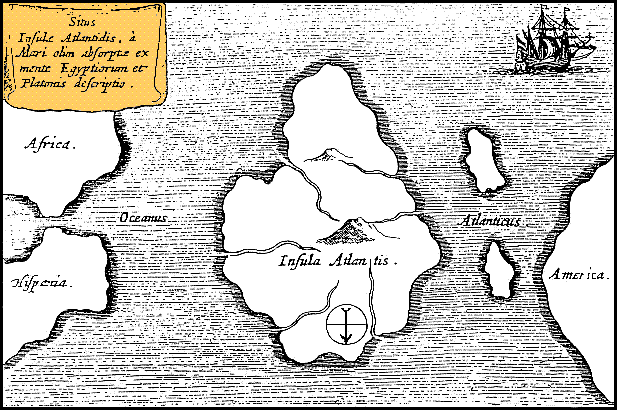

Image credit: Dropzink, Wikicommons

Continental Drift

So this is the way epiphany works. (I know it’s Lent, but I’ve got bigger fish to fry.) I sat down to check my personal email after a horrid day at work, and since I have a Verizon account, I can’t help but see the news headline that’s on the page when I open it. When the headline said something about a new continent discovered by scientists under the ocean, I’ll have to admit that Atlantis sounded better than anything I’d heard in the office. So it was worth a click.

Athanasius_Kircher's_Atlantis

Turns out that this isn’t Atlantis at all—I have this habit of making naive assumptions—but a continent just north of Madagascar that sunk some nine million years ago. No happy lemurs or Homo sapiens around then. So when this Atlantis sank, there was nobody around to see it. At least not Plato.

The story was broadcast by Newsy and it made mention of Science World Report. Here’s where the epiphany piphed. I’d never heard of Science World Report. When I went to their site, the wonders of the universe spread out before me. “Dying Stars Reveal the Clue to Extraterrestrial Life: Earth-like Planets Unmasked” read one headline. “How Dinosaurs Evolved the World’s Longest Necks While Giraffes Fell Short.” These are the things I need to brighten me after a rotten day. A world with wonder in it. A world where money is not the sole, or even the highest good. A world where an intellect need not go to waste.

“Human Language May Have Evolved from Birdsong: New Meaning for Communication.” This website is like my eternal monologue in headline format. I’m not naive enough to suppose this website will be the nepenthe for all my workaday woes. But it does serve to remind me that science and religion are not always foes. A religion only becomes belligerent when it takes its truisms too seriously. We evolved in a world of wonder, but we’ve taken great care to remove the wonder from it. As if joy and delight were puerile phantasms with no place in the serious adult world of finance and industry.

I became an educator because I’ve always been in love with ideas. I lost my job in education because I was an idealist. Yes, continents do indeed sink. And while it may not be Atlantis down there, a simple click led me to a world of wonder. And that is, if anything can be, cause for hope.


Dracula’s Dinosaur

It must be October when a dinosaur with a parrot’s head, porcupine quills, and fangs is announced. Yesterday’s issue of Time online featured a drawing of the creature and a nifty animation of reconstructing the aptly named Heterodontosaurus. Well, that’s actually the genus name. The species goes by the delightful name Pegomastax africanus. Last I checked, however, space on the ark was filling up. Dinosaurs create a unique embarrassment to Creationists. One suspects that if they didn’t have kids they’d dismiss dinosaurs all together, but the troublesome fossils just won’t go away. What’s more, although they’ve been extinct for 65 million years, they keep producing new species for us to recover, describe, and name. When I was growing up (and I have it on good authority that the argument is still used) Creationists told us that no transitional forms had ever been found. Therefore evolution simply could not have occurred. This was generally followed up by a reference to Genesis. Excuse me, a fanged porcupine-parrot? If that doesn’t count as a transition, what does?

Religion loses nothing by admitting to an ancient earth. Nothing but literalness. One of the joys of reading is the exploration of metaphors, similes, and hyperboles—writing delights us with its constant surprises. Even those who claim to read a text literally are engaging in a form of interpretation even earlier than the first wedge mark pushed into clay. Written texts give us something to ponder, to think about, and occasionally, to obey. Just when it looks like the cover has slammed shut on the black book we find a new set of dinosaur tracks running across our clay tablet. The literal-minded might not see these as being a message from God, but surely the endless variety of creatures that have walked this planet more than make up for it.

We used to have a pet parrot. His name was Archie, named after Archaeopteryx, the feathered dinosaur. Although Archie was cut off by disease in the prime of life, he was a curious bird and when I reached into his cage to try to get him on my finger he would dole out what he meant as a painful bite. I always took it as a sign of affection. Had our little friend had the fangs of Pegomastax africanus, I would’ve thought long and hard before risking the finger-perching trick. I like to think it would have reaffirmed my fascination with the amazing adaptability of nature. Evolution, unlike God, has no purpose. An endless tinkerer, it gives us thousands of differing dinosaurs that had been gone many, many millennia before Moses ever even thought of Noah. Pegomastax is safely extinct now, and the only ones who have to worry about this perfect Halloween dinosaur are those who think that one particular view of one particular book is the only way to find truth.

We still miss you, Archie.


Scotland’s Cryptic Evangelist

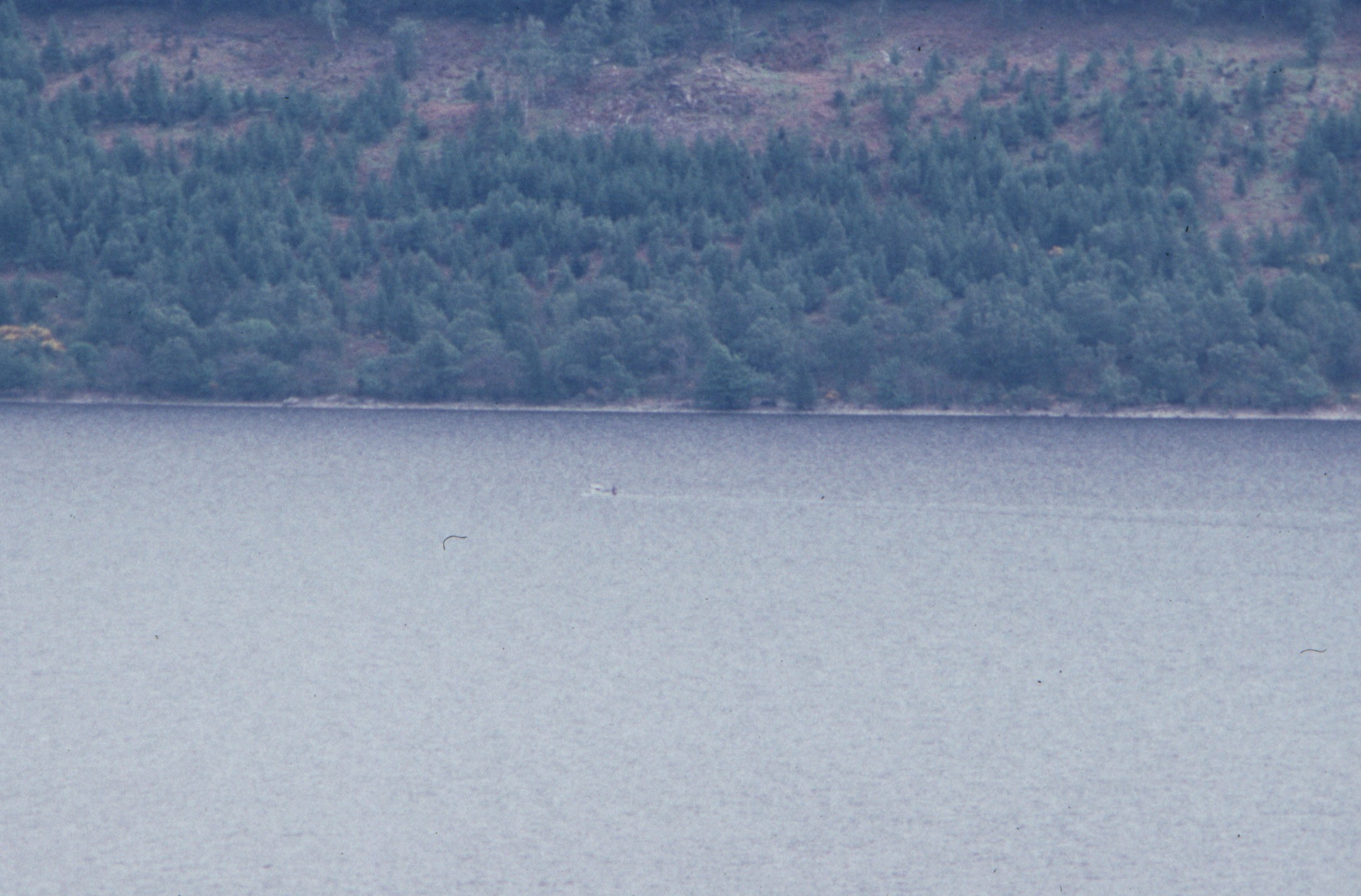
Many years ago it was now, on a Victoria Day bank holiday weekend, my wife and I were on a camping trip with friends in the Scottish highlands. Pitching our tents on the banks of Loch Ness, we joked about the potential danger—after all, Nessie had reputedly attached St. Columba, therefore even the pious had no refuge. Early the next morning, our party still intact, we drove to Urquhart Castle, arriving before it opened. Out on the loch we saw something moving through the water, leaving a wake. It was breaking the surface but was too small to be a boat and it was not a bird. It moved at constant speed until it was out of sight. This was in the days of actual film, and slide processing was “dear” as the Scots say, but I snapped off a photo anyway. The slide is too indistinct to make a diagnosis, but our friends, who had a better camera, came to the conclusion that it was a small boat. After looking at their enlargement, I still have my doubts. I’ve always sat on the fence for the Loch Ness monster. Certainly it seems improbable, but we have only a cursory knowledge of sea creatures and Loch Ness is deep and long and isolated. Is there a Loch Ness monster? Maybe yes and maybe no.

Of course, Nessie has been in the news, as my wife pointed out, backed by the considerable creativity of the creationist camp. Seizing a living dinosaur as the death knell of evolution, Fundamentalist schools in several states are using textbooks that argue Nessie’s existence proves that dinosaurs didn’t evolve and that they still walk (or at least swim) among us. An excellent corrective to this “either evolution or special creation” is Victor Stenger’s book God: The Failed Hypothesis, that I reported on a few weeks back. With apologies to the late Stephen Jay Gould, this tactic puts an entirely new spin on the concept of the hopeful monster theory.

Religion and monsters are thoroughly intermeshed. Often this intermingling comes as the result of revulsion against the unclean or impure aspects of life that monstrosity represents. Numerous analysts have shown that monsters tend to be unholy mixes of elements that religions prefer to keep widely separated—animals that would never have made it onto the ark, yet somehow have arisen since the deluge. Human fear at contamination has an excellent basis in evolution; those who never developed the sense to stay away from the sources of contamination grew sick and died off. Monsters, in this sense, serve as useful reminders for avoiding the “strange fire” that so displeases the Lord. Reading how good Christians are now reaching out the right hand of fellowship to their monstrous brethren, I wonder if a long-held belief is being imperiled. Those who would swim with monsters must be very cautious indeed, for above all things, monsters are notoriously unpredictable.


Strixology

One of the fascinations of parenthood is learning to see things through the eyes of a young person again. When my daughter was fascinated with dinosaurs, I found myself learning such tongue-twisters as micropachycephalosaurus (I spelled that without looking it up just now) and struthiomimus just to remain conversant with her. (That, and I never really grew up.) When she took a childhood interest in insects, I found myself picking up bugs that would have sent me running just a few short years before, in my bare hands, to take them home to show her. All of this is by way of introducing my current continuing interest in witch trials. My wife (and consequently our daughter) is a direct descendent of the Towne family that included three innocent women accused as witches in the 1690s—Rebecca Nurse, Mary Easty, and Sarah Cloyce. When my daughter found out, the next long weekend from school we drove to Salem. I’ve been reading about witches ever since. I recently finished Brian A. Pavlac’s excellent Witch Hunts in the Western World. Well, as excellent as any book about such a gruesome topic can be. In the course of reading it, an unexpected connection dawned on me.

Many of those accused of witchcraft in the early modern period in Europe were accused of killing babies. The vast majority of them were women, often midwives. Those so accused had their bodies stripped and examined in public venues, generally only to have confessions tortured out of them later, under the eyes of male magistrates. The church had given credence to the superstition that witches actually existed and were in league with the Devil. Suddenly as I read, I heard the echo of a familiar refrain that comes from modern witch hunters. Those who, like the magistrates of old, are men; men telling women what they may or may not do with their bodies. Who draw their self-righteousness from their religion and who claim that birth control is of the Devil. Who accuse women of killing babies. Texas begins to sound like the rebirth of the Holy Roman Empire. In all of Europe that was where the most women were slaughtered, in thousands, by men who burned with the zealotry of a religion that had lost touch with reality.

Time spent on history is never wasted. At times we seem to have come so far, but then I look back over my shoulder and see the suchomimus of unbridled male fantasy closing fast. We have worked hard to bring equality to all people, but at the start of yet another millennium, we are still measuring the worth of humans by the gonads they carry. Based on outdated views from a book that was once meant to be inspirational. Sadly, the legacy often left by religion is only a residue of superstition. The reasoning behind the witch hunts of yesteryear and those of today is the same—the desire to control the behavior of others. It is the cocktail of religion and politics that inebriates those who crave power. What was true then remains true today. In the words of Pavlac, “A history of the Middle Ages shows the intensifying entanglement of magical thinking with political power, which produced the European witch hunts.” Substitute “Modern Day” for “Middle Ages” and “Planned Parenthood” for “European” and see if you can’t find a pattern.


Extinctions

Gaddafi is dead. Bin Laden is dead. Saddam Hussein is dead. The people of the Middle East have risen up to reclaim their world from the privileged. In Wall Street people are arrested and sequestered lest the discontent should spread. Do those of Libya, Iraq, Egypt, aspire to Wall Street? Are not the oil barons wealthy enough? How easy it is for us to forget that what we call civilization began here. In what we now call Iraq, people first banded together with complex governments, specialization of labor, and the arts. And, naturally, slavery. As civilization grew, priesthoods became strong. Governments could not stand without the support of the gods. Temples could not stay open without government funding. Gods and kings slept together. The Bible would later parody this as the tower of Babel. How we want to live in that penthouse chapel!

We often take from history that which sustains our interest. And when that interest is reinvested and compounds, we lay the foundations for yet another tower. We live in a world of towers, glad to accept their beauty and glory without realizing that no tower stands out without the deep valleys between the artificial peaks. To build high, some must be consigned to live in the subways and cluttered alleys and sleep out on the streets. The oil money in Dubai, not far from the fabled Eden, erects towers that are the wonders of the modern world. Just looking at pictures of the Burj Khalifa can make one shudder. Oil is decayed life.

Sometimes I imagine the world of the dinosaurs. Mammals must have seemed an endangered species then, small and insignificant as they were. Our distant, distant ancestors must have gazed up on the towering brachiosauruses and bruhathkayosauruses with awe and fear. When they finally evolved opposable thumbs, they decided to emulate their fears. Now the dinosaurs are all petroleum and birds. And still they rule the earth. Civilization began in the oil fields of the world with little use for petroleum. Instead, kings and priests worked together to construct towers that would ultimately fall. Oil makes some very wealthy, but it is only possible because of the extinction of the largest living animals that ever walked the earth.


Time Isn’t Holding Us

Ancient is much more recent than it used to be. Perhaps it has something to do with the two massive earthquakes over the last couple of years that have together sped the earth’s rotation by almost three microseconds. Perhaps. A more likely explanation is that excessive technology makes us soft. We expect new toys, new tech solutions on nearly a daily basis, and with the communications revolution, we are rarely disappointed. I wonder if we’ve forgotten how to help ourselves. This is especially evident in the lack of initiative I sense among many students. Of course, I am ancient.

When exam time rolls around, the present-day student requires a study guide. When I was a student, after dodging all the dinosaurs running around the campus, I never received a study guide for a test. If a test is coming, read, re-read, i.e., study, your notes. Maybe read a textbook? Nowadays a study guide is required for that message to be sent home. And then there’s the emails. Once the study guide is distributed (electronically, of course) the emails gush in asking what exactly I mean by this or that. Since I reiterated the point endlessly in class, accompanied by a PowerPoint slide with the answer writ large, verily, I roll my eyes and drop to my three-legged stool in dismay. Can it really be that college students require detailed answers in advance for a multiple-choice test of only 40 questions? Back in my day, a multiple-choice test was a gift that felt like sixth grade had rolled around again.

Sixth grade: what's he got in his hands?

Time, since Einstein, has been relative. And since I am an antiquity, I can perhaps be forgiven for citing Supertramp’s “The Logical Song.” As a studious young man, religious from epidermis to viscera, I was sent off to get an education. Years later, kicked out of the academy for good behavior, I see the wisdom of the lackluster 70’s band: “But at night, when all the world’s asleep, the questions run so deep for such a simple man.” The lyrics are easily found on the Internet. It is simpler than walking over to the CD rack to check manually. Back in my day, I would never have even imagined skipping an exam and then asking the professor what he was going to do about it in the next class period. Email, in this instance, is easily forgotten. I’ll get back to you once I engage the electronic lock to keep out this velociraptor (if anyone can remember back to 1993).


Misjudging Dinosaurs

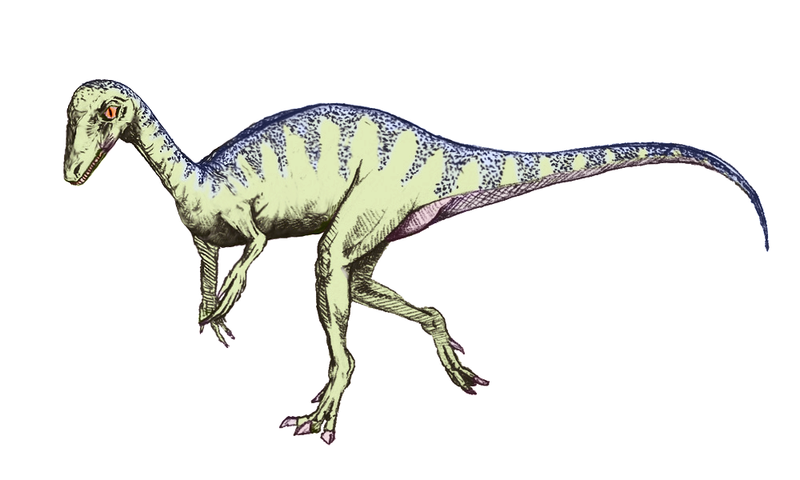
Two dinosaurs diverged in the middle of evolution, and I’m not at all sorry that they both flourished. One became an herbivore, harming no one but plants, while the other grew into a carnivore, eating its siblings. That’s the way of this evolutionary universe. The Eodromaeus and Eoraptor split took place near the very inception of the dinosaur form, with the most basic of existential options: eat or be eaten. Noted paleontologist Paul Sereno has been excavating these Argentinean Lilliputian dinosaurs and has detected that the species, while similar, had irreconcilable food preferences.

Dinosaurs are often relegated to the age of children. When we grow up, we’re supposed to take interest in more modern developments and leave the dinosaurs in the dust. Their value, however, is often underappreciated. We learn about our world by examining theirs. Identification is subtle and sometimes wrong. Little Eoraptor is now thought to have been the plant-connoisseur, despite the terrifying, Jurassic Park-sounding name. We call them what we think they might be. Further discovery often changes the complexion of the picture.

When forced into a choice of more adult occupations, perhaps I unwittingly rebelled, choosing to study ancient religions. Like dinosaurs, religions evolve. As a child it was far easier to tell the preferences of dinosaurs since their morphology often gave them away. Religions are much more subtle. We are told that some dinosaurs survived in the form of birds. Many, many millennia of evolutionary pressure reduced their size and morphed their scales into feathers. Sometimes it’s hard to recognize a carnivore even when it’s just outside your window. That’s the way it works. Some follow the herbivore track, others prefer the way of the carnivore.

It's not the Eoraptor you think you know (from WikiCommons)


Noah’s Newest Neighbor

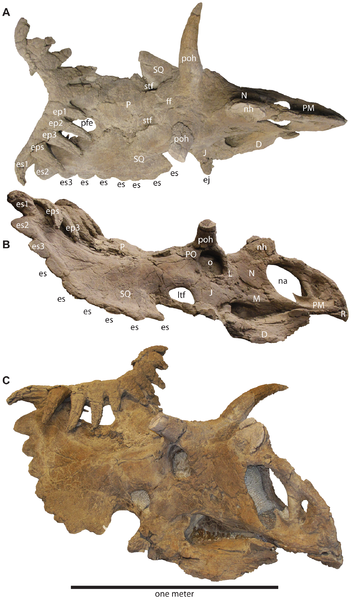
This week paleontologists announced the newest dinosaur discovery: Kosmoceratops, a plant-eating, three-ton beast with an improbable arrangement of fifteen horns on its head. Any beast arising from the sea would be jealous. As Kosmoceratops jostles its way onto the ark, scientists debate the utility of all those horns – placed incorrectly for defensive purposes, they seem to have functioned to attract mates. Isolated on a fairly compact land mass, these Cretaceous ceratopsids bloomed into a distinctive species as showy as any other so far discovered. As evolution continues to stir debate in this country, its evidence keeps marching along.

Every semester, four terms per year, I have students work on a project that includes (in part) evolution and the Hebrew Bible. Every semester as I overhear discussion, I realize just how deeply the anti-evolutionary front has its claws in the American psyche. Otherwise intelligent undergraduates studying a variety of subjects: science, business, engineering, psychology, express their doubts about evolution. The reason: the Bible doesn’t affirm it. Nor does the Bible affirm atomic theory, free market economics, or microchips. Evolution hits, perhaps, a little too close to home.

The dinosaurs stomp in the face of Creationism. As much as the fundies try to embrace them, dinosaurs are just too outlandish to fit in any world other than evolution. The God of the Bible doesn’t seem to have a surfeit of humor to have wasted so much creativity on dinosaurs that no human ever got to see. We reconstruct, with amazement, species after flamboyant species, and yet the foes of science keep a finger firmly tucked in Genesis. Serious Bible scholars seldom have difficulties with letting science do its job, including evolution. The agitation arises from another quarter. And with all those horns in front of us, that quarter might be the apocalyptic sea after all.


When Dinosaurs Will Rule

Just about all of us begin life as budding paleontologists. What kid doesn’t adore dinosaurs and their paradigmatic story of planetary rule followed by inexplicable decline? The mystery and drama only add to the fantastical nature of the beasts themselves – creatures towering over houses and trees, predators the size of school buses. When my daughter hit dinosaur age, my latent paleontologist experienced a profound resurrection. Sure that she’d become the next great dinosaur hunter, I relearned all the old species names and added dozen more from creatures discovered since my interest went underground. While my career was spiraling downward at Nashotah House, I contacted the paleontology program at the University of Wisconsin to see about retraining. I even started to teach myself calculus.

Life delights in playing funny tricks on people. Once again my career in religious studies spirals downward and the specter of the dinosaurs rises. Literally. A former student of mine pointed out an article on Helium.com that spells out some possible implications of the Deepwater Horizon fiasco. The first sentence reads: “Ominous reports are leaking past the BP Gulf salvage operation news blackout that the disaster unfolding in the Gulf of Mexico may be about to reach biblical proportions.” The Bible is our standard measure for disaster; no crisis can not be made worse by throwing in the adjective “biblical.” If Terrence Aym is correct, however, even the Bible won’t save us now.

Apocalypse now?

Basing his analysis on Gregory Ryskin’s thesis that immense methane bubbles from under the ocean led to several past mass extinctions on our planet, Aym suggests that all the signs are present that a true doomsday scenario is unfolding in the Gulf of Mexico. I have seldom been impacted by doomsday predictions, but Aym’s article is perhaps the scariest thing I’ve read in years. I’m not enough of a scientist to assess the danger, and the media blockade only makes the speculation worse. Could it be that the decay from all those dead dinosaurs, their cohorts and predecessors, their flora – the very source of fossil fuels – is rising to deal yet another mass extinction on our planet? The reader will need to decide. For me, I regret that I didn’t stay with the dinosaurs, for they still rule the planet.


Jurassic Playground

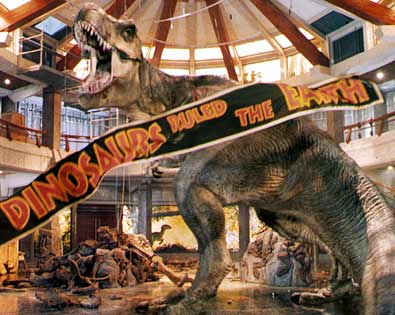
Over the weekend I watched Jurassic Park for the first time in many months, perhaps even years. Despite the caricatures that substitute for believable characters, the dinosaurs are mostly believable and the warning tone appropriate. Throughout Dr. Malcolm cautions against “playing God” – an interesting perspective for a character who ascribes so fully to chaos theory. So when the television was off and the dinosaurs once again safely extinct, I continued to ponder this notion of “playing God.”

Quite often the phrase occurs in two main contexts: those of science and ethics. When humans have discovered the naturalistic explanation for a phenomenon and devise a human means of altering it, we are then in the realm of “playing God.” It seems to me that this is only a difference of degree from what people, and other creatures, have always done. Does not every action we take have endless ramifications? In our own little chaotic system, our decisions and activities impact others just as surely as a T-rex stomping through the park. It is only a matter of degree.

As human beings we may be the only animals that consciously “play God,” but the truth of the matter is that we are all pieces in an intricately interconnected system. Animals, even plants (behold the kudzu!), influence the activities of others, changing courses of rivers, degrading the environment, blocking the paths of ants, ant-eaters, or ant-eater eaters. What could be more natural than “playing God?” This, of course, doesn’t change the ethical angle, but throws it open much wider. Should we clone dinosaurs? Should we clone people? Don’t ask me – I’m too busy playing God in my own little corner of the world.

T-rex plays God


Dinosaur Ark

Over the weekend I had a detailed comment left on my post about the discovery of Aardonyx celestae, found here. Since the comment is a lengthy rebuttal, my answer begged to become a post of its own, so I present it here. The first remark I have to make is that my commenter wrongly suggested two problematic assumptions: I “don’t care” about correctly representing Creationist viewpoints and that I “ridicule Christians.” For those many students who have taken my classes over the past 17 years, it is always clear that I respect all religious viewpoints; in fact, empathy is generally cited as one of my main characteristics. I vehemently defend the rights of individuals to believe the religion they believe to be right – e.g., I do care. As for the ridiculing Christians concern, I ridicule no person. I will, however, point out viewpoints that are ridiculous, “Creation Science” being one of the most obvious. As is clear to anyone who takes the time to survey Christianity, the large majority of Christians in the world have no problems with evolution. A small but vocal sub-sect of the religion, mainly based in America, is the main Christian group that supports Creationism.

My theological assailant tells me that the Hebrew word for “kind” in the Noachian account is “min” (the root, marked as “dubious” in the standard lexicon, is myn) and that it is “much broader” than the word translated “species.” The problem here is that the ancient Semitic viewpoint has been left unaddressed. For the ancient Israelite dog was dog and wolf was wolf, and ne’er would the twain meet. Arguing that a limited evolution has taken place in order to make room on the ark is a fatal flaw to the position. Once it has been admitted that the Noah story is not literally each and every species known, it is the equivalent to the ark springing a leak mid-deluge. The commenter’s examples of animals breeding only “within their kinds” is also problematic. Such “kinds” are not recognized by “nature” and numerous examples of viable offspring crossing species have been recorded. Nature simply doesn’t abide by the neat and tidy categories that the ancient Israelites recognized. Suggesting that two sauropods were all that was needed on the ark to produce everything from Titanosaurus to Anchisaurus is a stretch for even “day-age” theorists since the genetic differences between them are as immense as their body size differentials. This slippery use of the word “kind” has all the imprecision of a god-of-the-gaps.

Did God say to take seven pair of each clean animal? My Bible reads “two of each kind” in Genesis 6.19. But wait, the story changes in Genesis 7.3. Could it be that we have two separate sources (or “kinds”) here? My commenter does not inform me where the fresh-water fish came from; after God blew the water out of the cosmic dome (Genesis 8.1) they must have had time to evolve while the salt leeched out of the low-lying basins left behind by the flood and its marvelous geography-forming power. Good thing Noah had plenty of fresh water on the ark!

“Take time to consider what scientists have already said on the issue,” my debate partner adjures me. That’s just the problem, however. I do read what the scientists say. And all of them who write without a Genesis bias tell me that the ark story is not scientifically feasible. More than that, being a life-long Bible reader, I came to that conclusion as well, based on the genre of the story (myth). I never claim to be the first to find contradictions that prove problematic for the Bible – I simply try to make my readers consider the implications of the fact that such contradictions indeed exist.

What I find so interesting about such criticism is that the author of the comment has not tested his/her hypothesis about what I actually believe. On principle I do not share my personal religious beliefs on my blog, just as I do not share them in the classroom. What I believe is immaterial to the issue of Creationism; in this issue the facts speak for themselves. The fact is “Creation Science” is science fiction.


Missing Links

Dinosaurs hold a fascination like few other creatures. Perhaps it is because of their exotic and tragic rise to dominance and their meteoric plummet to obscurity. Maybe it is because of their impossibly creative adaptations to their environment leading to frills, fans, and pointy bits in unexpected places. It might even be that they reveal our own future to us. Whatever the reason, dinosaurs still rule.

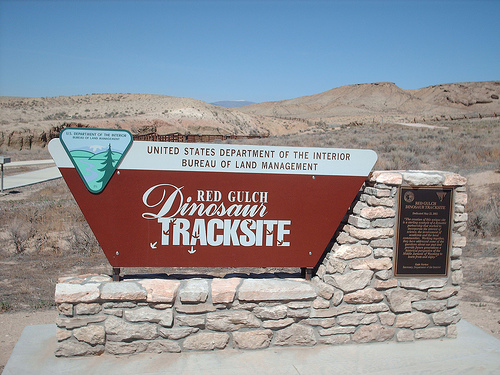
In the news yesterday, a man was arrested for stealing a dinosaur. Not a Jurassic Park living model, but a fossil excavated from private land in Montana. A few years back I took my family on a dinosaur-based trip to the west. Trundling across the endlessly flat eastern half of Wyoming, I insisted that we turn down a rutted and washed out dirt road to an obscure site where dinosaur footprints had recently been discovered. Rolling into Red Gulch (seriously!), we were, surprisingly, not the only people there. Staring down at my feet next to the fossilized prints of some ancient carnivore was like feeling the very pulse of evolution. There was no fear of divine retribution here, just a sense of tangible continuity with a long and very distant relative on the tree of life. Creationists insist that dinosaurs and other creatures were each separately created, fearing, I suppose, an interspecies miscegenation, in keeping with their overall fear of sexuality. I was envisioning myself shaking claws with cousin dilophosaurus.

There be monsters here

Over the years we’ve made many dinosaur trips, stopping at dinosaur museums in North and South Dakota, Montana, and Colorado. Once, at Makoshika State Park in Montana, where you can walk along and see dinosaur fossils in situ, we heard a couple exclaim to the flustered park ranger, “but how can that be when the world is only 6000 years old?” Dinosaurs are symbols. They represent the ultimate in stature and environmental dominance, while at the same time hosting brains that struggled to rival a humble grapefruit. As I read the other, more serious, headlines I realize how much we are like our very distant cousins.


Birds of a Fang Suck Together

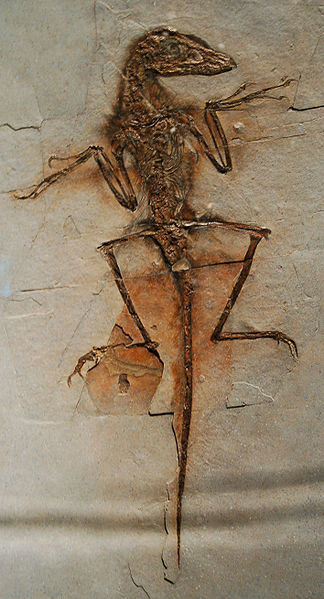
It reads like a cross between a Hitchcock movie and a Lovecraft story — paleontologists have unearthed a fanged bird fossil from the Cretaceous Era. Despite the cartoonish images this news flashes into my head, the startling find also suggests that this turkey-sized predator was also venomous. The first known ancestor to the avian family that used poison to immobilize its victims. A venomous bird.

Don’t let the cherubic Sinornithosaurus fool you! (From Wiki Commons)

Martin Luther is rumored to have said that you can’t prevent birds from flying over your head, (but you can prevent them from nesting in your hair). This new discovery suggests that there might be poisonous birds hovering around out there. And of course, Creationists must make room on the ark for this extraordinary creature. Since all critters, according to Genesis, were on the ark, our Sinornithosaurus must have lurked in some dark corner. I wonder how old Noah classified them — were they nestled among the birds or were they roaming about in the dinosaur wing? These toothy pterosaur wannabes were closely related to the velociraptors and microraptors that once served as the tetrapod mosquitoes of the Cretaceous Park world, stealth biters who’d glide down upon you undetected. The Creationists railing against transitional forms are scratching their theologically inclined heads.

I welcome the discovery like an early holiday gift. Although no one will ever see a living poisonous reptilian turkey soaring down from a Cretaceous canopy, we can all wonder and imagine. Fangs bared, venom dripping, it drops into our comfortable world and makes us reconsider. Apparently poisonous birds did not make the evolutionary cut, but I, for one, will be keeping a closer eye on the sky when I’m out in the woods or jogging around town early in the morning.


What Would Dinos Eat?

A recent edition of Science Illustrated ran an article about a potentially revolutionary understanding of mammalian evolution. Reponomamus robustus, a large mammal from the Cretaceous Era has been found with dinosaur bones in its stomach. The implication, of course, is that this early mammal may have eaten dinosaurs instead of the conventional reverse of the scenario. Science is open to such radical ideas, but my thoughts turned to the culture war being waged on automobile bumpers across the United States.

Several years ago the Jesus Fish or ichthus symbol began appearing on the backend of cars in what seemed at first to be a “baby on board” tactic with a don’t-ram-me-I’m-a-Christian subtext. Some drivers, however, associated the Jesus Fish with an evangelical power play, a showing of numbers that indicted all other drivers as “non-Christian,” and therefore, by implication, accident-worthy. The Darwin Fish showed up soon thereafter, a counter-symbol for those who seemed to be declaring that Christians could be evolutionists as well. Sensing a challenge — which always appears as a threat in neo-con eyes — the Jesus Fish or Truth Ichthus swallowing the Darwin Fish swam onto car posteriors. Then the dinosaur eating a Jesus Fish came out, and I am certain that I once saw a Jesus Fish eating a T-rex on some oversized vehicle hind-end.

A friend once asked me why I spent my time arguing with those who are so obviously wrong (the anti-evolutionists). The unfortunate answer showed up in the White House at the turn of the millennium and the radical restructuring of society encouraged by the “religious right” gains credibility from the sheer number of people willing to adorn their cars with Jesus Fish. The real victim in this volley of statements in chrome is a guy who said nothing about evolution and who, I’m sure, would be amazed at how misrepresented he is. As the love-hate relationship between Jesus and dinosaurs continues to wax and wane, I’m staying out of it, but I’m more frightened by the fish than by the dinosaur.