
Discriminating Tests

That explains it.  That glow coming through the window as I got out of bed this morning is the full moon.  Since this is the first full moon after the vernal equinox, that means Sunday’s Easter.  If Sunday’s Easter this is Good Friday.  That brought to mind an article my wife sent me from The Atlantic, “Most American Christians Believe They’re Victims of Discrimination.”  In this piece Emma Green explains that Christians of a certain stripe believe they’re under threat.  Most people express surprise at this outlook, but having grown up in a Fundamentalist tradition I can say that this is hardly new.  The narrative of persecution among conservative Christians has been around for a long time.  They have a mandate, you see.  A mandate to make the entire world like themselves.

Hearing the many cries of legitimate oppression doesn’t help, of course.  In this linked world of instant communication and news 24/7, we’ve become perhaps too aware of just how widespread oppression is.  Christians have felt persecuted from the very beginning, and they don’t like now being cast in the role of oppressor.  Forcing other people to conform is no longer considered right or desirable, but Christians have a mandate.  What strikes me as odd here is that we have a means of learning about this—of arming ourselves with knowledge—but we’d rather be surprised at the polls and pay for it with years of actual oppression.  What is this mysterious means of knowing?  The Bible.  If read, this viewpoint can be understood.  And if handled carefully, disarmed.

The Roman Empire, after which, tellingly, American politics is modeled, oppressed Christians.  At least for a while.  Then the faith became establishment.  And it began oppressing.  An ocean away, Christians fled here because they wanted freedom of religion.  They didn’t always want to share that freedom with other groups experiencing discrimination.  Especially, of course, if they could be compelled to do heavy labor without pay.  Now these groups feel they’re being judged for saying “Merry Christmas,” or for declaring loudly that Sunday’s Easter.  They can’t point to behaviors that in their understanding of the Bible are bad and tell people not to do them.  They don’t understand that Allah is the same deity they worship, only in monotheistic form.  And they get all this news while the moon is still in the sky.  I look at the puddle of light on my bedroom floor and head for my writing nook.  It may be Good Friday, but I’ve got to work today, getting Bibles ready to sell.

Wolves and Sheep

A state of the university address might not be a bad exercise.  If I might be so bold, as an inveterate outsider who nonetheless has tried to play by the rules, I have been cast in a supporting role—I think a few of my observations might be valid.  Some of my more pastoral colleagues try to reassure me that editors influence more people than professors, but in fact, the professors are the ones with the luxury to write books.  I get to sit on the bus and read them.  I do read many proposals before they become full-fledged books, and, interestingly, I get to discern how someone becomes an “expert.”  I worry a little about this latter point.  When it comes to religion, there are a few too many experts and dreadfully too few places for them to find gainful employment.  This is a volatile mix. I often run across religion experts who have professorships because they are of the right brand.  In a way that is almost inconceivable in any other profession, schools where religion is taught are actually allowed to discriminate.  This fact may even stretch out, in the case of some religions, to more objective fields.  Some religions teach that illness is spiritual rather than physical.  Some of them have medical schools, staffed by believers.

This comes back to the privileging of belief.  We all believe things, and most of us (if not all of us, when the lights are out) include some irrational things in that realm.  Beliefs can change, but not easily.  In the case of religions, most often we are taught our beliefs.  Sitting back and thinking about those truisms is the ultimate of academic enterprises, and yet few matters have a greater impact on society as a whole than the belief structures of people.  If you want to start a university for your brand of religion, after all, the law protects you if you keep your biases on your sleeve.  These people get to write books with the credibility that pathetic posers, like the current blogger, are doomed to lack.  You see, if someone is an expert, they have to have an institution to prove it.  That’s the way higher education works.

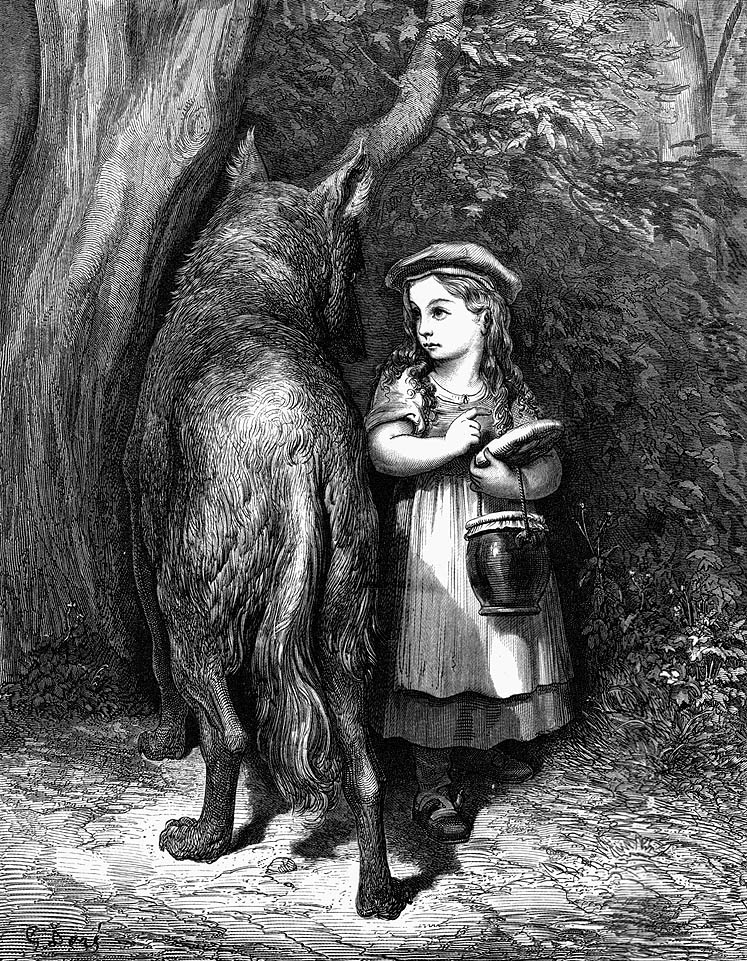
I read lots of stuff.  I sometimes think maybe I read a little too much because the ideas begin to affect my beliefs.  Nevertheless, it is a risk I’m willing to take.  It seems to me that if a religion is really as secure as they all pretend to be, you’d be willing to invite a few interlopers in your doors—a few wolves in wolves’ pelts.  If the sheep have to run, think of it as a chance to test their belief systems.  If the sheep overcome the wolves, then they will have earned the stars in their crowns.  Sometimes I am criticized for my liberal approach to things.  One thing my training has taught me, however, is that systems carefully reasoned through don’t shy away from challenges.  That’s a major difference on many belief-based structures.  Beliefs do not appreciate being challenged.  They want to be right.  But then, don’t we all?  It seems to me that the time for allowing prejudice against other religious views has outlived its usefulness.  If the truth is the truth, after all, it will be able to stand any fright that the wolves might bring.

Dore_ridinghood


Walking Monsters

It was a moment of weakness, or at least tawdry cheapness, that made me watch The Monster Walks. Just the day before the Cable Vision guy had stopped by, detailing how much money we could save by switching. We haven’t had television service since 2004, and even then it was only with a cheap aerial. Back in the days of Borders, I sometimes caved in and purchased the “Classic Features” movie boxes with 50 B, C, or D movies for what seemed a steal at less then 25 dollars. Maybe five or six of the movies from each set were actually worth the time spent watching them, but many of them proved an education. So it was with The Monster Walks.

Now, I readily confess to having a weakness for B movies. Made by people who were really trying, but who seemed to lack talent, I often identify with their efforts. So when I popped The Monster Walks into my DVD player, I had no idea what I might learn. The first revelation occurred in the opening credits where a character named “Exodus” was introduced. Since this was 1932, the character had to be African American. And comic relief. To spare you the pain of watching the movie, the plot is rather simple: rich man dies, helpless daughter inherits all to the chagrin of surviving brother and domestics, who plot to kill her by pretending to be a murderous ape. There also happens to be a murderous ape locked in the cellar. You get the picture. Aptly named Exodus is purely there as a foil for the educated, privileged white family. He was played by the talented but underappreciated Willie Best. As might (nay, should) be predicted, the scheme of killing the girl backfires and the ape kills the killer. Okay, so I can confess an hour wasted and get on with my reading. But the final scene arrested me.

Exodus wonders to the lawyer (who is there to read the will) why the rich man even had an ape. The lawyer, metaphorically transformed into a judgmental William Jennings Bryan, states that it was because he believed in Darwin’s theory of evolution. Exodus responds by noting some family resemblance to the ape. The blatant racism was hard to take, but in Black History Month the painfully obvious collective sins of our society should be laid bare. In 1932 Fundamentalism, often implicitly allied with racist causes, castigated Darwin’s theory for bringing all of humanity down to the same level. As long as a white god is creating the universe, the Anglo-Saxon can claim superiority. Never mind that Genesis was written by a Jewish writer living in Asia. Self-righteousness comes in many forms, but it always involves bringing others down to a rung below where the blessed stand. Has not the great Rick Santorum told us that even the Crusades were merely misunderstood?