Signs and Portents

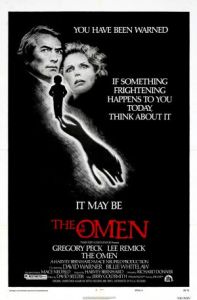
Horror movies are, of course, more than escapism. Although it’s taken many years academics are starting to pay some attention to them. Because of a conversation with a colleague this past week I felt compelled to watch The Omen again. The current political situation merits such viewing, in any case. Interestingly, the first time I saw The Omen—which was during a spate of unemployment—it didn’t scare me much. Like most classic horror, the scenes that had everybody talking in the mid-‘70s had been described so often that they failed to shock. All that was left was a dispensationalist tale of the end of the world—non-biblical, and the fright only came from belief. This time, however, I could see it as nothing but a film about a political takeover.
Omen_ver4

With the open admission on the part of Steve Bannon that his administration—let’s not kid ourselves here—intends to dismantle the government we’ve had in this country since around 1776, we can see that this election was only an excuse. Knowing that this dark side of human nature (some call it the Devil) won’t be given a chance again—they didn’t win the popular vote this time around and unless they silence the media they won’t win the next one—Bannon’s crew, like Damien, has to deconstruct quickly. The Republican establishment, unless it opens its eyes soon, will find itself locked outside as well. Ironically, it’s the public that can see this, not the elites. It’s as if George III were back from the grave. Power, as The Omen intimates, is incredibly seductive. The GOP, wrongly supposing it will share it, goes along with nominations that have now been openly declared agents of destruction. Where is Revelation when you need it?

The Omen is all about Satan getting a back-door entry to the White House. The politicians are all easily duped. Evangelical Christians have been brainwashed into thinking that only by voting Republican can they prevent abortion and gay marriage—two decidedly non-biblical issues. You see, the Devil works that way. Scripture says he can disguise himself as an angel of light. People who don’t educate themselves are very easily fooled. We’ve followed the script rather precisely. Satan’s greatest tool, it’s said, is that people don’t believe in him. So after you finish reading 1984—which we all should—watch The Omen. Ponder what inviting evil to take over the one remaining superpower might really mean.


Map to Eternity

One of the most remarkable things about Christianity is its fascination with the end of the world. Far from being the obsession of nineteenth-century dispensationalists alone (the other Mr. Darby), the earnestly anticipated end goes back to Paul of Tarsus, the first known Christian writer. Before even a Gospel was penned, this sect was expecting the end to come any day now. It still is, at least among many sub-sects. My wife, however, recently sent me a story on National Geographic about a map collection from the 1480s that depicts a geography of the apocalypse. If you were wondering where to make that left-hand turn, this book may be for you. One wouldn’t want to drive a German mile into Hell without an indicator signal on.

The story by Greg Miller describes this late Medieval manuscript and its assurance that the world will end in 1651—talk about your great disappointment! The unknown author of the codex feared Islam almost as much as Donald Trump but instead of running for the GOP nomination he wrote a book showing just how the end would take place. Illustrated, of course. Map is territory after all. I grew up reading fundamentalist tracts that did essentially the same thing. The more progressive bits of the propaganda left out the actual dates because an earlier Miller seems to have missed the doomsday boat, along with various and sundry telltale timekeepers. There in front of me I could nevertheless unfold the future and once the European Common Market gets its tenth member—wait, what? Has yet another head of the beast been lopped off?

Maps give more than directions.

Maps give more than directions.

Ironically, early Christianities were anti-materialistic. Money was considered the root of all evil and communism was the ideal. If you doubt me ask Ananias and Sapphira. They thought long-term investment was a bit of a foolish notion—something that I have somewhat naively, if unintentionally, followed my whole professional life. You can’t be vested without three years of servitude after all, and I was expecting the Second Coming after one year. Two, tops. If only I’d had a roadmap. It’s only 1777 German miles from Lübeck to paradise, so maybe I can catch the next doomsday boat and still get there in time.


Omen, O Man!

Omen_ver4

Of the unholy trinity of late-60s to mid-70s horror movies Rosemary’s Baby (1968), The Exorcist (1973) and The Omen (1976), the last always seemed the least effective to me. Having recently read about the Devil in American popular culture, and having a rainy Friday evening alone, I decided to give it a try again. Based as heavily on Hal Lindsey as it is, once one outgrows dispensationalism it is hard to be frightened by the idea of biblical end times. Everything from making up verses in “Revelations” to utterly bogus Holy Land geography (Megiddo is north of Jerusalem, not south—did the writers not even own a map?) contributes to a set of untenable tenets, even among the bibliterati. The film relies mostly on shocks and startles to earn its horror stripes, and after you’ve seen the movie once, these lose their power in subsequent viewings. Nevertheless, on this rainy May night, so close to June 6, I noticed new ways in which the movie undermines its own message.

The premise, of course, is that Damien, the son of the Devil (who apparently has a thing for bestiality), is plotting to take over the world through the means of politics. Having been watching the events of the past few months I have to wonder how the Devil could improve on progress through such channels. But I digress. His step-father Robert Thorn, US ambassador to London, discovers his “son”‘s identity and tries to kill him. With a strong anti-Catholic bias (the Antichrist is born in Rome, the seat of the church, and is protected by Roman clergy) the film nevertheless spawns sympathy for the Devil. As a child, Harvey Stephens hardly appears diabolical. Maybe it’s just because my brothers and I also spilled goldfish from their bowl once, but it seems to me he acts just like most little boys do. Who really wants to go to church at that age? As the movie approaches its climax, he’s represented as the biblical good-guy.

Thorn has to confirm Damien’s satanic identity. Like Delilah, he creeps up on the sleeping boy and cuts his hair. Convinced by a man who introduces himself “I am Bugenhagen” that he has to stab the boy, Thorn in a white car outraces police (so there might be a bit of prophecy here after all) to sacrifice the child on the altar. The movie casts Damien as both Samson and Isaac within a few short minutes. Apart from the film’s use of violence against women’s bodies (Thorn won’t allow an abortion, Kathy seems to have a penchant from falling from high places in slow motion, Baylock gets a fork in the neck) it actually seems ambivalent about the evil of the boy. An unfortunate birthmark does not a devil make. We’ve made it through the change of the millennium and many other hazards, yet dispensationalism is still with us, as is its anticlimactic Antichrist, Damien. He’s less scary than the real politics of an entirely secular age.