
There’s a hole in the bottom of the sea, if we are to believe childhood songs. News reports this past week, however, have suggested that just the opposite applies to the Sea of Galilee. According to Science on NBC, a huge stone structure, larger than Stonehenge, rests at the bottom of the lake over which Jesus reputedly walked at the height of a storm. To the untrained eye, this stone pile looks like just that—a stone pile. The problem is that there is no natural source for the mound, and it seems highly unlikely that it was built under the water. This astonishing find is only one of the many underwater structures known that seem to defy conventional chronologies and logical behaviors. If this gigantic cairn was built on land, the means remain a problem. It is one thing to climb a conventional pyramid, complete with ramps and sledges, and quite another to mount a mound of apparently random stones to drop another on top. Perhaps it was built under water after all, like one of those tantalizing toys where you try to land your penny in the cup at the bottom of a tank of water.
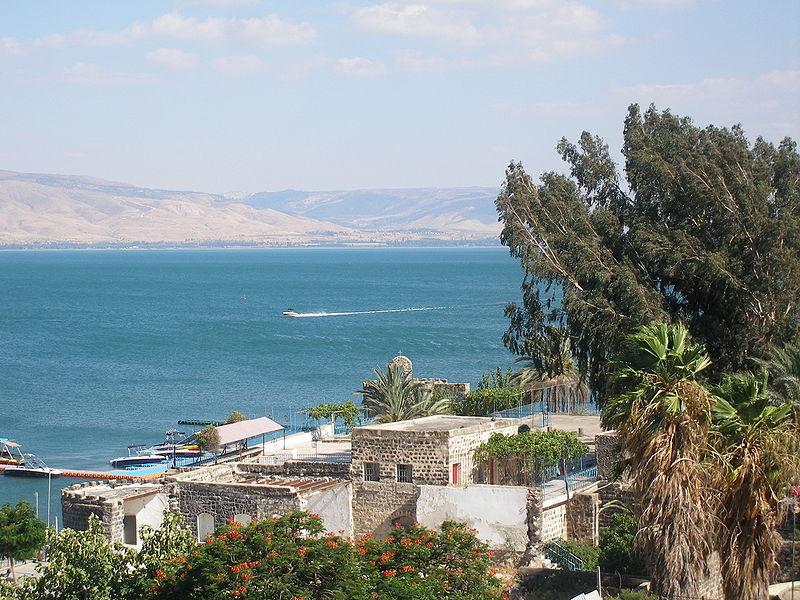
Pacman’s Sea of Galilee from Wikimedia
Ancient monuments are one of the great fascinations of antiquity. When no rational explanation is forthcoming, a religious one will be declared. Without written records, we know nothing of the real purpose of Stonehenge or Avebury, let alone Galilee-henge. With the pyramids of Egypt we have a better set of data, and we can feel justified calling them religious structures. But why were ancient people building massive rock mounds in what was to become the Sea of Galilee? The place has irrevocable religious associations to the modern mind. Did it possess such connections in the deep pre-Israelite period as well? The false mountain of Silbury Hill, not far from Stonehenge, comes to mind. People are mountain makers.
Cairns have been among the most persistent of human monuments, but what makes this new finding of interest is its location. Baptized in the very lake that holds the headwaters of River Jordan, the mysterious mound has already claimed its sanctity. Who built it, why and when, will take backseat to the fact of its holy location. Archaeologists will eventually dive and probe and will declare an anthropologically sound explanation for this newly found, artificial, miniature mountain. Mountains and gods go together, however, as readily as offering plates and churches. Whatever this newly discovered structure may turn out to be, it will always be a religious site for those who believe.
 Steve A. Wiggins