Pet Theory

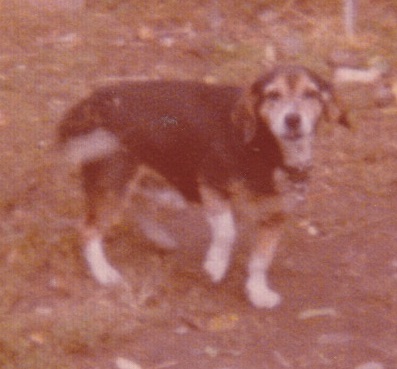
We don’t have any pets.  At least not beyond the spider near the sink that I don’t have the heart to release outdoors in winter temps.  But I have had.  I think the reasons our pets mean so much to us is that they’re like people in so many ways, but nonjudgmental.  They accept us with all our quirks and despite occasional—generally unintentional—neglect.  A recent family text chain about the sad occasion of having to put a dog down got me musing about my history of pets.  We get remarkably attached to them.  Growing up we had dogs, cats, birds, turtles, guinea pigs, fish, and we tried a short-lived attempt at hamsters.  My wife grew up with a cat but became allergic after leaving home, so we had to avoid furry pets when my daughter was young.
We had fish, hermit crabs, and a bird.  The bird, a parakeet named Archie (short for Archaeopteryx), was with us at a difficult time.  Things weren’t going well at Nashotah House, but I had no idea that I was in the cross-hairs.  Archie was a suspicious bird.  We tried to get him to talk (mostly “nevermore”) but he wouldn’t.  I tried to get him to perch on my finger—my Mom could get birds to do it—but he only ever bit me.  Still, he was part of the family.  When the seminary axe fell, he moved to two different apartments with us, remaining solitary but stolid in tumultuous times.  In the second apartment he stopped singing.  My daughter thought something was wrong, but we knew from a previous trip to the vet that we couldn’t afford another.  I was unemployed and my wife had to look for a better-paying job.  Then I found Archie dead.  That day is still, all these years later, very difficult for me to think about.  How we cried.  How we snuck back onto land owned by the seminary to bury him in the woods.  How empty our small apartment felt.

Emotions are difficult things, but they’re what bind us together as humans.  We all know loss and sadness.  Many of us have poignant memories of pets who, although we supposed we’d outlive them always thought they’d be there at least another day.  Is there anything that brings us more together?  We think anyone who doesn’t shed a tear at Old Yeller is somehow not really human.  Certainly less human than our adopted animal family members.  How wonderful not to be judged by someone who knows us perhaps better than we know ourselves.


Interstices

College move-in weekend can be a stressful time. In our particular case it means crossing a couple of state lines and staying in a hotel. Well, I suppose we technically might manage to load, drive, unload, and drive in a day but that seems awfully abrupt. You need time to shop for those supplies that might have run out, wait for roommates to arrive, and spend the last quality time together before facing an empty nest for four months. So we find ourselves in a hotel. It’s the one closest to the university, but it is also the host to some kind of event that draws a lot of people but fails to make internet event calendars. We usually stay at this hotel, and they even emailed us at the start of summer to make reservations early. The clientele this weekend is a cross-section of town and gown. It’s a mixed group. In the hall I see other students about, but there are those here who’ve come for non-academic entertainment, whatever that might be.

The barking started about 6 p.m. I grew up with dogs and most members of my family still have dogs. In fact, evidence points to the dog—the wolf at the time—being the first of the domesticated animals. Before agriculturalists rounded up sheep and goats and cattle, the dog accompanied the hunter-gatherer and both engaged in a win-win scenario. The successful hunt of a large animal left food for both humans and their best friend. Ironically for dog-owning anti-evolutionists, dogs are among the most selectively bred of animals. Looking at a pug, or a maltingese, it’s difficult to conjure up images of the wolf pack. The dog next door, obviously lonely and abandoned, was the small, yippy sort with a high-pitched, insistent bark. It was clear there was more than one in there. And, of course, hotel doors are about the least soundproofed surfaces on the planet. It was like Fifi and company was in the room with us. When I turned in about 10, the barking was still going on, and the front desk said they were trying to locate the guests registered for that room.

What's that shining?

What’s that shining?

I grew up with dogs, and I understand the attachment. I do, however, sometimes wonder about the courtesy of others. Some actions impact other people in direct ways, and sometimes we just don’t think of the consequences. I don’t just mean dogs. Lying awake, listening to distraught pets, I thought of the point of higher education. It is an “industry” in which I have a strong investment. The point of it all is to make our life together on this planet better for everyone. There will always be those who can’t travel without their dogs. There will always be those who have to venture far from home to get the education they want. Can’t there be affordable hotels with doors to dampen the noise just a little bit? Or maybe some of us a just over-sensitive at times like this. Maybe it’s time for me to go back to school to try to figure it all out.


Dog-Headed Saints

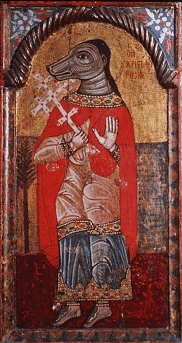
Eastern Saint Christopher

In Stephen Asma’s recent book, On Monsters, he discusses the role of early Christianity in perpetuating or perhaps even inventing various monstrous creatures. As is clear from sources going all the way back to Sumerian times, ancient religions are the spawning beds for monsters. One of the monsters Asma mentioned that caught my attention was the familiar St. Christopher. According to sources as orthodox as St. Augustine, there lived races of dog-headed people in Late Antiquity and the early Middle Ages. These Anubis-like cynocephali were barbarians in the extreme, eating human beings like the more familiar werewolf.

In some Eastern Orthodox traditions, St. Christopher was said to be among the cynocephali. Converted to Christianity, the dog-headed saint was martyred and entered the great kennel in the sky. The message proclaimed by this strange story is the tolerance of the early Christian movement. While battles raged over Orthodox vs. heterodox vs. Gnostic vs. pagan, there was still room to allow dog-headed humans into the fold. (They could be quite useful in rounding up straying sheep as well, one supposes.)

One of the hallmarks of modern Christianity is its exclusiveness. Naturally, not all Christians fit this profile, but many of the current movements define themselves by those not permitted to enter. In the sordid history of the Religious Right there are many chapters demonstrating a stark mistrust of non-Anglo believers. Roman Catholicism maintains that it is the only historically correct version of the faith. Other religions also erect barriers to keep others out. If religions truly promoted tolerance we might see a few more dog-headed saints in the news today instead of those who earn headlines for their exclusive claims on the truth.