Okay to Look

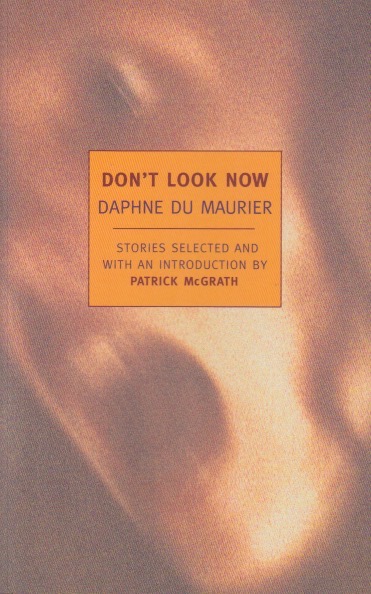
I admit to having learned about Daphne du Maurier from Alfred Hitchcock, and then only after my wife pointed her out to me.  I read our copy of Rebecca with appreciation—a good gothic novel will never steer you wrong.  I saw the movie first, however.  Learning that she’d also written “The Birds” (not the screenplay), I tried to find a book of her stories in various bookshops only to discover that American bookstores tend not to stock her work (beyond, perhaps, Rebecca).  Eventually I started searching online for collections that contained “The Birds.”  I settled on Don’t Look Now, which includes that story as well.  When researching The Wicker Man I learned that Don’t Look Now (the movie) had A billing to the former film’s B place.  I decided I’d read the story first, which I’ve now done.

There are several intriguing tales included in this particular collection.  The one that I found most haunting was the final story, “Monte Verità.”  The narrative of a woman who finds peace in an ancient commune on the titular mountain, it was difficult to read without wanting to find that kind of satisfaction.  Particularly for someone who has had lifelong cenobitic tendencies.  Those of us who struggle against the 925 life, beholden as it is to the great god capitalism, and who require time to think, contemplate, and just to be, this mythic mountain does indeed sound like finding what it is that you’re seeking.  Du Maurier tells the story with such longing that you think she must’ve been there herself.  As a writer I’m sure she had been, in a sense.

Du Maurier was, it should be no surprise, quite a versatile writer.  Some of these stories are gothic and others more naturalistic.  They do tend towards the darkness, but not the kind that leads to despair.  They also reflect a time in publishing when longer short stories were acceptable.  (Most accessible online fiction publishing venues cut their limits far too short these days.)  Some stories really take time to get into.  “Monte Verità” is one such, as is “Don’t Look Now.”  They take time to build up.  “The Birds” isn’t exactly brief either.  The trend these days is for the quick payoff.  We have lost something as a culture with such short attention spans.  This collection of nine pieces provide a good sample of different shades of darkness.  And they encourage further reading.

Dangerous Fiction

At the suggestion of a friend, I recently watched the documentary Daphne du Maurier in Rebecca’s Footsteps.  I confess I haven’t read much of du Maurier’s work, yet.  From a family fairly well off, du Maurier, perhaps unusually for a writer, found early success and was able to make a living from writing.  Like many authors she valued her time alone, but also had basic human needs.  In keeping with her gothic sensibilities, she fell in love multiple times, both with men and women.  And she lived in that kind of fantasy world that fiction writers often inhabit.  For some reason I had it in my head that she had died young, many years ago.  It was somewhat surprising to learn that she lived until I was 26.  I can make the legitimate excuse that I didn’t grow up in a literate family, though.  I learned about du Maurier from my wife.

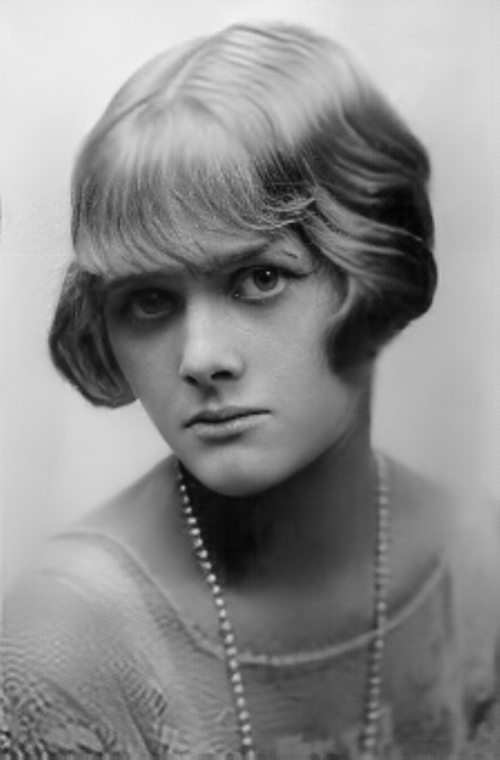
Copyright released photo, author unknown; via Wikimedia Commons

That doesn’t mean, however, that I didn’t know her works.  I first saw Alfred Hitchcock’s The Birds when I was in college.  In those days I hadn’t yet learned to pay attention to who the writer of a film was.  That intimate interplay between written literature and film easily ties me into celluloid knots.  My wife is a Hitchcock fan and together we watched some of his earlier du Maurier adaptations, such as Jamaica Inn.  Then she introduced me to Rebecca, du Maurier’s early and best-known novel.  We watched the Hitchcock rendition.  The documentary makes the point that du Maurier’s life, in some ways, played out that novel.  Writing can be a dangerous business, especially fiction.

My own most recent book, on The Wicker Man, which I hope will see the light of day, brought me back into du Maurier’s orbit.  The Wicker Man was, of course, nearly disowned by the studio that had sponsored it (British Lion).  Half-hearted about the effort, they made it a B movie, showing it after Don’t Look Now, a film I admit that I’ve never seen.  I learned from watching this documentary that this was yet another du Maurier story.  I’ve read one or two of her short pieces—they aren’t commonly found in American bookstores, although I see them whenever I visit England—and clearly I need to read more.  That brings up, however, the age-old dilemma: should I try to read the story before I see the movie?  I think I know what du Maurier’s answer would have been, and I think it wise to follow her advice.