
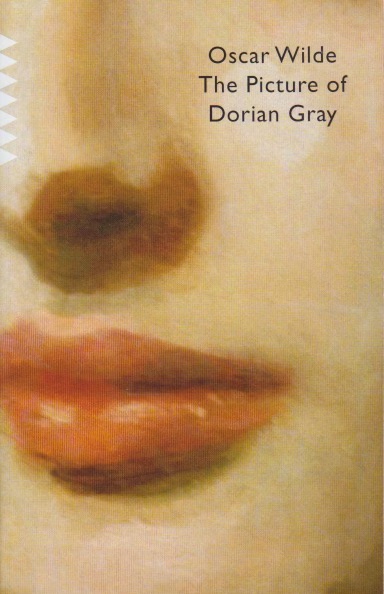
It seems to me that I was living in Boston the last time I read Oscar Wilde’s The Picture of Dorian Gray. That was long enough ago to have forgotten almost everything except the central premise that everyone knows. Recently, I had been reading some analysts who consider it a kind of horror story. Wilde was a great and notable wit, not typically cited as a horror writer. More recently I’d seen the novel classified as dark academia. Since there are no students, and there’s no school in the novel, that genre seems forced. In any case, it is a classic and I was curious about what I had forgotten. The dialogue regarding morals stands out rather boldly, with traditional Christian values being the gold standard. In his own life Wilde was known to flaunt these things, but in his story they stand mostly unchallenged.
At the same time, it is a book about seeking redemption. Toward the end, Dorian regrets the lifetime of evil he’s led. He wants to turn over a new leaf. Corrupted from an early age by Lord Henry Wotton, he learned to live a cynical and self-centered life. He shut out the feelings and needs of others for his own pursuit of pleasure. As an old man still appearing young, he comes to have his regrets. Although Wilde didn’t really live long enough to reach this stage in his own, he seems to have understood psychology well enough. He even tried to have a half-year Catholic retreat. Length of life often trails regrets in its train. Of course, for Gray it is too little, too late. He has made his mark on the world, but it hasn’t been for good. His final act is a stab at redemption, but the novel gives no hint whether he achieved it or not.
Whether intentional or no, the novel considers the fact that we all wear masks. And we do so for much of the time. And there is a bit of horror involved in discovering that we aren’t who we pretend to be. The real Dorian Gray was locked away in an attic room while his life of dissipation led to the ruin of many. The witty dialogue maybe makes this a comedy horror. At times it seems to get in the way of the mood of the story, but it never stopped the novel from making a similar impression to the nearly contemporary Dr Jekyll and Mr Hyde. Late Victorians knew something that we, as a society, seem to have forgotten. The attics of some prominent individuals surely have portraits that belie their appearance on the ubiquitous screen.
 Steve A. Wiggins