Hunting Vampires

The Mercer Museum in Doylestown, Pennsylvania is a treasure trove of Americana from the turn of the last century. Henry Chapman Mercer, in addition to being wealthy, had the foresight to realize that society was rapidly changing, even back then. He undertook the collection of everyday artifacts from many human industries, poured himself another castle-like concrete building, and housed the baubles there. It is a fascinating walk through nineteenth-century America. And if you visit on a cold day it feels as well as looks like Currier and Ives have just passed through. My main draw, however, was a vampire hunting kit.
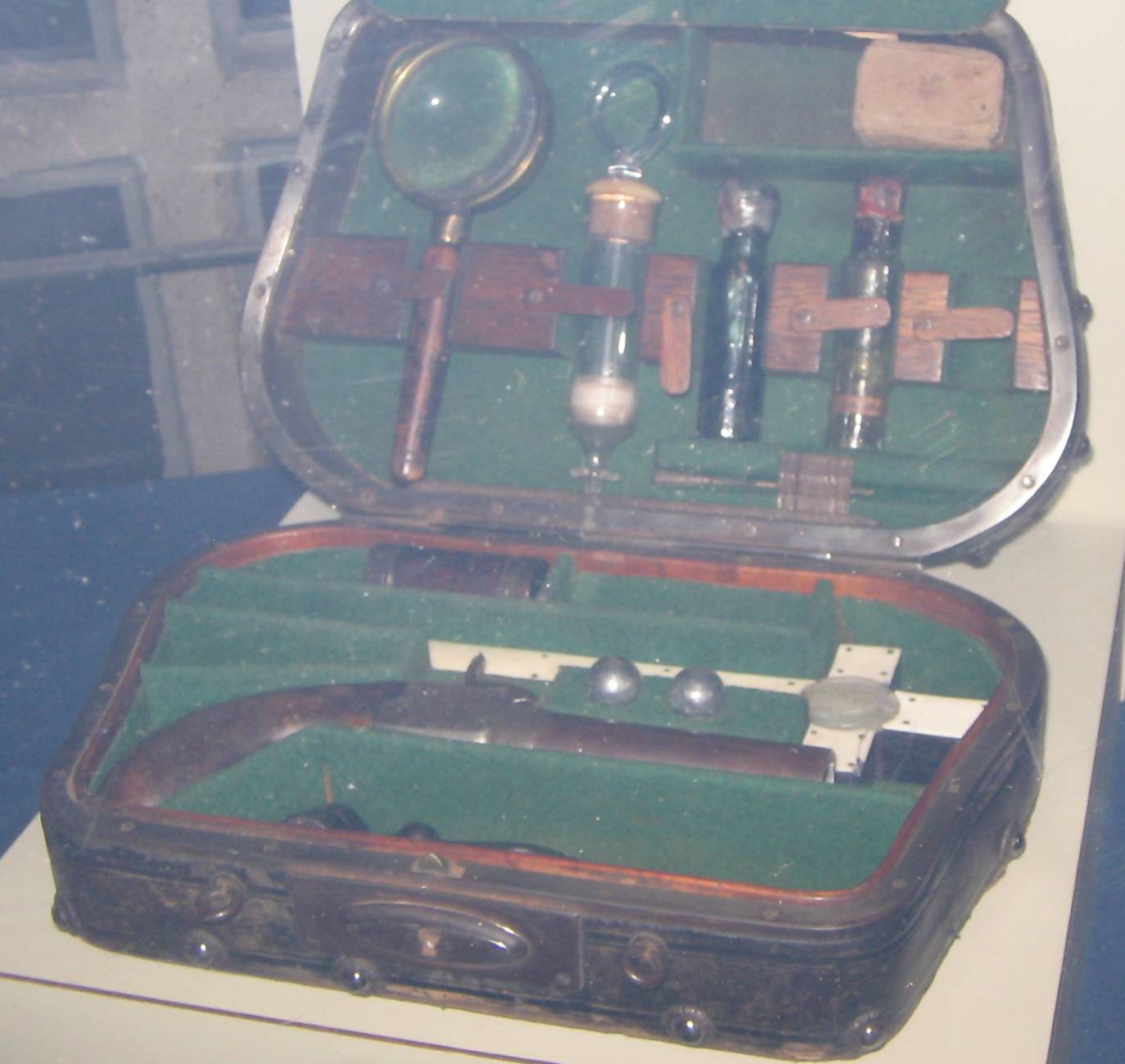
If only I had a polaroid lens...

Prominently displayed, the kit includes a Victorian Protestant’s tool chest for any blood-sucking eventuality. A cross (sans corpus), a pistol with “silver” bullets, glass vials with various apotropaic ingredients, even a little stake, all in custom-cut green velvet. Unfortunately, the kit is believed to be a forgery, although the items in it are from the Victorian era. The silver bullets are, for example, pewter. As the placard notes, vampires do not exist, but that doesn’t mean people didn’t believe they might have existed. The museum, naturally enough, hoped that the Victorian era kit might be authentic. Scientific analysis has revealed otherwise despite the fact that many people continue to believe in something that has no basis in reality.

Belief constitutes reality. Otherwise, how could it be that thousands, if not millions, of people don’t accept the fact of global warming? Brash barons of unhindered industrial progress insist that humans can’t harm the planet – it’s just too big. We can suck out all the resources that billions of years have deposited in intricate recesses and that nature has sprouted right on the surface. For, they say, God has given them to us. They believe that. If we held a mirror up to them, what would we see? Maybe we would be forced to change our minds and go after that vampire-hunting kit after all.
Mercer Metaphor

Not being a follower of the rich and famous, I had never heard of Henry Chapman Mercer before visiting his house. Mr. Mercer has long departed, but he was a tile-maker with a very rich auntie back at the turn of the penultimate century. Being from Doylestown, Pennsylvania, Mercer poured his money (literally) into a castle made of concrete. This sturdy, labyrinthine structure, called Fonthill, is a five-story museum that is an hommage to ceramics and the art of tile making. The friends who introduced us the museum enticed me with the information that Mercer had embedded Sumerian tablets in the wall of his concrete mansion. Indeed he had. Standing in the house that Charles Dickens once visited, I realized that the literary connections stretched beyond Sumer to the lifetime of Mercer himself. And right in the middle was the Bible.

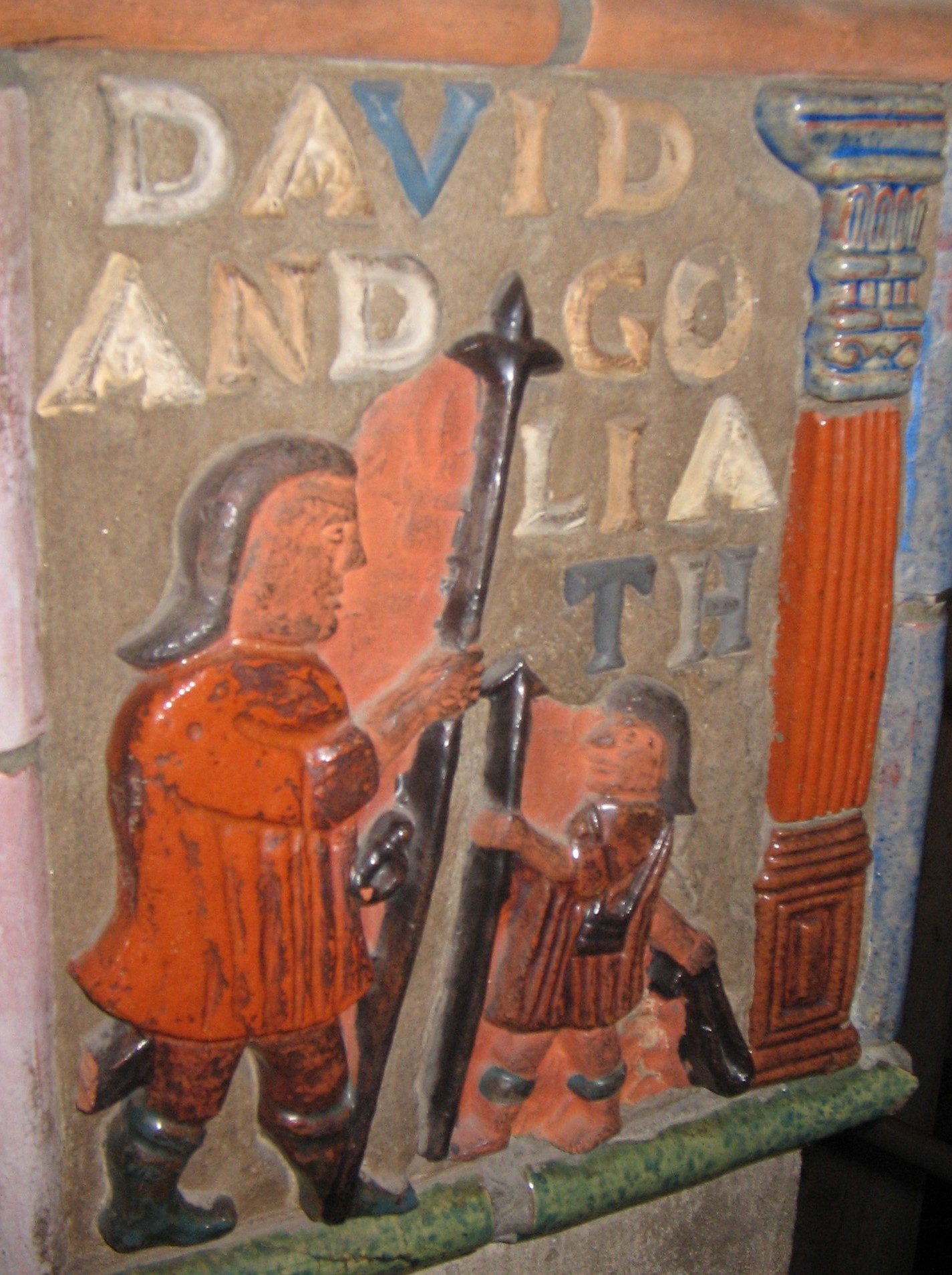
Who might that giant be?

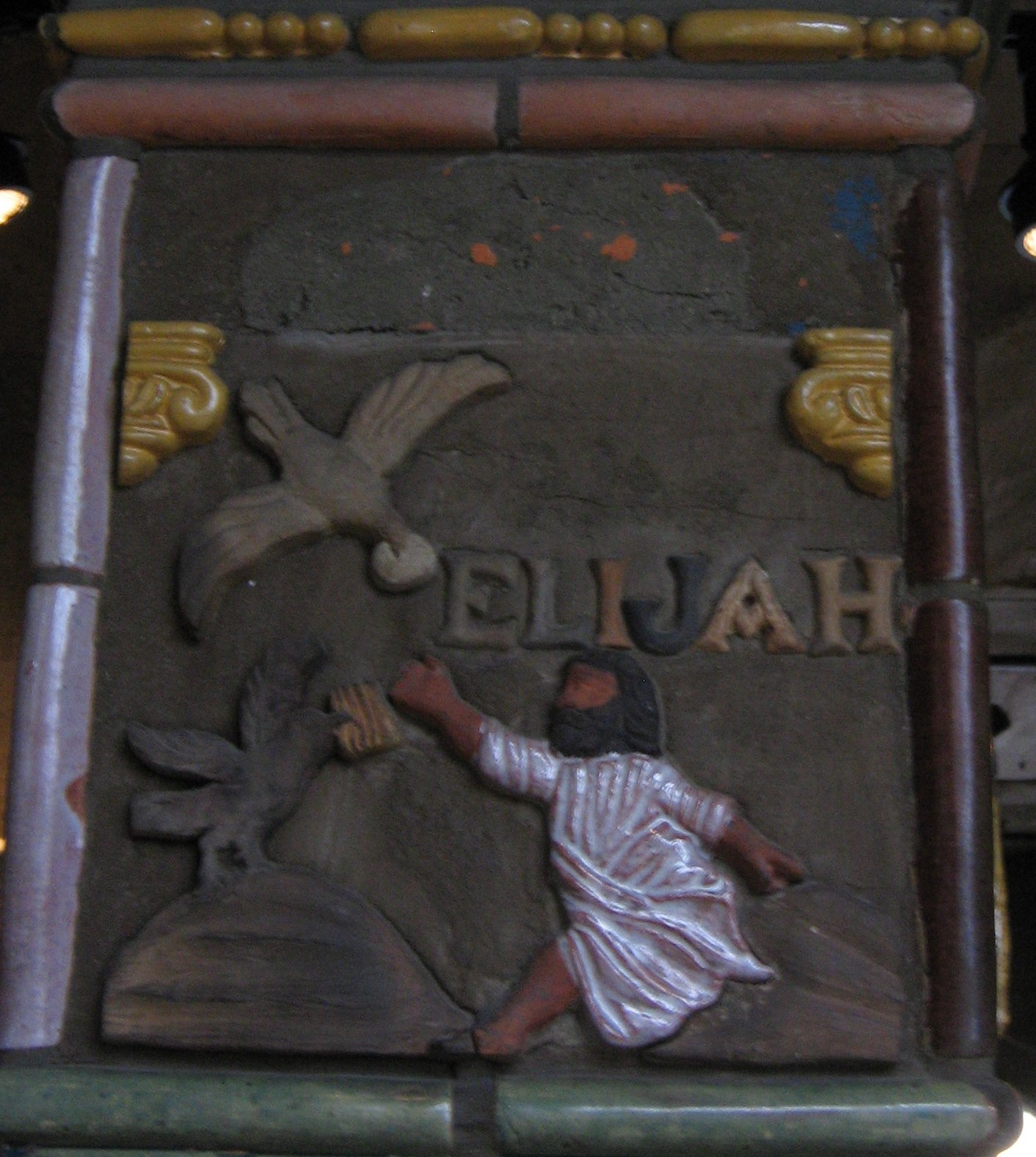
There is so much to see in every room of Fonthill that I could not hope to take it all in. No photographs are allowed inside, so I was desperately trying to remember every square centimeter that I was lucky enough to examine. The Bible, however, came in the form of clay. Mercer designed tiles. A tile factory still sits on the grounds of the house. Many of these tiles depict biblical scenes. Perhaps sharing a shudder with most of the wealthy, Mercer had concerns for the afterlife. The Bible is the balm in Gilead. Although I couldn’t take photos in the house, pieces made from the same molds adorned the nearby Mercer Museum that we visited later that day. Both buildings lack adequate heating but abound in human-made stone. I snapped a couple of biblically themed tiles before eagerly heading to the warmth of the car.

Elijah reaches for a handout

Meanwhile the news declares that unemployment benefits are being shortened by a bloated government. Those who’ve been forced out of work by a capitalism out of control will now have to make their own jobs, it seems. Bush-era tax breaks are being desperately defended by congressmen who look surprisingly well fed. The rich have never had it so bad. Henry Mercer did not have to work for his money, yet the Bible adorns his monument in stone. Fonthill is definitely worth the trip to Doylestown. While you’re there, look for the ubiquitous Bible. The Bible, although possibly the most misunderstood book in human history, lends its gravitas even to the vaunted towers of Babel.