Seussical Thoughts

It seems that Dr. Seuss has fallen on hard times.  His estate is pulling six of his books from production because of hurtful race representations.  This has, of course, sparked the debate between period pieces and the clearly necessary reeducation that has to take place regarding race itself.  I don’t have a solution here, but children raised on these books are among those who realize the dangers of racial stereotypes.  In fact, even those of us who try to keep a weather eye on our own thinking process can at times get caught in the trap of thinking that “white” is “normal” and everyone else is a “variation.”  The truth is we are all variants and political power, with its not-so-subtle adjunct money, have embedded racist thinking throughout our society.
Photo credit:
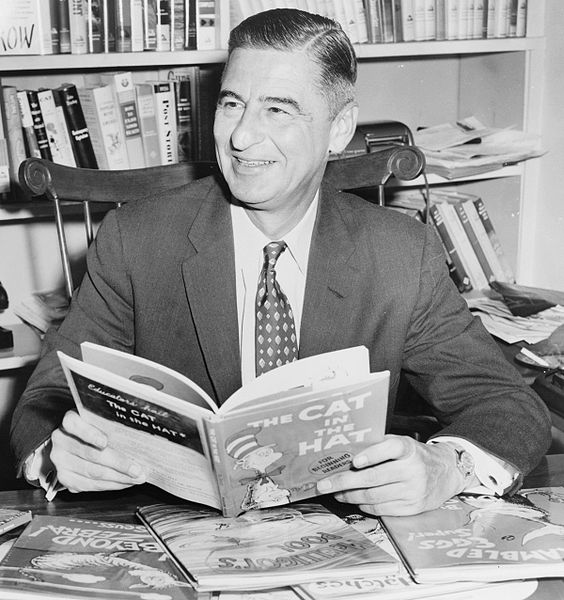
Photo credit: Al Ravenna, via Wikimedia Commons

Theodore Geisel was a broad-minded individual.  His works often advocate for inclusion.  He was also a product of his time, even as we are.  The struggle to do right in the midst of a corrupt world is constant.  None of us, I fear, have risen to perfection.  The roots of racist thinking run deep and they re-sprout if just a fragment of a rhizome left behind.  We should all know by now that slavery was evil and that a system that devalued other humans for money was clearly wrong.  We should know that government policies that keep American Indians repressed and do so secretly are unethical.  We should know that people from Asia have as much right to opportunity as those whose ancestry lies in Europe.  Why is this so hard to learn?  Why do we still have to fight to dismantle systemic racism in this “land of the free”?

Dr. Seuss has taught generations of kids that “a person’s a person” and that persons deserve fair treatment.  He did it in the language and idiom of his own era.  Those making the decisions for his estate are not trying to destroy his legacy.  They are, however, asking us to look forward and to try to figure out where we go from here.  Half a century ago we knew that civil rights were the only fair way to live.  We’ve experienced globalization since then and we’ve been made better for having done so.  Yet we are mired in preconceptions that can only damage our collective sense of justice, often falling along party lines.  Dr. Seuss taught us well—shouldn’t we implement what we’ve learned?


A Slice of Childhood

Few names from childhood are as well known as Dr. Seuss.  When my wife and I read Theodor Seuss Geisel, in the Lives and Legacies series, we realized that neither one of us had learned to read with his books.  It’s not that they hadn’t been written and widely adopted yet (they had by the time we started school), but rather that our districts had gone with other fare.  I learned with the famous Dick and Jane series, and I think there must’ve been some Seuss thrown in here and there.  We didn’t own any of his books, but I remember my mother reading from library copies of Hop on Pop.  When our daughter was born we read to her daily and Dr. Seuss was a large part of our informal curriculum.  Before reading this book, however, I knew very little about who Theodor Geisel was.

The series Lives and Legacies features short books, so this is a quick and no-frills way to meet the man.  Although Geisel was born into a middle class family, he experienced (ironically) the trauma of being in a German family during the First World War.  What we would call hate crimes today were committed against German-Americans during the war, even though there were sizable populations of Teutonic Americans by that point (including my mother’s family).  Not only that, but Prohibition put his father’s brewing company out of business.  Still, Seuss was accepted at Dartmouth and, like many who make it to the Ivy League, his connections helped him to a successful career in advertising and then in writing children’s books.

Geisel was a successful man, but wasn’t driven by money.  He was an artist both with images and words, and as Pease makes clear he approached his craft seriously.  As he matured he began to address social and political issues in his larger formatted books.  He eventually became the most successful children’s book author in history.  Reading to my daughter when she was young we discovered that, unlike the often idealized times of the fifties (followed by the sixties into which I was born) there is a wealth of quality children’s literature available.  It’s easy for middle-class kids to be raised loving reading.  Dr. Seuss knew that the pretensions of adults often created the seriousness with which we face life.  Children enjoy fun and the ridiculous.  He never lost sight of that simple fact.  We live in times when it is readily to be wished that many of the adults in power would go back and read a little Seuss and perhaps, just perhaps, learn their lessons.


Yopp

My fellow academics, lend me your ear. Two or three friends have sent me articles this past week, featuring academics speaking out against the businessification of academia. I’ve been railing about this for years, and I am encouraged by my fellow academics who are looking up from their research long enough to realize they live in a crumbling, if ivory, tower. Too long and too often academics have taken the road of least resistance. Jobs may be rare, but hey, I’ve got one, so who’s to complain? It is tres chic not to believe in anything these days, but I am now, and have always been, a believer in education. And education is not something that can be bought or sold. Higher education is not a business, and if society insists on replacing university presidents with CEOs, then it is time for those of us who believe in education to unite and form our own forums to educate. It won’t pay as well. You might have to skip an academic conference or two, but if we really believe, we can make a difference.

I’m not finger-pointing here. I know that when I had an academic post, such as it was, I wasn’t particularly motivated to suggest that a new model was needed. But now that adjuncts and those of us who are underemployed Ph.D.s outnumber our tenured brethren and sistren, it is time for us to begin talking about alternatives. Once a university becomes a money-making machine there’s no turning back. Too many people love money too much for there to be enough integrity for a president to say, “No, I don’t need a raise. Hire more faculty instead.” Those academics who believe it will happen need to get out more. Although the most educated people in a given society, academics can also be among its most naive. If you can’t join them, beat them. (Metaphorically, of course.)

My education, in many ways, began with Dr. Seuss. We couldn’t afford the books, growing up, but we had television—especially the poor have television. I remember watching, anxious with encouragement, as JoJo sets aside his yo-yo to lend his voice to a cause. His lone “Yopp” saves an entire world. My fellow academics, those with ears like Horton are rare. His species of elephant (let those with ears to hear, hear) may be extinct. I am suggesting right here, right now, that we get together and start working on a solution. This is my Yopp. I shall not, however, be surprised if my inbox fails to light up. The temperature, I know, is already rising. And Whoville, as always, will make itself available for purchase to the highest bidder. I believe it can be different.

IMG_2582


In Praise of Eve

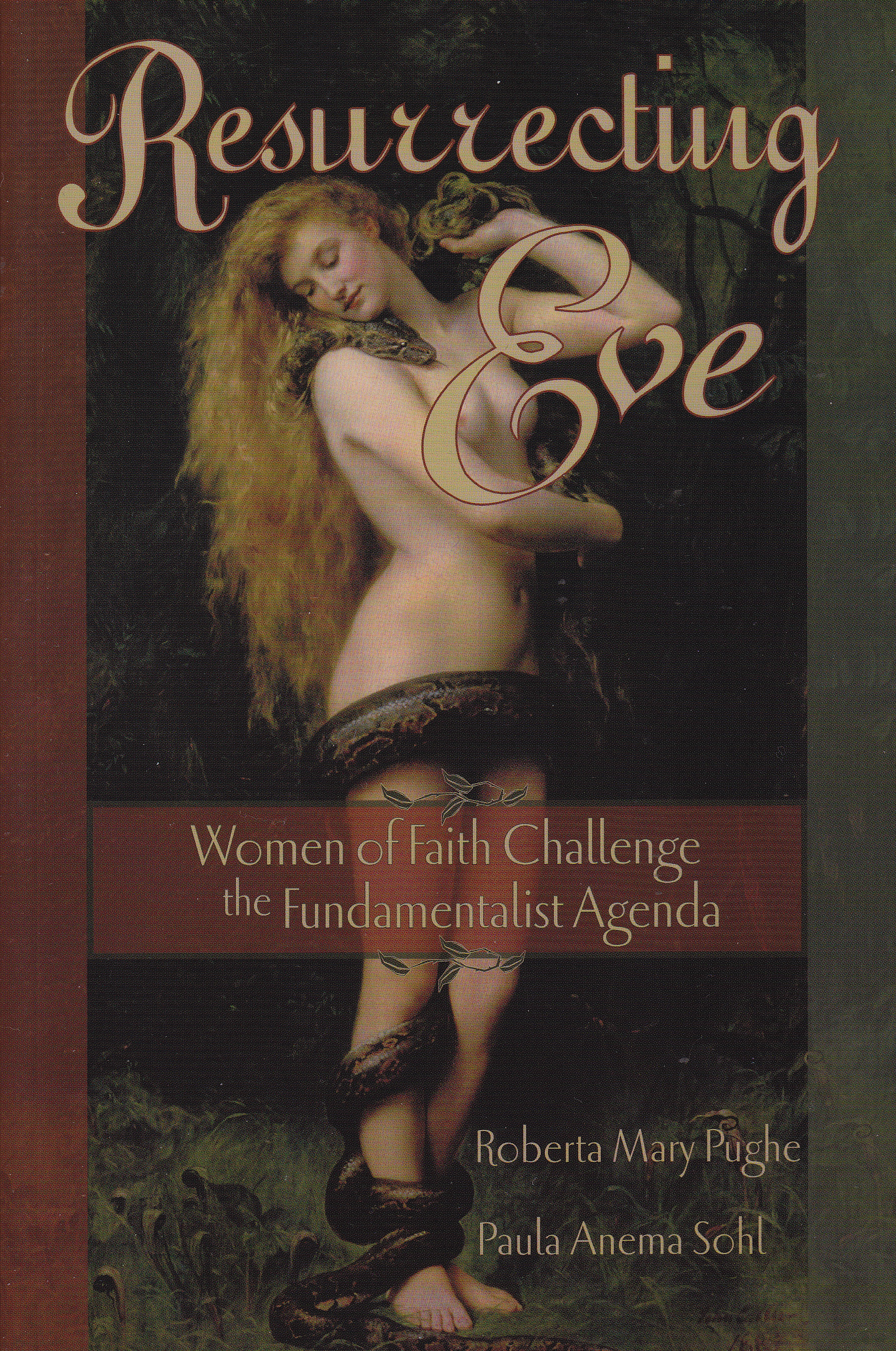
Resurrecting EveI once told some colleagues that reading even basic children’s books as Dick and Jane or The Cat in the Hat was a different experience for girls than it was for boys. Although Dr. Seuss was far more enlightened than much of the standard children’s literature from the era, there’s no doubt that the Cat is an active male, as are Things 1 and 2. The human girl (and her brother) are somewhat more passive, and thus the raring, rollicking action is mostly male. I try to stop frequently and notice how the message is still broadcast too widely that gender stereotypes contain the truth. Back when the American Academy of Religion and the Society of Biblical Literature met in San Francisco, a west-coast publisher, White Cloud Press, showed up. One of their books, Resurrecting Eve: Women of Faith Challenge the Fundamentalist Agenda, seemed appropriate for someone who’d been at Nashotah House as long as I had. Written by a psychologist and a pastor, Roberta Mary Pughe and Paula Anema Sohl, it raises many points that, while not new, again reminded me that men have to take responsibility to learn how women experience the culture that masculinity continues to dominate.

Reading stories of women who’ve suffered at the hands of a hyper-masculine fundamentalist Christianity, it is difficult not to cringe. Young girls molested by ministers in a culture where no one’s voice trumps that of the preacher, have no chance of justice. The mere thought of the few who’ve managed to build the courage to speak out suggests that far more choose to suffer in silence. The abuse isn’t always sexual. Damage to the esteem is rather a specialization of literalist groups, but males get off comparatively easy. Women and girls are provided with a unfair framework from the beginning and they often spend their entire lives conforming to it. These stories, even with the new age-ish kind of framing the book gives, must be told. More importantly, they must be heard.

In a world where our technology is so advanced as to make a Wright brother’s head spin, we still refuse to admit the equality of women. The United States comes nowhere near the top of democracies that have a significant portion of women in government positions of power. We like to think we’re advanced, but we still keep half of our people back from their true potential. We sent a satellite out of our own solar system before a woman president was ever elected. We call ourselves civilized. Of course, Pughe and Sohl are mainly concerned with fundamentalist Christianity. When we look at the demographics of government officials, however, the picture in this regard is not encouraging. Fundamentalism won’t be changed by scholars, for they are easily ignored. It will be changed by everyday men who pick up a book, perhaps because of the seductive painting of a woman on the cover, and realize that there’s far more at stake than cheap thrills and Sports Illustrated swimsuit issues. Treating women equally is merely the first step in becoming truly human.


National Reading Month

Welcome to National Reading Month. Today is the birthday of Dr. Seuss (Theordor Geisel). Since so many children begin reading with Dr. Seuss, March has been designated National Reading Month in his honor. Nothing could be more deserving of a holiday than reading. In an era when active, visual displays and lifelike animation readily draw eyes away from books, it is more important than ever to think about what reading has done for us. As a society, no significant advancements were made beyond agriculture and shepherding until writing was developed. We needed a way to convey knowledge not only over distance, but also over time. To participate in writing is to taste immortality. To read is to communicate with those long gone or far distant. How trivial we’ve made it all seem. Writing was a truly remarkable achievement. The entire purpose of schooling was originally to teach our young to read and do math. So we should all celebrate National Reading Month and put down the devices for a while and curl up with a book.

Okay, well, reading on devices does count. Still, some of us can’t help ourselves from acquiring books. I once visited a house of a friend’s relative on a trip. It turned out that we would be spending the night. As I glanced around my new surroundings I noticed something odd. There were no books in the house. None. It felt so hollowing that I knew I could not long remain there. Every room of our apartment (except the bathroom) has books. I travel with books. Even if it’s going to be a fairly brief car ride, I wonder what happens if I break down and don’t have anything to read while awaiting rescue? On the bus everyday I have at least one book with me, and sometimes two or three. I’m lost without them. Libraries and book stores are my favorite places to be. Surrounded by words, comforted by communication.

564px-Ted_Geisel_NYWTS_2_crop

Dr. Seuss was part of my childhood reading, but not so much as Bible stories and Easy Readers. We didn’t buy any Dr. Seuss, but I did check his books out from the library. When my daughter was born we corrected that misdemeanor. We purchased nearly every readily available book by Theodor Geisel, and this was in the days before Amazon. Some were difficult to locate, being in rural Wisconsin, but we persisted and instilled the love of reading into another generation. We have holidays to celebrate wars and victories in wars. Great deaths and momentous births. Love, fear, and the Irish. And yes, reading. The cracks in winter are beginning to show. Light is beginning, ever so slowly to increase. Why not celebrate the coming of the light with enlightenment for the mind? It’s time to read a book.


Merry X-Man

XMenComic books were hard to keep up with for a kid of limited means. Consequently, I never heard of the X-Men until the movies started coming out. Since I suppose I fit the profile of the guy whose life has devolved into day after long day in the office, superheroes are burdened with living life for me. I’ve watched the X-Men movie a few times, but after reading Jeffrey Kripal’s Mutants and Mystics my latest viewing took on a different angle. Of course, Mageto is presented as being separated from his parents at a concentration camp in Poland as the film opens. A child on trial for his ethno-religious heritage. That, and the fact that he’s a mutant, lends him a perspective on evolution not shared by many. His scheme to transform world leaders into mutants is premised on his understanding of evolution. He tells Senator Kelly, however, that God is too slow. That apparently minor line may bear more weight than it seems at first.

I can’t see the title “X-Men” without thinking of Xmas. Probably the fact that it is now mid-December has something to do with it, along with the bumper crop of Keep Christ in Christmas media this year. Yard signs, church marquees, bumper stickers. People who don’t know the history of their own holiday fear that they’re losing its meaning. Already by the twelfth century the abbreviation Xmas was in use—this is a centuries old tradition that predates American white Christmases by several hundred years. The X is not a substitute, but rather a symbol. A religion that has lost its appreciation of symbols has become just another set of onerous laws.

Maybe we can learn a lesson from our X-Men and their too slow deity. Not having read the X-Men when I was young, and even now noting that there are just as many X-Women as Men, I had to puzzle out the name on my own. Of course, it wasn’t too hard to see the connection of Charles Xavier with his clan of adopted mutants, and therefore the origin of their X. It is a symbol and no one disparages Cyclops his sight or Storm her lightning (miracles all) for having an apocopated title. I think, too, of how the Grinch stole, and returned, Christmas. Dr. Seuss created a tale that captured the essence of Christmas without so much as a religious vocable in the the book. And his eponymous character has come to represent all those who refuse to celebrate when occasion calls for it. So when God is too slow, X-Men, or even a Grinch in a pinch, can keep the X in Xmas.